Sunday Scribble #1: Sonic slop

Slipping further and further from the light.

This week, I listened to an AI-generated voice recording masquerading as a completed university assignment. The initial task was for students to piece together a news bulletin for a radio show and record a voiceover for their script. At first, I thought maybe I had accidentally clicked something which started an automated reading of the student’s script. I paused. Went back to the beginning. Pressed play, and there it was again. A staccato mess, made up of ones and zeros, “reading” the script to me with all the flair of an instruction manual. I paused again. Surely not. Surely this student had not run their completed script through a programme that generates an AI voiceover. Surely. Why would a curious university student do that? No, why would a curious media student do that? What is the point of them being here if they don’t even want to hear the foibles in their voice, the rhythm of their own words, which should have been carefully constructed to fit into the three minute time limit? Then the take one, take two, take three and maybe take six of it all? “This is the end…” the line from Skyfall started to echo from a distant corner of my mind. Shit. This is it isn’t it? This is the new normal. Forget original thoughts, even original voice is on a slippery slope now.

“Where will we get our ideas?” – been haunted by this quote for months but I have been looking for three days and just can’t find the professor who posted this about a student of his responding to why they use AI to curate their assignments.

For some students, coming up with ideas and academic writing may be tough – and using AI may assist in getting an idea started or help refine a draft – that much or rather that kind of use seems somewhat justified to my mind. But subverting your actual voice, for whatever reason – not wanting to hear your own voice, not wanting to record your own voice or not being bothered to try – seems an incredible waste of an experience. One’s experience as a university student for one, particularly in a country where less than 10% of the total population even has access to a viable shot at higher education. Secondly, one’s experience as a creative (we all have the capacity and need for creativity/play), even more wasteful when your grades are embedded in playful and practical assignments that aim to nurture that trait, what could possibly push towards a machine-assisted “no thanks”? The chilling reality of it is that for many, critical thought and navigation are a chore to be avoided. While I recieve the point that people are overworked, overwhelmed and are just trying to get through ‘it’ as quickly and easily as possible, this seemingly convenient choice stands in the way of the kind of authentic grappling we all need for growth.
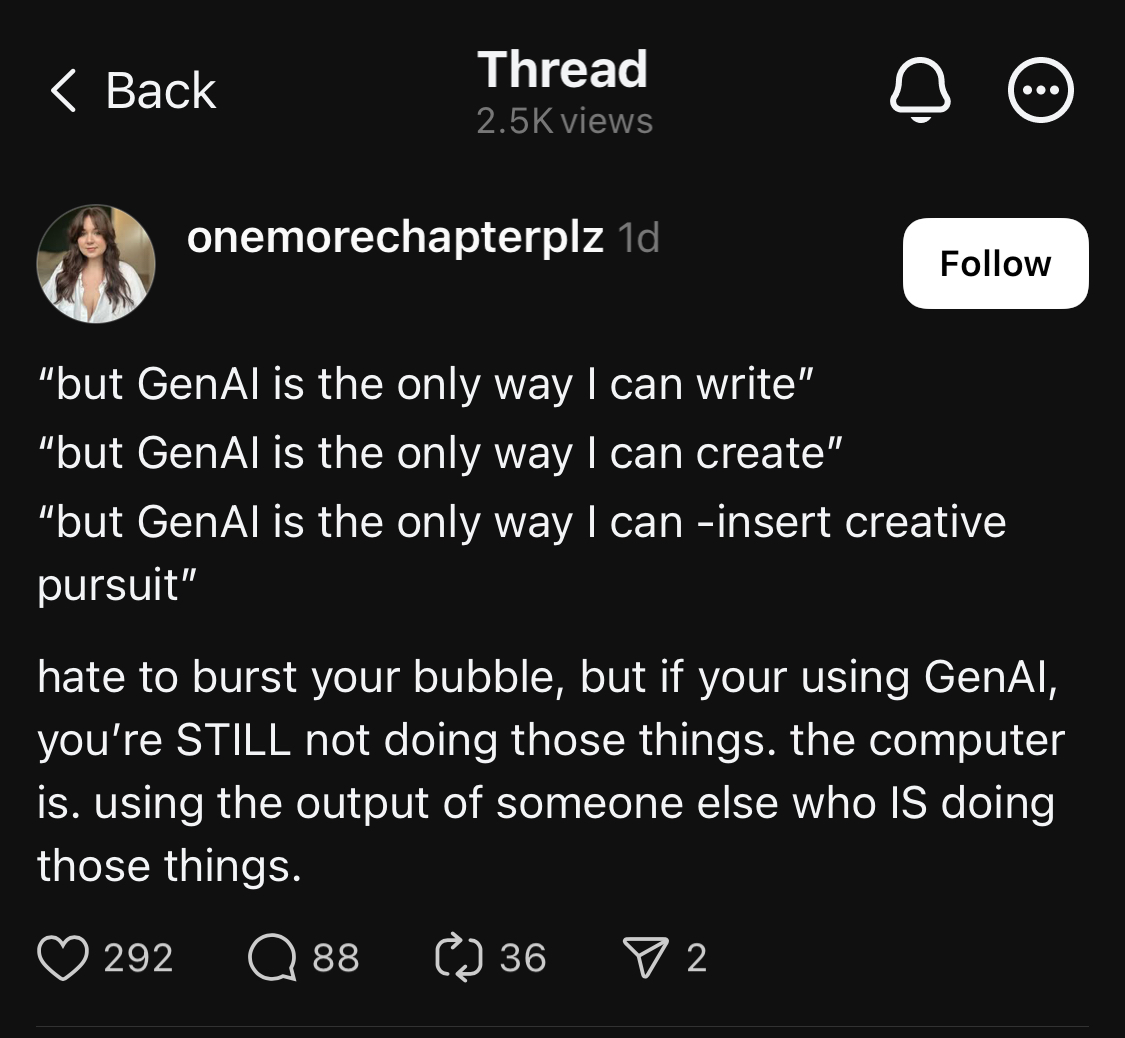
It brought back to mind a video clip I saw on Threads earlier that week, where the creator of an AI music prouction app was claiming that making original work takes up “too much time” and is “too hard” for the average joe to tap in to making music – “yes, it’s meant to be” was the welcome and resounding retort from people responding to the post. Their point being that the process of creation is meant to be developmental, it’s meant to be challenging and all the more rewarding when you ‘figure it out’, and the figuring out in this sense is a finding of oneself through that process. Creating anything worthy of reading, listening to or looking at requires this process. Perhaps what perturbs me most is that ultimately, I think the use of AI in the way mentioned above shows a level of disdain for what it means to be human. It considers the human brain as slow, unoriginal and ultimately not worthy of the effort/investment required to keep it vital through the exercise of reasoning, reading, failing and meaning making.

Life lately, as seen by my handheld handycam

This is my second home video edit. Captured some of the things I got up to in April and May 2025, which included a book club meet, a walk in the park, a coffee date, a wine date, a cake decorating class and a potplant painting class for Mother’s Day. Wholesome time all around.

Literary Postmortem: Endings and beginnings

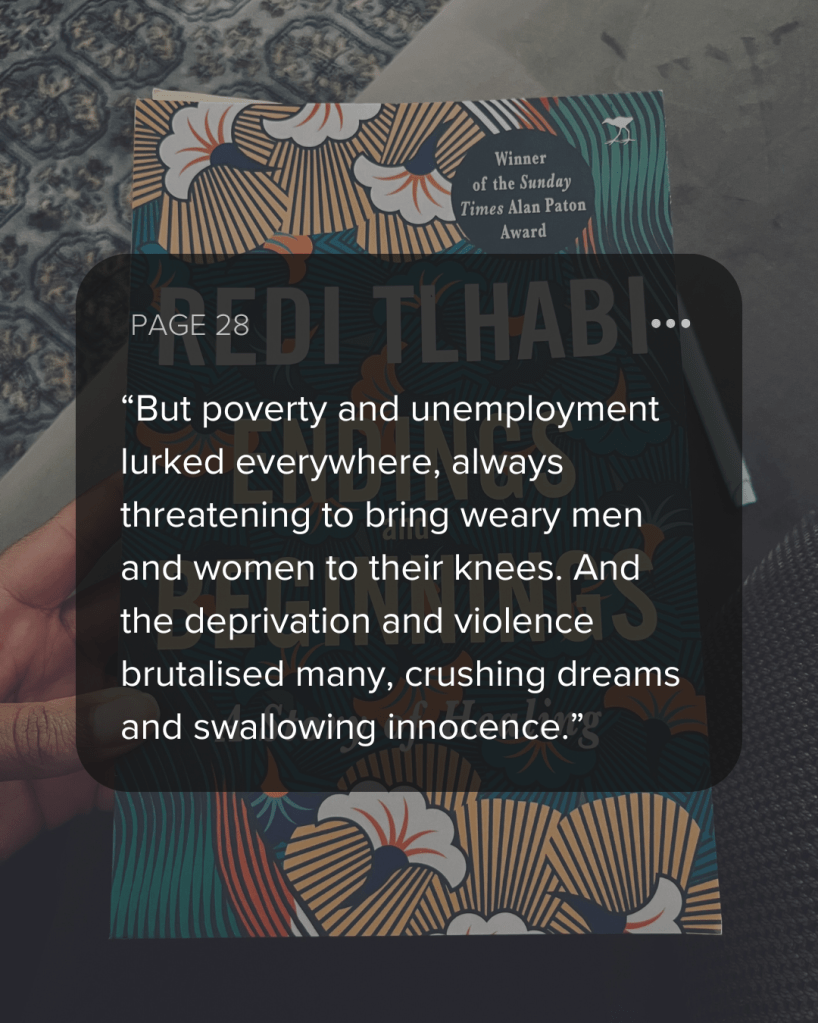
The fragility of life and the devaluation of individual lives in South African society swung on a pendulum throughout the 288-page stage that this memoir played out on.

For transparency’s sake, I must declare that I am a certified Redi Thlabi stan, she’s an incredible journalist and thinker I have always looked up to, and that no doubt coloured my reading somewhat. I picked my copy up at a recent book sale by publisher, Jacana, for a steal (one of those pay-per-kilogram sales – best!) Knowing Thlabi’s public persona quite well, I went in with quite specific assumptions about what her memoir might be like, and boy was I wrong on every count. Nothing could have prepared me for the twisted tale of a great first love marred by violence, manipulation and neglect. Sjoe, I was never ready shem.

Without giving away much more of the plot, I will say that the story that unfolds won’t be difficult to summon into ones imagination, Thlabi writes with a careful balance of honesty, warmth and clarity that transports you to the same street corners, the end of longing stares and swirls of despair that she experienced. It’s a reminder of how complex human beings and human relationships can be. Thlabi illustrates just how thin the line is between our precious inner lives and the relived realities that threaten it day and night. Grief stalks the pages from start to finish, the intensity of it varied from part to part and chapter to chapter, but ever present nonetheless.

Without being glaringly obvious about it, a geographic and historical profile of Soweto is sketched and helps root readers in place. The passage of time can also be seen through the lens of the location itself, ensuring that the past and present are delineated well. The lives of ordinary South Africans (and Southern Africans) during Apartheid always fascinate me, because they help us fill in the gaps that pure political and historical accounts can not. One of my favourite parts of the memoir was an account of how a central character risked life and limb to do his bit to assist in the anti-Apartheid movement. I appreciate accounts like this because the collective memory of our history can be narrow and solely focused on the people with bridges and buildings named after them, which is a distortion of how many truly played their part to fight off an oppressive regime.

Would I read it again? Nah uh. While intensely personal and revealing, I think it’s the kind of work that doesn’t necessitate revisiting when you are done reading it. Much like Khwezi, Thabi’s second book, it winds you so much that the very idea of bracing for impact again just doesn’t seem possible. But like Khwezi, it is a masterclass in using deep listening and authentic connection to navigate through one’s curiosity and sense of justice.

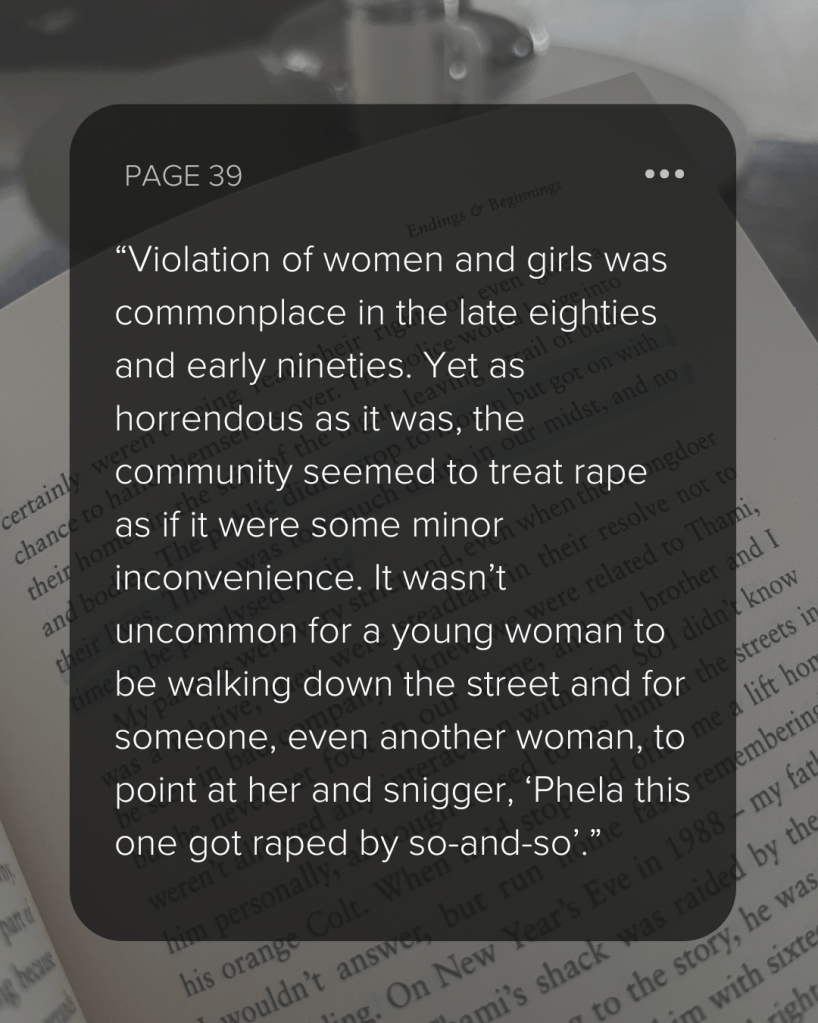
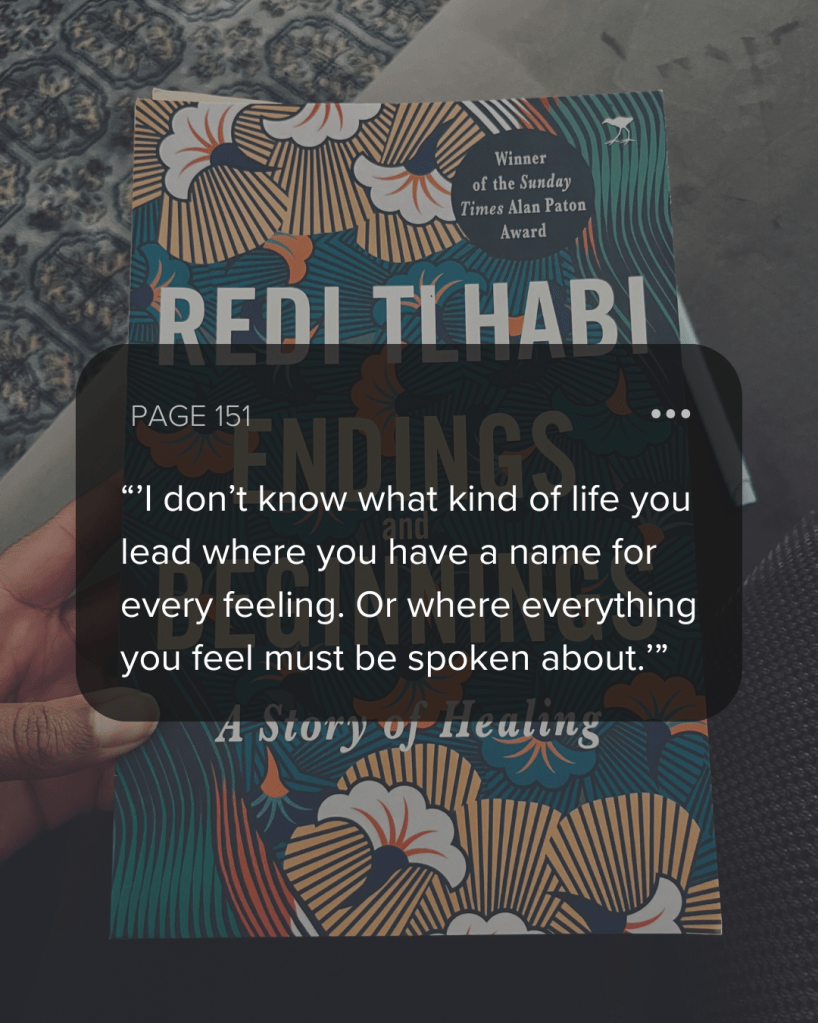
Some of my best bits below:

Stuff is less exciting without Twitter

“Turn the lights off!” Before May 21, 2025 that phrase had much sexier connotations in my head, now, unfortunately, it is a reminder of the very strange ‘meeting’ between President Cyril Ramaphosa and that guy in the Oval Office. While I have appreciated and gobbled up all the analysis that followed that strange encounter in the last few weeks, something was still amiss. Memes, gags and retweets about the encounter, to be specific. This event was the first time I sincerely missed the bird app since deleting it from my phone last year.

Have I known peace, absolutely. It has been freeing to be rid of the watered-down, oft-triggering and anti-intellectual ‘discourse’ that had come to dominate my Twitter feed. Since the Musk takeover, the algorithm on that app has become most unhelpful and uninformative, making an occasionally toxic and divisive environment, perpetually so by boosting the accounts and thoughts of the most harmful actors in the swamp (himself included).

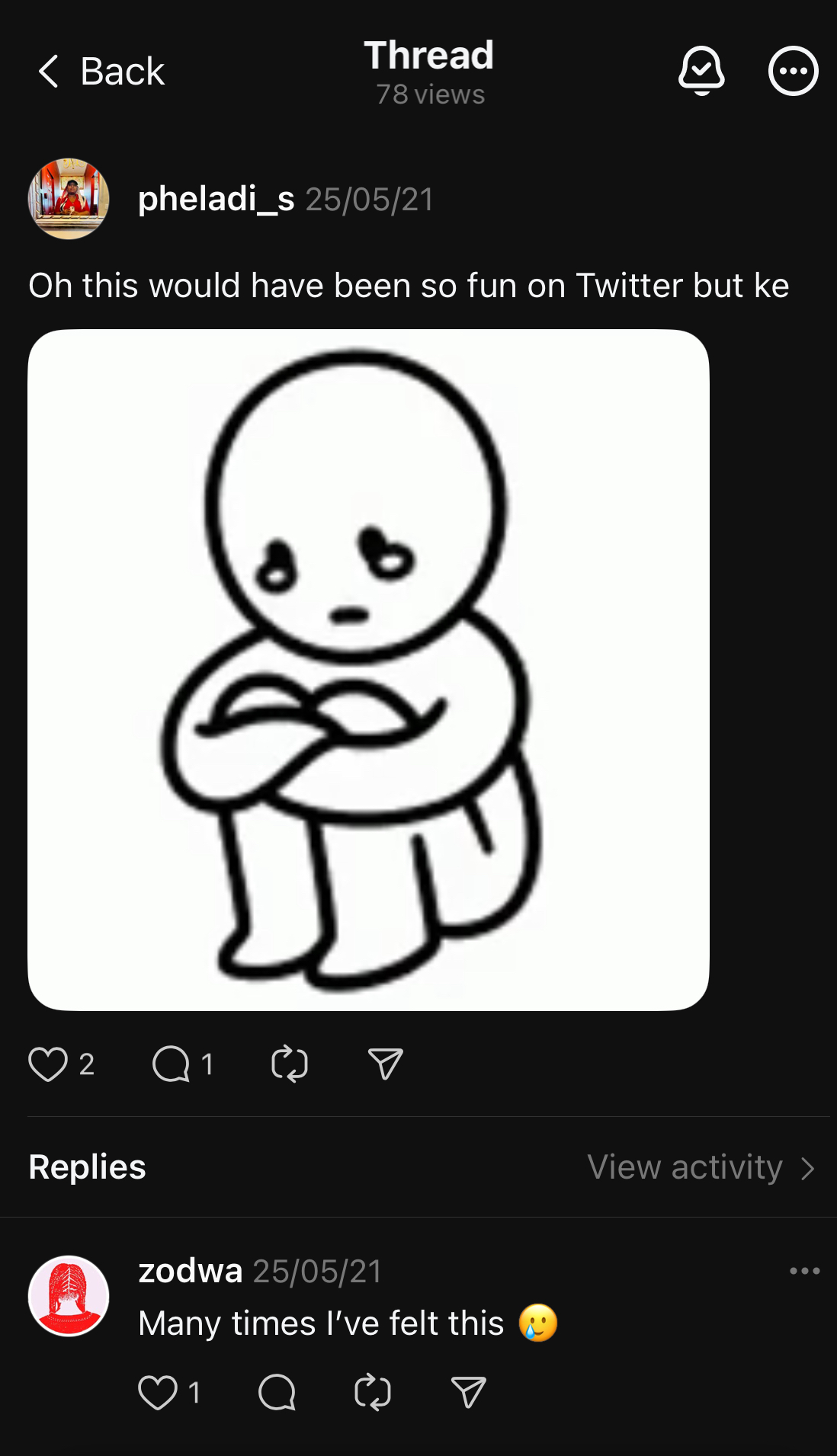
Anyway, that wasn’t the point of this little scribble. The point was, on that chilly Wednesday evening, I sat listening, enthralled by the shenanigans with no public place to live tweet and banter about the increasingly bizarre events coming through my speakers all the way from Washington DC. I was glued to the radio live feed in my car and couldn’t risk running out of the car, into the house to catch the visual feed in fear of missing even one second of the special episode of WWE. Itching to say something, anything, I turned to my almost inactive Threads account to cash in on the adrenaline that was coursing through me. I made a handful of posts, forgetting in my glee-come-horror at what I was hearing, to actually thread my posts together. But minutes passed with not a like, a retweet, a reply or GIF-only response. That’s when it hit me, that damn, Twitter is really gone and the live back and forths I had become accoustomed to during particulaarly important socio-political events and moments, could not simply be replicated on a different app. Sure, my following and level of activity on Threads probably plays a role, but that used to be the beauty of Twitter, you didn’t have to be ‘somebody’ to hop in on a trending conversation and simply by being vocal be seen by others interested in that conversation.

As someone who had been on Twitter for 14 years, using it professionally as a journalist and socially as a loudmouth, the relative silence during a live news event left me a little sad. Selfishly, for entertainment’s sake. But there was also magic in the way we collectively processed the world around us. As South Africans, primarily through laughter and making light of what is often too heavy. Threads did eventually ‘catch up’ the next day, filling my timeline with more post-meeting reactions, but the moment was gone, and my thumbs were at ease.