’m typing this post after another languid, candlelit bath, with a hydrating face mask on and a cup of hibiscus tea steeping towards perfection, as indicated by its deep purple hue. I am undoubtedly the most peaceful, calm and well-rested version of myself because I just came back from a trip where I spent an entire week sleeping my way towards that state.
Picture it: I had just narrowly escaped the 3-degree, wet and grey weather that assaulted Johannesburg in mid-August and a short four-and-a-half-hour flight carried me to an island that lies to the east of South Africa. Within minutes of landing, I had to dig into my carry-on to fish out a small handheld fan to fight off the humid, 26-degree weather that greeted me. I was in Mauritius for work, attending the annual AJEN Roundtable to be precise. This would be the fifth one I attended, and the ‘worker’ in me only ever tacked on a day or two post-conference to ‘see’ the countries we found ourselves in (Kenya, Ghana, Rwanda so far). Always rushing back to my normal routine, and the deadlines and students that ‘needed’ me. This year was the first time I said, you know what, no, let’s not do that again.
So, uncharacteristically, but very much in the spirit of slowing down and savouring my life a bit more, I tacked on not two but seven days of leave post-conference to enjoy the island and some much needed alone time. In another surprise move, I planned nothing. No walking tours. No trips to the market. No museum passes. No dinner reservations. Nothing. I wanted to rest. Truly rest. Not in stolen naps, a singular spa treatment, or a once off lie in. I had never been on a trip like that. I am usually the type of traveller that packs in as many activities as possible, operating from what I now recognise as a slight scarcity mindset. The idle hours reminders of the fact that I might never be here again and I needed something to show for the time that I was there. Not this time.
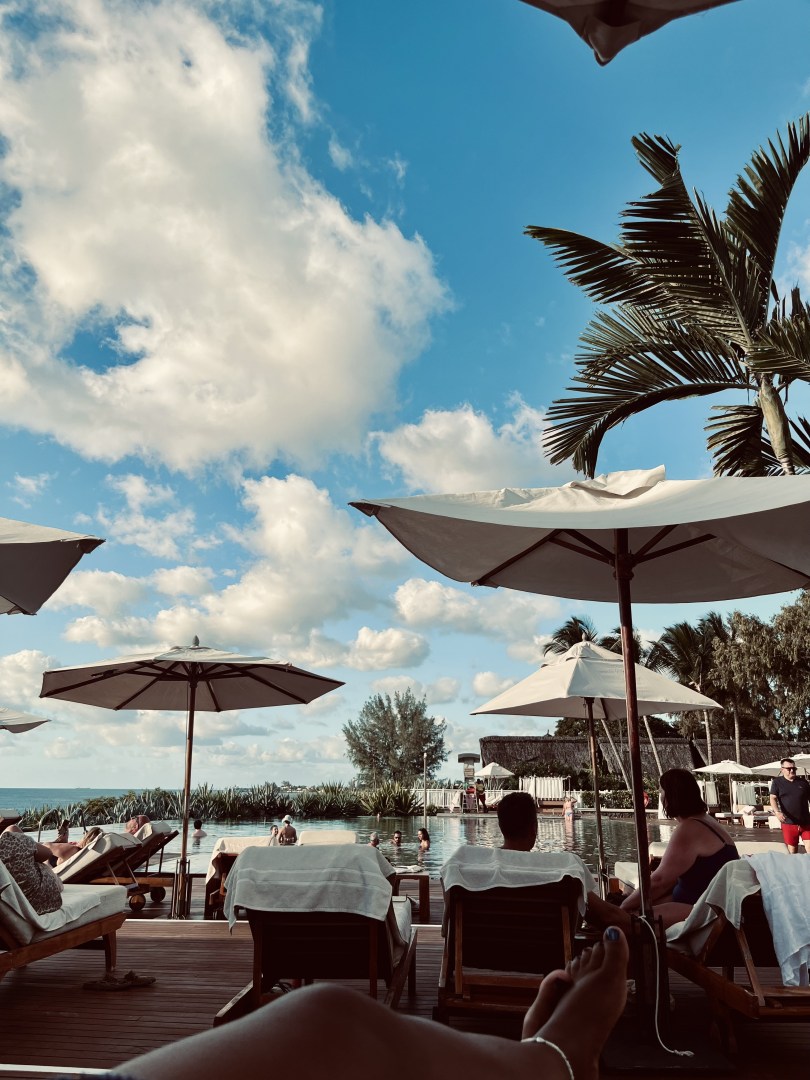
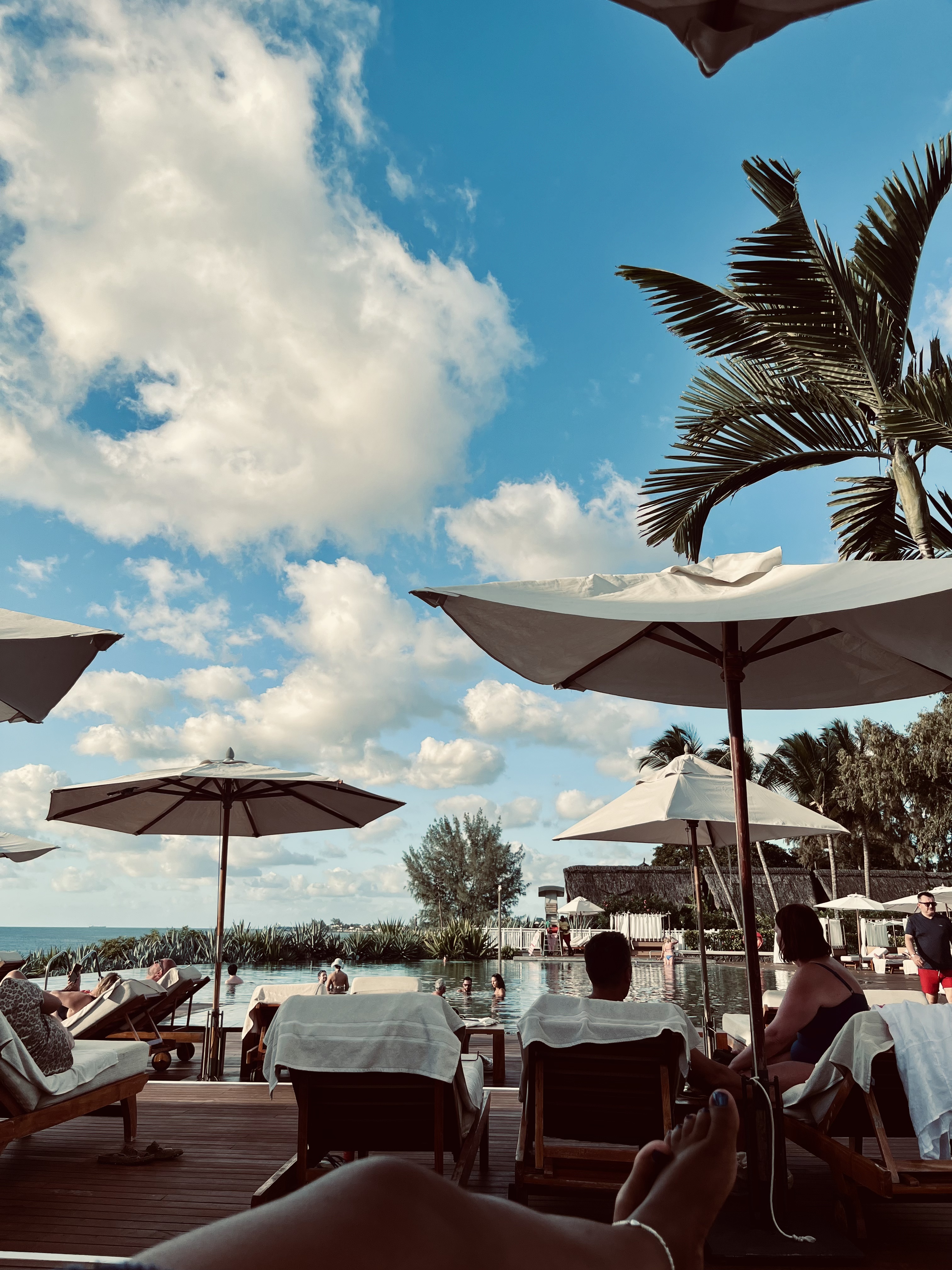
One of the adult-only areas at Club Med Albion, can safely say I spent 70% of my trip on these loungers. Photo: Pheladi Sethusa
This time, I dropped some big girl money and booked myself into an all-inclusive resort. Knowing that I wanted my only decision-making to be what I would be wearing, eating and how much I would be sleeping on any given day. Anyone who knows me knows I love sleep. It’s one of my favourite things to do. I need a minimum of eight hours to be okay and feel at one with my body. The working week doesn’t consistently allow for that, however, which is why I was so desperate for a couple of days in a row that would guarantee uninterrupted, non-alarm-induced waking, sleep. And this solo vacation allowed me to do just that – sleep whenever I wanted, whether on a lounge chair, beach towel or my actual bed for the week. The freedom to do as little or as much as I wished at any given moment, a rare and luxurious treat. Changing my mind mid-walk or mid-meal about something, a decision with no knock-ons or elaborate discussions that can come with group trips. This was also my first genuine solo vacation overseas, which offered a tranquillity I had never experienced before.
Not being rushed is the thing I walked away with as a new truth about myself. I loved having the freedom to blow off going to breakfast if I felt like I was moving faster than I needed to while getting ready for it. Or not hitting snooze, but turning my alarm off completely and sleeping for however much longer I needed. Or skipping a planned event because squeezing a quick shower and change into the 30-minute window between now and then just seemed unnecessary. These small acts solidified how dysregulating being rushed is to me. I actually hate it and doing it forces me to move at a tempo that betrays what I imagine is my natural rhythm. Which is why I like arriving early to things; ordinarily, I would rather mill about or just sit and let my mind wander for some time, instead of stumbling into my plans, with a racing mind and an elevated heart rate.
The trip also reminded me of one of the most impactful podcast episodes I have ever listened to, Rest for Them on Nocturne. An episode with the Nap Ministry’s Tricia Hersey, whose work reinforces the fact that rest is not a reward we earn, but a human right we should all have more consistently than we do. The episode found me during the pandemic, and I really think it helped shift my brain chemistry in a lasting way. Overwork is not something I exalt as a result, and I actively work against it when I can. She helped me begin the unravelling of conflating what I do with who I am. And I guess the way I got to rest on this trip served as an example of what the pinnacle of real rest looks and feels like. To more. To much more.
Imagine being gifted with time travel, but it sucks you back to a plantation in the early 1800s *screams*.
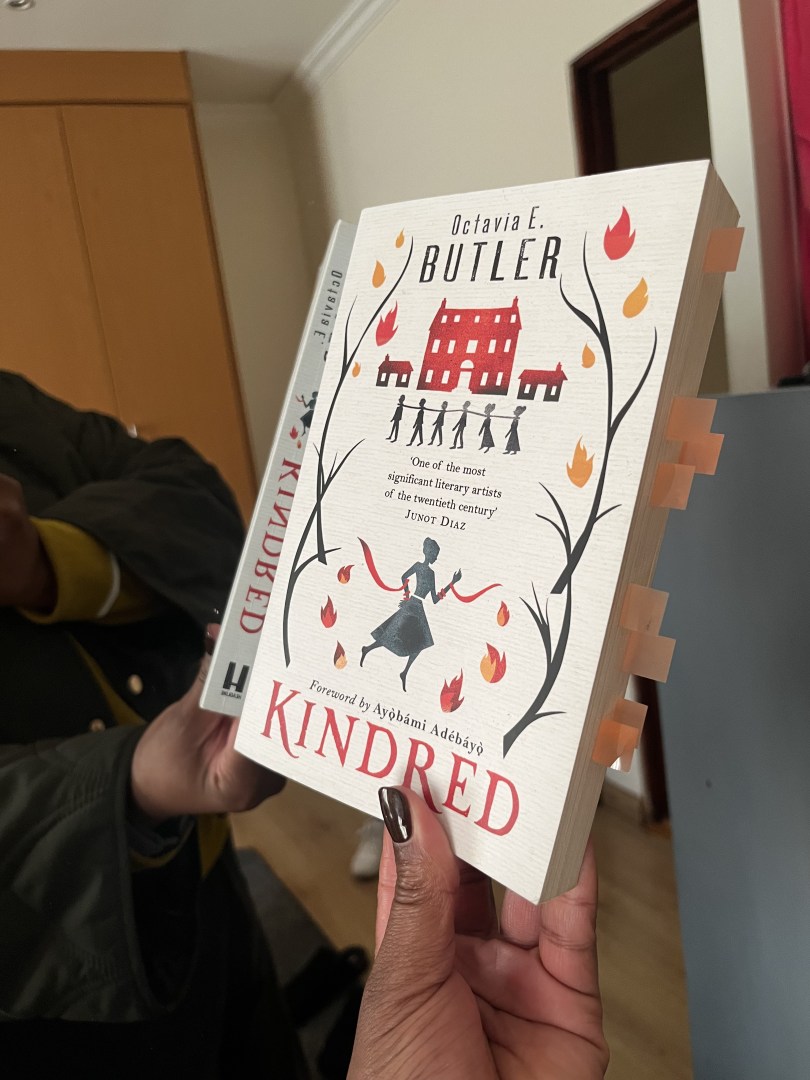
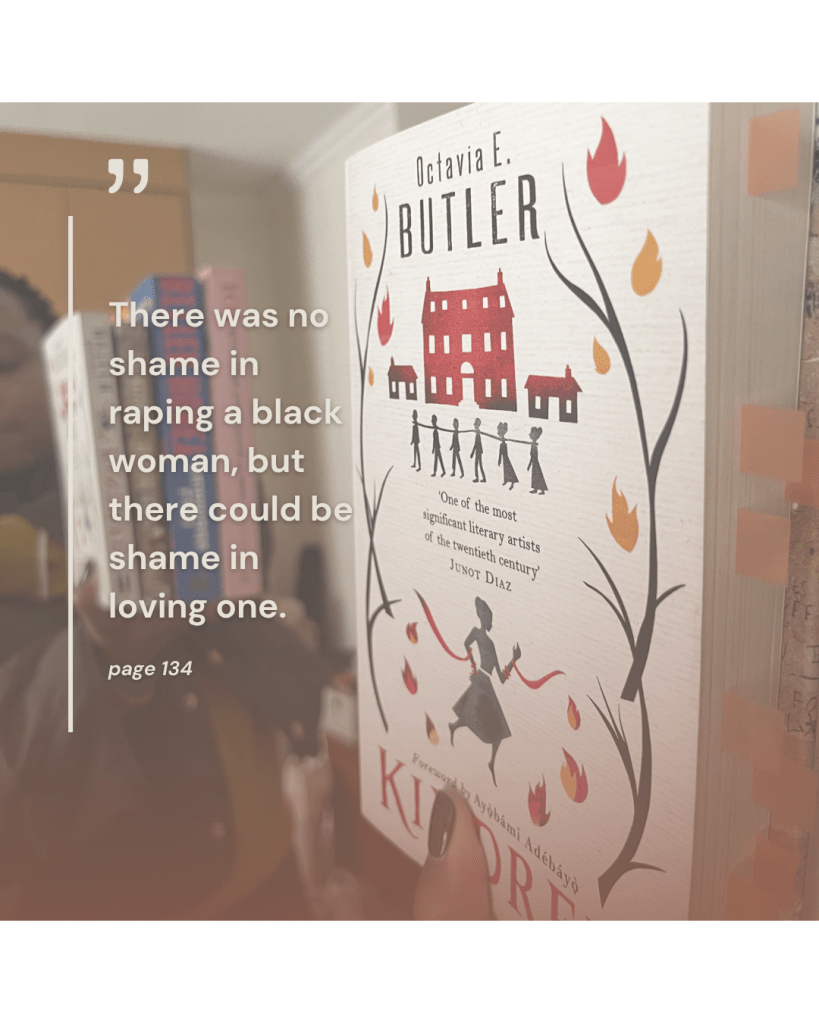
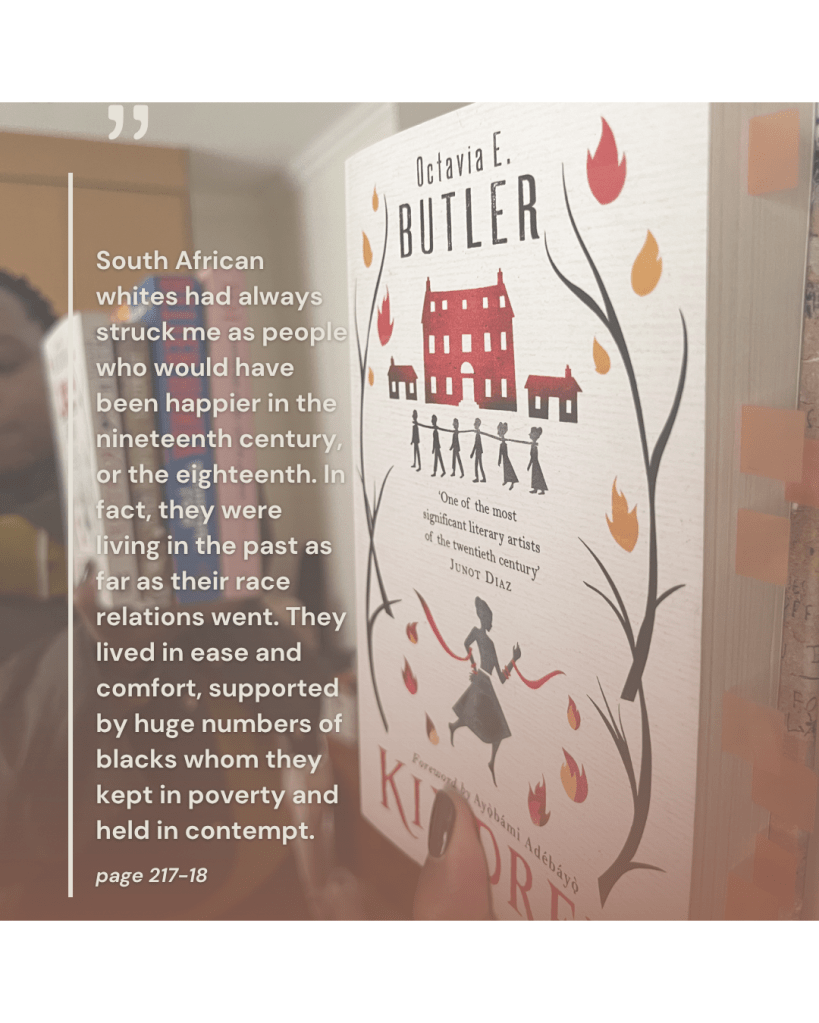
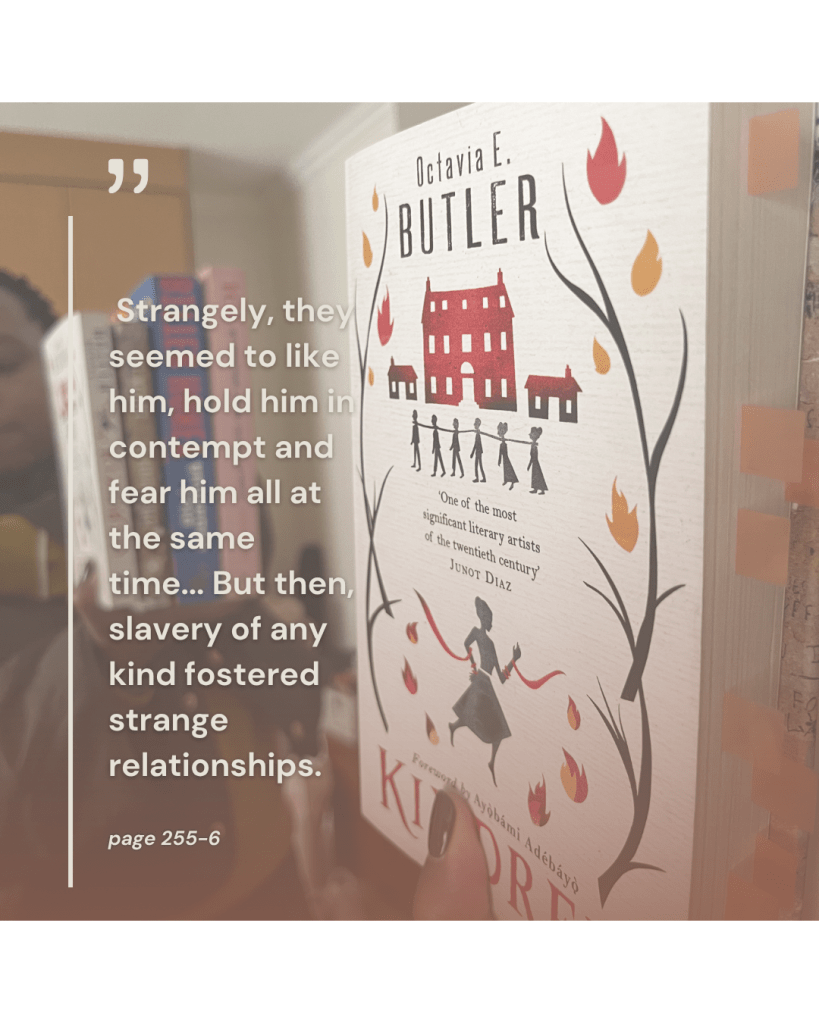
That was the exact premise of Kindred, a fascinating but terrifying novel we just read in one of my book clubs. Almost embarrassed to say this is the first time reading Octavia Butler’s work – at my big age *hangs head in shame* I joke, rather late than never right? Needless to say I was very excited to tuck in because her work precedes her.
Back to the terrifying premise of the book – Dana, a black woman in the States, is yanked from her 1976 reality to a slave plantation in 1815. The mechanics of her time travel depend on any instance in which an ancestor of hers (Rufus) is in extreme pain or has a near-death experience. That ancestor is a slave owner’s son and slave owner in the making himself. In addition to this, time then and now aren’t the same, so a day here can be weeks or months then, trapping her in ever precarious situations for much longer than is safe. Tricky doesn’t even begin to describe it. Dana carries whatever physical pain she is subjected to in the 1800s as an assumed but privileged slave, she carries into her 1976 reality. But worse than any of her physical injuries is the (at the time) modern sensibilities she carries and has to unlearn to survive the time she finds herself stuck in.
It was a page-turner that kept me up at many a bedtime, as I constantly fretted over Dana’s safety. It combines two of my favourite genre’s – historical fiction and science fiction. The characters are very well written as well and elicit some very strong emotions in you as you read. In our book club it scored an impressive 8/10, with some points left on the table simply because of some of the loopholes in the genesis and rationale behind Dana’s time-travelling capabilities.
Our most recent #bookclub read was octaviabutler’s Kindred. Have some more thoughts of my own but this is how the meeting went. #booktok#readersoftiktok#hobbies @knotlessinjohannesburg @ChrisDuncan @relebone_
I really enjoyed the juxtaposition between the two eras and the exploration of Dana’s relationships with two very different white men in either. Reading it in 2026 as a black woman in South Africa, allowed for an even more complex reading of times long gone but ever present in the “subtleties” of brutality in my neo-colonialist, post-apartheid and late-stage capitalist reality. It also acts as a provocation to readers, saying it’s easy to imagine how one would survive and revolt during a repressive and dehumanising situation, but in reality, there are very real limits to the options enslaved people had. Staying was often just as dangerous as trying to flee to freedom. Hindsight deludes us into thinking we would all be strong enough or lucky enough to do anything tangible to change the circumstances of the times we are tethered to.
I certainly won’t be reading this one again, can’t stress myself out like that again, but I would highly recommend it. As always, some best bits below.
Bit difficult to “no DNA just RSA” when bearing witness to another round of self-hate running rampant on our streets.
In 2008 – I was a 17 year old who caught snippets of what was going on while driving to school with my dad, listening to John Robbie on his morning radio talk show on 702. It was a story that seemed too far-fetched to be true to my sheltered self. How could not knowing what elbow meant in isiZulu get you hit ot killed? The tattoo of the continent I had just used all my pocket money on (from working activations at robots and inside supermarkets) had just about healed. It was a basic outline of Africa on the middle of my back. That personal commitment to this land of my birth now stood at odds with the collective and rather public self-annexation by the people from its southernmost tip, fuelled by what I could only imagine was extreme desperation and misplaced hate. Then I saw a man who had been set alight on the front page of the Star newspaper when we got home from school. Shit. Is this what Apartheid necklacings were like? The image, with a singular police officer trying, and failing, to put the flames out – cemented a terrifying realisation of who we could become when presented with the opportunity to turn our own dehumanisation onto others. The horror drew ever nearer when one of the camps set up for the displaced was fully operational a few kilometres from home. The white tents stood like stark images I had only ever seen in a National Geographic magazine or the later parts of news bulletins where one or two “African” stories fought over a tight three to five minute slot before the next ad or news block.
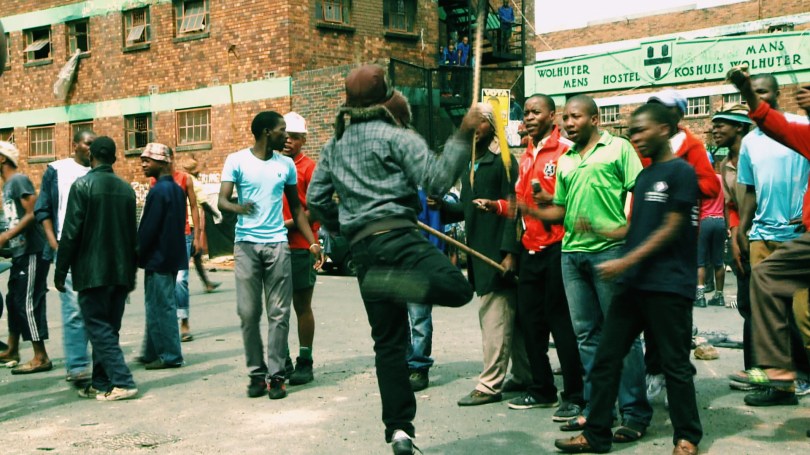
In 2015 – I was a newly minted journalist with a camera in my hands. I was working for an international wire at the time. The fact that I could drive and speak the “local languages” was the qualifier for being sent out to cover the latest surge of afrophobia. By this time, I knew a little more thanks to university-level electives in Politics and African History, so I no longer simply called what was going on xenophobia – the targeted nature of attacks on exclusively black and brown people made it difficult to do so. From Snake Park in Soweto, to abandoned wholesalers in the East and hostels in the inner city – I was this time face to face with both the victims and perpetrators of this targeted harassment and violence. It was the first time I got an unwanted advance (read violation) from a drunk protester in the middle of commotion at a hostel. It was also the first time I filmed a grown man crying on camera. He had lost all of his stock, cash and a leg during a violent looting incident at his shop. Technically was still new to operating and using professional video equipment, so he was slightly skew and the hue more pink than could be used in that particular package of rushes. But some creative editing allowed me to at least use his cracking voice in a longer piece a few days on when the breaking news of it all had settled.
In 2026 – I was sitting with a group of women at our monthly book club meeting a few days prior to June 30, 2026. We were reading Octavia Butler’s Kindred, so a heavy afternoon was guaranteed. Once we had shared our frustrations, sorrows and incredulities over the atrocities of slavery we had encountered in its pages, conversation turned to the elephant-shaped ‘deadline’ in the room called South Africa. Online conversation/discourse said that it wasn’t the place of the educated, clever blacks in the middle class to opine on the matter at all. That we were/are too far removed from the realities on the ground to understand the calls for migrants to leave the country by the end of June, or else. That we were insulated from the growing precarity created by unemployment, inequality, lack of basic services and other socio-economic disparities. And I largely agree with that to be fair, the indignities millions of South Africans have to stomach in the name of survival is a daily struggle I don’t have to contend with. The familiar ‘survivor’s guilt’ that used to settle in when I was a journalist. I got to hop into an air-conditioned vehicle, with the details of just how a person or community had been failed by the system and/or its lieutenants neatly jotted down in a notebook and recorded on camera, leaving them to continue to contend with the untenable, hoping my 60-second insert would do something. So yes, I understood from whence the plea to view the situation through a lens that wasn’t only academic or bureaucratic came from. What I, and my book club, couldn’t understand was the urge to suspend our humanity, to vilify people equally disempowered and disenfranchised by a system that none of have ownership of. Leaving the meeting, again, in warm clothes and air-conditioned cars, what hung over our heads as Pedi, Venda and Tsonga women was which ‘others’ would be deemed different enough for the same collective punishment being doled out this time, because invariably this kind of violence quickly takes on an ethnonational flavour once the more ‘obvious’ targets have been dealt with. Heavy sigh.
On the imbalance of knowledge that knocked the wind out of my 13-year-old self.
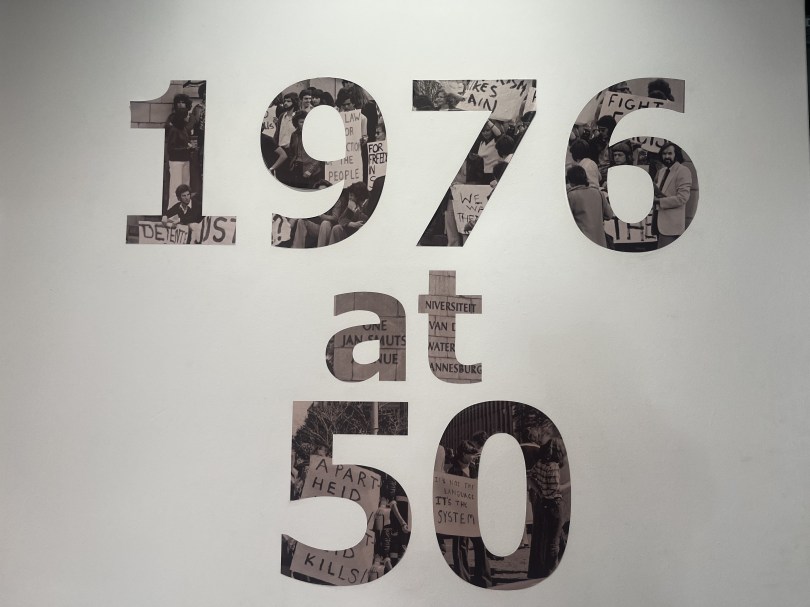
I recently interviewed Paul Laufer, a photographer and cinematographer from Los Angeles, for a podcast episode. The context of our conversation was a photo essay he put together to commemorate 50 years since June 16, 1976. His body of work contains stills that were published in the Wits University student newspaper of the time, Wits Student, as well as some never before seen images he only recently developed for this exhibition. A fascinating experience for me on multiple fronts – namely, as the current editor of the student publication at Wits, as a former student journalist of selfsame publication (Wits Vuvuzela), as a black woman in South Africa and a person obsessed with history.
One thing kept playing on a loop in my mind after my two-part Zoom call with him. Paul had been sent into Soweto to shoot a quick portrait of Orlando High School principal, Mr Tamsanqa Kambule (whose name is now on a whole building at Wits). A colleague of his had already written the copy about the school and its visionary steward, Paul just had to get the headshot. But upon driving into Soweto, he says everything he had been told about the township began to come apart at the seams as very ordinary scenes unfolded as he drove deeper and deeper into it. So I asked what he knew about Black life at the time and part of his response was, “Black people understood everything about our life, there were no secrets. The reverse was not true. White South Africans had no idea about Black urban life.” In other words, we knew everything about them and they knew nothing, or very little, about us.
It took me back to my own upbringing, and the continual need to explain references – songs, movies, icons, ways of being – and Black life in general to friends, coworkers and acquaintances who lived in insulated silos, with very little knowledge, outside of prejudice, of what was going on outside of their own little bubbles. [Run-on sentence much?!]. As I turned his words over in the days that followed, a very specific moment in primary school came up. A genesis of my understanding of this disparity in experience and exposure.
I went to what is considered a ‘model C’ (formerly reserved for whites only) school in Irene, Pretoria. Our student body was reflective of the ‘new’ and changing South Africa – for context, this would have been between 1998 and 2004. I say new like that because – look around 👀 Anyway. It was in grade seven, the exact date and month elude me. But our arts and culture teacher announced that we would be performing parts of the musical, Sarafina, in our annual school play. There was palpable glee from all the Black learners in the room. Finally, we would get sheet music we didn’t actually need, we already knew the words. We knew who we might want to be cast as. Knew how we would be dressed. How we would move when the accompaniment started. But all of that joy and wonder was quickly tempered when a classmate’s “what’s that?,” followed the announcement. The hours and days that followed revealed that many of our white counterparts had no idea what Sarafina was. I felt somewhat betrayed by it.
That moment was a dream come true for the little drama kid I was at the time. Singing and dancing along to Sarafina songs on stage?! I had practised my whole life for this. See, Sarafina was one of the video tapes my brother watched and wore down from the mid-90s through to the early 2000s. It was on high rotation with our other faves, Coming to America, The Lion King, Titanic,Boys in the Hood and Matilda to name a few. Crazy line-up – I know. But we liked what we liked. Leleti Khumalo as Sarafina was one of the first on-screen characters I could imagine myself as. I wanted to be her. I wanted to dance like her. Be brave like her. Wear my school skirt like she did. Be snarky with boys like she was. Make them weak in the knees like she did. Be knowledgeable like she was. Fight like she did.
So to sit in that classroom and hear some of my peers and friends have no idea what we were talking about left me crestfallen. What alternate universe did they live in that they didn’t sit down as a family on June 16 every year, and remind themselves of what our freedom had cost? Here I was, watching 7deLaan to get better at Afrikaans, reading SaltWater Girl and standing in a Musica to listen to a White Stripes album. Actively imbibing whiteness and white culture at will. Or force really – because again, look around. This imbalance in that moment put me off kilter for a while. It made me question the very nature of my interracial relationships, considering this lopsided perspective of the world and each other. Like you weren’t curious about me at all? Damn Gina (we watched Martin a lot too). In retrospect, I probably owe some of my conscientization to that moment, it made my 13-year-old self open her eyes a bit wider and raise her eyebrows at other and more sinister remnants of the system that showed up in daily life.
Some days later, our teacher (shout out Mrs Eunice Marais) arranged for an in-class screening to bring everyone up to speed before practice started in earnest. Watching a movie in class then, meant watching on a giant black behemoth of a TV unit, over a few days, with discussions and speculations holding you over until the next instalment. The temporary interest quelled my sadness, but the ensuing disinterest in further immersion became somewhat commonplace in the years that followed. But that I got to stand on a stage and sing lead vocals on the Lord’s Prayer and Freedom is Coming? Oh please, fuck them kids.
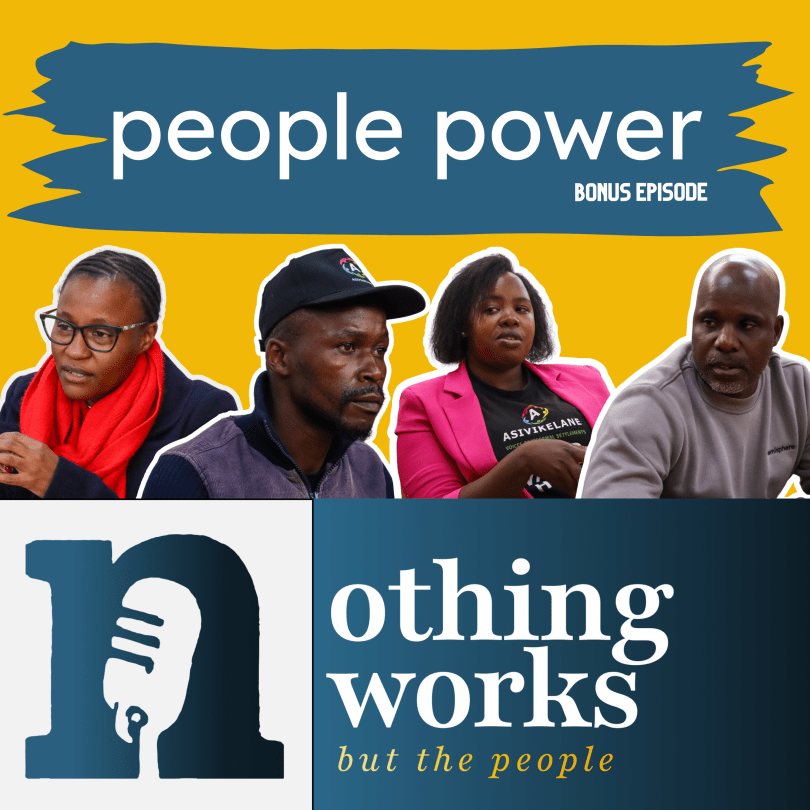
After two years of unmet promises of renewal and sweeping change by the elected Government of National Unity (GNU) in South Africa, some citizens are ready to take matters into their own hands to ensure accountable governance.
A landmark citizens perceptions and expectations survey conducted in 2025, revealed that not only do people know what things are keeping them from accessing their basic needs, but also how they can better wield their individual and collective power to ensure them.
This episode unpacks the town hall meeting in which the survey findings were discussed and meaningfully built upon to empower participants across the country, ahead of a pivotal local government election in a few months.
This episode was created in collaboration with PlanAct, Act Ubumbano and the SIVIO Institute. It is another showing shortly production.
Show Notes:
Host, producer and editor: Pheladi Sethusa
Junior producers: Siyanda Mthethwa and Salim Nkosi
Guests: Ambani Sandani, Albert Mkhabela, Mondli Mabuza and Eddah Jowah
Sponsors: PlanAct, Act Ubumbano and the SIVIO Institute
Music: The Fight is Over by Kirk Osamayo, Free Music Archive, CC BY; Step by Cyrus, Free Music Archive, CC BY
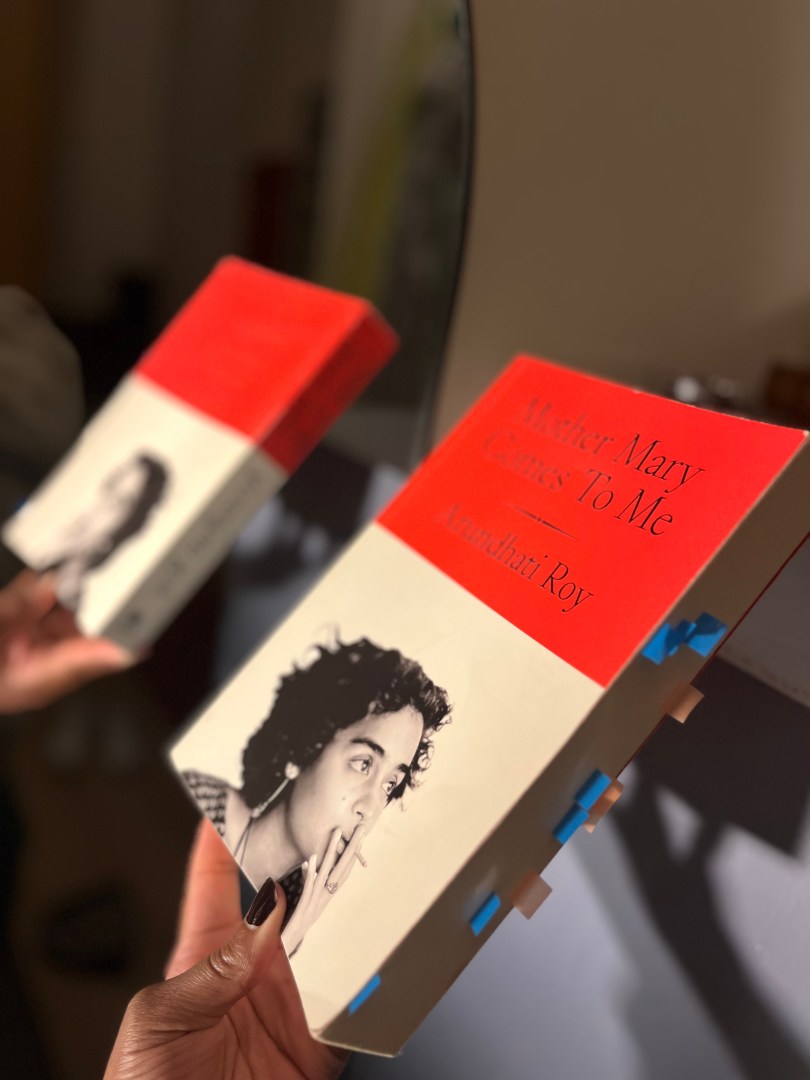
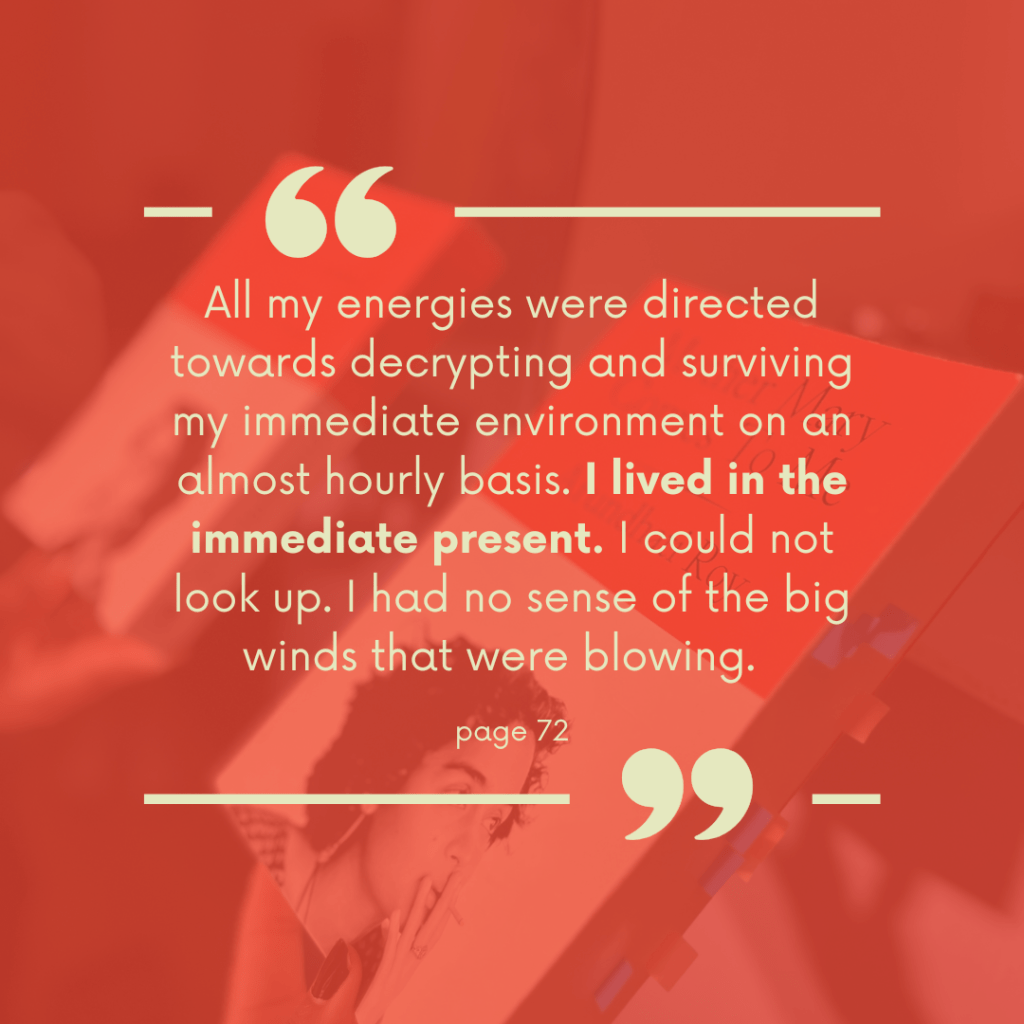
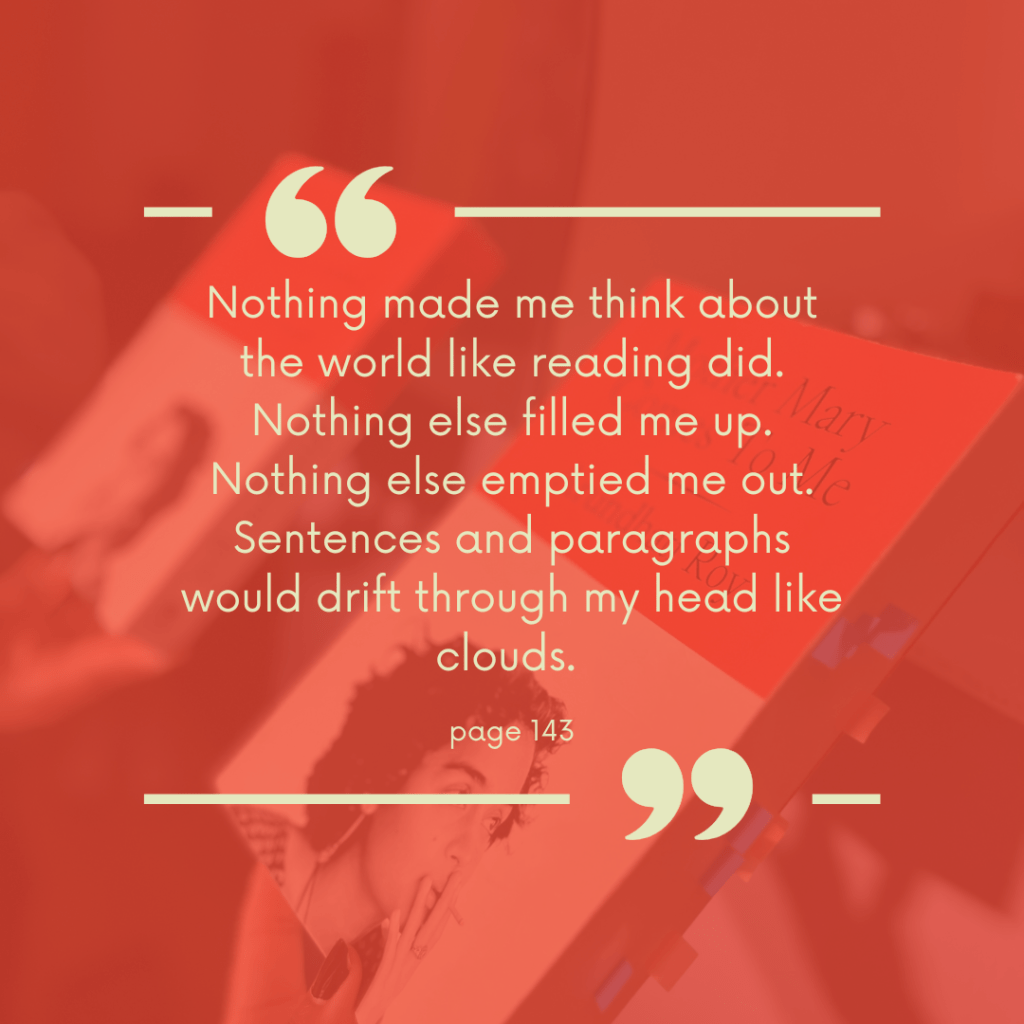
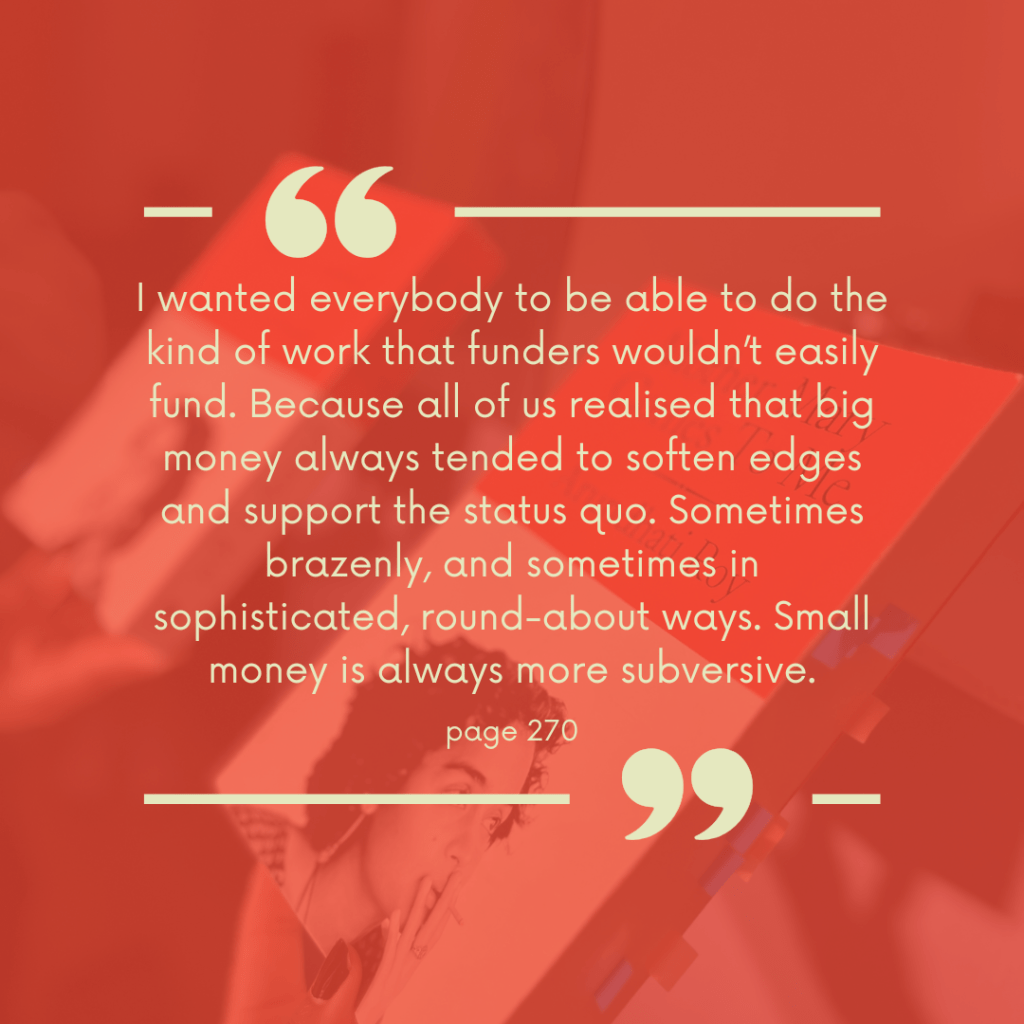
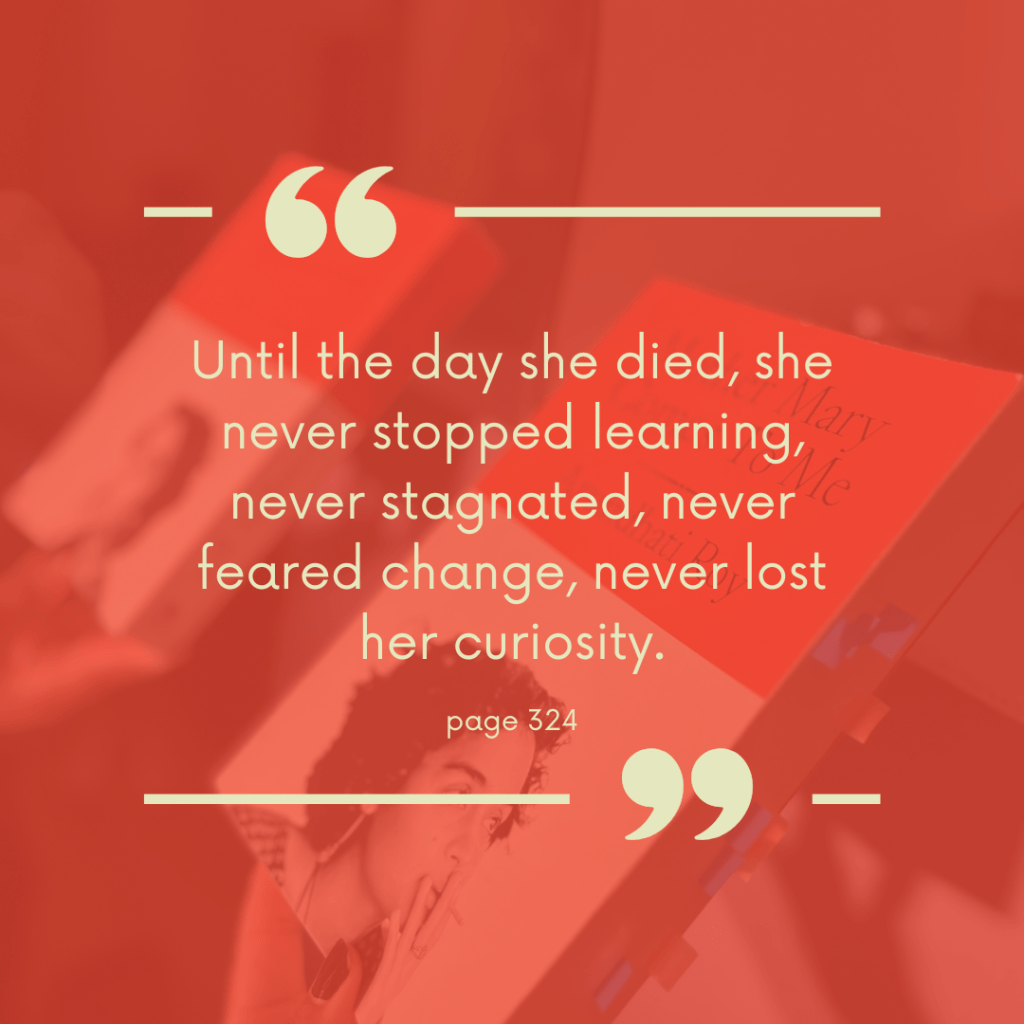
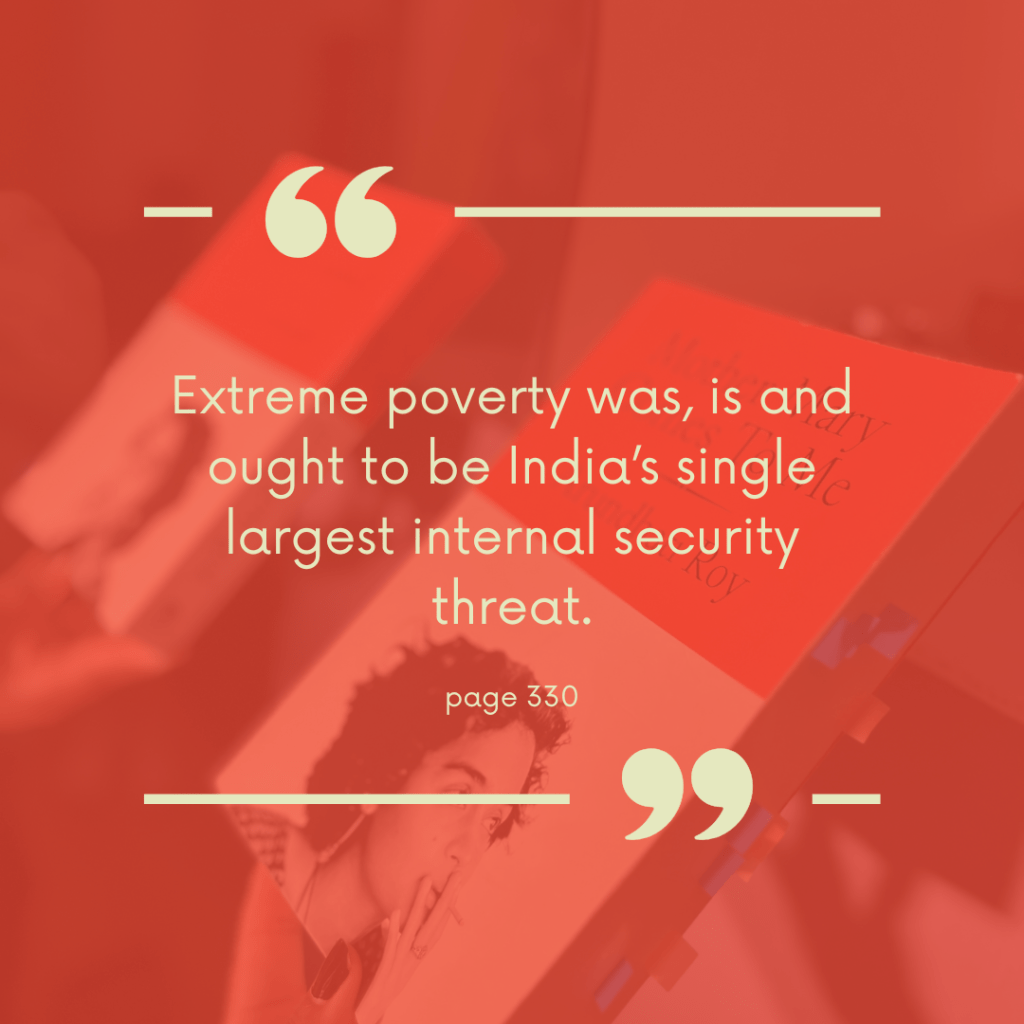
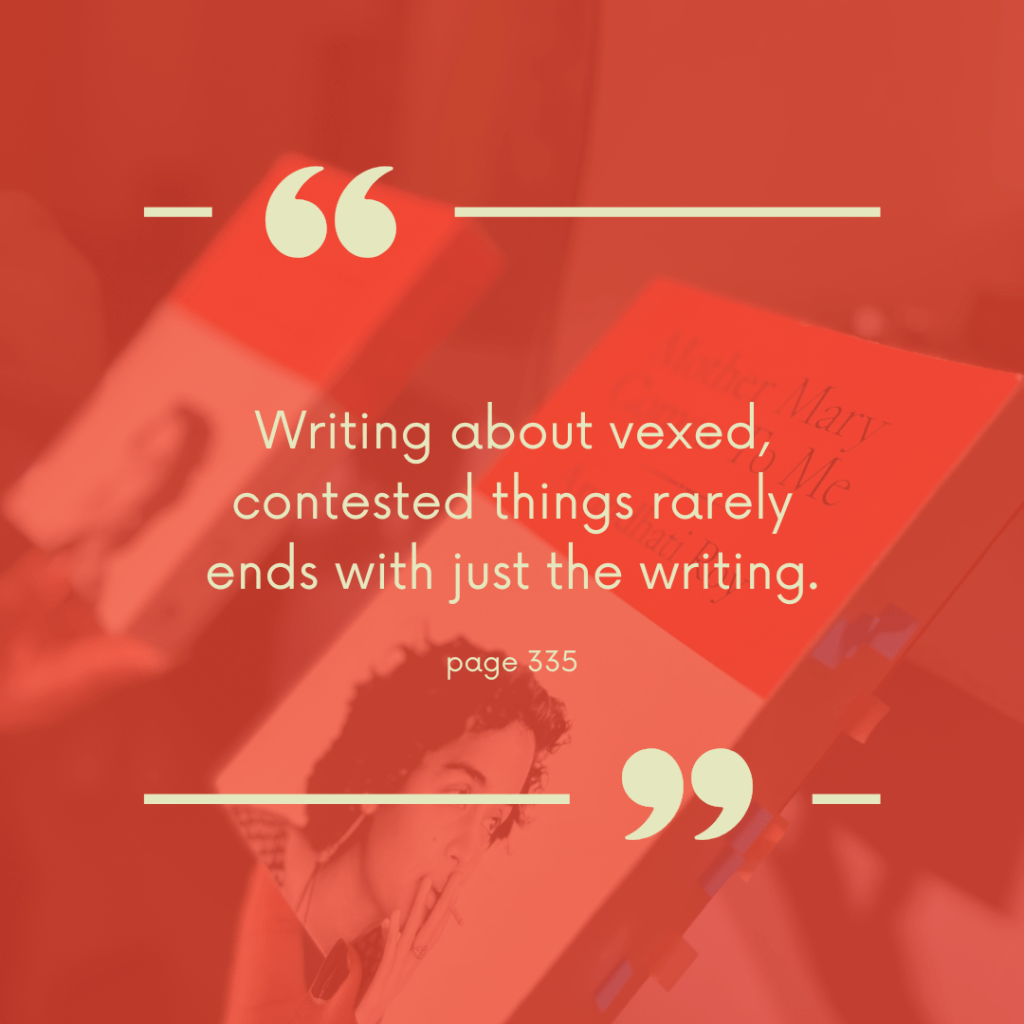
Nothing could have prepared me for the many lives Arundathi Roy has lived. It’s amazing that she’s still standing, intact, after what can only be described as a relentlessly trying few decades on this earth.
When I first picked up the copy in a bookstore late last year, I thought fondly of her visit to South Africa in 2018. Sitting in a packed auditorium at UCT, I had taken the day off and readied myself to be awed for the two hours we had with her. See, Roy is somewhat of a personal hero to me. Her words and mind have helped me sharpen my own, see and experience the world differently.
Reading this memoir, something she said in that setting, turned over frequently as I realised just how much of her fiction has been informed by her very life.
“Only fiction can tell the truth… it has its ear and heart very close to the ground. Fiction is years of listening and travelling and sweating that experience out in ink.” Roy, August 13, 2018
From the early pages of her latest work, through to the last, some 400 pages later, one can’t help but be stunned and struck by just how closely fiction mimics reality for her. To now know that Velutha from The God of Small Things, was based on a real man, made my whole year. He remains one of my favourite literary characters to date.
What hit me first and has stayed with me since is the indelible marks our parents leave on us. Regardless of their intent, the impact of their actions seeps into our marrow in confounding and lasting ways. Roy’s relationship with her mother comes across as being rooted in something like love, fear, jealousy, disdain and deep affinity all rolled into one. There’s an understanding on the page that this toxic and at times abusive cocktail cannot be survived, at close proximity at least, so Roy and her brother run as soon as they are able, but the taste of it, no matter how bitter, is something that stays with them. Something you crave even, for her anyway.
She manages to write about both her parents with care and admiration, despite the lasting and lingering pain either has inflicted. My assumption around that is the way Roy considers herself an imperfect person, she extends that grace to her close relations with a knowing that in the far reaches of any given relationship, love exists. Which to me harks back to the title of the memoir, Mother Mary Comes to Me, yes, it’s a clever play and shoutout to her obsession with The Beatles, but on a deeper level I think it’s an acknowledgement of the acceptance of what their relationship was and wasn’t (or could not be). That while she describes her mother as her shelter and her storm in the book’s early pages, she has chosen to point us to the house and not just the impending weather. Her mother, like so many others, defied and defeated incredible odds to build the life she did. She fought tooth and nail for everything she had, and therein lies the affinity I pointed to earlier.
It’s an almost unbelievable read, Roy’s life (to me) is characterised by extremes which mould her into the rebel, vagabond, artist and fighter I have come to love. Her convictions are firmly rooted in her experiences and the unwillingness to look away in the face of personal and collective injustice.
As always, with anything she writes, it drips with imagery and perfect prose which force you read and re-read some passages over and over in a desperate attempt to commit their meaning to memory.
I think one would struggle to read this if you aren’t already a fan of her’s or at the very least intrigued by her and her work. If you are, highly recommend it. Best bits below.
As the world observes and celebrates Internaltional Workers Day on May 1, 2026 – we take the opportunity to take stock of the season that was in a bonus episode. Co-producer, Kabir Jugram and host, Pheladi Sethusa speak about the work they do, the origins of ‘nothing works but the people’, reflect on the modern world of work and producing the first season together.
Show Notes:
Host: Pheladi Sethusa
Producer: Kabir Jugram
Editing, writing and sound design: Pheladi Sethusa
Graphic design: Mutsa Katsidzira
Theme music: Trench Work by Ketsa, Free Music Archive, CC BY
Additional music: Hanami Matsuri (花見祭り) by Fabian Measures, Free Music Archive, CC BY
Additional sound: Crying by freesound-community on Pixabay
We’ve talked a lot about money this season, everything from how much people make to how they go about making more. In this sixth and final episode for this season, we speak to the people who help you manage the money you do have, safeguard it and grow it – financial advisors. They fall under the financial services sector and their work goes way beyond the sales component most of us are familiar with.
Show Notes:
Host: Pheladi Sethusa
Producer: Kabir Jugram
Editing, writing and sound design: Pheladi Sethusa
Graphic design: Mutsa Katsidzira
Theme music: Trench Work by Ketsa, Free Music Archive, CC BY
Additional music: Work by Steve Combs, Free Music Archive, CC BY
This series is a Showing Shortly production and made possible thanks to grant funding from Africa No Filter and forms part of the Work Reimagined Storylab. Another big thanks to our publishing partners, the Currency News.
According to research, South Africans are the fifth highest guzzlers of beer in the world, with the average drinker consuming an average of 30 litres of the golden stuff per year. In metros like Joburg, craft beers are slowly overtaking demand. In this episode, we take a slight shift in form to tell a truly extraordinary tale of one brewmaster’s almost 20 year journey in the industry. Someone who has had a hand in creating some of the country’s most renowned craft beers. His special recipes won awards but also led to betrayal more than once, but he refuses to be deterred and has just helped launch a raft of new brews taking the inner city by storm.
Show Notes:
Host: Pheladi Sethusa
Producer: Kabir Jugram
Editing, writing and sound design: Pheladi Sethusa
Graphic design: Mutsa Katsidzira
Theme music: Trench Work by Ketsa, Free Music Archive, CC BY
Additional music: A je to by Paweł Feszczuk, Free Music Archive, CC BY; Reflection Documentary Background by Jake Hunter, Free Music Archive, CC BY
Additional sound effects: Freesound_Community, Pixabay, CC BY
This series is a Showing Shortly production and made possible thanks to grant funding from Africa No Filter and forms part of the Work Reimagined Storylab. Another big thanks to our publishing partners, the Currency News.