

The fragility of life and the devaluation of individual lives in South African society swung on a pendulum throughout the 288-page stage that this memoir played out on.
For transparency’s sake, I must declare that I am a certified Redi Thlabi stan, she’s an incredible journalist and thinker I have always looked up to, and that no doubt coloured my reading somewhat. I picked my copy up at a recent book sale by publisher, Jacana, for a steal (one of those pay-per-kilogram sales – best!) Knowing Thlabi’s public persona quite well, I went in with quite specific assumptions about what her memoir might be like, and boy was I wrong on every count. Nothing could have prepared me for the twisted tale of a great first love marred by violence, manipulation and neglect. Sjoe, I was never ready shem.
Without giving away much more of the plot, I will say that the story that unfolds won’t be difficult to summon into ones imagination, Thlabi writes with a careful balance of honesty, warmth and clarity that transports you to the same street corners, the end of longing stares and swirls of despair that she experienced. It’s a reminder of how complex human beings and human relationships can be. Thlabi illustrates just how thin the line is between our precious inner lives and the relived realities that threaten it day and night. Grief stalks the pages from start to finish, the intensity of it varied from part to part and chapter to chapter, but ever present nonetheless.
Without being glaringly obvious about it, a geographic and historical profile of Soweto is sketched and helps root readers in place. The passage of time can also be seen through the lens of the location itself, ensuring that the past and present are delineated well. The lives of ordinary South Africans (and Southern Africans) during Apartheid always fascinate me, because they help us fill in the gaps that pure political and historical accounts can not. One of my favourite parts of the memoir was an account of how a central character risked life and limb to do his bit to assist in the anti-Apartheid movement. I appreciate accounts like this because the collective memory of our history can be narrow and solely focused on the people with bridges and buildings named after them, which is a distortion of how many truly played their part to fight off an oppressive regime.
Would I read it again? Nah uh. While intensely personal and revealing, I think it’s the kind of work that doesn’t necessitate revisiting when you are done reading it. Much like Khwezi, Thabi’s second book, it winds you so much that the very idea of bracing for impact again just doesn’t seem possible. But like Khwezi, it is a masterclass in using deep listening and authentic connection to navigate through one’s curiosity and sense of justice.
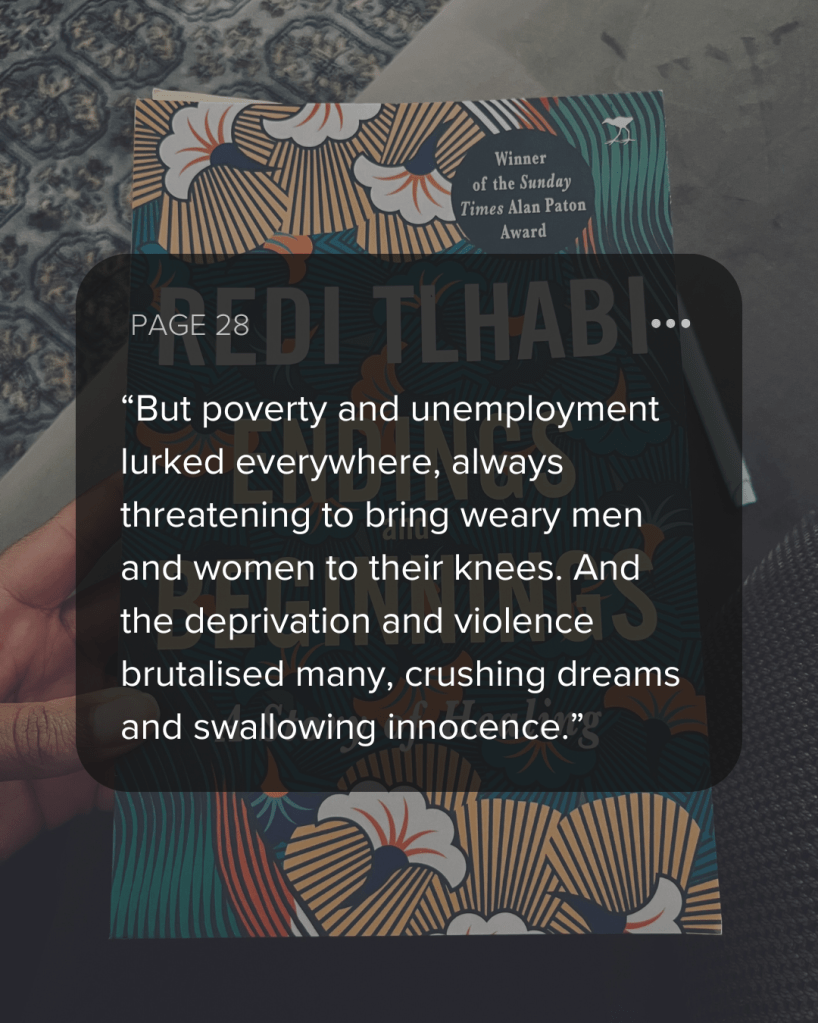
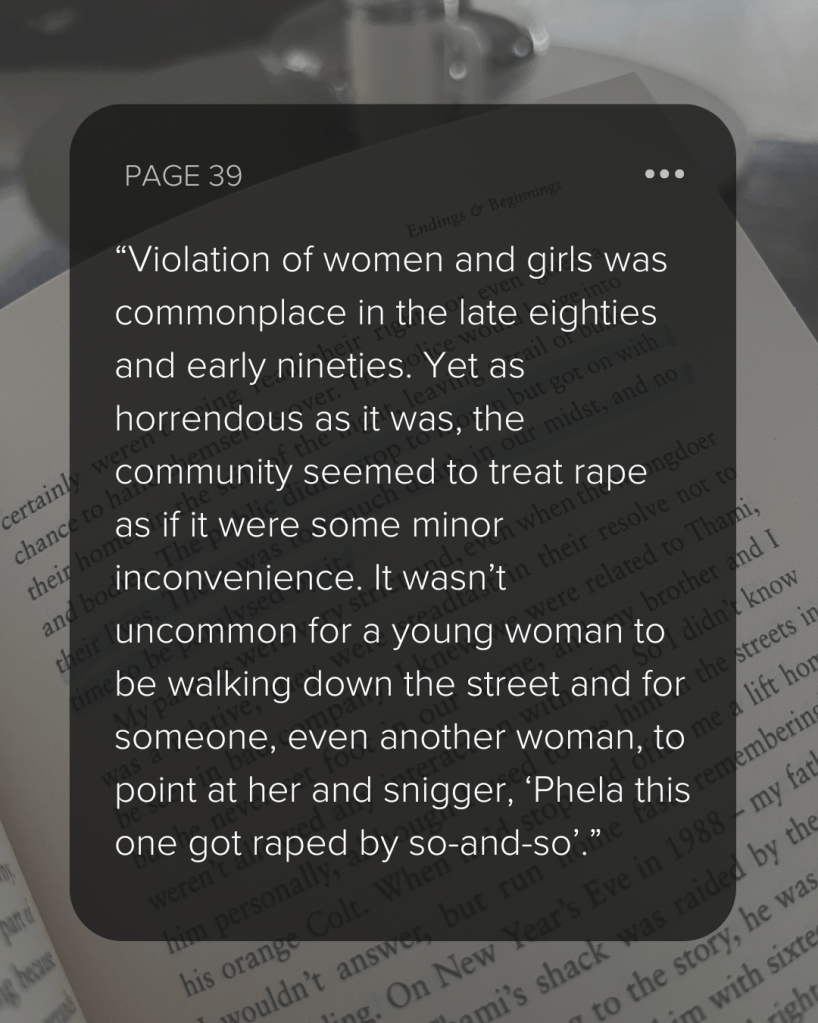
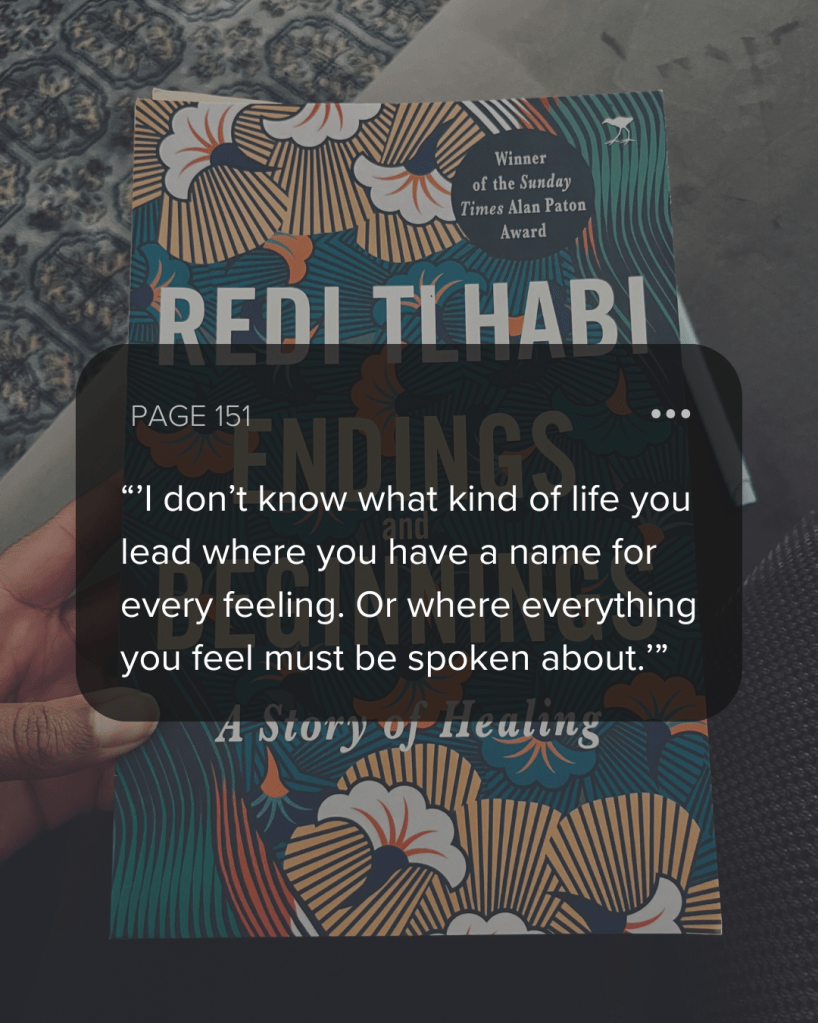
Some of my best bits below:







 Write. Snap. Click.