Literary Postmortem: You Made a Fool of Death with Your Beauty by Akwaeke Emezi

What a frustratingly delicious and maddening rollercoaster ride this novel was. Feyi when I catch you?! This was a page turner for sure, but because it was a library book, I couldn’t mark it up as I went along so instead, I am going to go through some of the questions in the book club reading guide, as a means to reflect on my experience of it.

Q: Feyi’s interior monologue (and actions) In response to Nasir’s pursuit rapidly oscillates between interest and disgust, as we see in chapter 2: “he was hunting her”; “she wanted him closer. She wanted him far, far away.” What does Feyi want on the roof? Do we know? Does she?

I think she carries enormous guilt about the fact that she not only survived the accident with Jonah, but is now at a place where she is physically and emotionally trying to explore new connections. Feyi is on the roof because she is really curious about Nasir, but also knows she can’t make eyes at him ‘during the people’ (South African turn of phrase, look it up, or don’t). So she knows they can have a private moment up there.

Q: In chapter 3, Joyce says, “Maybe Nasir is it—not the serious thing itself, but just the chance. Don’t run away from it,” in response to Feyi’s insecurities about accepting a date with Nasir. Later, Joy’s voice in Feyi’s head tells her to take a chance. What does this chance refer to and what could it mean will Feyi?

A chance at a real romantic relationship, what she has with Milan is purely physical but she can already sense that things would be a lot more serious with Nasir.

Q: When thinking about her developing emotional intimacy with Nasir, Feyi considers the fact that their physical intimacy is moving glacially. In chapter 4, Feyi asks Nasir whether he was sleeping with anyone, and his response allows for a shared moment of trust and humour between them. Nasir uses that space as an opportunity to inquire about Feyi’s studio. How does this reflect their respective outlets of intimacy and their inevitable relationships to it?

There’s a quiet acknowledgement that Feyi isn’t quite ready for physical intimacy because Nasir is ‘more’ than just a guy, knowing that he is being ‘serviced’ elsewhere brings her some relief that she can push that task even further out (emphasis on task). I remember taking issue with how this conversation moved on so casually, flippantly almost. But I recognise that is because I hold a candle for Nasir and I was upset that he was stepping out on us 🥲😅 The pivot to the studio conversation is his effort to get to know her more deeply, he is at this moment operating under the premise that she wants to be known fully before taking their relationship to the next level. Oh, if only he knew 😦 Shame I’m being unfair she also was giving their relationship a genuine chance at this point, but definitely holding back A LOT under the guise of taking things slow.

Q: “So much of her time was spent in uncertainty” Feyi reflects on her imposter syndrome; meanwhile “It was hard to imagine Alim ever doubting if he fit into whatever he was.” What were Feyi’s doubts around her work? How does this doubt pervade other aspects of her life and how does she view Alim’s sureness in comparison?

Because her art is so personal, it puts her life up for scrutiny and judgment from others and herself. It operates as a mechanism to memorialise and process, which requires enormous amounts of vulnerability from her, which she isn’t entirely comfortable with. Alim is able to practice his art more freely because he is more open and quick to vulnerability, it colours his world as opposed to dimming it in hers.

Q: “It was something she wanted to hear—what it was like to fall in love again after your heart had been shattered. She could feel Jonah’s presence on the mountain peak, gentle and curious,” writes Emezi in chapter 10. How does this differ from past moments of intimacy up until this point, when Feyi felt Jonah’s presence?

In other moments, she was overcome by guilt, and Jonah’s presence was her internal warning signal that what she was doing was not ‘right’. When she is on the mountain top with gramps (sorry, not sorry #justiceforNasir) because she feels strongly for and about Alim, she doesn’t feel that guilt and/or shame; instead she feels the warmth of a familiar safety and calm by being with someone who makes sense to her.

Q: “’ There are so many different types of love, so many ways someone can stay committed to you, stay in your life even if y’all aren’t together, you know? And none of those ways are more important than the other,” Feyi says in Chapter 11. Why is this perspective liberating for Feyi?

I think she realises that moving on isn’t about forgetting Jonah, that being devoted to his memory doesn’t have to mean staying stuck in her hurt or even in who she was when they were together.

Q: In Chapter 11, Nazir tells Feyi, “Lorraine and I don’t have a lot of memories of our mum. The house helps us remember.” What does this house represent to the Black family? And to Feyi? How do these meanings influence the space she occupies in it?

I think it is a living monument to the memory of what they lost and the effort to keep things together through physical reminders of what once was. It also signals an inability to move on in some ways, less nostalgia, more shrine if you know what I mean. Crazy to me that Feyi feels a pang of jealousy seeing family photos – like yes doll, where do you think you are?!

Q: Feyi fondly recalls Jonah’s words in chapter 15: “He said [being messy is] one of the best things about being human, how we could make such disasters and recover from them enough to make them into stories later.” How has this informed Feyi’s decisions in life since Jonah’s passing?

Well she’s made quite a big mess of things at the Black’s, so that’s one. This recollection allows her to remember that she can prioritise herself and her desires (not that anything had been stopping her to be fair).

Q: What is the difference between Alim calling Faye his friend and Faye calling Nasir her friend?

He meant it, she didn’t 💀

Q: “You know you can always just come home right?” Joy reassures Feyi in chapter 16. What or who is Feyi’s home here?

Joy is Feyi’s home now.

Q: In chapter 17 we witnessed the confrontation between Nasir, Feyi, and Alim. Discuss whether you expected it to go down this way or not. When Nasir’s anger and subsequent actions justified? Were Alims? How is this possibly triggering forfeit?

I actually did because I was BIG MAD myself, but I was also scared of him and what he might do in that moment, I understand why she was terrified too.

Q: Alim tells Feyi in chapter 18, “I can’t bring myself to not try to give you the best every year I have left,” to which she requests he make “no plans.” Why is Feyi resistant to making plans?

Because people can die tomorrow and none of those plans would matter, she has conditioned herself to live moment by moment because of the fear of loss that constantly walks beside her.

Q: “You can see [my painting] in any stage it’s in. I don’t care, I like showing myself to you,” Feyi tells Alim in chapter 21. How does this stark difference from her objection to showing Nasir her artwork parallel the differences in their respective relationships?

This really hurt me, because Nasir was so eager, on board, down-for-whatever, desperate for her to show herself to him. But she just couldn’t and I guess that’s only fair, we don’t have to match people’s attraction/energy/care, but I do think he was owed more honest communication about the improbability of her feelings for him growing beyond a homie level.

Q: “You’re worth it, Feyi. You can be yourself, as messy and contradictory as you like,” Joy affirms in chapter 5. “He’s lucky to even be near you.” Feyi’s feelings seemed to be at odds with each other throughout the novel. Speak to the inherent beauty in the contradiction and comfort and transients that come as a result of Feyi’s growth, both within our protagonist as well as from the perspective of the reader.

I struggled with her choices, not gonna lie, but I get them. She gave herself the chance to figure out what she truly wants and needs. She was ten toes about what she did and didn’t want for herself. I suppose the intensity of my disappointment helped me realise that people fiercely choosing exactly who and what they want for themselves might always look crazy or wrong or ill-timed to others, but that those things can’t and shouldn’t inform whether or not they make those decisions. That sometimes your body knows before you do what is meant for you and what isn’t. As much as I was batting for Nasir, choosing him would have been a betrayal of self that actually may have set Feyi back even further in her journey of healing. Alim, whether I like him or not, was the person she needed to help in coming back to herself fully and simultaneously shed the survival version that had been in the driver’s seat for the last few years (unfortunate pun, forgive me).

That said, #justiceforNasir, tell him he can find me @pheladi_s on all socials.

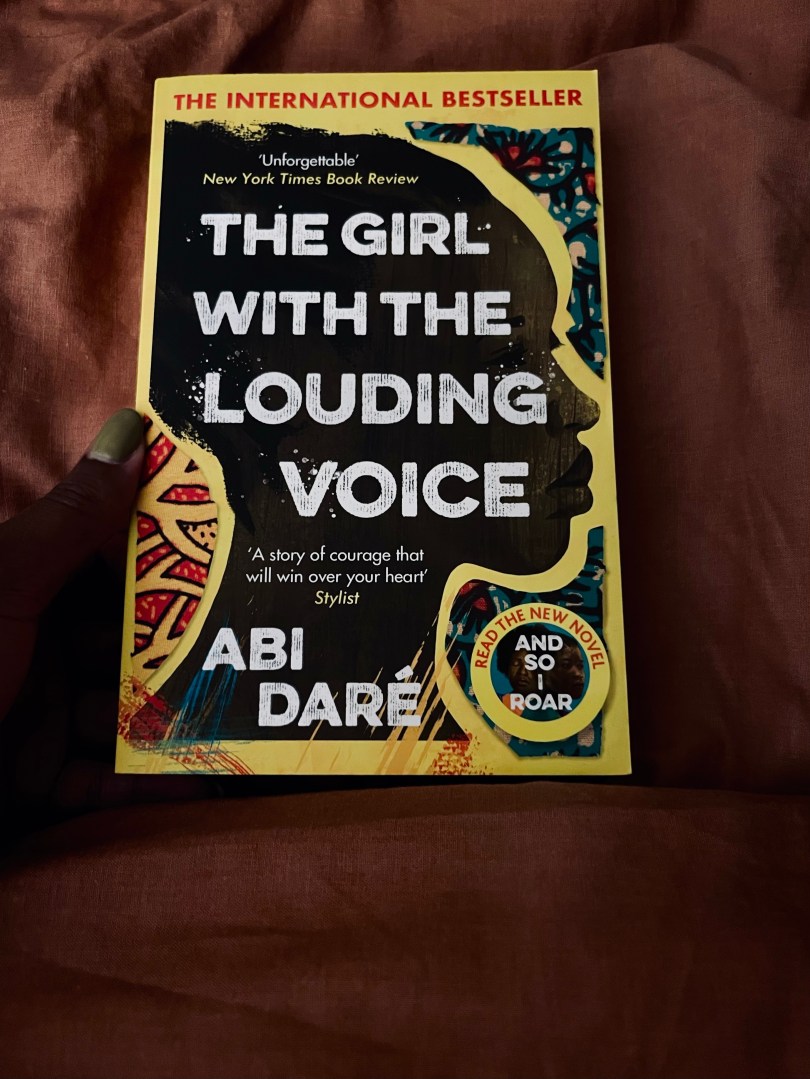
Literary Postmortem: The Girl With the Louding Voice by Abi Daré

Things just kept getting worser and worser with each page I turned in this read, the sheer volume of violence and injustice both overwhelming and infuriating. Which is why I could barely put it down and sometimes spent an extra two or three hours reading before bed, I was captivated by Adunni and Daré’s literary presentation of life in rural and urban Nigeria in the early 2010s. 

I had heard much about the protagonist, Adunni before even opening this book from friends and people I go to the same internet with, mostly because of how she speaks. Daré makes the deliberate decision to write Adunni’s thoughts, fears and hopes in the broken English of a 14-year-old who didn’t quite finish school, which is true to the character and adds so much honesty to her story. The “nonstandard English” spoken by Adunni was less confusing than expected and often times more descriptive to me of the situations she found herself in, phrases like “the sky have eat up the morning sun” to describe an overcast sky, and “cold is spreading rashes all over my body” to describe goosebumps, provide such clear imagery. I think for me, the language alone was the thing that allowed me to be steeped in Adunni’s innocence and fostered an intimacy that kept me ‘on side’ no matter how bad things got for her.

Adunni’s tale is coloured by various indignities, violations and brazen injustice. The thing that keeps readers afloat is her determination to somehow overcome those odds. I usually hate an ‘against all odds’ narratives, in which wave after wave of evil is meant to simply be thwarted by sheer resilience, but Adunni’s character implores you to stay with her through all of it. She is fuelled by the prospect of different outcomes, which keeps your hope alive as well, despite the deep poverty, child marriage, domestic violence and slavery of it all. 

The chapters are short but jam-packed, which makes for a fast-paced, page-turning adventure. Daré has written some of the most endearing and repulsive characters, people like Big Madam and Morufu filled me with unspeakable rage. While their context and complex backgrounds are unpacked and do shed light on why they are the way they are, it’s a cold comfort when the object of their frustration and abuse of power is a little girl.

From about halfway through, I appreciated and even looked forward to the foreshadowing at the start of chapters, provided by whatever fact was quoted from ‘The Book of Nigerian Facts’. I like my fictional reads injected with some historical tidbits that feed my insatiable need to know things. The facts about Nigeria were fascinating and sobering, for example: 

“Fact: Child marriage was made illegal in 2003 by the Nigerian government. Yet, an estimated 17% of girls in the country, particularly in the northern region of Nigeria, are married before the age of 15.” – page 194/Chapter 35

I was looking forward to finding out some more of these revelatory facts in the book once I purchased a copy, only to find it was a fictional book used for the purposes of the narrative in the pages of this novel 😦 There is, however, a Nigerian Facts Book published in 2022, which I imagine aims to do the job of the book Adunni uses to learn about her country and her life really. 

In short, it’s a harrowing but highly entertaining read, filled with twists and turns that will still your sensibilities. I will probably never read it again because of how much trauma lives in it’s pages but I would recommend it. Best bits below.

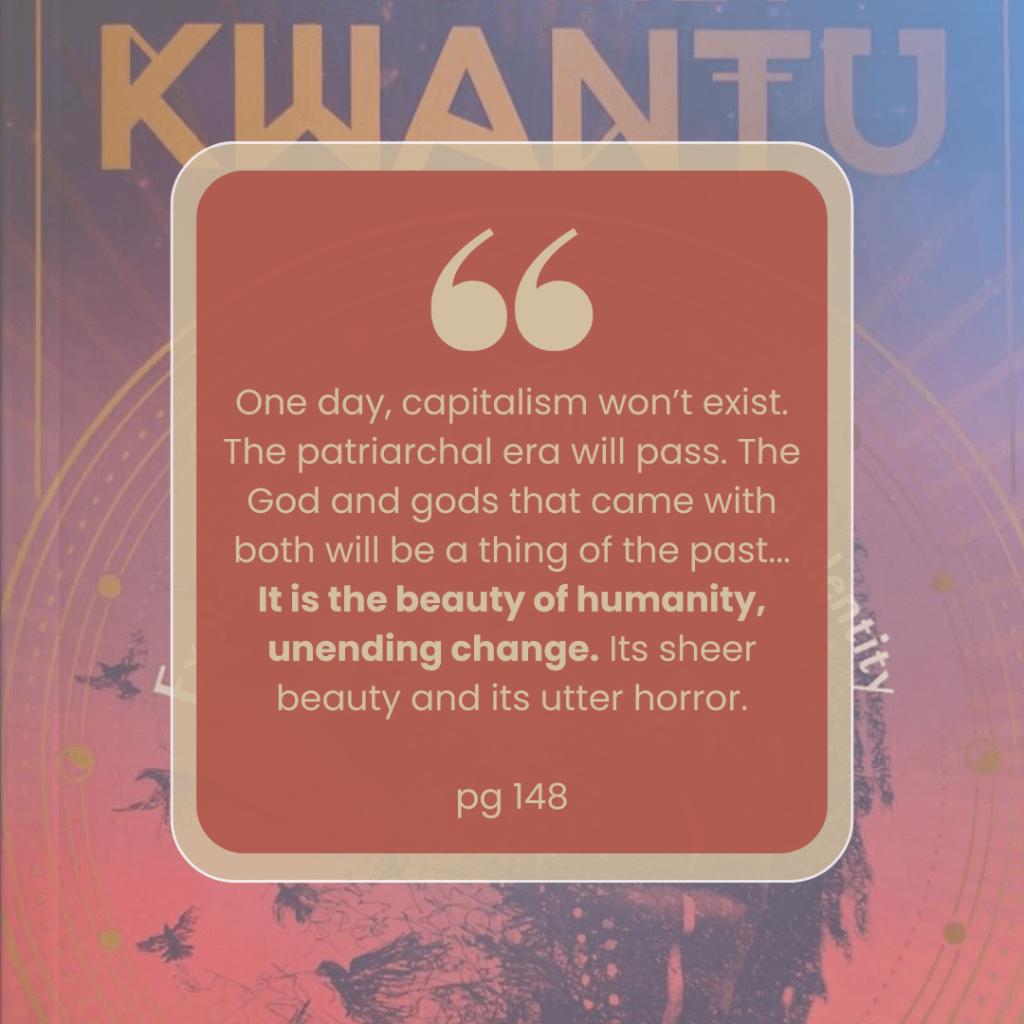
Best bits: Journey Kwantu by Vusumzi Ngxande

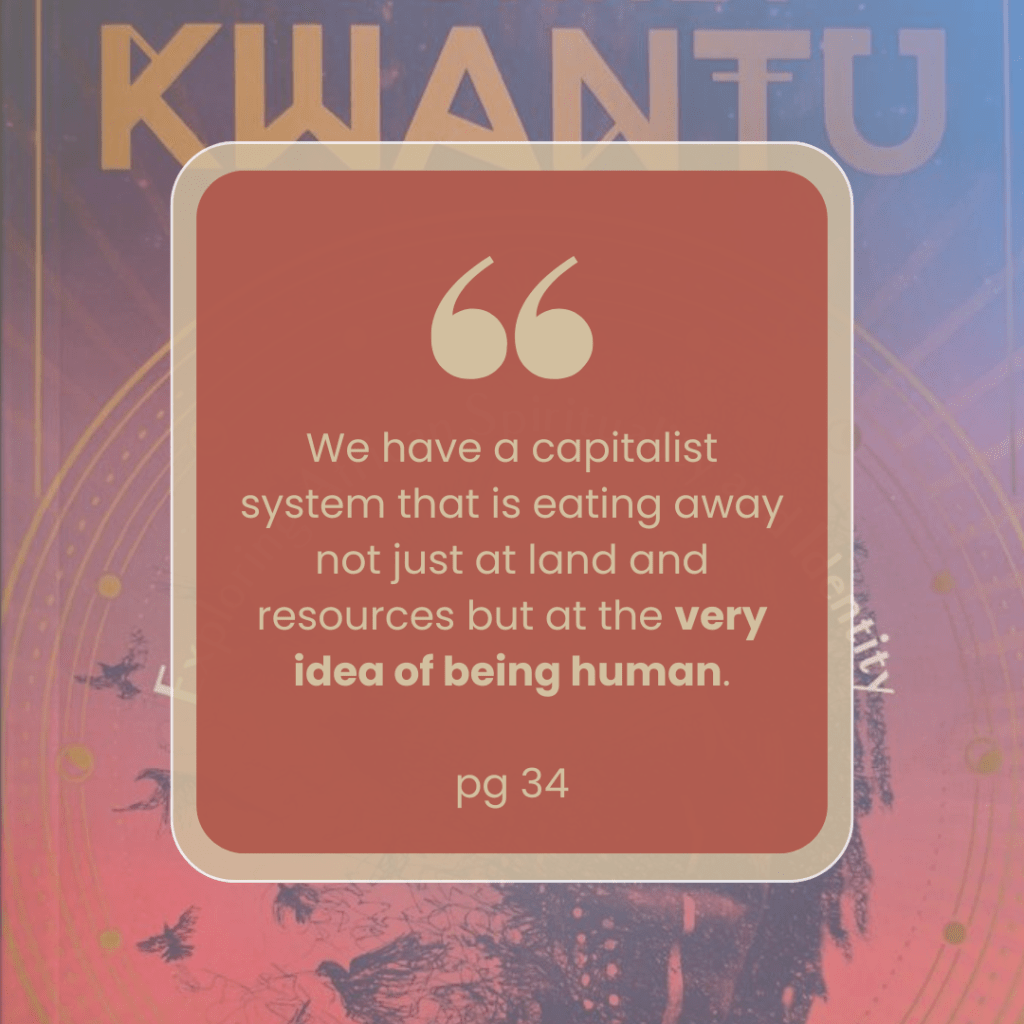
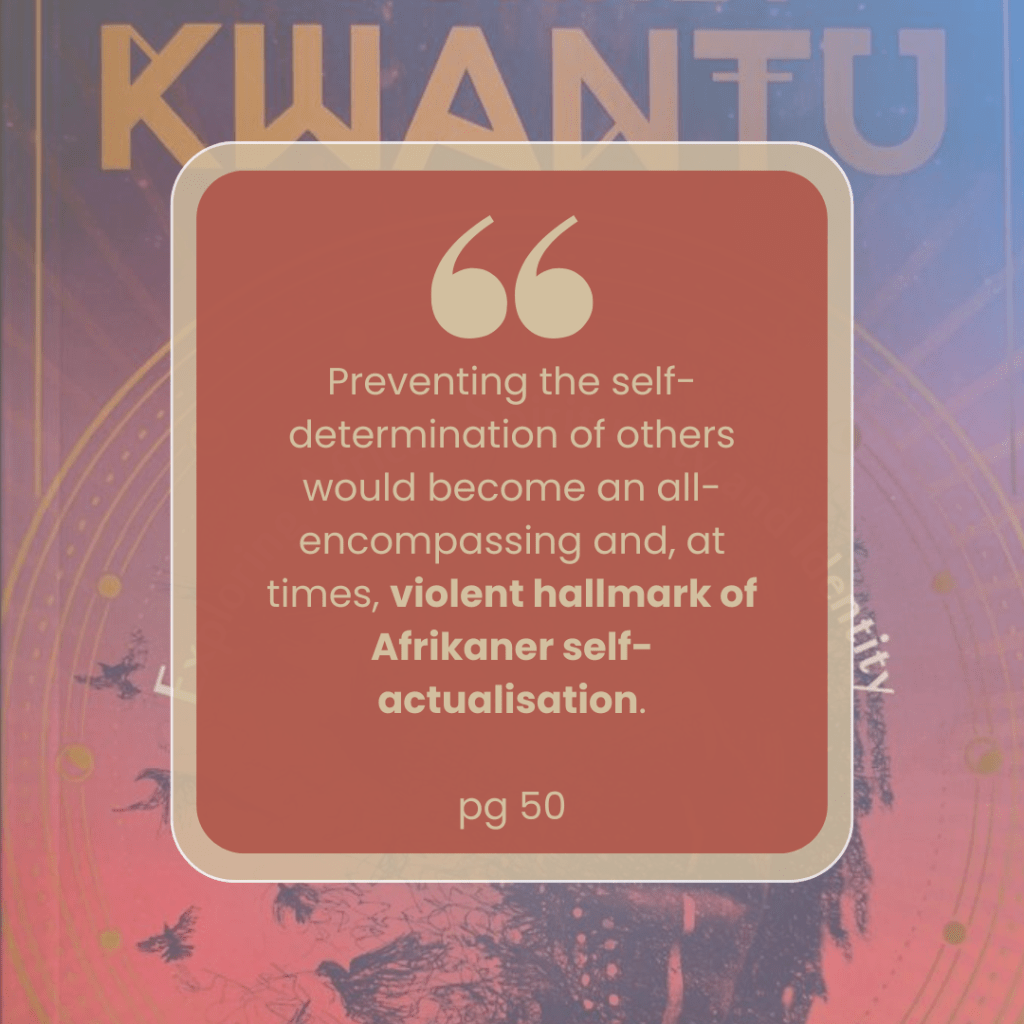
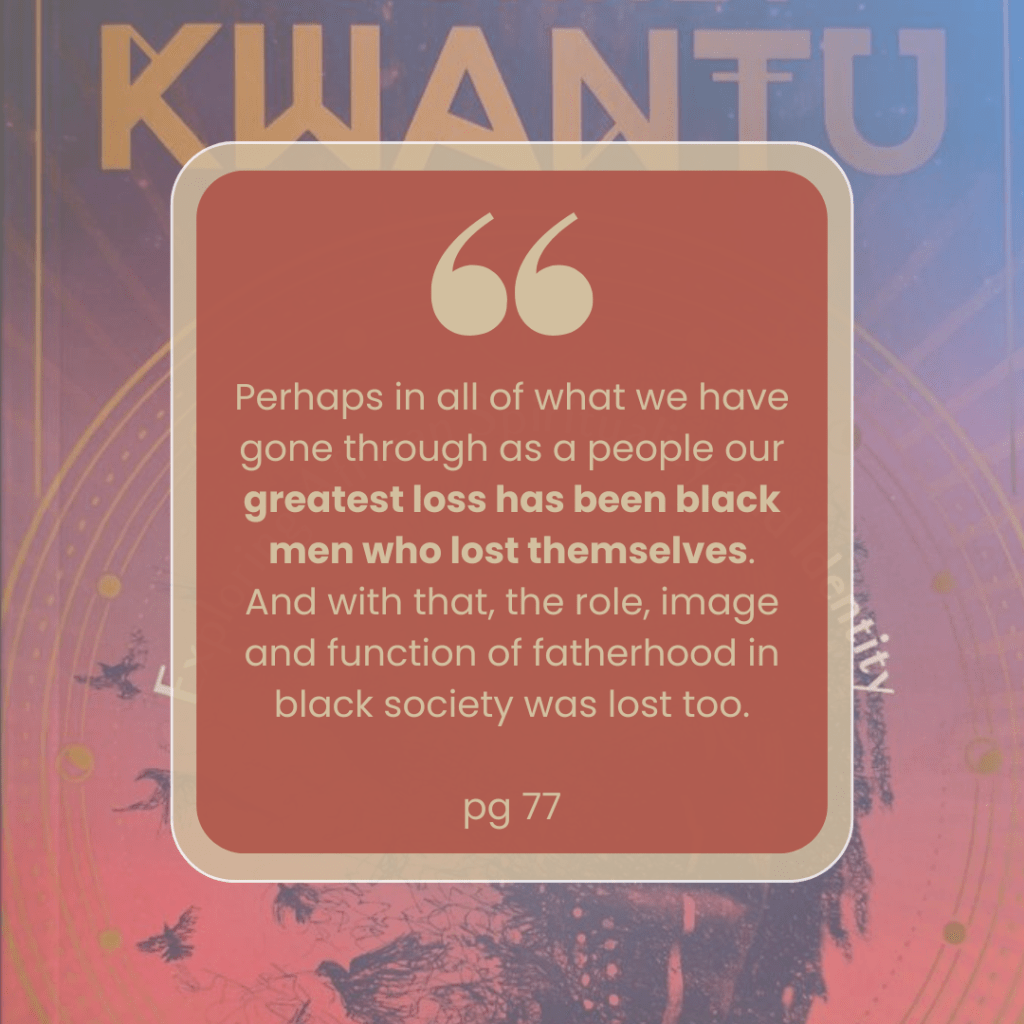
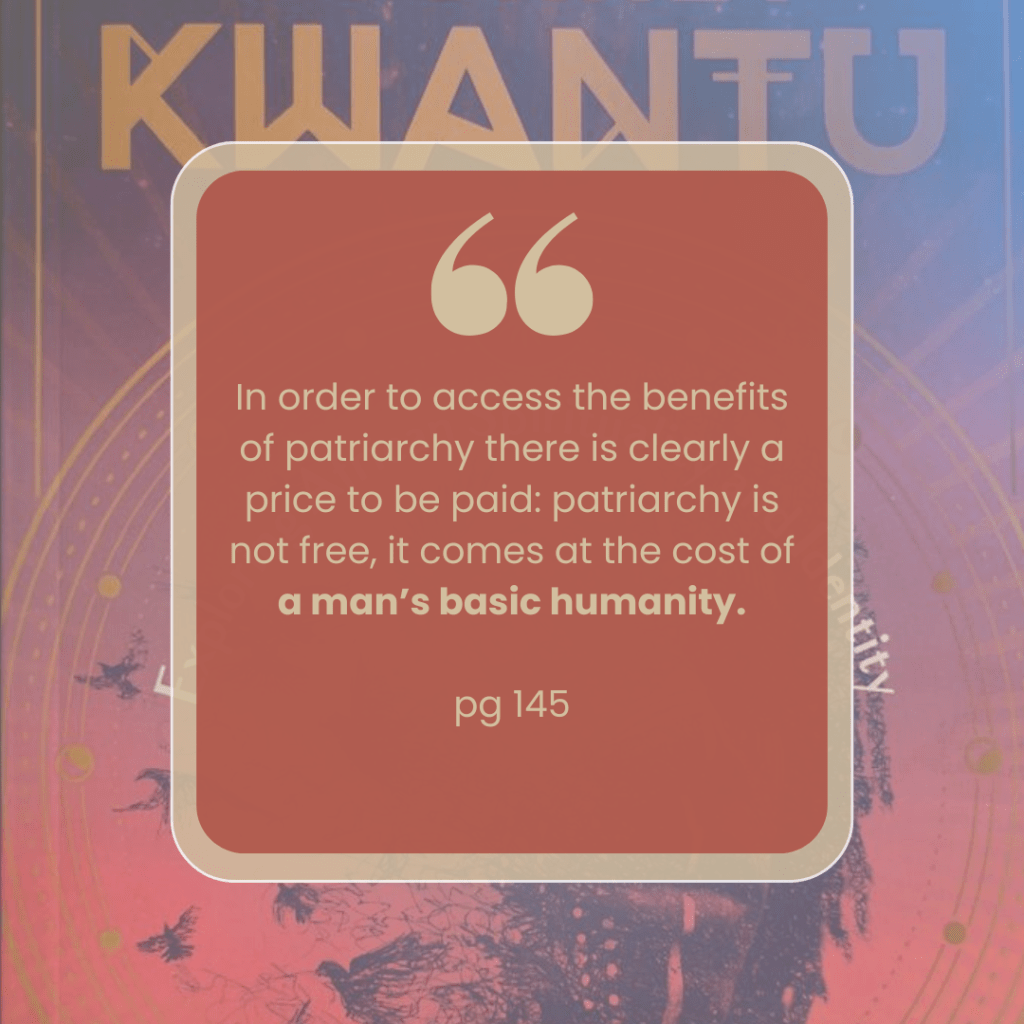
Finished reading this about a week ago, but the lessons and revelations have stayed with me, interrupting my train of thought several times a day, in an effort to grapple with its many inconvenient and reality-shifting truths. 

It’s an essential read which uses the author’s personal journey with African spirituality to tell a nuanced and well researched story that contends with mythology, history and anthropology. In so doing, it presents possibilities that challenge readers’ perceptions and beliefs. 

There are many things I am still in disbelief over, like cows being one of the reasons matriarchies came to an end on the continent; cotton being one of the true assimilatory tools of colonialism and the knowledge of family lineages being lost to the (in)convenient surname system. I am forever indebted to the author for this expansive work. 

I know I will have to revisit it and look forward to that occasion. Listening to the podcast series the book is based on is my next mission, and from the snippets I have heard so far, I am in for a treat.

Best bits: little gods by Meng Jin

This might be my favourite read of the year.

It is the kind of novel that doesn’t let up from the moment you start. Every sentence dripping with intellect, emotion and beautiful imagery. Jin is such an incredible writer and world builder, thoroughly enjoyed my time with her complex and complicated characters.

I would describe little gods as historical fiction that is a clever marriage of science and spirituality. The characters are frustrating yet inspiring and force you to constantly question who you are rooting for. Even the most minor characters we only engage with over a few passages are written in such great detail that an affinity is immediately fostered.

There were so many sentences that took my breath away, I cannot wait to find and read more of Jin’s work.

Best bits: The Great African Society by Hlumelo Biko

Unfortunately, I read this about ten years too late :/ Published in 2013, it was an analysis of SA at a very particular time.

Infuriatingly, many of the issues that plagued the country then continue to do so today, at alarming and probably irreparable rates now. I enjoyed his careful and considered analysis which incorporates history, social, psychological and economic nuances to dissect a nation that could have (at that point) become a ‘great society’.

The author also provides quite realistic and achievable solutions, some of which have come to bear and others which are still much needed. Would be interested in the author’s current reading of the state of affairs because 📉

34 going on 65

My youth is firmly in the rearview mirror and a part of me is relieved.

Today is Youth Day in South Africa, a public holiday which commemorates the 1976 Soweto Uprising. The day is often marked by both loud and quiet acknowledgements of just how much freedom cost this country. My reflections this Youth Day were far less weighty, instead, I was struck by the fact that this would officially be the last one I would be able to celebrate as a “youth”. When the next one rolls around, I will be a real, full, card-carrying adult.

I will no longer be able to run for a leadership position in the ANC Youth League (dammit), forms will start grouping me with people who are 40+ (yikes), opportunities for the sprightly will consider my submissions with some disdain (“give the young ones a chance” or “make way” they’ll say) and to top it all off, my bone density is about to start an inevitable freefall which can only be quelled by lifting heavier weights.

But, there is a silver lining, this jumping of an invisible line into middle age also means I get to let go of so much. Past mistakes, past versions of myself, relationships and situations that have run their course. Turning 30 at the peak of the Covid-19 pandemic meant that I didn’t quite feel I had aged because time was so warped by lockdowns and isolation, which significantly shrunk our lives. I remember blowing out my candles in my childhood home with just my mother, brother and father – extremely thankful to be alive, but rueful of what I had imagined that the moment would be like. Not just thankful that at that point none of us had the virus at the time or had succumbed to it yet, but to truly be alive, that wasn’t something my 27, 28 and 29-year-old self even wanted. To want to be alive was new.

So, I guess growing older has brought with it the will to live, which I am thankful for. It has provided me with what now seems like unabashed joy since. The certainty in who I am and what I want out of life has been more than just a second breath. The practice of patience, presence and rest has helped me become and feel like a real person again. And to that, I thank and am eternally indebted to time.

“I have never regretted walking out of a movie, I have many times regretted not walking out of a movie. Not finishing things is one of the great joys of life.”

– Marie Phillips, on This American Life, 791: Math or Magic?

So much so that I am almost militant about how I spend it (bar for when procrastination pays its languid visits). If something sucks for even 30 minutes, I’ll dip – no seriously, what are we doing? Not to say that I’m not tolerant of difficult or uncomfortable situations, especially those that are necessary (work, a funeral, a workout etc), but now, when I stray closer towards the edge of betraying myself to sustain being in a moment, I will always choose myself. Sometimes that looks like physically leaving, sometimes it is saying nothing further and other times it is just closing my laptop. Enduring anything for the sake of others is exhausting; real winners quit. Do I believe fundamentally that human beings owe each other things, absolutely, it just needn’t be everything, all the time. I have this one precious life and where possible, I am guarding it with my life, because not doing so previously nearly cost me, me. Is it selfish, yes. Is it right, also, yes.

**First appeared on my Substack.