Journalism and Media Studies Lecturer at Wits University. Master of Arts in Digital Documentary from the University of Sussex. A former journalist at eNCA, Reuters, AFP and The Citizen.
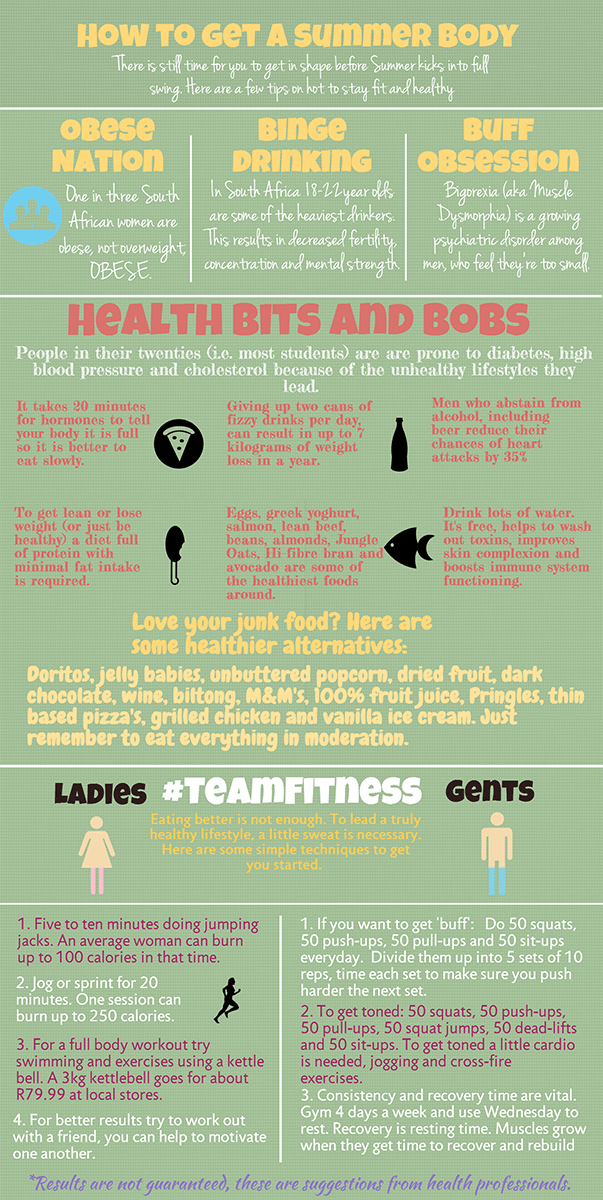
As summer creeps on in, health and fitness are key to looking and feeling good all season.Wits Vuvuzela put together a few health and fitness tips that can help out with getting back into shape.
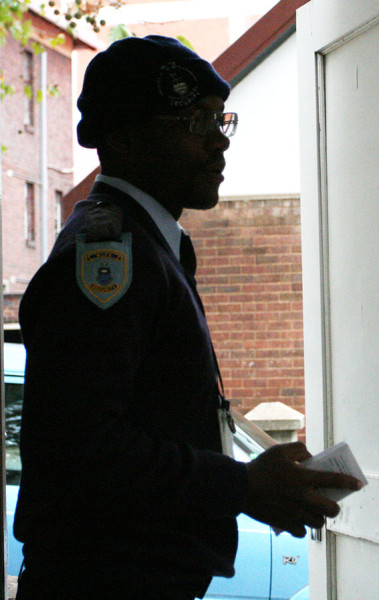
FILE PHOTO: A Wits security guard is pictured on duty earlier this year. Photo: Mfuneko Toyana
WITS Campus Control security guards allege they are owed about R40 000 each in their night shift allowance payment.Three Campus Control security complained to Wits Vuvuzela that they had not received increases for night shift allowances since 2002, despite working seven days a week for 12 hours a day. This amounts to about R40 000 per guard.
The security guards want a night shift increase of R400-500 per month, to their current monthly salary which they say ranges between R4000- R5 000. The security guards said they only received R190 per month for night shift allowance.
“There is no indication that the night shift allowance increase will materialise. Every time we ask the head of security, they say they cannot comment. The money for the night shift allowance is too low,” a security guard said.
Payment received
At a meeting last week Prof Tawana Kupe, deputy vice chancellor of Finance and Operations, showed Wits Vuvuzela evidence of the payment of nightshift allowances via workers’ payslips. He said all Campus Control workers were accounted for.
However, unionist Billy Cebekhulu, the treasurer of Nehawu said a report was commissioned by Wits management to look into night shift increases. While the report is done the issue is that the findings are not yet public .
Cebekhulu said: “We were told the person has been hired [to look into night shift remuneration] and there will be a report. We have not seen it and we are still awaiting a report. The night shift issue is a concern to us.”
We want our money
A third security guard said they are owed at least R40 000 in night shift allowance increases per person from 2002. He said they want the money before December.
Nehawu said that in 2009 it took the university to the Commission for Conciliation, Mediation and Arbitration (CCMA) to resolve night shift disputes at the institution.
However, Kupe said during his eight month tenure as DVC, he was not aware of a CCMA case as there might have been a settlement.
Kupe said perhaps the nightshift allowances are not increased like salaries, “not everything is subject to an increase,” he added.
“I’m not saying there isn’t a problem, I want to know what their problem is,” said Kupe.
Cebekhulu said the problem with the nightshift allowances was that before 2009, the allowances were being taken off their basic salaries at cost to company. Cost to company is the amount a company pays employees before any deductions, meaning that any benefits would be charged off of one’s salary.
“We have been paid with our own money,” said a distraught Cebekhulu.
In 2009 it was agreed that a R150 increase on the nightshift allowances would be granted, which meant that the R150 would be a separate entity, that wasn’t at cost to company.
The union and workers want to be remunerated for the years in which the nightshift allowance was taken off their salaries.
Hide and seek
Chairperson of Nehawu Wits Richard Sadiki said there was “a hide and seek on management’s side” in not addressing night shift concerns.
One disgruntled guard said: “We work hard and we can’t afford to take care our family (sic). We are being ripped off. We should be paid more and we guard the university 24 hours, but there is no thanks from the university. We are doing our level best to make students safe, but the employer is not grateful.”
Security guards also complain of a lack of security guards on West campus.
According to a security guard, there are only three guards at West campus, from the nine hired in 1993.
Kupe said that having more staff on campus would not help to prevent crime on campus, “we don’t need more guards”. He felt we needed students to behave morally and justly towards each other, he felt.
Rob Kemp, Director of Campus Control denied allegations that nightshift staff were not paid their allowance. “The allowance has not fallen away and still active. The allowance is a requirement in terms of the Basic Conditions of Employment Act,” he said.
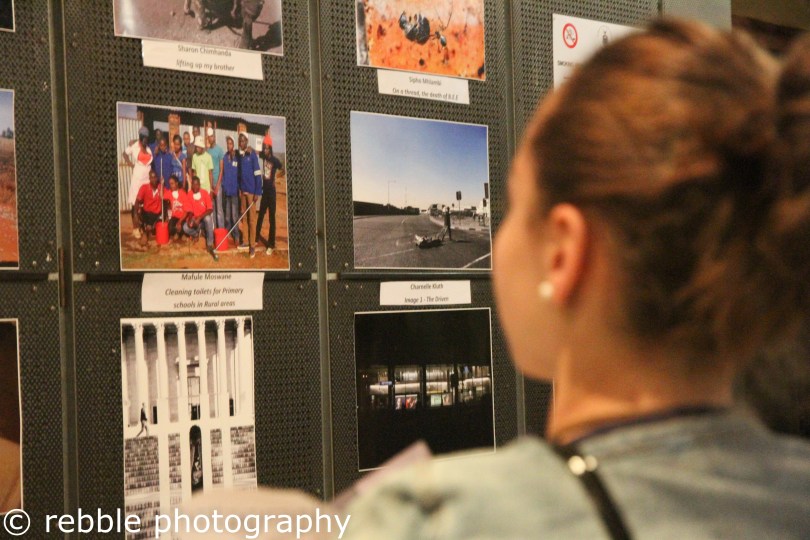
Last night was the prize giving event for the fifth annual Wits Photographic Competition. Here are some of the photos I took at the event, more from the night can be found here: https://www.facebook.com/WitsTO?fref=ts
The week that was is somewhat of a blur. Feels like it took a short Usain Bolt like sprint and before I knew it, here I am on a Sunday afternoon trying to string together something semi interesting to write.
Monday morning is a haze of people typing frantically, in 11th hour attempts to get features done. I wished I could have joined in on the madness but I had already accepted that it was late for me, very late.
Later that morning we had to take a crack at writing travel features with Fred de Vries. He made us go to a mall, preferably one we had never visited before and take notes that would bring that mall to life. I went to the newly opened Oliven Plaza and man did I see some interesting things, hope it came out in the feature I managed to write.
That afternoon I dashed off to a Right2Know protest outside Luthuli House. Protesters were appealing to president Jacob Zuma, to ask for the Protection of State Information Bill to be taken back to parliament for some revision. I cause I would expect any media practitioner to support, this expectation was quickly dashed upon arrival.
We stood with some journalists and photographers from The Times and SAPA, they were obviously disappointed by the dismal turn out at the protest – granted. What I didn’t understand was their attitude towards the protest itself. There were scoffs, sighs and comments about what a waste of time the whole thing was. One photographer condescendingly said, “How many of these people (the protesters) have even read or really know what the Secrecy Bill is about?” he quickly went on to answer is own question “Only the journalists do,” he said with a chuckle.
I was like whaaaaat?! These people are gathered here to defend your right to do your job mister (all in my head of course, and in a tweet later that night). I suppose it was just disappointing to find out that some of the people we look up to are so jaded. Anyway I managed to get some great pictures and that’s all that mattered that day.
On Tuesday we had guest speaker Phillip Altbeker come in to discuss movie reviews with us. We wrote reviews on a movie the whole class went to watch a few weeks prior, Of Good Report. There were no comments on our work but he did say, “These will probably be the first and the last reviews you write.” I suppose that says it all doesn’t it?
From then on, the chase was one. One story after another had me going to and from the department. Another 12 pager was on the cards so we all had to do best. We were much more efficient than we have ever been come production time. I suppose being shouted at will do that to you. Needless to say we only missed deadline by a smidge and for the first time in a long time, I got home before the sun went down J
Friday was the best day of the whole week. It started off with a trip to Engineers Breakfast to get some good photographs, which we managed to do. Fomo hit us hard when we had to leave, we also wanted to sit under a gazebo, with meat on the coals and not a care in the world.
But we couldn’t, we had to rush off of to a guest photography lecture. I was very grateful for once it had ended, it might be one of the best lectures we have ever had. We got to see some of the meaningful work people are doing out there, as clichéd as it is pictures really are worth a thousand words.
Later that evening we had a braai and piss up of our own (that’s not very pc is it) oh well, we did and it was great. I’ve said it before and I’ll say it again, man I love my team *Drizzy voice*
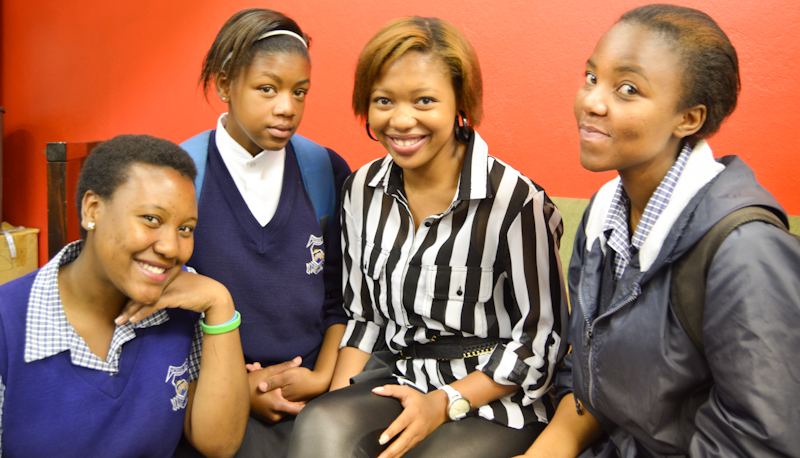
SMILES ALL ROUND: Wits mentors each got some highschool pupils to take under their wing for a day, From left to right: Philile Mashele, Palesa Mokoena, Tanyani Daku and Kedibone Rapoo. Photo: Pheladi Sethusa
Sixty uniformed pupils were beaming from ear to ear as they got a chance to walk up the steps, sit in the lecture halls and walk amongst ‘real’ students – things and people they had only ever seen on Wits’ promotional brochures.
A rare opportunity provided by the Wits Rag society made that possible. This year’s Take a Child to Varsity day was bigger and better. Last year only ten kids got to spend a day with a mentor, this year that number more than doubled said Wits Rag Chairperson, Siphe Mkize.
The pupils
“We take kids from underdeveloped area’s… To help them get an idea of what to study when they come to varsity, as well as what they need to do to get there,” said Mkize.
A teacher from Lesebogo Girls High School in Soweto, Humbulani Mavhunga who ordinarily teaches grade 10’s and 11’s maths, accompanied pupils on their visit this past Wednesday.
“I took a range of learners, mostly the highest achievers and some who are sitting in the middle. I also took some low achieving learners, to show them what is possible if they work hard,” said Mavhunga.
Mentees and mentors
The selected pupils were allocated a mentor from Wits, anyone from any faculty could volunteer their services for the day. The mentors who availed themselves this year were “very keen and patient with their kids,” said Mkize.
Tanyani Daku, a Media Studies mentor took three girls under her wing and spent her time giving advice from her personal experiences and answering questions posed by her inquisitive bunch.
Daku said she loved being a mentor and getting a chance to help kids with complicated social situations, focus on their academic lives and improvement thereof.
The pupils she took under her wing could do nothing but sing her praises. Although not all of them wanted a media studies mentor, they were glad they all said what they learnt from their mentor was invaluable.
Stop going to the zoo!
“We must stop going to the zoo for school trips, rather come to varsity,” said an impassioned Daku, making her mentees roar with laughter.
Echoing words in the same vein, Mavhunga said that she hoped Wits Rag would continue with this initiative. “This opportunity helps kids to make informed decisions about their futures,” she said.
She said it was important to break down the legacy of students choosing careers within very narrow confines, Mavhunga wishes she had the chance to be exposed to university beforehand.
“All we knew was teaching, nursing and being a policeman or woman,” said Mavhunga.
Impressions
“Today blew me away. I thought Wits was very serious and just for people who want to pursue maths or physics but it’s not,” said grade 11 pupil, Philile Mashele. She cannot wait to come to varsity now that she has had a taste of what it’s really like.
Another pupil, Palesa Mokoena said that she was impressed with the way people seemed very “focused” on campus, she said it inspired her.
On a slightly different note, fellow classmate, Kedibone Rapoo said that she was by no means prepared for varsity life and the pressures that come with it. However, “I am prepared to try by studying hard,” she said.
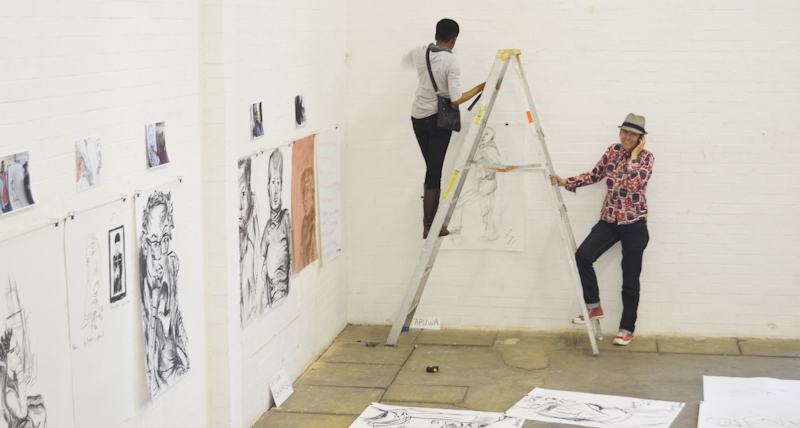
WHITE NOISE: The exhibition Substation art gallery was poorly attended. Photo: Pheladi Sethusa
By Nolwazi Mjwara and Pheladi Sethusa
Empty lecture rooms where talks were planned, no information tent and an exhibition with no pull are some of the things that contributed to the dark cloud that hung over this year’s Wits Pride celebrations.
Wits Vuvuzela headed out earlier in the week hoping to bump into people dressed in rainbow colours, ready to see all the events but all those hopes were dashed by a lack of noticeable fanfare for Wits Pride.
It’s pride?
Witsie after witsie had no idea that it was Wits Pride this week, largely due to the lack of visible advertising around campus.
“I had no idea that it’s Pride this week. I think they haven’t advertised it enough,” said Jabulani Moyo, 3rd year BSc Eng.
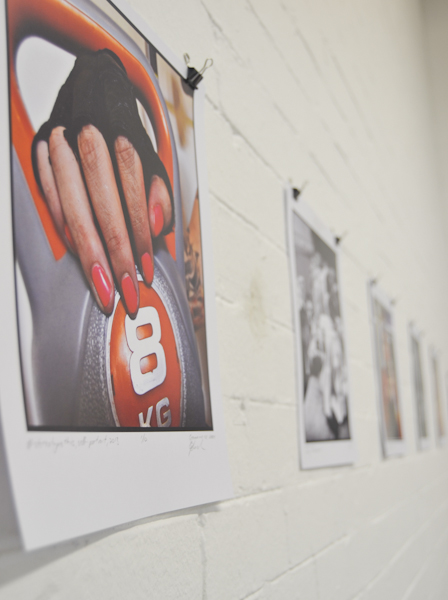
A daily exhibition held at the Substation art gallery was poorly attended. Few came to see the beautiful self-portraits by artist by Germaine de Larch.
PORTRAIT: Photography by Germaine de Larch was on sale, at a pricey R1 500 a portrait. Photo: Pheladi Sethusa
Ella Kotze, programme officer of the Transformation Office, defended the promotion of Wits Pride on campus.
“In terms of marketing, we have put close to 1 000 posters up across all of Wits’ campuses. We have been very active on Facebook and Twitter, and we have also had a very good relationship with Voice of Wits, who has gone out of their way to promote our events and the whole concept of Wits Pride,”she said.
Kotze agreed that attendance at some events was disappointing, particularly Tuesday’s panel discussion and films.
However, Kotze said that an information stand and tours to Hillbrow and Constitutional Hill were very successful.
“Contributing factors are possibly varied and may include timing, as well as type of activity – perhaps Witsies don’t like movies as much as we thought,” Kotze said.
We need pride
“Pride is very, very, very necessary on campus,” said Wits Pride organising committee member Jeremiah Sepotokele, 3rd Law.
He believes the overriding culture on campus was still “very hetero-normative”, especially in a lot of the men’s residences like Knockando.
“As men’s res there’s a culture that’s very hetero, violent and masculine. That’s problematic,” said Sepotokele.
Many students start at Wits start out as homophobic but their perspective changes.
Sam Allan, 2nd year BSc, said that she was ignorant of gay rights before she had gay friends.
“I couldn’t stand gay people before,” she said.
It was only after spending time with gay people that did she begin to accept them for who they were.
Allan said she would have liked to have gone to Wits Pride events, had she known about them.
As Dean of Students Prem Coopoo spends her sixth week on special leave, the rumour mill churns out speculation and the university remains silent about the reason.
Week to week Wits Vuvuzela has been given the run around when trying to find out more about the situation.
Initially staff and students had been informed Coopoo’s absence would only last for a week.
Wits spokesperson Shirona Patel told Wits Vuvuzela last month that Coopoo was placed on special leave pending investigations but would not specify the nature of the investigation.
This week director of special projects, Oliver Seale, said Lamese Abrahams had been appointed the acting dean of students.
He went on to say: “University management is currently in negotiations with Ms P Coopoo on this matter.
We will notify the entire university community on this matter as soon as the negotiations are concluded.”
Some of the rumours Wits Vuvuzela has heard include that the university has plans to change the position of the dean of students, taking away the title of dean. Seale responded to this by saying that was not the case: “Please note that the negotiations with the current incumbent and (sic) not on the job title.”
Wits Vuvuzela contacted six members in executive management, including Vice ChancellorAdam Habib, but could not obtain further comment.













 Write. Snap. Click.