Imbawula: Modern storytelling

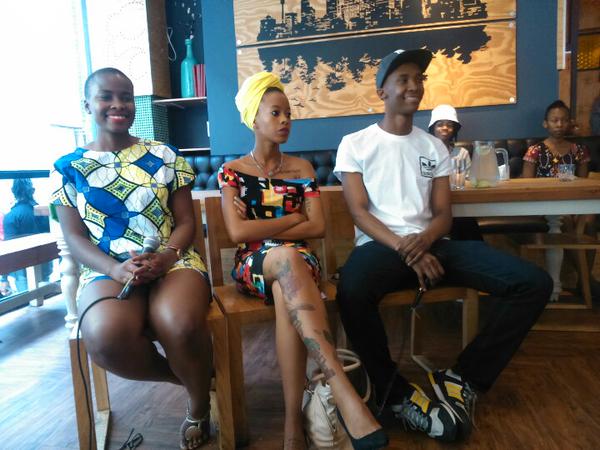
We laughed, we cried, we were enlightened and we were simply enthralled when four vastly different people told us stories in a basement  at Bean Republic, over wine last week Thursday.

It was the first Imbawula event jointly hosted by Random Window and Quarphix Foundation, under the stewardship of Siphiwe Mpye. He got the ball rolling by telling us a tale of how the idea for what will now become a monthly event came about. He remembered always being curious about the time shift that happened as the sun set and he had to run home to when the dark settled leading to older boys taking over street corners to talk sex and politics next to informal fireplaces.

I imagined that people would read something short that they had written – but it was really just four people telling us stories about themselves, which was really something. First we had Lee Molefi, who told a very moving story about being a kid on the cusps of teenage drama, who had to navigate  not black enough, too smart and and an untimely death. He has the kind of voice you can listen to for hours and so it was nice to hear him speaking in such a personal way as opposed to the very serious MC’ing I’ve only ever heard. His story had us gasping, laughing  in one moment  and then suddenly crying.

The second storyteller was, the sultry voiced, Vutomi Mushwana. She spoke about love and used the example of what was one of her most important relationships to illustrate how love can smother, hurt, heal and ultimately make you grow. As a lover of love, her story was my favourite. Not because of the topic but because of the reality of what  a toxic relationship can do to you without you realizing. She definitely hit us with some wisdom. I have read some stuff on her blog and I have become a fast fan.

The third speaker was one of my favourite commentators slash bloggers, Milisuthando Bongela (better known as Miss Milli B). First of all her outfit was fierce and fittingly so because her tale was about where her journey with fashion began. But the bigger story she told was how she met her intuition while on the job, when it seemed that the world was coming crashing down around her. We so often second guess our intuition and if she had that day things would not have worked out as intended.

The night ended of an a light note when Anele Mdoda’s storytelling time turned into a bit of a comedy set. She regaled us with a tale from her early childhood, one I had read before in her book, It Feels Wrong to Laugh, But (part of The Youngsters series) but because of how animated she is in person I loved seeing that story come alive. I cried but not because there was any sad part in the story but because I was laughing so hard.

I loved the intimacy of the evening because it let those who told stories do it so freely and made those of us who listened privy to some the four storyteller’s most telling tales. I am keen for the next event, to hear more stories over wine in a basement.

PS – In between the storytelling, Melo B. Jones serenaded us, here’s a little taste of that:

On Ferguson – The System Isn’t Broken, It Was Built This Way

All of this.

Anne Thériault's avatarThe Belle Jar

I have an uncle who was a cop.

His kids, my cousins, were around my age and when we visited our family in Québec every summer I practically lived at their house. As soon as we got to my grandmother’s house, all rumpled and grumpy from our eight hour drive, I would start dialling my cousins’ number on her beige rotary phone. I spent the whole damn school year waiting for summer, and my time with my cousins, to come; we wrote each other letters all through the dreary winter, hatching plans for new summer exploits. Life with my cousins – swimming in their pool, family barbecues, playing hide-and-seek in my grandmother’s mammoth hedge at twilight – was lightyears better than my boring life in Ontario.

Pretty much every summer my uncle would, at some point, take us to visit the police station. He would pretend that we were criminals and…

View original post 1,109 more words

Debate Club: Gender agenda

Gender not sex. Womanism not feminism. Patriarchy not masculinity.  These were some of the things brought up at the last debate club meeting of the year on November 25, 2014. The panel steering the direction of the conversation was made up by Panashe Chigumadzi, Lee Molefi and Lebohang Nova Masango.

Feminism, what it is and who it speaks to made up a substantial part of the debate on the night. Some described it as movement that seeks justice and equality. As women wanting to live in a world where they don’t have constantly “check” themselves to stay out of harms way. As vaginas and boobs not being the things that dictate where we belong and what we get to do. The most poignant description for me was:

The way patriarchy shapes what men should and can expect from women was another hot topic. I recall one guy in the audience saying he is all for woman empowerment and equality for “other women” just not his woman. He admitted that he had learnt to expect subservience and as a result that is what he now yearned for.

If I recall correctly he said he’s all for his sister becoming and engineer but his wife should have a more “humble job” as to not bruise his ego and mess with his role as the head of the house. The room, filled predominantly with women, was up in arms at that. This is the kind of thinking that reminds women that they are alone in this struggle, black men aren’t really here for us. Agreed with these comments on gender roles made on the night:

My biggest take away from the night was the fact that so few men were willing to understand what feminism is, some suggested that they can never identify because they aren’t women, that they need to be schooled and feel included to get on the train. In response, the panel said acknowledging patriarchy and how as a man you benefit from it, is similar to white people having to acknowledge white privilege. Something that was necessary to start trying to make things better.

https://twitter.com/ShanduMul/status/537288762934714369

There is a lot more that could have been discussed but time rules us all. This is a very short video of the night made by the good people at LiveMag:


Water supplies restored as reservoirs fill

NOTE: Article first appeared on The Citizen website on September 16, 2014. 

Water supply has been sporadic or non-existent in parts of Johannesburg and the West Rand over the past two days.

Democratic Alliance ward councillor Amanda Forsythe received calls from residents reporting “ first  low water pressure and then others saying they had completely ran out of water”.

Forsythe contacted Johannesburg Water, who informed her that the Rand Water reservoirs had ran out of water due to an extensive power outage.

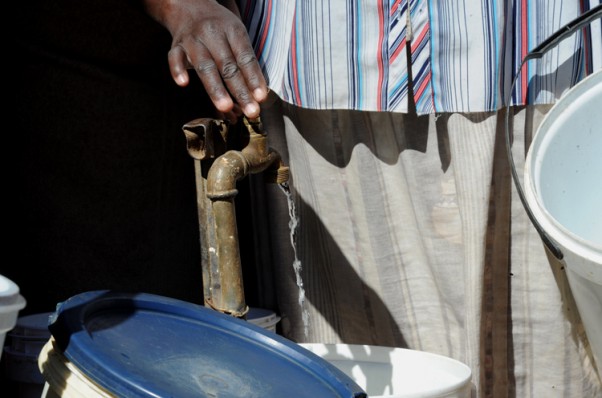
FILE PICTURE: A resident fills her bucket with water from a tap. Picture: Werner Beukes/SAPA

Johannesburg Water spokesperson, Justice Mohale said: “The interruption was caused by the power outage in the Eikenhof area, which resulted in Rand Water unable to pump water from its Eikenhof Pumping station to the Meredale Reservoir, which supplies Joburg Water.”

Affected areas included the south-western part of Johannesburg and northern suburbs including Emmarentia, Greenside, Melville and Parktown. Restoration of water supply began yesterday afternoon but because of the size of the reservoirs, it took a few hours. Forsythe said water was restored to most residents by 10pm last night, but that there were some glitches.

“Some people had water on for a while last night and then this morning had nothing, but I believe water has been fully restored now,” Forsythe said.

Considering the extent of the water interruption, Forsythe said: “Those reservoirs are huge. The power outage must have lasted a day or so. They even have back-up generators, but those also ran out of power because of the high demand for water.”

A healthy dose of reality

Fifth year Wits medical students have learnt some harsh lessons about the conditions at public hospitals this year, after doing their practicals at Charlotte Maxeke Hospital.

Shortages

“The shortage of resources and supplies is a real concern for me,” said Massillon Phasha. Doctors had to improvise and work with whatever was available, she said, because they did not have the necessary equipment and medicine. This meant patients did not get the best treatment possible.

“The lab tests one can request are limited and results for specimens sent for pathology assessment take a long time to get back. All these factors largely influence the management of the patients.

Concerns voiced

“I have voiced my concerns to the doctors, but unfortunately there is not much that they can do about it because this is largely due to shortage of funds. So unless we can get the government to give the hospitals more money, there is almost nothing we can do,” said Pasha.

Keabetsoe Phello said she had never voiced her concerns as she was too scared.

Daily activities

Medical students go to the academic hospital as part of their fifth year studies, but do not manage patients.

“We help where we can under supervision from a doctor, but our duty in the hospital is to learn,” said Pasha.

On a typical day the students do everything from being tutored by doctors on specific subjects to running basic diagnostic tests, and they could even assist in delivering a baby, depending what rounds they are doing that day.

Despite the poor conditions, students appreciate the learning experience. Pasha said she was grateful to be at Charlotte Maxeke because she was able to learn a lot. She said she believed the doctors were doing their best despite the difficult working conditions.

Phello said she loved being part of a team and getting a “sneak peak as to what life after med school entails”.

All hospitals had problems when it came to resources and facilities, she said. But despite these, and the fact that medical students work hard, with no pay, she still loved her job.

“I could never imagine myself doing anything else. In some cases we do almost the same amount of work as the interns, yet we do not get paid. And some other medical disciplines, pharmacy and nurses to name a few, get paid a wage for working.”

The students will be stationed at the hospital until November 2014.