As part of our in-depth project, we have to blog religiously to keep our various mentors up to date with what we are doing and how we are progressing (or not). There were a lot of posts to read through and a lot of good one’s out this week, but as always I do have my faves and here they are:
A Chinese Necropolis: Day two by Mfuneko Toyana. Learnt something interesting about Chinese tombstones when I read this and it was just a good read. Give it a bash.
Chinese Johannesburg: Field Work Day 3 by Liesl Frankson. I legit cannot wait to read Liesl’s final product, her topic is of particular interest to me and this piece is a nice little taste of what’s to come I think.
In depth day 5: Thank God for Google Translate by Ray Mahlaka. Ray struck gold when a genius and innovative idea to start breaking down the language barriers we all kept hitting. That’s my team member ya’ll. Have a look at his blog for more posts from the past week, pure quality.
Snake wine for sexy time by Caro Malherbe. Last week we tasted some of the most potent alcohol I have ever tasted, Caro looks at what was in that little shot glass.
Unpacking prejudice by Shandukani Mulaudzi. Shandu writes about an interview she had, which forced her to realise she had some ‘unpacking’ to do 😉
This past week has been one of the most challenging of the whole year. On Monday morning we officially started working on our in-depth research projects.
Up until that point we had only been told how intense it would be and how difficult it may be to connect with sources. It took no more than a full day for us to realise this ourselves. Day after day, colleague after colleague would walk into the newsroom at the end of the day with nothing but defeat written all over their faces.
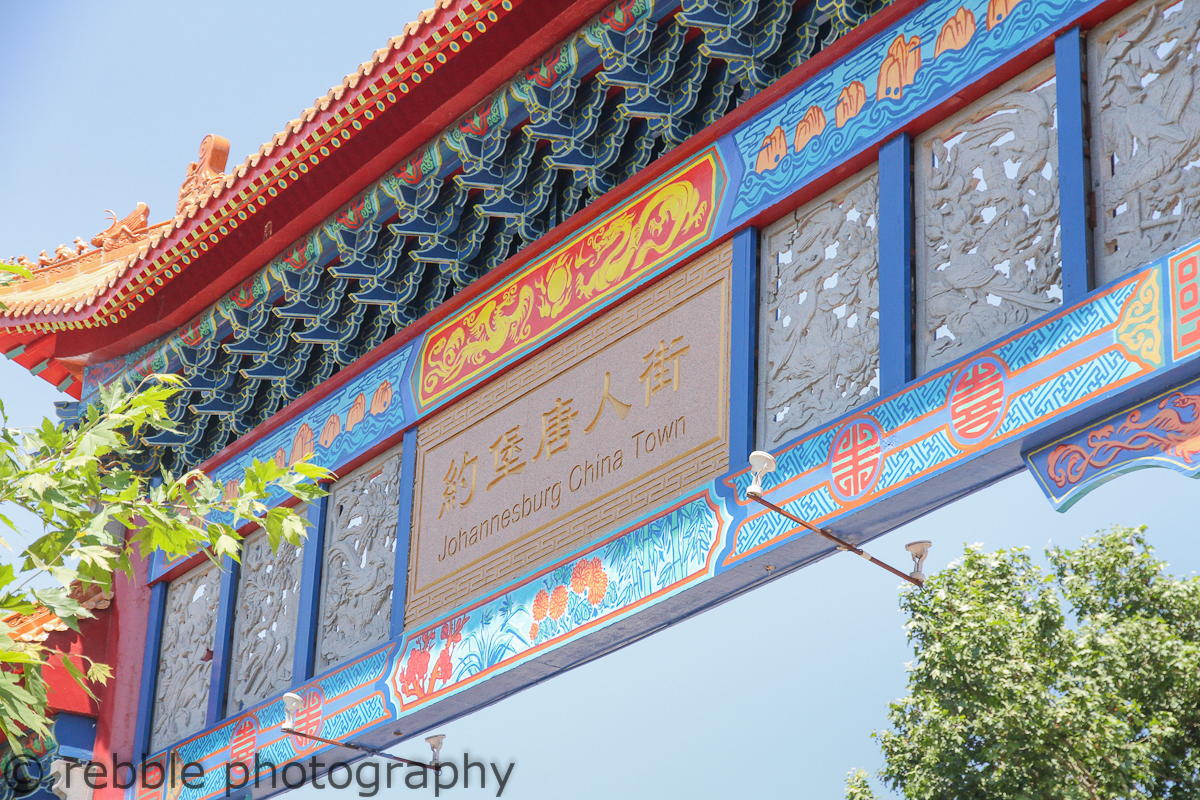
Our biggest challenge was definitely the language barrier we bumped into in almost 80% of our encounters with people from the Chinese community. There were some particular instances that stuck out that I talked about earlier in the week. Which is why it was so interesting to find out about a partnership with the Chinese Police Forum (CPF) in Cyrildene and the South African Police Service (SAPS) in the area. They are working together to combat the language barrier so that the police in that area can do their jobS as effectively as possible.
The video above was taken at a Mandarin lesson held at the CPF offices on Thursday morning. In attendance are members of the local SAPS. These lessons take place weekly. It was interesting to me because one has come to expect foreigners to adapt to local ways of doing things when they migrate to a particular place. In this instance things are happening vice versa. The locals are finding ways to adapt to a foreign language to help migrants in that area.
While I understand that being a foreigner in any country is challenging, we have all stumbled upon one recurring theme within the Chinese community. I use the word community loosely here because the five or so examples I’m drawing from are by no means representative of the community at large. A lot of the English speaking people we encountered described the Chinese community, especially those living in Cyrildene as being very insular. To me the example above is evidence of that.
So our challenge this week was two fold. Not only could we not communicate effectively but we also had minimal success in trying to break down the walls built up by some of the people we encountered. But on the whole I get that as a foreigner in a place you consider especially dangerous, one would take to keeping to themselves to avoid landing up in any kind of perilous situations. My job is to figure out how to work around this well enough to make a connection and get the information I need,
Well I suppose that’s not my job in this particular instance because my topic doesn’t rely too heavily on individuals on the ground, but who knows it might in a few days.
This little thing called life got in the way of me posting a ‘best reads’post last week, I will not let this thing called life do that to me again.
Last week was one of the last editions we’ll produce in a while, so it was jam packed with copy to feed the appetites of our readers.
Here are some of my personal highlights from the edition:
EFF triggers PYA exodus by Thuleto Zwane. One would imagine that it would take more than kitch red berets to sway comrades’ alliances, one would be wrong. I kid, I kid. Interesting to see how quickly the new political party is gaining ground among some students.
Dr Last loses by Shandukani Mulaudzi. Things came full circle last week when a verdict was reached regarding our supposed ethical misdemeanour with one of our sexual harassment stories. Good to know that even back then our ethics were intact.
Wits improves in world rankings by Dineo Bendile. Since my first year of studying at Wits I have been one of its most ardent supporters. Defending it left, right and centre at braai’s and other such gatherings. It’s good to know that we are indeed getting better as an institution and that I can brag even more 😉
Enjoying food that has roots by Mfuneko Toyana. For no other reason than the deliciousness that came from this meeting. Glad I got to tag along and literally get a taste of Kenya.
“Go see Josh” by Sibusisiwe Nyanda. Lovely and inspirational story about weight loss. Josh had me going til he mentioned something about no carbs, that’s when I knew I couldn’t do what he did. But inspirational nonetheless.
Witsie bail-out by Nolwazi Mjwara. A look at the contentious issue of students on campus being bailed out of jail by the university.
Survivor: ANN7 edition by Nokuthula Manyathi. Another one I got to sit in on last week. It was interesting to hear first-hand how things are going over at ANN7. The tweets weren’t lying.
As the clock struck 11 last week Thursday, we were frantically proofing and designing our way towards another deadline.
#teamvuvu did a steller job producing one of the last editions of the year. We only have two unofficial papers left to produce but we won’t have to worry about that right now.
Dreams of spending the long weekend with friends and family were quickly put at bay by our final exam staring us right in the face. We wrote for a whopping 5 and a half hours, some wrote for even longer than that. Exhaustion aside, it might be the most fun exam I have ever written (just hope the marks are ‘fun’ as well).
In keeping with the spirit of no rest for the wicked, tomorrow we start prepping for our in-depth project. All we know about the project is that it’s a long, research type project that will have us working like we’re part of amaBhungane.
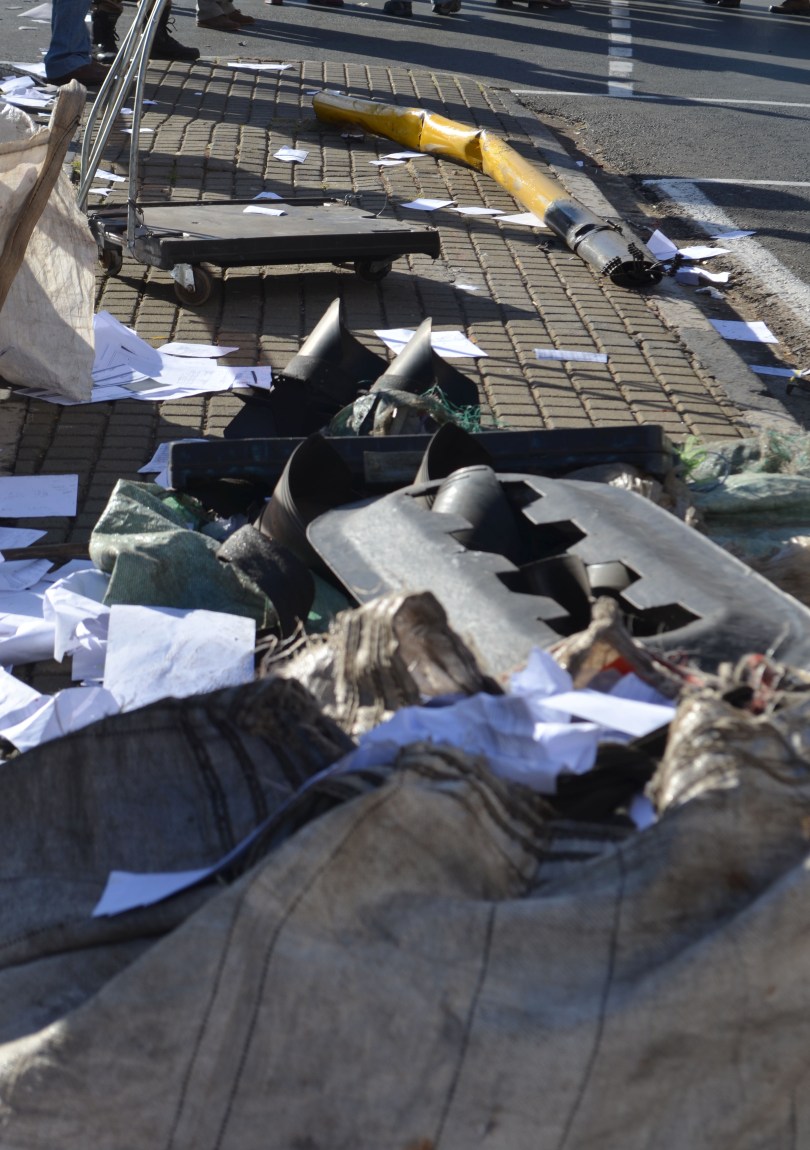
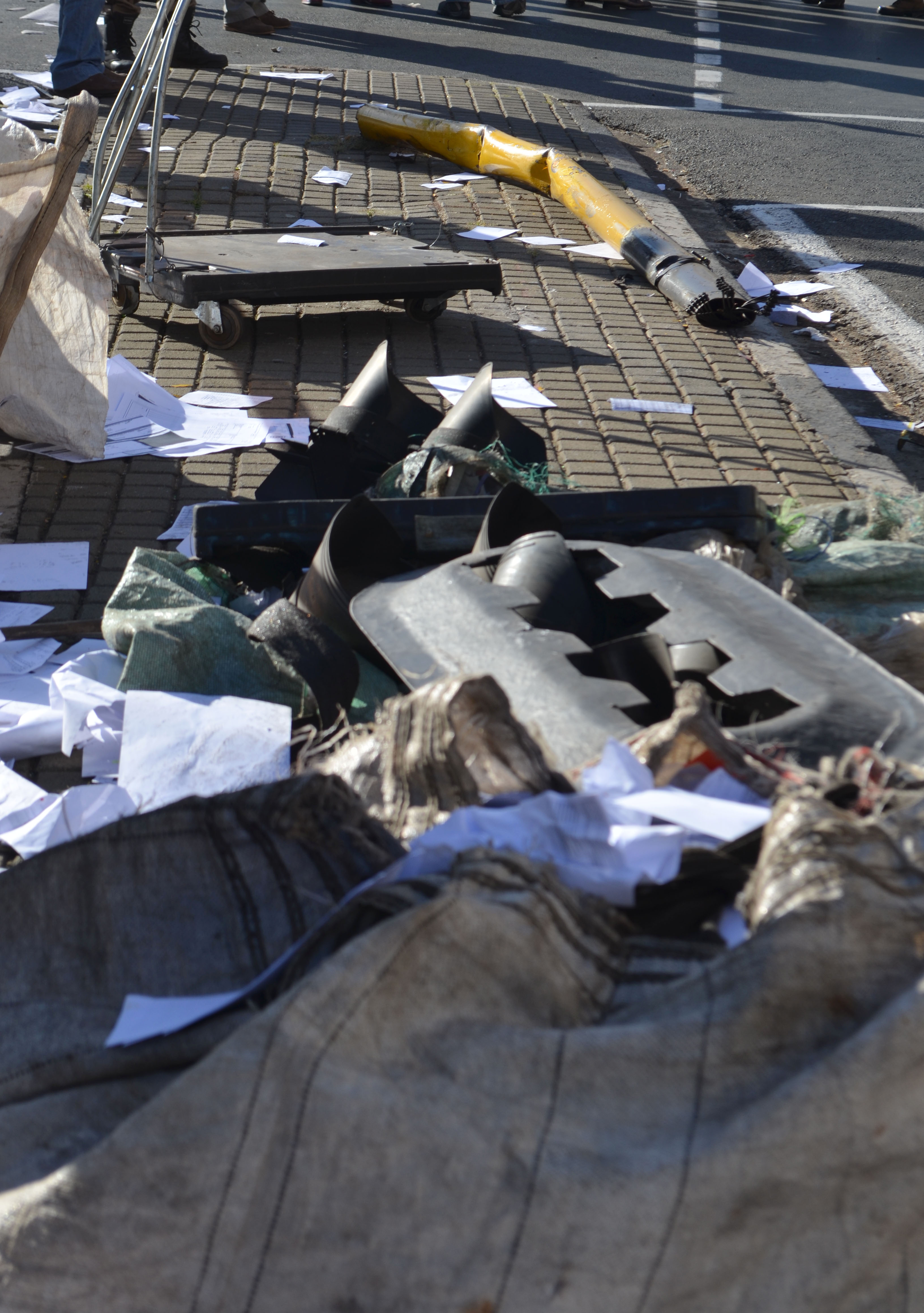
Blue light wreakage – my semi-winning photo.
I’m pretty keen because its a chance to so something a bit more substantial and less rushed than we’re accustomed to. I’m particularly looking forward to being afforded the time and resources to have a bash at a proper photo essay. An exciting few weeks lay ahead.
Oh in other exciting news, one of our lecturers is going to use some of my photo’s in a new book she’s publishing. Along with this I got an honourable mention at the prize giving for the fifth Wits Photographic Competition. Winning.
The week that was is somewhat of a blur. Feels like it took a short Usain Bolt like sprint and before I knew it, here I am on a Sunday afternoon trying to string together something semi interesting to write.
Monday morning is a haze of people typing frantically, in 11th hour attempts to get features done. I wished I could have joined in on the madness but I had already accepted that it was late for me, very late.
Later that morning we had to take a crack at writing travel features with Fred de Vries. He made us go to a mall, preferably one we had never visited before and take notes that would bring that mall to life. I went to the newly opened Oliven Plaza and man did I see some interesting things, hope it came out in the feature I managed to write.
That afternoon I dashed off to a Right2Know protest outside Luthuli House. Protesters were appealing to president Jacob Zuma, to ask for the Protection of State Information Bill to be taken back to parliament for some revision. I cause I would expect any media practitioner to support, this expectation was quickly dashed upon arrival.
We stood with some journalists and photographers from The Times and SAPA, they were obviously disappointed by the dismal turn out at the protest – granted. What I didn’t understand was their attitude towards the protest itself. There were scoffs, sighs and comments about what a waste of time the whole thing was. One photographer condescendingly said, “How many of these people (the protesters) have even read or really know what the Secrecy Bill is about?” he quickly went on to answer is own question “Only the journalists do,” he said with a chuckle.
I was like whaaaaat?! These people are gathered here to defend your right to do your job mister (all in my head of course, and in a tweet later that night). I suppose it was just disappointing to find out that some of the people we look up to are so jaded. Anyway I managed to get some great pictures and that’s all that mattered that day.
On Tuesday we had guest speaker Phillip Altbeker come in to discuss movie reviews with us. We wrote reviews on a movie the whole class went to watch a few weeks prior, Of Good Report. There were no comments on our work but he did say, “These will probably be the first and the last reviews you write.” I suppose that says it all doesn’t it?
From then on, the chase was one. One story after another had me going to and from the department. Another 12 pager was on the cards so we all had to do best. We were much more efficient than we have ever been come production time. I suppose being shouted at will do that to you. Needless to say we only missed deadline by a smidge and for the first time in a long time, I got home before the sun went down J
Friday was the best day of the whole week. It started off with a trip to Engineers Breakfast to get some good photographs, which we managed to do. Fomo hit us hard when we had to leave, we also wanted to sit under a gazebo, with meat on the coals and not a care in the world.
But we couldn’t, we had to rush off of to a guest photography lecture. I was very grateful for once it had ended, it might be one of the best lectures we have ever had. We got to see some of the meaningful work people are doing out there, as clichéd as it is pictures really are worth a thousand words.
Later that evening we had a braai and piss up of our own (that’s not very pc is it) oh well, we did and it was great. I’ve said it before and I’ll say it again, man I love my team *Drizzy voice*
Tomorrow will mark the beginning of the end. It is our last academic block, the last block I will spend in the Vuvu newsroom.
I can imagine that my sleep deprived body is celebrating at the thought, but the rest of me, is quite sad. Sad that there are only three editions of the Wits Vuvuzela left to produce, sad that I will no longer see the same 16 faces (well 18 if I include K-dawg and Mama D) and sad that I will no longer have people join in when I randomly burst into song.
The past week and a half were a taste of the emptiness that awaits me. I had my mid-year photography course with just one other classmate. It was eerily quiet in the newsroom, making it that much more obvious that our whole family was gone.
On the few days that people did come in to work, I felt whole again – suddenly the days weren’t as long and my mouth seemed to curl into smiles more often. I wish someone had warned me against getting too close to these people, it’s going to be tough without them next year.
We went on a little field trip for a lesson in photography at the Times Live Media group. The newsroom was very quiet, very orderly, very cold even. Everyone seemed to be glued to their own cubicle, trying to meet their deadlines. Got the sense that it’s an every man for himself situation. Which I am definitely not used to after this year. All my efforts, all our efforts have been to make the Wits Vuvuzela the best newspaper it can be. No single gain made has been one that we all haven’t contributed to or are proud of.
And in testimony to that every so often I think back to all that we have achieved this year and all I can think is, “Man I love my team”.
The potential team vuvu for 2014 are already in the process of being chosen, the first round of tests started last Friday. That scared me shitless. It was not so long ago that I was where they are, hoping with everything inside of me that I would get picked.
It has been a grueling and trying year, but one I would do all over again if given the chance. We’ve had our ups and downs, more ups than downs and I will cherish them forever.
So as we head into the final weeks of being student journalists, I plan to make each day memorable – not they haven’t been but just because I realise how little time I have left to do so. Onwards and upwards 🙂
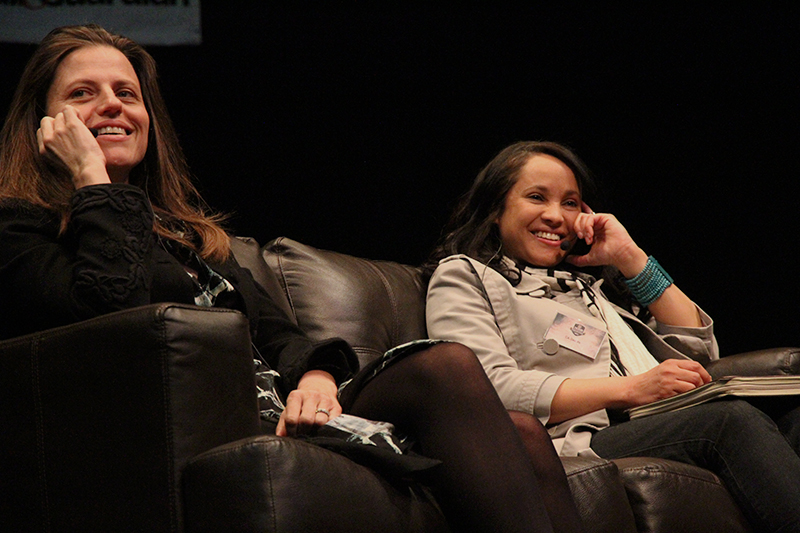
Writers Dominique Botha (left) and Carol-Ann Davids (right) were two of the ‘new’ authors on the panel. Photo: Pheladi Sethusa
“I know I’m going to be a writer one day. I don’t think it in my brain but I know it in my heart,” I have not been able to look back since I read this Chris Van Wyk quote three years ago. It provided me with the resolve to do exactly what I’m doing in my life right now.
This past weekend a colleague and I went to the 2013 Mail & Guardian Literary Festival, to bask in the presence of some of South Africa’s literary giants.
The Market Theatre was the historically apt venue picked to host the festival. Couches in the middle of a black stage in the main theatre providing the speakers with their literal platform.
We sat in one session after another, furiously typing out tweets, scribbling notes and snapping photos. Between all of this we had to process what was being discussed on the various panels. All of which were interesting and engaging in their own ways.
One recurring statement made by writers like Nadine Gordimer and Craig Higginson, was that writing is a calling of sorts. One doesn’t write because they want to but because they have to. Craig went on to say that it simply isn’t worth the pain and effort otherwise.
I want to be like them
I was lucky to sit in on a panel discussion with a theme of ‘fact and fiction’ luckier still to listen to the first panel of women only, all of whom are first time published authors.
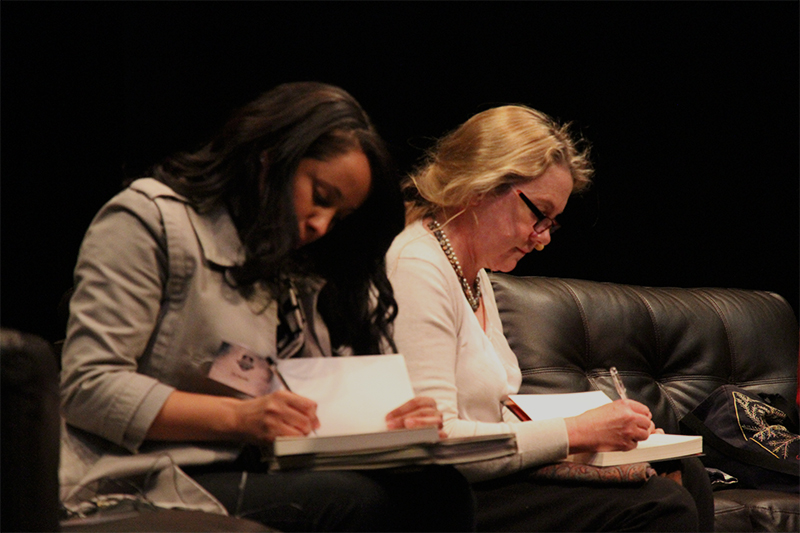
Carol-Ann Davids (left) and Claire Robertson (right) sign copies of their books for fans. Photo: Pheladi Sethusa
I have ambitions of being in their shoes one day. I’m doing journalism in a mission to be on the right side of history and because I really do enjoy writing. I want to be a journalist because I imagined at some point when I am too old or too tired of being on the field, I would magically turn into a writer. Well not magically but all that training will come in handy.
Anyway long story short, becoming a writer is the end goal.
So this panel discussion provided enough information for me to be inspired to keep on keeping on where this dream is concerned.
Journalism and writing
Claire Robertson provided some insight on how she managed to use her experience as a journalist to help her write her book, The Spiral House.
She said that she tried to avoid writing about her personal life, because in journalism reporting on oneself just isn’t done. “I’m not brave enough to write too intimately about my life,” confessed Claire. Clearly I have no such inhibitions, one browse on my tumblr blog is evidence of this.
However, she did insert herself in the places were she deemed it necessary because it was unavoidable. Her background helped her to write much faster than some of the other women on the panel, in this moment she was thankful for the demanding deadlines.
Fact versus fiction
A little fact, mixed with some fiction or do you have to one or the other. Author, Dominique Botha said the truth is incredibly hard and can never really be 100% in that regard. This makes for a problematic relationship between memoir and fiction she added.
“To retrieve memory is the first act of fiction,” she said. Botha added that memory relies on the act of imagination, in an effort to illustrate that memory is compromised and can’t be considered as 100% accurate.
Carol-Ann Davids, author of The Blacks of Cape Town said that one needs a little bit of both (fact and fiction) to tell a story.
Storytelling
The women on the panel emphasised that what they were doing was telling stories. Claire went as far as to say being a good writer is not enough, one has to be a good storyteller to write something of substance.
Maren Bodenstein , said that by way of storytelling and using details you can get a little closer to the ‘truth’ Dominique said was illusory. She said that this was the magic of, “dealing with the theory of literature”.
When asked by chair, Craig how they all managed to write such mature and deep books on their first try, the women unanimously agreed that they got to that point through enduring a lot of rejection and humiliation. “After chipping away at yourself you have no option but to write from your gut,” added Dominique.
The discussion then opened up to the floor in which time questions about getting published and being mothers were asked. Basically it difficult, it’s difficult to get published – to get someone to believe in your story. On being a mother while writing her first book, Carol-Ann said it was challenging but not impossible.
I learnt a thing or two about the journey I am yet to travel and was encouraged to press on.
THE BACKLASH AGAINST FEMINISM Joonji Mdyogolo writes about Feminism’s tendency of being condescending. A must read. Related articles Feminism: What on Earth does it actually mean? (zarajandurrani.wordpress.com) Backlash against feminism aims to preserve the ‘manosphere’ (rawstory.com)
TIMELINES on twitter are clogged up by constant sports updates on Saturday and Sunday afternoons.
The most tiresome of the bunch are the football ones, random tweets with things like “foul ref!”, “4-3-3” and “what a cross”.
Maybe a little understanding of the so-called beautiful game would lead to less annoyance come kick-off time. I decided to find out what the basics are, so that I too can get angry when people are offside and tweet about it.
Along with this I am on a mission, like Will McAvoy, to civilise, to reform the poor spectator abilities of those of us who watch for ‘hunks of the week’ instead of ‘sportsmen of the week’.
Soccer versus football
Firstly there is a whole debate about whether to call it soccer or football, football or soccer.
“It’s fashionable to be angry and indignant at people who call it soccer instead of football, it’s f***ing bullshit” said one dreadlocked enthusiast.
He went on to explain that people have become obsessed with calling it football as a way to defy the Americans. They call it soccer so as not to be confused with their American football, also known as fake rugby.
“Just because European football is considered better, now all of a sudden we want to change what we’ve been calling the game for years, it’s soccer man!” said someone in the newsroom.
Good on those who choose to colour outside of the lines drawn by those in the land of the free, but let’s just stick to local lingo and go for diski.
I went around asking semi-keen people what they were unsure about or wanted clarity on when it came to diski. The responses included “what the hell is offside”, “are the soccer players single?” and “what do those numbers like 3-5-2 stand for”.
Offside rule
The offside rule is actually quite an easy one to wrap your head around and once you do, the game starts making sense.
The FIFA rule book says “It is not an offence in itself to be in an offside position. A player is in an offside position if he is nearer to his opponents’ goal line than both the ball and the second-last opponent”.
Student and avid football lover Brendan Zietsman said to imagine this scenario:
“You are at a club and you see a girl/guy you like. Another person has seen the girl/guy too and they have a drink in their hand for that person. Your friend slides you a drink across the bar to give to the girl/guy. It would be wrong of you to step in front of the other person before their drink has left their hand. That is offside”. Simple.
4-3-3: Formations in football or soccer (whatever you call it) are used to ensure flexible play but given the fluidity of the game they can become redundant. Graphic: Provided
Hotties on the pitch
The second response points to the question on many minds when they watch 22 men running around after a patent leather ball. I will admit that I am one of those people.
When the teams line up I watch out for a hottie to keep my eyes on for the 90 minutes that will follow. Every team has that one player who captivates the imaginations of those of us who aren’t ‘fans’.
Formations
3-5-2, 4-3-3 and 4-5-1 are “those numbers” which indicate a team’s planned formation for the game. Formations are used to strategically place players across the field, to enable them to attack and defend in the best ways possible.
Now to watch a match to see if I scream “offside” at the television with confidence.







 Write. Snap. Click.