Finally developed another roll of film – averaging about a year a roll – lol. Have just bought some more film so hoping to change this habit quite quickly and take my camera along on every adventure, big or small, I embark on in the next few months.
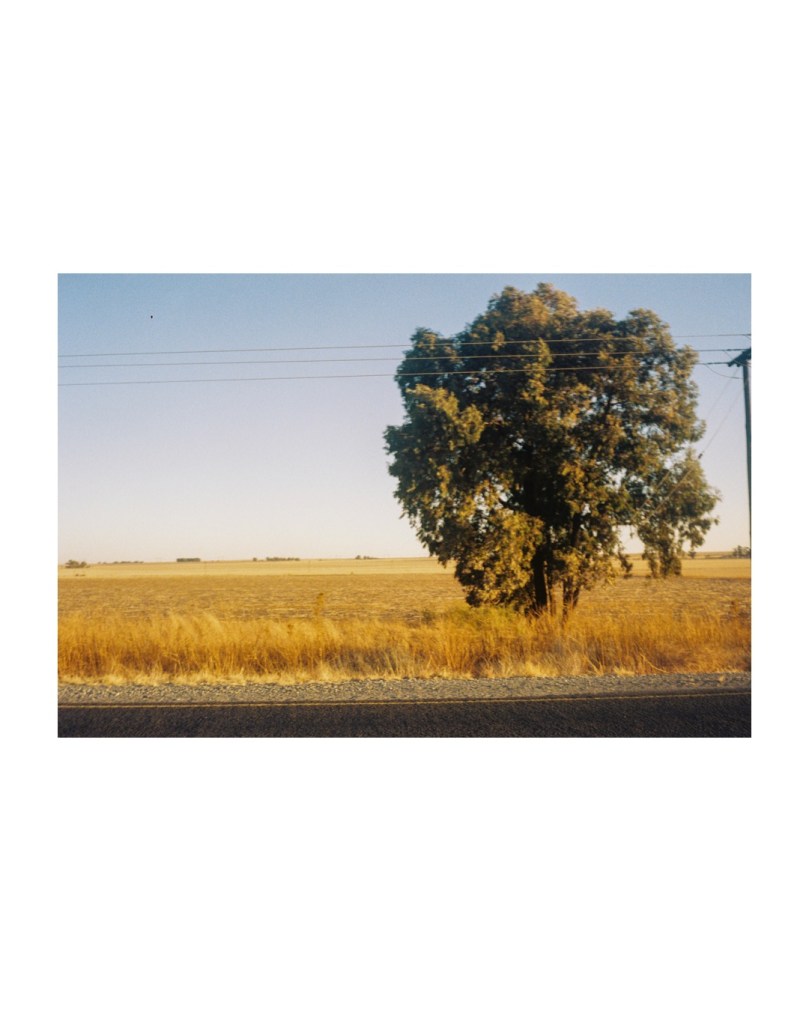
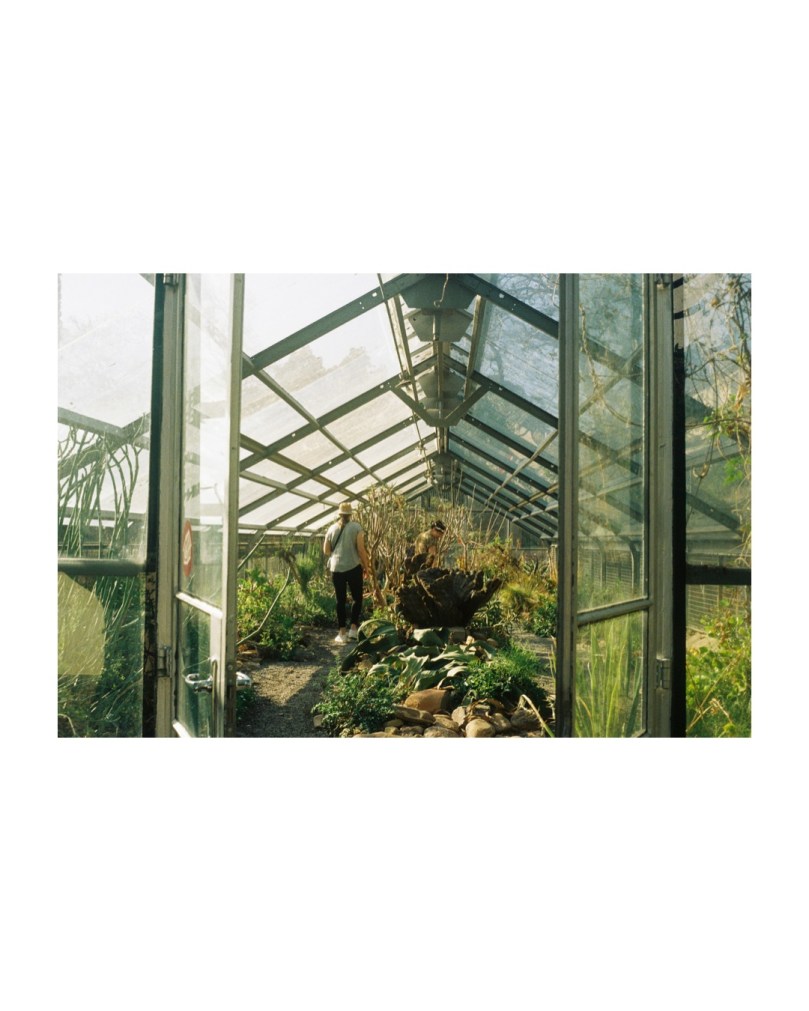
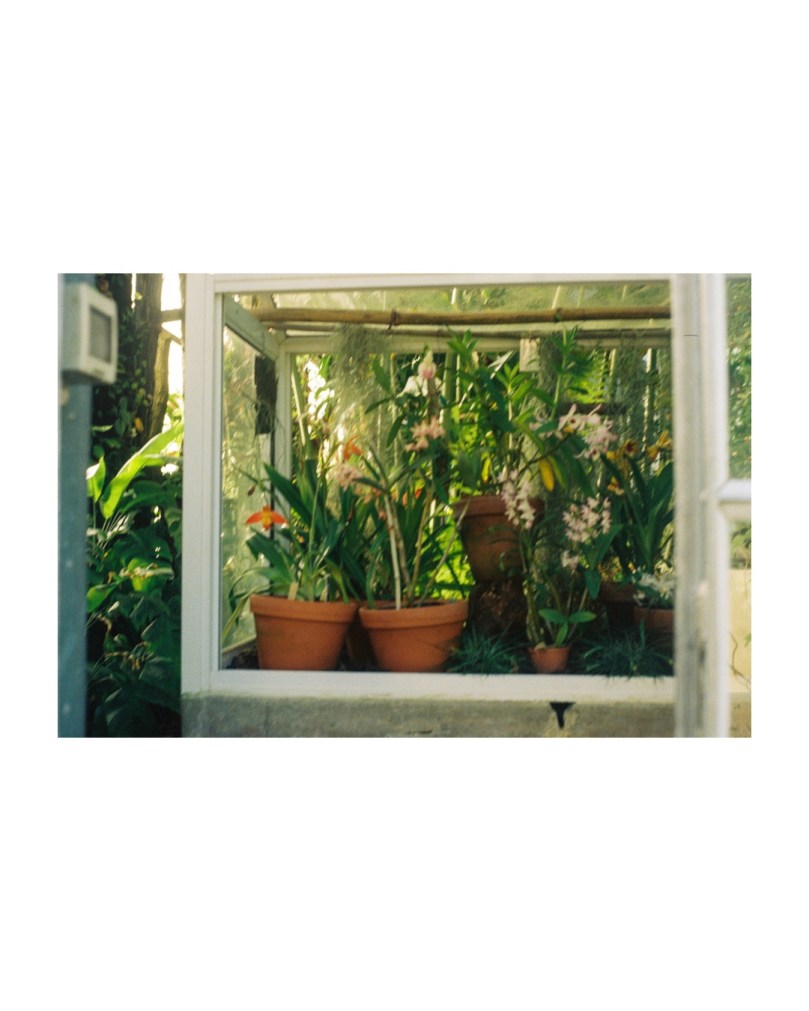
This roll covered quite a bit of ground, it travelled with me to a speed dating event, a road trip and girls’ weekend away in the Vaal, an especially magical few days in Cape Town, a side quest to a botanical garden at a conference in Stellenbosch and a final trip with my class of postgraduate students at Constitutional Hill. Very different but very special memories.
I love how much more selective I am when shooting on film, and which moments feel special enough to etch onto film, I’ve missed the intimacy with memory this brings. Additionally, the imperfection in some of my frames feels almost signature and unshackles me for a moment from the obsessive need to have the right f stop, focus and ISO with each shot – something I am trying to unlearn as I shift between shooting on an SLR and my film camera.
Taking photos for fun and for work used to be a huge part of my identity, and in the busyness of life I have let that part of me slide into the shadows as other pursuits took centre stage. That has meant giving up the joy that used to come with shooting and editing photos as well. Until I spotted this little beauty on sale last year.
My Olympus Trip35
An account I follow on Instagram, 35mmbyloosechange, routinely sells previously loved cameras, accessories and film. I started following the account after a print and swap event I attended with the idea of going back to shooting on film someday. I say go back because the last time I had a film camera was well over 16 years ago when I was in high school. I had done zero research when I bid on the camera when it came up for sale in a post and figured this would be a perfect way to start shooting again in a slower, less perfection driven manner.
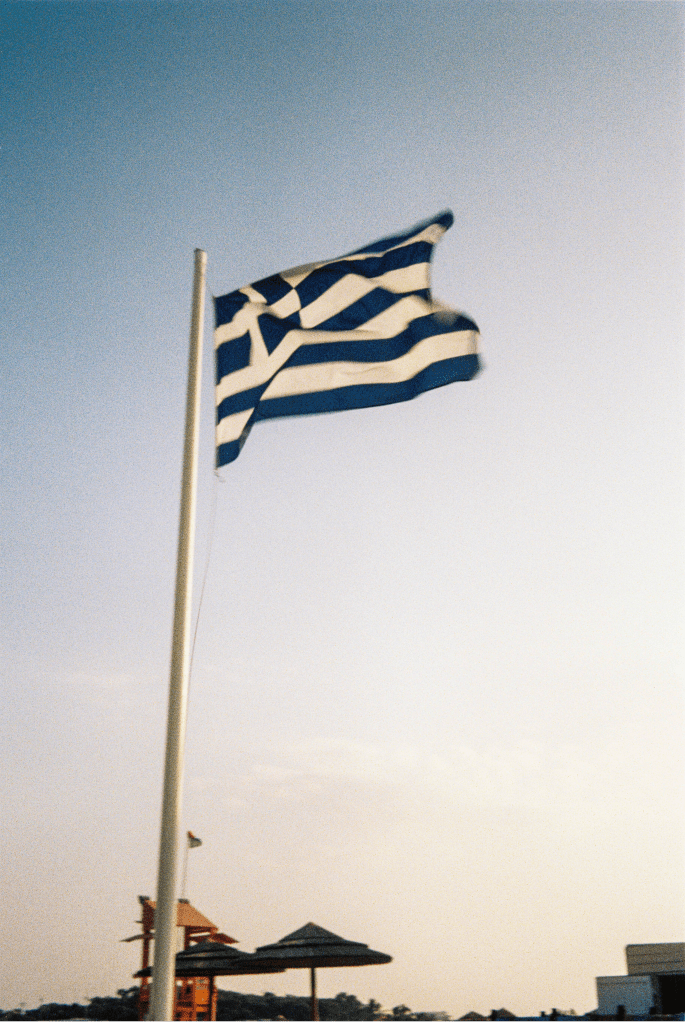
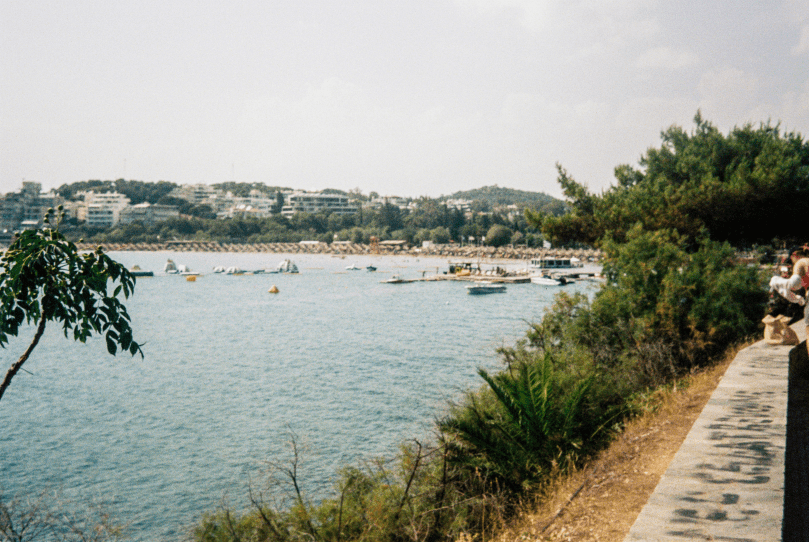
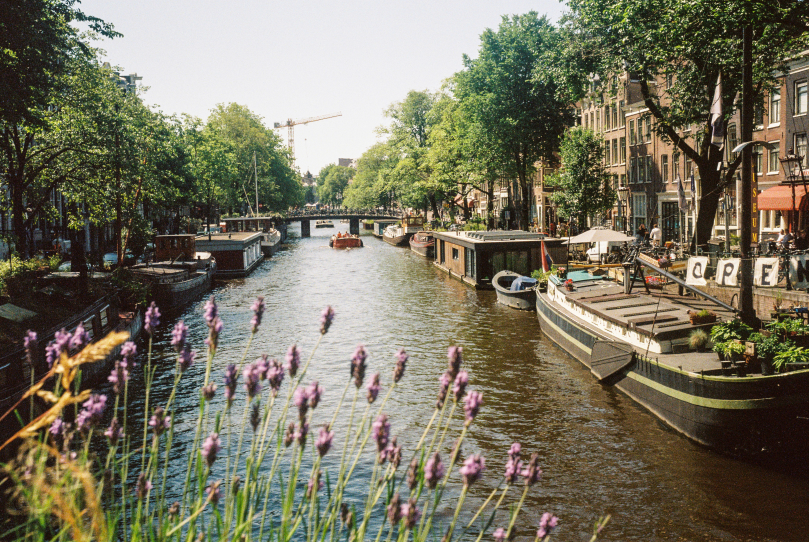
The past few months with with camera have forced me to take my camera out with me more and think in moments more than frames when taking analogue photos. What I mean by that is fighting the urge to take photos that would be aesthetically pleasing for the consumption of others on my timeline, and instead just freezing moments I knew I wanted to freeze because they made my heart happy. My first colour roll was a trip I took with friends to Greece and Amsterdam.
My second roll of film was shot on black and white film, or so I thought. Turns out I loaded the roll incorrectly which returned a blank roll when I went to get it developed months later through Cape Film Supply. Bummer, but lesson learned. I am new to this, so giving myself for the mistakes and missteps I will be making as a relearn this analogue medium.
Operation fiela. Fiela in Sepedi means “sweep away”. This is the name my government chose as a response to the recent spate of xenophobic attacks in the country.
This year it started in Soweto, when “foreigners” were looted out of the shipping containers that are their livelihoods. Some kicked, slapped, knifed and burnt. Our leaders said it was all down to criminality, not xenophobia but added that perhaps sharing business secrets with unemployed, discouraged South Africans would help- because it wasn’t xenophobia.
“Foreigners need to understand that they are here as a courtesy and our priority is to the people of this country first and foremost. They cannot barricade themselves in and not share their practices with local business owners,” Lindiwe Zulu, Minister for Small Business Development (January 28, 2015)
Then last month “afrophobic” attacks (the chosen instigator this time) broke out in Durban and copycat attacks spread to other parts of the country. We were told lies about how many had died as a result, reminded that South Africans had also died. This time were even treated to the “third force” delicacy – nice. But back to operation sweep away.
In May 2008, South Africa witnessed its worst wave of xenophobic violence. An estimated 20 000 people were displaced, 62 died during clashes, 600 more injured, over 500 arrested but only 132 convicted for crimes committed during that time.
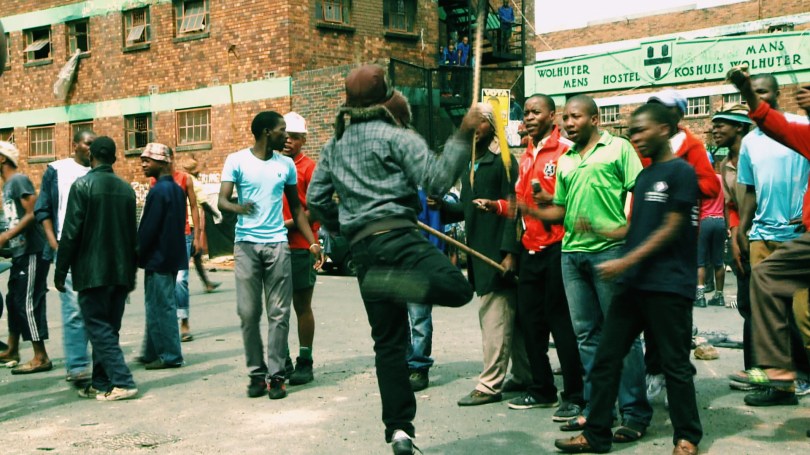
Screenshot from a short clip I took in Jeppestown, Johannesburg last month.
Often the names given to police or government operations have more bark than the implementations bite. Normally bad things happen, they say nothing for what seems an inordinate window between the occurrence and their reaction. And then (normally) things that make it look like things are happening happen – photos are taken, interviews conducted, live crossings on the scene – some people feel like something has happened because their voices are heard or a heavy police presence alters their daily reality somewhat. Then we all run towards the smoke of another fire in the distance and leave before a pile of ashes can form before us, at the current crisis.
Normally.
Sometimes the (re)action comes in the form of a temporary structure or a wrongful arrest – something, anything that will appease even the skeptics for a few beats.
This time they chose force, brute force and swift broom strokes to deal with the problem.
Every police man or government official I have spoken to has said that Operation Fiela is in no way linked to xenophobia, it’s just a standard joint operation to deal with criminal activity in certain areas (read hostels, informal settlements and other such places where they can stamp their boots with unadulterated impunity). Even though they’re collaborating with the same army that was deployed a few weeks ago and conducted humiliating night time raids.
“Large sections of police were unleashed on people, their doors kicked down and people were asked to show their papers. It was a military operation in the middle of the night,” Stephen Faulkner, Cosatu nine unions representative (May 12, 2015)
This week, Stephen Faulkner said it perfectly, to paraphrase: this entire operation needs a rethink, we can’t go around unleashing the military on people and sweep them away (deport them) like rubbish.
Wayne Ncube, human rights lawyer, explained that deportation is a lengthy process with many steps, which is why they are concerned with the high number of arrests and possible deportations that have already happened. This week they are working towards consulting with about 400 of the latest victims of such a raid which took place at the Central Methodist Church last Friday.
I have not spoken to a single person who isn’t in government who has stood behind the operation. The raids never made sense to begin with, nor do the arrests. It would be easier to believe that these are “standard joint operations” if they were in actual fact standard. If we knew about weekly or monthly raids to seize illegal firearms, bust prostitution rings and arrest undocumented people it would have been easier.
But the timing – first the limp condemnations a week after the first attacks, then the army deployment and raids two weeks after that – the boasting and plenty photo opps say otherwise.
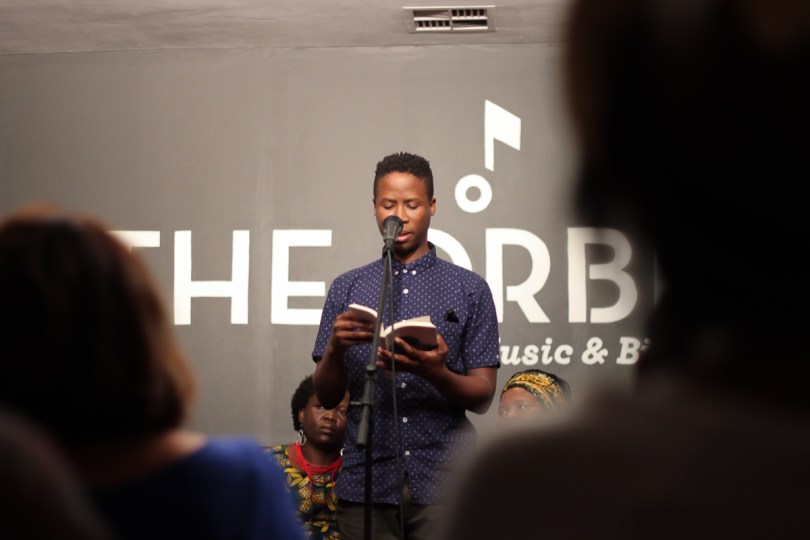
I attended a night of poetry and literary goodness in a jazzy place earlier this month. Finally got down to editing and packaging this short(ish) video of what transpired that night, enjoy.
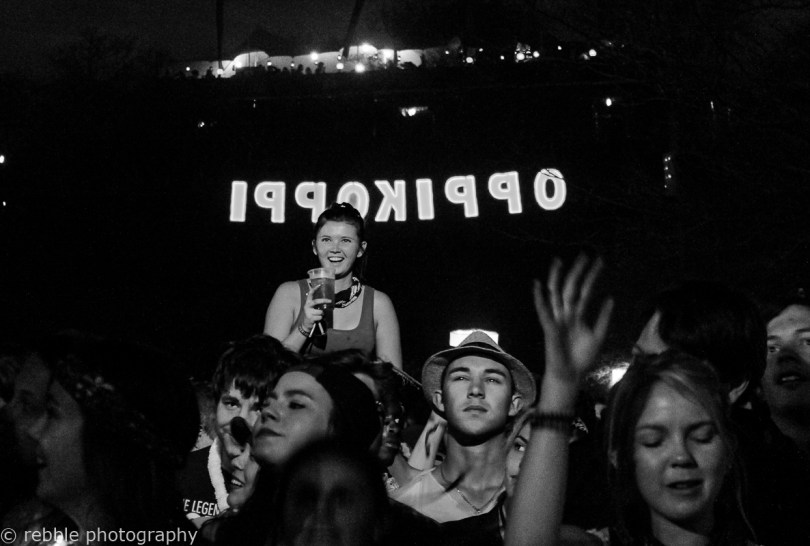
This year I headed out to camp out in the bush again for the 20th year of Oppikoppi. These are some of the photos I managed to take at some of the performances I watched.
NOTE: Article first appeared in The Citizen newspaper on August 14, 2014.
Sitting on a black leather couch in a tent on a farm in Limpopo, 42-year-old singer-songwriter Chan Marshall – also known as Cat Power – shared some intimate details of her life.
Marshall had just come off stage after her first appearance at Oppikoppi on Saturday, a performance on the Bruilof stage that saw fans shout words of encouragement when the sound equipment was not working properly.
Cat Power (Chan Marshall) on the Bruilof stage at Oppikoppi Odyssey on 09/08/2014. Picture: Pheladi Sethusa
Between constantly apologising for the staccato nature of her performance, Marshall had to change the sound on the amplifier, sing into two microphones and figure out how to work a keyboard she had never played by herself – a visibly nerve-racking experience.
“I always have stage fright,” she says.
It’s a situation that’s not entirely foreign to Marshall, though in the past her erratic performances have been attributed to problems with alcohol and drugs. “People used to say ‘Oh, did you go see the train wreck?’” she says.
She does admit to having had a drug problem a while ago after her partner passed away.
“I chose it every day and I knew what I was doing every day. It wasn’t me being oblivious. I was riding that train because I couldn’t take the pain of losing the love of my life.”
Marshall wished the women in the audience a happy Women’s Day while on stage, and spoke about feminism afterwards.
“A lot of times women don’t have the simple, casual dignities that men have as their birthright,” she says.
“I’m called a feminist because I protect myself from someone else trying to get something from me,” she says.
Marshall’s latest album, Sun, was produced independently, using the singer’s life savings.
“I had to make a choice between what the label wanted me to do and what I knew I could do myself, and the album made the top 10,” she says.
She performed at the Baxter Concert Hall last week, a performance she had asked for in December when she came back after Nelson Mandela passed and she witnessed “social change” that inspired her.
Marshall intends to return to Cape Town next January to write about the experiences she has had in the city over the years.
Third year law student, Zareef Minty, is the national youth president for businessmen Kenny Kunene and Gayton McKenzie’s new political party, the Patriotic Alliance (PA).
The slight looking 20-year-old Minty, who is also a fashion designer said the PA was youth-centred and had a strong focus on giving second chances to the reformed, like two of its own founders.
Second chances and new alliances
“If Nelson Mandela could have that chance to be reformed (sic) coming out of jail and having an opportunity, then we should allow Kunene and Gayton to have the same thing.
JUGGLING: National youth president for the Patriotic Alliance, Zareef Minty, explains how he manages between being a law student, political figure, fashion designer and author. Photo: Pheladi Sethusa
“In the same way a student has been charged with something should be allowed to have a future as well,” said Minty.
“Ex-cons” Gayton McKenzie, president of the PA and general secretary Kenny Kunene, met each other in jail and following their release in 2003, became business partners.
Minty met the two through his clothing line partnership, after Kunene was asked to be an ambassador for Minty’s own fashion label, Self Made Billionaire (SMB). “Kunene liked the idea of an up and coming clothing brand worn by celebrities,” said Minty.
Youth-centric
He said the party also included more young people in its decision-making. He said four of the party’s 12-member national executive committee were under the age of 25.
“We are the only party out there who allows youth to have a platform in the NEC. The ANC and the Democratic Alliance has a separate Youth League so you don’t get young people in parliament,” he said.
Minty is sixth on the PA’s parlimentary list, which means if they manage to get six seats after the national elections this year, he could be sitting in parliament and not in stuffy lecture rooms.
The party’s focus on the youth and a “practical approach” to politics are what Minty believes will make the PA “a better alternative to the ANC”, which he said was policy heavy with little to no implementation thereof.
He believes that PA would be able to relate mostly to the born-frees because it was a party that did not have any “baggage”.
Campaign trail
The PA’s campaign trail on campus has come with its own set of issues, “Until we have permission to be a club or society on campus we can’t really go out in a group and recruit people. We have been working by going person to person, trying to get them to join,” he said.
The PA, often referred to as the “coloured” or “gangster party”, was founded in Paarl in the Western Cape three months ago and plans to contest in the upcoming elections.
Minty said they have a good chance of having up to six seats in parliament after this year’s elections.
Minty is treasurer of the Wits Law Students’ Counsel and the chairperson of the Student Discipline Committee, which influenced his alignment with the PA and their belief in reforming and empowering the previously charged.
Before the PA, he was part of the ANC Youth League on campus where he took up position as treasurer but the PA presented him with an opportunity for national leadership
Along with the multitude of things Minty has on his plate this year, he plans to publish a motivational book, Empireby March. Let’s watch this space.
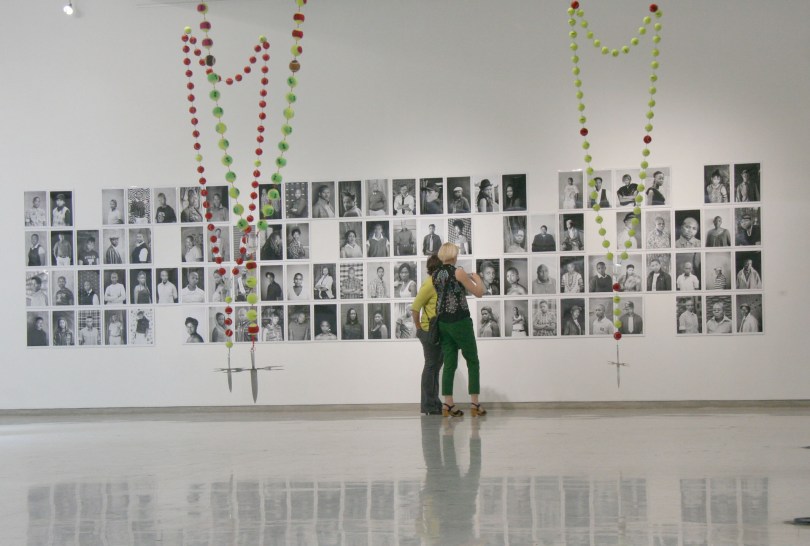
CRAFTY SYMBOLISM: Onlookers were drawn to the Faces and Faces wall, full of black and white photographs taken by visual artist Zanele Muholi. Photo: Pheladi Sethusa
Walking onto the eerily silent ramp that leads to the new exhibition at the Wits Art Museum, one is met by death. Small mounds of sand stand,holding up colourful wooden crosses that have dates of birth and death written on them.These graves that lie in glass containers are in the Zanele Muholi’s Mo(u)rning section of the exhibition.
The next piece of the collection, Faces and Faces catches the eye immediately as a wall of black and white portraits look one in the eye. There are some gaps between some of the photographs by Muholi which speak to the nameless but dated graves.
“The spaces were left there to show that they could have been a part of this section of the exhibition if they weren’t killed for being gay and lesbian,” explained facilitator Ace Kekana, whose face appears in one of Muholi’s portraits.Queer and Trans Art-iculations: Collaborative Art for Social Change is a collaborative exhibition by visual artists, Muholi and Gabrielle le Roux.
“…men who gang rape women, who murder lesbians, who beat their wives – they walk the streets as free men.”
Muholi’s work is on the ground floor of the museum with a focus on the LGBTI community in South Africa – their beauty, their struggle, their murders and more. Muholi is not only a photographer, so her work varies and in this exhibit includes some of her bead work and a documentary film.
The most elaborate display in Muholi’s section are rosaries that hang from the ceiling. The beads in the rosaries are tennis balls and kitchen utensils. The vertical end of the cross at the end of the rosary is made from a knife which represents the violent killings of members of the LGBTI community experience, and the horizontal end from braai forks to represent the supposed hell killers think they’ve sent their victims to, or perhaps the lived hell victims endure.
“When people kill based on gender they like to say it’s for religious reasons, these crosses represent how dangerous that kind of thinking can be,” said Kekana.
The most moving part of Muholi’s exhibited work is a wall with a number of written messages from victims and their family members about their experiences. One of the messages read: “Here in South Africa you have judges sending women to jail for stealing a loaf of bread to feed her baby, but men who gang rape women, who murder lesbians, who beat their wives – they walk the streets as free men.”
This is one of the rosaries that hang from the ceiling. Photo: Pheladi Sethusa
In contrast to the quiet reception on entering Muholi’s floor of the exhibition, walking down the ramp into the basement area, sounds from the television screens set up with short documentaries by Le Roux lure attendees with their mixed up buzz.
Le Roux’s collection, Proudly African & Transgender and Proudly Trans in Turkey looks at the experiences “trans and intersex people in Turkey and Africa,” said Kekana. Another facilitator, Thekwane Mpisholo is in one of the portraits put on display by Le Roux.
The painted portraits are inclusive of their “subjects” and this can be seen in the quotes the artist let them scribble on their actual portraits.
The newly launched Wits Centre for Diversity Studies, helped to find the funding for this project. “They’re the ones who helped us with the planning and funding because they (Diversity Studies) study things that aren’t ordinarily studied by other faculties – that’s how they came on board,” said Mpisholo.
There is a lot to read, watch and see at this exhibition and people can do so until March 30 2014 at the Wits Art Museum.
















 Write. Snap. Click.