Wits nightshift isn’t mahala

By Pheladi Sethusa and Ray Mahlaka
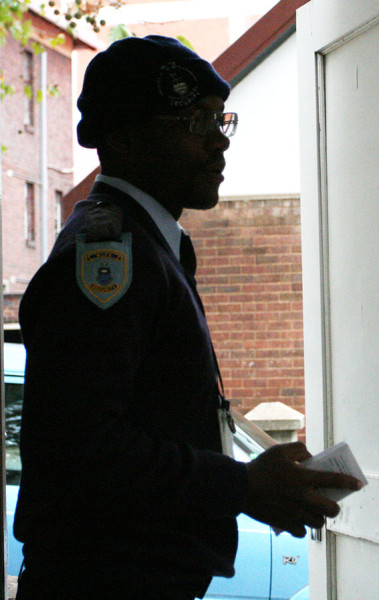
FILE PHOTO: A Wits security guard is pictured on duty earlier this year. Photo: Mfuneko Toyana

WITS Campus Control security guards allege they are owed about R40 000 each in their night shift allowance payment.Three Campus Control security complained to Wits Vuvuzela that they had not received increases for night shift allowances since 2002, despite working seven days a week for 12 hours a day. This amounts to about R40 000 per guard.

The security guards want a night shift increase of R400-500 per month, to their current monthly salary which they say ranges between R4000- R5 000. The security guards said they only received R190 per month for night shift allowance.

“There is no indication that the night shift allowance increase will materialise. Every time we ask the head of security, they say they cannot comment. The money for the night shift allowance is too low,” a security guard said.

Payment received

At a meeting last week Prof Tawana Kupe, deputy vice chancellor of Finance and Operations, showed Wits Vuvuzela evidence of the payment of nightshift allowances via workers’ payslips. He said all Campus Control workers were accounted for.

However, unionist Billy Cebekhulu, the treasurer of Nehawu said a report was commissioned by Wits management to look into night shift increases. While the report is done the issue is that the findings are not yet public .

Cebekhulu said: “We were told the person has been hired [to look into night shift remuneration] and there will be a report. We have not seen it and we are still awaiting a report. The night shift issue is a concern to us.”

We want our money

A third security guard said they are owed at least R40 000 in night shift allowance increases per person from 2002. He said they want the money before December.

Nehawu said that in 2009 it took the university to the Commission for Conciliation, Mediation and Arbitration (CCMA) to resolve night shift disputes at the institution.


However, Kupe said during his eight month tenure as DVC, he was not aware of a CCMA case as there might have been a settlement.

Kupe said perhaps the nightshift allowances are not increased like salaries, “not everything is subject to an increase,” he added.

“I’m not saying there isn’t a problem, I want to know what their problem is,” said Kupe.

Cebekhulu said the problem with the nightshift allowances was that before 2009, the allowances were being taken off their basic salaries at cost to company. Cost to company is the amount a company pays employees before any deductions, meaning that any benefits would be charged off of one’s salary.

“We have been paid with our own money,” said a distraught Cebekhulu.

In 2009 it was agreed that a R150 increase on the nightshift allowances would be granted, which meant that the R150 would be a separate entity, that wasn’t at cost to company.

The union and workers want to be remunerated for the years in which the nightshift allowance was taken off their salaries.

Hide and seek

Chairperson of Nehawu Wits Richard Sadiki said there was “a hide and seek on management’s side” in not addressing night shift concerns.

One disgruntled guard said: “We work hard and we can’t afford to take care our family (sic). We are being ripped off.  We should be paid more and we guard the university 24 hours, but there is no thanks from the university. We are doing our level best to make students safe, but the employer is not grateful.”

Security guards also complain of a lack of security guards on West campus.

According to a security guard, there are only three guards at West campus, from the nine hired in 1993.

Kupe said that having more staff on campus would not help to prevent crime on campus, “we don’t need more guards”. He felt we needed students to behave morally and justly towards each other, he felt.

Rob Kemp, Director of Campus Control denied allegations that nightshift staff were not paid their allowance. “The allowance has not fallen away and still active. The allowance is a requirement in terms of the Basic Conditions of Employment Act,” he said.

RELATED ARTICLES:

A day in the shoes of a Witsie

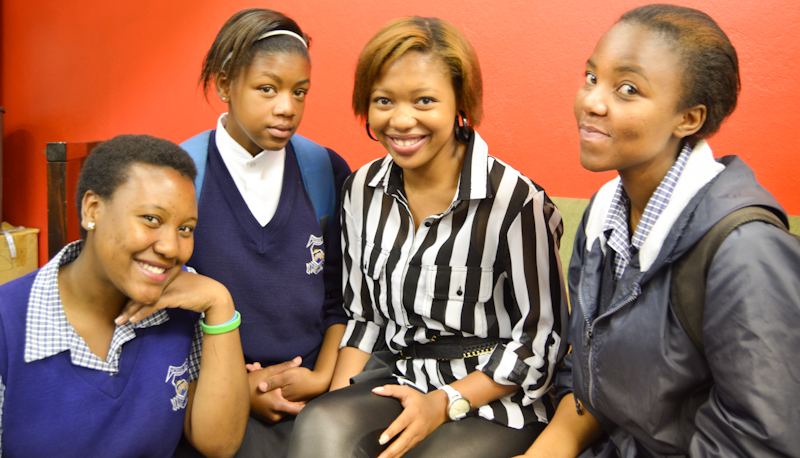
SMILES ALL ROUND: Wits mentors each got some highschool pupils to take under their wing for a day, From left to right: Philile Mashele, Palesa Mokoena, Tanyani Daku and Kedibone Rapoo. Photo: Pheladi Sethusa

Sixty uniformed pupils were beaming from ear to ear as they got a chance to walk up the steps, sit in the lecture halls and walk amongst ‘real’ students – things and people they had only ever seen on Wits’ promotional brochures.

A rare opportunity provided by the Wits Rag society made that possible. This year’s Take a Child to Varsity day was bigger and better. Last year only ten kids got to spend a day with a mentor, this year that number more than doubled said Wits Rag Chairperson, Siphe Mkize.

The pupils

“We take kids from underdeveloped area’s… To help them get an idea of what to study when they come to varsity, as well as what they need to do to get there,” said Mkize.

A teacher from Lesebogo Girls High School in Soweto, Humbulani Mavhunga who ordinarily teaches grade 10’s and 11’s maths, accompanied pupils on their visit this past Wednesday.

“I took a range of learners, mostly the highest achievers and some who are sitting in the middle. I also took some low achieving learners, to show them what is possible if they work hard,” said Mavhunga.

Mentees and mentors

The selected pupils were allocated a mentor from Wits, anyone from any faculty could volunteer their services for the day. The mentors who availed themselves this year were “very keen and patient with their kids,” said Mkize.

Tanyani Daku, a Media Studies mentor took three girls under her wing and spent her time giving advice from her personal experiences and answering questions posed by her inquisitive bunch.

Daku said she loved being a mentor and getting a chance to help kids with complicated social situations, focus on their academic lives and improvement thereof.

The pupils she took under her wing could do nothing but sing her praises. Although not all of them wanted a media studies mentor, they were glad they all said what they learnt from their mentor was invaluable.

Stop going to the zoo!

“We must stop going to the zoo for school trips, rather come to varsity,” said an impassioned Daku, making her mentees roar with laughter.

Echoing words in the same vein, Mavhunga said that she hoped Wits Rag would continue with this initiative. “This opportunity helps kids to make informed decisions about their futures,” she said.

She said it was important to break down the legacy of students choosing careers within very narrow confines, Mavhunga wishes she had the chance to be exposed to university beforehand.

“All we knew was teaching, nursing and being a policeman or woman,” said Mavhunga.

Impressions

“Today blew me away. I thought Wits was very serious and just for people who want to pursue maths or physics but it’s not,” said grade 11 pupil, Philile Mashele. She cannot wait to come to varsity now that she has had a taste of what it’s really like.

Another pupil, Palesa Mokoena said that she was impressed with the way people seemed very “focused” on campus, she said it inspired her.

On a slightly different note, fellow classmate, Kedibone Rapoo said that she was by no means prepared for varsity life and the pressures that come with it. However, “I am prepared to try by studying hard,” she said.

No pride at Wits

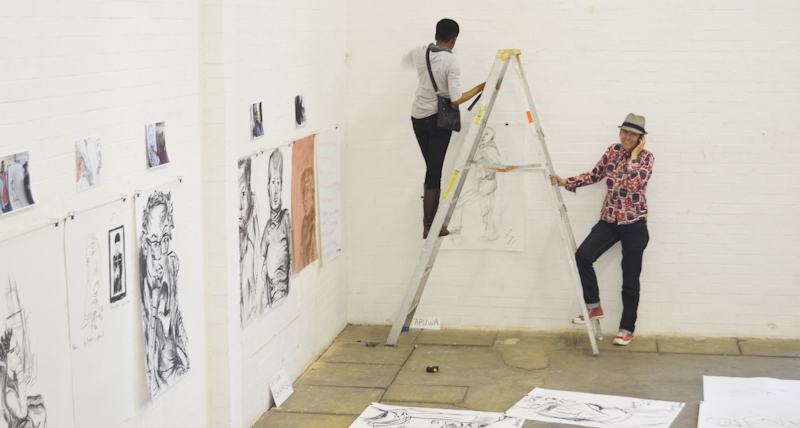
WHITE NOISE: The exhibition Substation art gallery was poorly attended. Photo: Pheladi Sethusa

By Nolwazi Mjwara and Pheladi Sethusa 

Empty lecture rooms where talks were planned, no information tent and an exhibition with no pull are some of the things that contributed to the dark cloud that hung over this year’s Wits Pride celebrations.

Wits Vuvuzela headed out earlier in the week hoping to bump into people dressed in rainbow colours, ready to see all the events but all those hopes were dashed by a lack of noticeable fanfare for Wits Pride.

It’s pride?

Witsie after witsie had no idea that it was Wits Pride this week, largely due to the lack of visible advertising around campus.

“I had no idea that it’s Pride this week. I think they haven’t advertised it enough,” said Jabulani Moyo, 3rd year BSc Eng.

A daily exhibition held at the Substation art gallery was poorly attended. Few came to see the beautiful self-portraits by artist by Germaine de Larch.

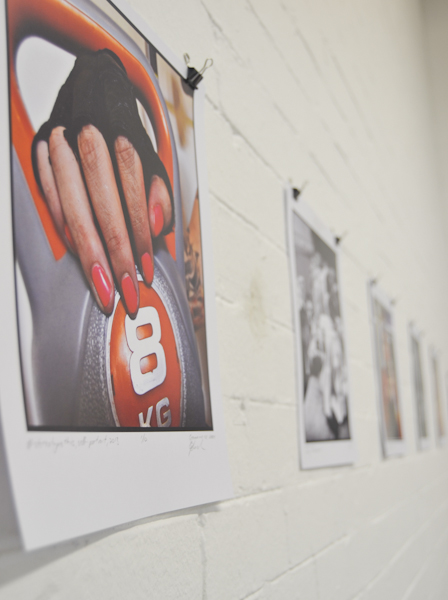
PORTRAIT: Photography by Germaine de Larch was on sale, at a pricey R1 500 a portrait. Photo: Pheladi Sethusa

Ella Kotze, programme officer of the Transformation Office, defended the promotion of Wits Pride on campus.

“In terms of marketing, we have put close to 1 000 posters up across all of Wits’ campuses. We have been very active on Facebook and Twitter, and we have also had a very good relationship with Voice of Wits, who has gone out of their way to promote our events and the whole concept of Wits Pride,”she said.

Kotze agreed that attendance at some events was disappointing, particularly Tuesday’s panel discussion and films.

However, Kotze said that an information stand and tours to Hillbrow and Constitutional Hill were very successful.

“Contributing factors are possibly varied and may include timing, as well as type of activity – perhaps Witsies don’t like movies as much as we thought,” Kotze said.

We need pride

“Pride is very, very, very necessary on campus,” said Wits Pride organising committee member Jeremiah Sepotokele, 3rd Law.

He believes the overriding culture on campus was still “very hetero-normative”, especially in a lot of the men’s residences like Knockando.

“As men’s res there’s a culture that’s very hetero, violent and masculine. That’s problematic,” said Sepotokele.

Many students start at Wits start out as homophobic but their perspective changes.

Sam Allan, 2nd year BSc, said that she was ignorant of gay rights before she had gay friends.

“I couldn’t stand gay people before,” she said.

It was only after spending time with gay people that did she begin to accept them for who they were.

Allan said she would have liked to have gone to Wits Pride events, had she known about them.

No answers on Coopoo

By Nokuthula Manyathi and Pheladi Sethusa

As Dean of Students Prem Coopoo spends her sixth week on special leave, the rumour mill churns out speculation and the university remains silent about the reason.

Week to week Wits Vuvuzela has been given the run around when trying to find out more about the situation.

Initially staff and students had been informed Coopoo’s absence would only last for a week.

Wits spokesperson Shirona Patel told Wits Vuvuzela last month that Coopoo was placed on special leave pending investigations but would not specify the nature of the investigation.

This week director of special projects, Oliver Seale, said Lamese Abrahams had been appointed the acting dean of students.

He went on to say: “University management is currently in negotiations with Ms P Coopoo on this matter.

We will notify the entire university community on this matter as soon as the negotiations are concluded.”

Some of the rumours Wits Vuvuzela has heard include that the university has plans to change the position of the dean of students, taking away the title of dean. Seale responded to this by saying that was not the case: “Please note that the negotiations with the current incumbent and (sic) not on the job title.”

Wits Vuvuzela contacted six members in executive management, including Vice Chancellor Adam Habib, but could not obtain further comment.

BREAKING: Third “sex pest” sacked

Prof Rupert Taylor of the Political Studies department. Pic: Facebook.

By Nokuthula Manyathi and Pheladi Sethusa

Prof Rupert Taylor has become the third Wits lecturer to be fired following a university investigation into allegations of sexual harassment.

Political studies department head Prof Daryl Glaser confirmed to Wits Vuvuzela that Taylor, formerly a senior lecturer, has been dismissed after a four-month inquiry.

“I am relieved that the process has come to a conclusion,” said Glaser.

Glaser said he had just been told of Taylor’s dismissal on Thursday afternoon. He said would comment further when he had more information.

Taylor was forced to step down as head of the political studies department last year following a report in Wits Vuvuzela of sexual harassment allegations made against him by students.

In March of this year, Taylor was put on special leave and made to leave university premises.

Taylor had denied the allegations at the time, telling Wits Vuvuzela: “I am deeply upset and concerned about the damaging allegations that have been published against me.”

Taylor is the third lecturer to be dismissed after allegations of sexual harassment were lodged against him. Former head of the media studies department Dr Last Moyo and former senior drama lecturer Tsepo wa Mamatu were fired in August following investigations.

In a statement regarding the most recent dismissal, Vice Chancellor Prof Adam Habib said the university had adopted a “zero tolerance” policy towards sexual harassment.

“We hope that the swift action taken by the university in these three cases, sets a clear example that sexual harassment will not be tolerated in any form on our campuses,” Habib said. Wits Vuvuzela has so far been unable to contact Taylor for comment on his dismissal.

RELATED ARTICLES:

Wits sexual harassment inquiry complete

Prof Bonita Meyersfield outlines some of the key findings from the report. Photo: Pheladi Sethusa

By Caro Malherbe and Shandukani Mulaudzi

Wits has pledged to undertake a multidimensional approach to issues of sexual harassment on campus by formulating a special task team initiated by the vice chancellor’s office. These measures and others were announced today at a press conference called to make the findings of an independent inquiry into issues of sexual harassment at Wits University.

Vice chancellor Prof Adam Habib said he takes full responsibility for the abuses that happened at Wits and that the report highlights the failure of the university’s system to address rumours and allegations decisively.

Habib added that the university welcomes the recommendations and will form a Senior Executive Team to start a plan of action on how the issue of sexual harassment will be dealt with, in line with the culture of the institution.

Special Task Team 

The special task team will originate from the VC’s office and comprise various experts from within the university including gender specialists, the transformation office, sexual harassment advisors, legal expertise and student representatives.

Habib said student representatives will not be solely from the SRC but from various sectors of the student body.

Prof Adam Habib, Kirti Menon and Prof Andrew Crouch field questions from the media. Photo: Pheladi Sethusa

 Difficulties of investigation


Prof Bonita Meyersfeld, the director of the Centre of Applied Legal Studies at Wits was part of the team who compiled the report together with lawyers from law firm Norton Rose. She said this was one of the most difficult inquiries to undertake.

“The inquiry was one of the most difficult tasks for the whole team to undertake because we were dealing with our own university. But it was important and totally worth it.”

Meyersfeld said students and members of staff were initially reluctant to speak to them but in the last two months of the inquiry they were more willing to come forward.

“The emotion involved in both students and staff alike is evident throughout the university and administration. Students felt they were not listened to and not taken seriously.”

Meyersfeld said the students were also worried about following the legal process as they were worried about being re-traumatised by speaking to various entities about the same incident.

Members of staff, although they shared the same sentiments also worried about the threat posed to their careers if they came forward.

Continuing investigation 

Two cases have already been dealt with and the accused persons have been dismissed. Habib said there are two other cases that are on-going.

“Two have been dismissed and another who began investigations will hopefully be released to me tomorrow. The fourth is yet to begin.”

SRC President, Sibulele Mgudlwa answers a question from the audience. Photo: Pheladi Sethusa

The on-going investigation is that of Prof Rupert Taylor, while the one that has not yet begun is that of Dr Lord Mawuko. This was confirmed by a reliable source who did not want to be named.

Meyersfeld said while there were other perpetrators discovered during the inquiry. However cases were dealt with on a confidential basis and unless students asked for their accusations to be pursued, they were not.

Habib added: “We pursued various other avenues to get to the bottom of it [new cases]. But in those instances our findings yielded no further investigation.”

Habib thanked the media for blowing the whistle on issues of sexual harassment as this forced the university to take immediate action.


RELATED STORIES:

Johannesburg: The migrant city that is anti-migrants

This slideshow requires JavaScript.

Gallery by Mfuneko Toyana

The Market Theatre’s main stage was the platform where six diverse minds gathered to discuss migration, a topic central to all of their individual work.

The last day and the last panel discussion of the Mail & Guardian Literary Festival helped to make audience members and authors alike reflect on the movement of people in and out of cities and countries.

The poor accommodating the poor

Wandile Zwane from the City of Johannesburg’s Migrant Helpdesk, used an interesting anecdote from a conversation he had had with a woman, illustrating a point made earlier about migration being a situation where the poor are accommodating the poor.

The woman talked about the hierarchy that existed when it came to where one slept in her house. As a young child one was in the main bedroom, the older one got you would move to the dining room and the kitchen to make space for the younger ones. Eventually one would land up in the outside room and from there move on to their own house with a spouse.

Unfortunately her marriage had not worked out so she had to move back to the outside room with her kids, but because there was an immigrant living in that room she had to go back to the kitchen. The story points to one explanation of the animosity that exists around migration in South Africa.

Migration

Chinua Achebe’s book ‘There was a Country’ was the theme around which the conversation around which migration had to bend itself.

The panel consisted of writers who had threaded together stories and books, all zooming in on migration and themes central to resettlement. The panel discussion was largely based on the different writers’ works and their experiences of bridging political and personal narratives in their storytelling.

A young writer making waves in the literary world, NoViolet Bulawayo, said emergent personal narratives are based on political events, and that it was not possible to separate the two in one’s writing.

While the works of the six on stage were central to the discussion, engagement with audience members opened up the dialogue and brought up issues that were left out in the initial conversation.

Photographer and self-proclaimed book lover, Victor Dlamini (@victordlamini) made a poignant point from the floor, which steered the conversation to a meaningful point. He commented on people who are migrants themselves taking issue with people who migrate. He used Johannesburg as an example, saying most people who are in this city are not even from this city. “Johannesburg is a migrant city,” he added.

Panelist and writer, Achmat Dangor responded by saying that he agreed with Dlamini and pinned negative attitudes around migration on mechanisms of ‘othering’. He added that people migrate to places with a gravitational pull because of new ideas in that specific place. This is always the case with ‘big cities’, the activity and promise of economic emancipation lure people in, be it across borders or provincial lines.

Caroline Wanjiku Kihato, author of The Bookseller of Kibera, added to Dangor’s response, saying that human beings had a tendency of finding one another’s differences and using them to oppress one another.

Another audience member asked why was it that only Africans were considered immigrants. He did not understand why the Chinese and Europeans who come to this country were not treated with the same hostility that “our brothers” were.

In response Kwanele Sosibo (@KwaneleSosibo), journalist at the Mail & Guardian, simply said “we do it to ourselves”. He went on to narrate an anecdote about how people in an Eastern Cape community believe in measuring people according to certain pedigrees. Mining house recruiters divided them up according to body size, using pedigree determine who’d make best workers, exemplary of systematic ‘othering’.

Writing Invisibility

The Writing Invisibility e-book was launched. Some of the writers on the panel were contributors in the book which was a project done in collaboration with the Wits African Centre for Migration & Society.

The book is available for free download here.

RELATED ARTICLES:

WITH GALLERY: The 1913 Land Act realised through photos

This slideshow requires JavaScript.

A crowd of eager art lovers could not resist the magnetism of the historical photographic archive dating back to the 1800′s and commemorating the 1913 Land Act.

The exhibition Umhlaba 1913-2013: Commemorating the 1913 Land Act opened this week at the Gertrude Posel Core Gallery in the Wits Art Museum.

1913 Land Act

This year  marks 100 years since the 1913 Land Act was passed. The act helped to successfully disenfranchise indigenous South African’s in terms of land ownership and its repercussions are still felt today.

Curator of the Umhlaba Exhibiton, Bongi Dhlomo-Matloa said that the exhibition’s purpose was to help people remember their history. “Commemoration is a relative term here, we are remembering this act that left blacks with only 7% of the land,” she said.

Dhlomo-Matloa coincidentally wore a black and white ensemble matching the monochromatic nature of most of the photographs on display. She said it was merely a coincidence but nonetheless she carried the colours of our history around her neck and on her shoulders.

Remembering history

Next to the exhibition’s entrance was a plaque detailing the aims, limitations and history behind the curation. “No single photographic exhibition could illustrate the full diversity of our complex realities,” but this by no means, kept the artist/photographer from making an attempt  to illustrate those complex realities.

This history could not only be seen, but was also heard as  jazz, afro-soul and choral music ushered people up the ramp and along the walls of the gallery. It was quite jarring  to hear the juxtaposition between Miriam Makeba’s voice sing Gauteng and then immediately after, a choir sing Die Stem, while standing at the wall with all the apartheid-era photography on it.

Photographic reality

Dlomo-Matloa went on to say that these photos were used as they “are very exact” and can therefore accurately depict the reality they captured. The first colour picture seen in the gallery was on the apartheid wall, a photograph by David Goldblatt. It was taken in 1987 at a resettlement camp in the Wittlesea district of the then Ciskei.

Fourth year photography student Melissa Bennett, said  she loved how the photos told a story of overcoming boundaries. She was also particularly intrigued by the way the photos had been arranged  according to a historical timeline.

Dhlomo-Matloa said that the exhibition  was displayed in chronological sequence laid out in a timeline to reflect how things and people changed as time went on. Although a huge amount of images were available, budget and space constraints restricted how many photographs could be exhibited.

The photography on display showcases some of the most talented photographers in the country, like Peter MagubanePaul Weinburg and Ingrid Hudson.

After a walk about the whole gallery, the reality of our history was more than apparent. The exhibition will be on display until January 2014.

Watch the video below in which curator Dhlomo-Matloa talks about the exhibition: