Same music, different people

By Pheladi Sethusa and Shandukani Mulaudzi

Pulling the short straw is something that happens a few times in your life. Sometimes you may be lucky and you won’t, this is life.
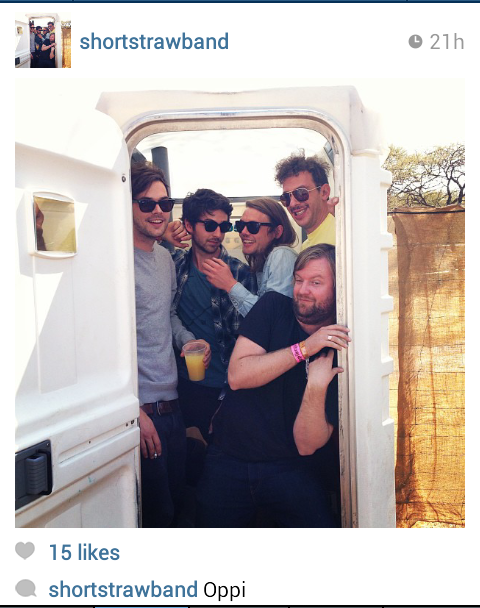
Screenshot_2013-08-10-12-10-21-1 ShortStraw

For the five man band ShortStraw, it was about the beginning of their career. They started out playing for no one then moved on to crowds of about 40 and now, they have two shows on the best Oppikoppi stages.

In an interview with the band, we told them ofour sad racist encounter the night before.

“That’s fucking bullshit. It’s fucking 2013 you can only laugh at people who still think that way,” said Russel, bass player for ShortStraw.

Russel told Wits Vuvuzela that one of the first black bands to play at Oppi was Kwani Experience and that was what sparked a cultural change at Oppi.

“Black bands used to be apprehensive. But once they played and were received well they changed their minds about the fest.”

Tom added that music is an experience for everyone and something that should bring all people together.

After pulling the short straw on day one, we were on a mission to find some diversity at Oppikoppi.

Traditional music moves

FIRST OPPI: Bongeziwe Mabandla plays his first set at the festival. Photo: Pheladi Sethusa

The Ray-Ban stage, where the incident happened the night before was where we found a new enlightening Oppi experience.

The act was, Bongeziwe Mabandla, who enchanted the crowd with his sweet traditional melodies in isiXhosa. His sound was one we cannot put our finger on but it made us feel like we were watching a male Thandiswa Mazwai.

The crowd, representative of South Africa’s overrated rainbow nation, more than half of whom did not understand the lyrics, stood and danced along with him.

People lost their minds when he jumped off the stage into the crowd and beckoned him to jump onto the table, which he did without protest.

AO JIKA: Mi Casa’s frontman, J Something setting the stage alight. Photo: Pheladi Sethusa

 Oppi’s cultural shift

Bittereinder, who are veterans to Oppi said the festival has gotten bigger and better with more variety in music than ever before.

Jaco van der Merwe, rapper in three man band used the Vusi Mahlasela tribute last year as an example of Oppi’s diversity.

Mi Casa is a great example of diversity, it’s just beautiful. They also have random black people at our show, who have no idea what we are saying, but they jam anyway,” Jaco chuckled.

Later that evening we jammed to crowd favourites Zakes Bantwiniand MiCasa. At these performances, the crowds were just as diverse and responsive. As J’Something asked us to jika, we turned and saw different people jika along with him.

Op pad na Oppi

OPPI PAD: The long and windy road. Photo: Shandukani Mulaudzi

By Pheladi Sethusa and Shandukani Mulaudzi

Three camera bags, two spare batteries for each camera, sleeping bags, tent, camp chairs, bags and booze all squeezed into the back of a Polo hatchback.

Even though the day had been coming for a month, two Oppikoppi virgins were scrambling to get their things together at the last minute.

Rosebank Mall was full of people getting last minute supplies, mostly of the liquid variety.

The journey begins

Within the first 30 minutes of the drive, a wrong turn made it clear that it would be a long journey to Northam Farm, Thabazimbi.

The scenic route made up for the potholes and narrow roads which made for a bumpy ride and also provided plenty of photo opportunities.

After two hours of driving a toilet break was needed but no Engen, Shell or Totall garages were in sight – only kilometre after kilometre of dusty road and the odd bush. The only solution to this problem was found inbetween the two car doors of the little Polo.

We’re here!

A wrong turn gone right led directly to the Oppikoppi gates.

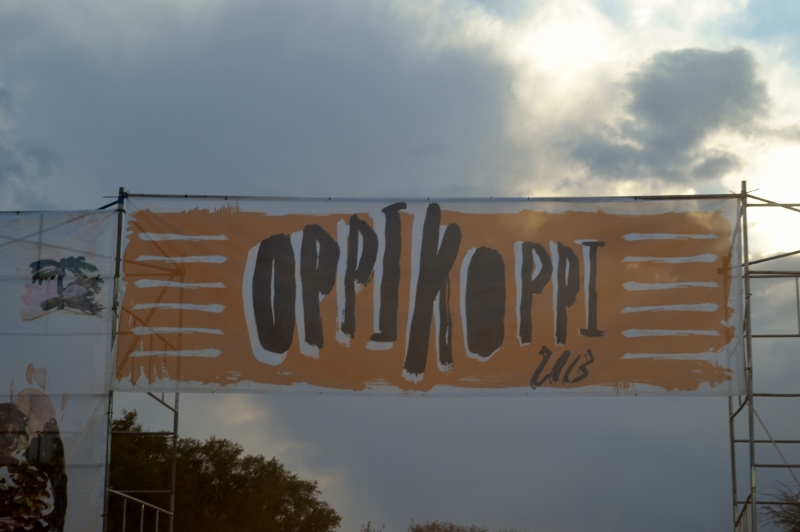
ENTER HERE: Oppikoppi 2013. Photo: Shandukani Mulaudzi

Thorn bushes and dust in the air welcomed the first-timers to what would be their home for the next three days. Setting up a tent and easing into the campsite took no longer than 30 minutes.

After settling in, it was time to explore the festival they didn’t know but had heard so much about. Having heard rumours about poor to non-existent sanitation, drunken mosh pits and rampant racism – only first-hand experiences could tell.

Rumours turned true-mours

A performance by band, CrashCarBurn proved the mosh pits true, leaving a rocky taste in our mouths.

A bird’s eye view of the ShortStraw performance from the shoulders of a strong man proved the racism claims.

While many sat on shoulders and waved their hands to the music, it was not a fun experience for one.

As soon as she was lifted to the gracious man’s shoulders, pushing and shoving came from the girls in the front. It could have been a matter of jealousy however, we learned differently.

The guy let our reporter down, and apologised for the failed experience.

His friend, known only to us as Francois, told Wits Vuvuzela journo Caro Malherbe: “I’m sorry. I really would like to talk to them (the black colleagues) but the girls won’t like it. They are of a different race classification.”

With shock and disappointment, the short straw was indeed pulled: by us. We went back to our tents feeling disheartened, but still hopeful.

That hope was quickly snuffed out by comments that came from a neighbouring tent. To our left was a tent with two black men who were very chatty, to our right were two white, Afrikaans men who were also very vocal.

We overheard the white campers saying “Ag, ek gaan nou iemand klap as hulle nie stil bly. Ons sal sommer die nuwe Waterkloof 2 wees”, this was followed by the two men laughing.

That was within a few hours of being on the farm, two more days to go.

Best reads

Decided to start this new little section, to promote what I thought were the best reads from the newspaper.

Obviously none of my work will feature in this section because that’ what the rest of this blog is dedicated to.

I’ll just share some of the best work from #teamvuvu that week and hope others enjoy it as much as I did.  So here goes:

  • Academia lost in translation by Nolwazi Mjwara. Fasctnating piece on monolingualism in South Africa. I felt like I was at the talk and agreed with everything the speaker had to say.
  • A coffee shop that’s stirring things up by Mfuneko Toyana. A write up about HEI Cafe, i may be a little biased considering my vested interests in HEI but regardless it was a well written piece with beautiful imagery.
  • Dismissed “sex pests” speak… by Prelene Singh and Emelia Motsai. Our front page this week, the quotes in this article are priceless. This article also represents something much bigger though. It’s about showing that the collective efforts of our team, the University and the brave girls and boys who came forward have been effective.
  • Habib No money for in-house cleaning by Emelia Mostai. Outsourcing has been and continues to be a serious problem at Wits. Readings
  • I did not report my harasser by Shandukani Mulaudzi. In my humble yet not so humble opinion there has not been one ‘Slice of Life’ written that isn’t compelling. The section lets us truly speak in our voice, Loved that this read like a conversation. Literally though, Shandu and I discussed this matter a few weeks ago and now here it is on paper (well on screen here).
  • Letter to SRC president by Saul Musker. He is not a teamvuvunite but his letter made the opinions section of the paper. Shucks if ever there was a response to an open letter, this was it. I could hardly believe that I was reading the words of a first year. His response was clear and left me with a lot to think about.

VIDEO: WAM After Dark

The Wits Art Museum hosted their first “WAM After Dark” event this past Friday, August 2. Th event is geared at attracting a younger crowd to the museum. It was quite fun to be in attendance, here’s a quick video showing what went down. Related articles Snap(s) of the week (thejourneytoadream.wordpress.com)

Team Vuvu Oppi ball

ALL ROADS lead to Limpopo in August, this time not for Moria celebrations or to return to one’s roots, but rather to rock out at Oppikoppi.

Bewilderbeast

Bewilderbeast is the theme this year and it marks the 19th Oppikoppi festival since its inception in 1994.

Performers set to take the stage and entertain revellers include Mi Casa, Jeremy Loops, Jack Parow and the Deftones.

Two Wits Vuvuzela reporters will be attending Oppi this year and, in preparation for the festivities, they decided to find out how to prepare for their weekend in the bush.

What to expect

Most people approached for advice said to get a reliable tent, warm sleeping bags and a big cooler box to store food and booze.

A veteran who has attended numerous Oppikoppi festivals, Habrey Landman, from the University of Pretoria, told Wits Vuvuzela: “You need to take a boy, to help you make a fire and set up camp. There are no camp areas, it’s just bush.”

She added that hygiene is a major issue and the best way to stay clean is to bring along wet wipes and dry shampoo that can be bought at Clicks.

VoWFM DJ Max Motloung said he had been warned about the funky smelling festival.

“Just know that you guys are not going to bath, hey,” he said.

Motloung added that one should be prepared to wait in hours of traffic when leaving on the last day of the festival.

Landman said festival goers should keep hydrated: “a case of something, a bottle of something and dash” would suffice.

The festival starts next week Thursday, August 8 and runs for three days until Saturday, August 10.

Team Vuvu is ready, all that stands between reporters and bringing the festival to Witsies is a three-hour drive to a farm in Northam.

Ramadan: a time to reflect and fast

Allahu Akbar: Muslim students pictured at the University of Johannesburg, reciting a sunset prayer before breaking fast on Tuesday evening. The Wits and UJ Muslim student associations broke their fast together at a Ramadan Iftar dinner. Photo: Caro Malherbe

For Muslims all over the world Ramadan is a time of sacrifice and reflection.

What is Ramadan?

Anwar Jhetam from the   Muslim Students Association said Ramadan marks the ninth month in the Islamic calendar.

This is the month in which it is believed  the holy Qu’ran was revealed, said Jhetam.

“It is a month of fasting and increased worship to develop a closer relationship with God.   Ramadan is a month of reflection and self development,” he said.

During this month Muslims fast from dawn to dusk and abstain from “food, drink and sex with one’s spouse”, said Jhetam.  The fast is broken after dusk at which point people are allowed to indulge in the above.

Students and fasting 

While the rest of the students go about their day, munching this and that, Muslim students have to wake up before sunrise to have breakfast and fast throughout the day until about 5.30pm.

Romy Dasoo, 1st year Engineering, said she is finding fasting while attending university very difficult.

She has class from 8am to 5pm. “I end up breaking fast later, due to traffic,” she said.

Third year physiology student, Imraan Ballim, said: “Apart from the weird gastric sounds, it’s quite cool.”

Ballim believes the month of Ramadan is a very spiritual experience. “You engage more with religion and what it means,” said Ballim.

He also believes the introspection aspect of the fast makes it worthwhile.

Dasoo wishes she was more spiritual because the month would mean more to her and added that she admires students who are very spiritual.

Many students are quite aware of the difficulty of having to concentrate on an empty stomach.

Ballim agreed the first few days are difficult but said it becomes easier with time as you aren’t distracted by having to eat or drink.

Shared experience

Many Muslim students also get together to pray in the afternoon.

Ballim said this is a “nice experience because everyone gets together” and shares in the religion. Breaking fast is another good experience, as people gather with their families to feast on food they have been wilfully avoiding all day.

Special concessions are made for pregnant women, children, the sick and people who will be travelling at the time.

“They are permitted to abstain from the fast and can fast at a later date,” said Jhetam.

“At the heart of the fast is drawing closer to God during this special time,” he added, saying that students should use this time to develop character traits and habits that they will carry with them long after this religious period is over.


La Bonne Vie

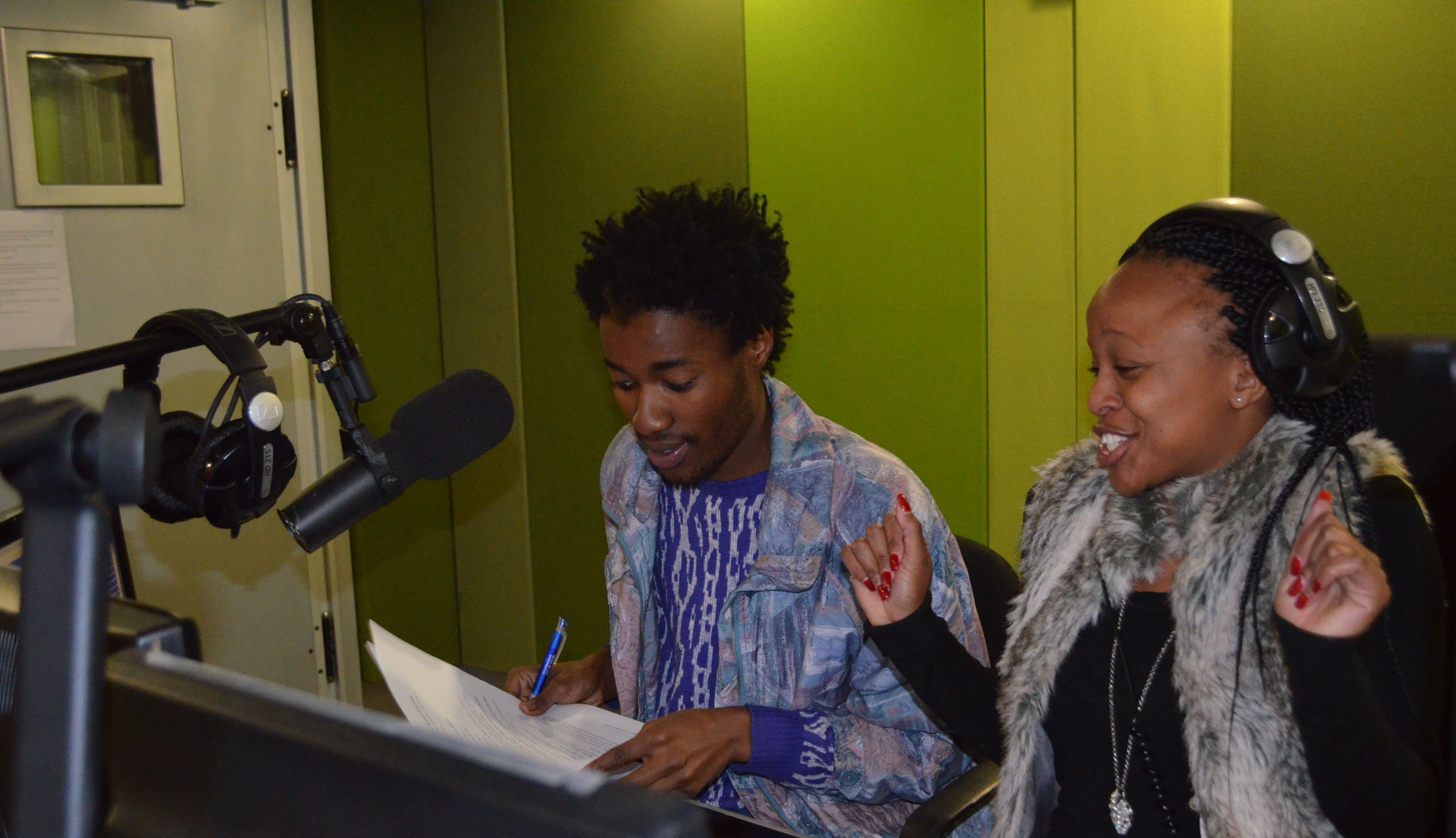
LE GOOD LIFE: Samkele Kaase and Karabo Ntshweng having fun in studio. Photo: Pheladi Sethusa

Two great minds and voices have come together to bring Witsies and all those in Braamfie ‘the good life’ on VoWfm.

La Bonne Vie is the French phrase for ‘good life’ and is now the name of a lifestyle and entertainment show hosted by Karabo Ntshweng and Samkele Kaase.

La Bonne what?

“We want to expose Joburg in its entirety,” said Ntshweng. She added that they want to give students a taste of the good life that falls within their budget.

Kaase and Ntshweng said that they went about doing this by attending events, informing people about events and having weekly give-aways. Events and places that students previously might not have had access to or just didn’t know about.

Kaase said that they connect with the people who own all the hotspots in Braam and make their proposals for deals and give-aways for the show.

Who’s it for?

Kaase said: “The show is very androgynous. People often assume that lifestyle shows are for women.” The pair added that they are about reaching out to students in the Braamfontein area who want to make things happen for themselves.

Natural progression

The co-hosts have always wanted to work together and this show was the natural progression of their professional relationship. Ntshweng said that they have both been at VoW for a long time and that they wanted to host an “entertaining talk show” that did more than just play popular music.

Kaase is still a student at Wits and Ntshweng now works at a popular Johannesburg radio station.

Witsies can catch La Bonne Vie on Thursdays at 7pm and podcasts are going to be available on VoW’s website from this week onwards.

Disregard for the disabled

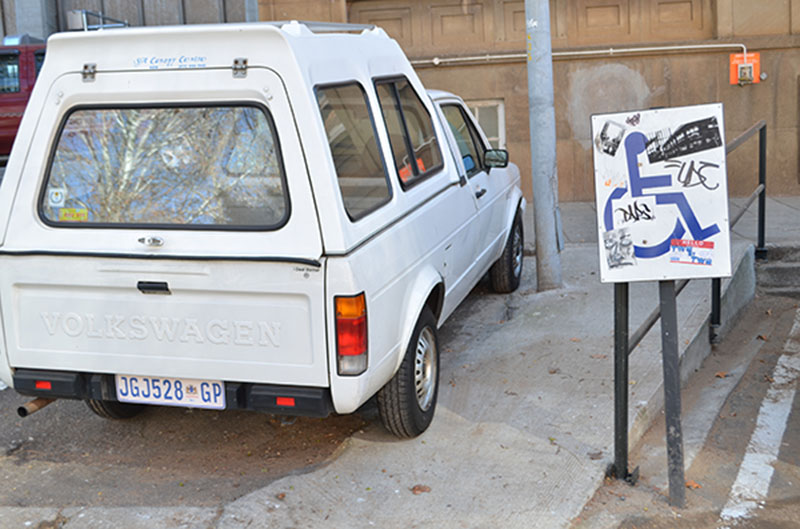
PARKED IN: Students in wheelchairs would not be able to access this ramp outside the School of the Arts as a driver decided to turn into a parking bay. Photo: Pheladi Sethusa

By Liesl Frankson and Pheladi Sethusa

It’s easy for able-bodied students to forget that navigating the world without sight or the ability to walk can be very tough.

Students in wheelchairs and students who cannot see have to carefully map out their routes to classes, residences and the like.

If they are met by even one obstacle on that route on a certain day, they have to think on their feet.

Cuthbert Ramatlo of the Disability Unit on campus said blind students with guide dogs would be stranded in such an instance, as their dogs only know one specific route.

The Disability Interest Group meets two to three times a year to discuss issues which constantly comes up is  access to campus for disabled students.

One of the major issues around this is often a lack of clear signage indicating suitable entrances, parking areas and toilets.

Vandalism

Wits Vuvuzela walked around to investigate access and wheelchair friendly routes on campus.

Some signs were vandalised while others were not clearly marked or visible.

One of the backdoor entrances that students in wheelchairs have to use. Photo: Pheladi Sethusa

Along with this a wheelchair lift at the School of Arts had been vandalised,  forcing students who use this entrance to go through the after hour’s back door.

“Often we think of back door access for people with disabilities and that’s really wrong because it’s basically going back to discrimination when there were different doors for different races,” said Duncan Yates secretary of the Disability Interest Group.

Yusuf Talia, BSc final year, a student who uses a wheelchair said: “There are some limitations at older buildings, like elevators that make certain places inaccessible”.

Along with this he said weathered paving made for tricky navigation and this problem was intensified when going uphill.

Easy access

To tackle access issues the unit has started developing interactive maps which will show easy access areas around campus for disabled students.

Yates said the map would be a living map that grows as the university changes.

The access map system aims to make online and printed maps available for disabled students, staff and visitors to make their experience at Wits more pleasant.

Students and staff will be able to flag areas on the maps online that are not easily accessible or where they may be experiencing problems.

In addition to the new mapping system the disability unit also provides training for staff and bus drivers. One of the achievements they are proud of is the dedicated Wits bus with access for disabled students.

The unit aims to respond to all student suggestions and complaints.

Talia confirmed this and said most buildings and areas are accommodating, if one lives at res the disability unit generally makes a plan for students to be comfortable.

Sign or forever hold your piece job


ON THE JOB: Business as usual for Wits cleaner. Photo: Pheladi Sethusa

Desperate to keep their jobs, Wits cleaners say they signed contracts which they were not given time to read – making them all temporary workers for the next three months.

New company

Ukweza took over from Supercare as the new company to whom Wits has outsourced its cleaning services. Cleaners have claimed for years that Supercare treated them unfairly. Wits Vuvuzela spoke to several cleaners about the new contracts, which were signed during the university break.

New contracts

Maggie* said all the workers were called in on a Saturday to sign the new contracts. The workers were not given copies of the contracts or even given time to read through what they were signing.
“We had no time to read the contracts, but we were scared to lose our jobs so we just signed,” said a visibly upset Johanna*. Once they had signed, she said they were given a thick document to take home and read through. It set out the terms of their contracts.

Temporary work

Only at this point did the cleaners realise they would be working on a temporary basis for three months, after which permanent positions would be given.

Agnes* who has worked at Wits for 13 years found this unfair, especially because the contract said they could be dismissed without warning during those three months. “I have been here for 13 years, how can I be a temp?”

Tokelo Nhlapo from the Workers’ Solidarity Committee said the new contracts also contained a clause which allowed the workers to be body-searched, something he thought would allow for “poor working conditions”.

The workers were forced to sign because they were desperate for employment, he said. They were left especially vulnerable because contract workers were not allowed to have a union. “The university is taking advantage of structural unemployment,” said Nhlapo.

Clauses and responses

Nhlapo also made these allegations on twitter. He was engaged by the vice chancellor, Prof Adam Habib, who replied: “Deliberately lying serves no purpose but destroys Wits reputation.”

Besides the brief interaction on twitter, Nhlapo said Habib and Prof Tawana Kupe had been reluctant to engage with the Workers’ Solidarity Committee, because it was not a “recognised body” in the university structure. “We will continue to engage them. If they don’t listen we will engage students.”

A source from Ukweza management, who asked not to be identified, said: “No-one forced them to sign. They could have left when Supercare left.”

He added that no-one could say whether Ukweza was good or bad yet. “As for the body searching, it hasn’t been implemented so I can’t say anything about that.”

Kupe told Wits Vuvuzela that the allegations made by Nhlapo and the cleaners were not true.
“We would not condone such a practice because we are committed to the upholding worker’s rights and protecting them from abuse,” Kupe said.

He added that fixed term contracts do not automatically make the workers temporary workers. Kupe said the university would engage the Workers’ Solidarity Committee after they took measures “to regularise their status.”

*Names have been changed since the workers requested that their identities be protected.