OPPIKOPPI: Made it out alive

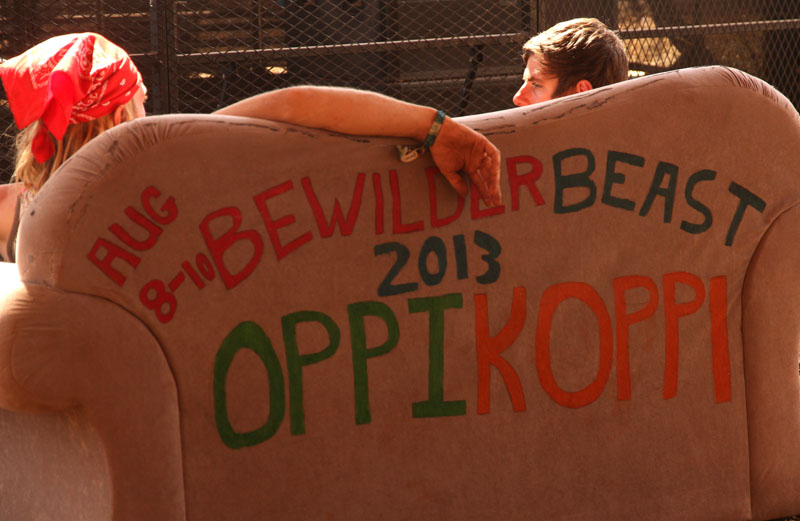
CHILL OUT: Oppi goers taking time out on a couch on the last day of the festival. Photo: Pheladi Sethua

By Pheladi Sethusa and Shandukani Mulaudzi

While one of us sits with a heaving chest and the cough of death, the other found the cure to her cold at Oppokoppi.

The last day of the festival could not have come soon enough, we were exhausted, dirty, dehydrated and hungry – but we had survived.

#InDustWeTrust

We had the time of our lives and we screamed our lungs out for our favourite acts as the dust made its way into our ill-prepared bodies.

The first thing to remember for next year is that Oppi is also known as “Dustville”. Have something to cover your nasal cavities and mouth. It will save you rocky tastes in your mouth and sandy lip gloss.

Now that we are no longer Oppi virgins, we thought it fitting to provide a few survival tips for those looking to go next year.

BAKING: Fans braving the sun to watch a show. Photo: Pheladi Sethusa

 How to make it out alive

We had bought enough food and booze to sustain our little bodies for three days in the bush. But on the last day, dry hot dogs with no margarine on the bun or sauce on the Vienna no longer seemed appealing.

The second thing to remember, the festival runs on a cashless system. Those who wish to buy food and drink on the farm have to buy pre-loaded debit cards.

We opted not to do this, knowing it would lead to frivolous spending. We had packed enough food but the smell of boerie rolls and hot chips accosted our senses by the last day, we were dying for a hot meal.

We were also so dehydrated at that point that seeing people’s water bottles had us salivating. Pack enough water, even enough is not quite enough – pack more than enough just to be safe.

In addition energy drinks would have been beneficial. We could barely keep our eyes open by the third day, this would have been cured by a kick and wings from one of those special drinks.

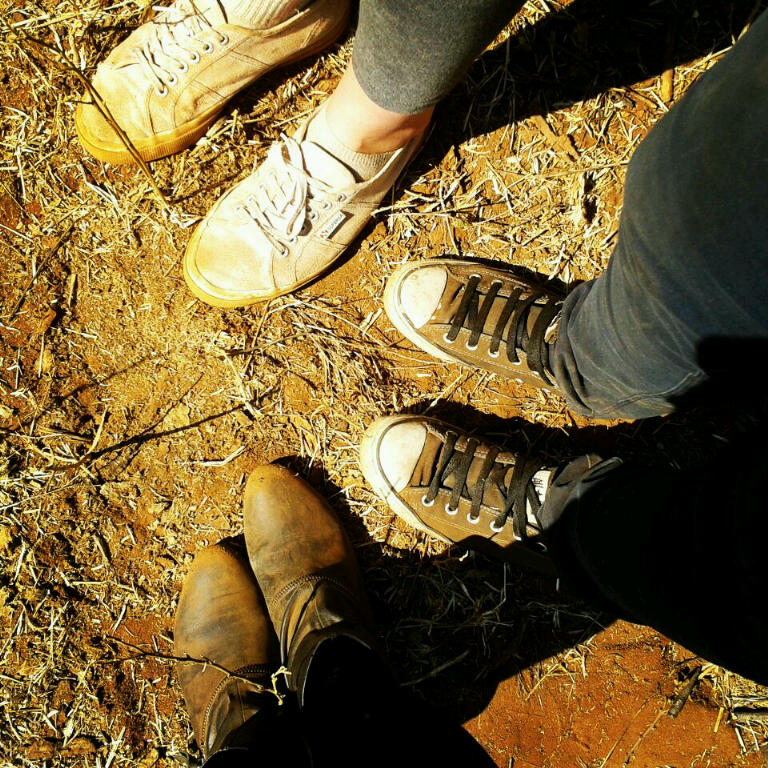
RUINED: Three pairs of shoes that will probably never be clean again. Photo: Shandukani Mulaudzi

 Clothes and shoes

We were so scared of the cold that we only packed winter clothes, big mistake. During the daytime we wanted to cry as the hot Limpopo sun scorched our fully covered bodies. It was as if the devil himself was sitting on the hill by the stages letting his heat out on everybody.

Do not bring shoes you hope to wear ever again and only bring one pair. You are going to be filthy by the end of the festival, so rather go with the general theme and take scrappy clothing.

On your way in and out

On the way to and from Oppi try to choose the route with the toll gates, it will set you back R21 but big, open, un-potholed roads await you. This way you won’t have to battle it out with trucks that are struggling to stay on the narrow, windy lanes.

Most importantly though we had a of fun, we enjoyed all that Oppi had to offer and made memories to last a lifetime.

Best reads

Decided to start this new little section, to promote what I thought were the best reads from the newspaper.

Obviously none of my work will feature in this section because that’ what the rest of this blog is dedicated to.

I’ll just share some of the best work from #teamvuvu that week and hope others enjoy it as much as I did.  So here goes:

  • Academia lost in translation by Nolwazi Mjwara. Fasctnating piece on monolingualism in South Africa. I felt like I was at the talk and agreed with everything the speaker had to say.
  • A coffee shop that’s stirring things up by Mfuneko Toyana. A write up about HEI Cafe, i may be a little biased considering my vested interests in HEI but regardless it was a well written piece with beautiful imagery.
  • Dismissed “sex pests” speak… by Prelene Singh and Emelia Motsai. Our front page this week, the quotes in this article are priceless. This article also represents something much bigger though. It’s about showing that the collective efforts of our team, the University and the brave girls and boys who came forward have been effective.
  • Habib No money for in-house cleaning by Emelia Mostai. Outsourcing has been and continues to be a serious problem at Wits. Readings
  • I did not report my harasser by Shandukani Mulaudzi. In my humble yet not so humble opinion there has not been one ‘Slice of Life’ written that isn’t compelling. The section lets us truly speak in our voice, Loved that this read like a conversation. Literally though, Shandu and I discussed this matter a few weeks ago and now here it is on paper (well on screen here).
  • Letter to SRC president by Saul Musker. He is not a teamvuvunite but his letter made the opinions section of the paper. Shucks if ever there was a response to an open letter, this was it. I could hardly believe that I was reading the words of a first year. His response was clear and left me with a lot to think about.

The slippery slopes of patriarchy

Patriarchy slapped me right in the face this morning.

I was listening to my new favourite radio station, Power FM. One of the news bulletins covered a story about a serial rapist who committed suicide while in prison. This man had raped 34 girls. The breakfast show anchor, Tim Modise said that it was “unfortunate” that the man decided to kill himself. What?!

What was unfortunate was that it took 33 ‘other’ rapes to catch this man. What was unfortunate was that the he saw it fit to strip 34 girls of their innocence and dignity. What was unfortunate was that 34 girls will probably never have ‘normal’ relationships with men. That’s unfortunate.

The man’s suicide is not.

They then went on to talk about how he may have had psychological problems and how ‘irresponsible’ it was to put a man like him in a solitary cell. Irresponsible.

What struck me was the words these men used to effectively shield one of their own. No one said good riddance or that maybe it was a long time coming. No one spoke of how maybe now the 34 girls could start to heal. No one breathed a word about them.

This brings me to my second on air encounter with slippery words. I decided to tune in to 702 yesterday, for the first time in 3 weeks – just to give them a chance you know. When I changed the station I had done so just in time for John Robbie’s Comment, a segment in which he gets to air his views and opinions.

He was outraged by a comment made by the secretary general of COSAS. In his comment, Tshiamo Tsotetsi called for the castration of rapists. To this Robbie said “did you ever hear such a deeply stupid and dangerous comment?” To answer his question, no. It is not a ‘stupid’ comment, it’s a proactive one. SA has a rife rape culture which cannot and has not been cured by judicial channels. Why not take away the instrument used to rape? Tsotetsi’s comment borders on brilliance.

Robbie went on to say that what Tsotetsi was suggesting promoted vigilantism and would break the law in a violent manner. As opposed to rape which doesn’t right?

If you rape, you should know that you are opening up a world of hurt for yourself. You should be afraid to do it knowing how dire the consequences may be. I back COSAS on this one.

Men should not trivialise how violent and how prevalent rape has become in our society. I am not saying that these men did but the language they chose to use suggested it – well to me in any case.

The Newsroom

I just finished watching the first season of The Newsroom (again). I first watched the series earlier in the year when I had just began my honours in Journalism at Wits.

I decided to watch it again for three reasons:
1) I am REALLY excited to be going back to school on Monday after being on holiday for about six weeks.
2) The second season starts later today, yays
3) I wanted to see how differently I would view the show now that I am a semi legit journ person.

[Aside: for those of you who actually read my posts – yes my ‘Newsroom’ something point something posts are a play on the series title and the show title News Night 2.0]

This time around watching the show was way more emotional. I think it has to do with the fact that I have a better understanding of what they all went through – in the newsroom that is. I have learnt a thing or two about the pressures of being in a newsroom – even if ours isn’t considered a ‘real’ one.

I felt like I could very well be one of the journalists in that newsroom. I wanted to be on their team, working on a show like News Night 2.0. Even though it’s a fictional show and all. I respect their hustle – yes that’s it. I respect their hustle.

I loved Will and MacKenzie more – so much more. They reminded me of the kind and calibre of people who teach us. They really have their whole teams back all the time. They support their valiant efforts at delivering the news, real news that matters. Something we have been encouraged to do as well.

I guess this time round it just reinforced and validated my very ambitious reasons for deciding to become a journalist. It reminded me that I can do something worthwhile while having the time of my life. Which I am.

That said, really keen to see the second season 😀

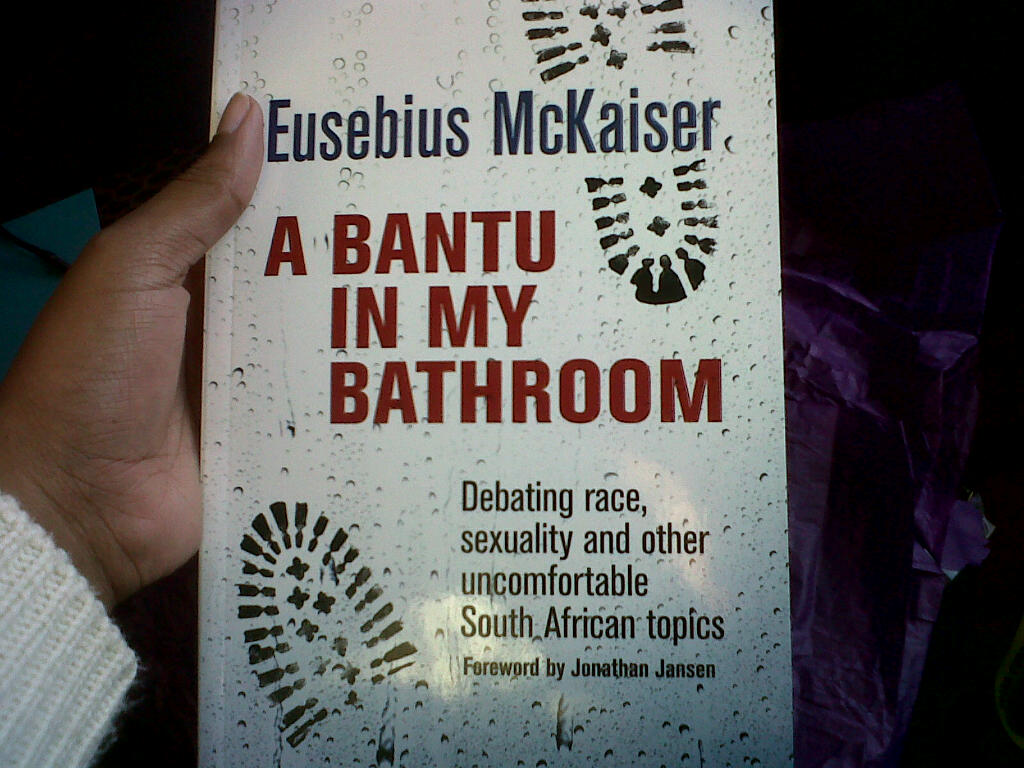
Literary Post-Mortem: A Bantu In My Bathroom

Disclaimer: I wouldn’t really call this a book review – just don’t dig the term. Also don’t feel like I’m qualified to write such yet. I’m just telling you that I read this book, how it made me feel and why or why not one should give it a read. That’s all. Let’s rather call it a ‘Literary Post-Mortem’ (I like that)

IMG00724-20130613-1623.jpg

Onwards with A Bantu in My Bathroom by Eusebius McKaiser then. Been wanting to read this book for some time, but being the broke student I am it just never happened. Umtil I got this as a gift, yays.

Before I tell you how awesome a read it was, I must mention that I am a fan of the man. At some point in my second year at Wits I considered taking up Philosophy in the hopes of being lectured by him at some point. However, reason and a passion for what I was already doing steeled me. Anyway back to why I’m a fan – I love his insights and the way he chooses to deal with difficult topics that many are reluctant to. Along with this I find him quite relatable – not all the time but I mostly get him/what he’s saying.

The book is basically a collection of essays based on a variety of topics. Namely race, culture and sexuality. Under each section there are about four to five essays, which aim at tackling various aspects of the ‘big issue’ at hand. Unsurprisingly, my favourite essays were  in the race section. I think that it is still important to look at and understand why race is still an important contributing factor to the lived South African experience. He mentioned that we can’t pretend we don’t see race just to avoid being labelled ‘racist’.

McKaiser highlights some of the most important race related challenges South Africans face. He explains why Affirmative Action is necessary, discusses white privilege, tackles the issue of whether or not black people can be racist and much more. Even though one might disagree in places, I did find myself agreeing with him 80% of the time – not just in this section but throughout the rest of the book.

In the sexuality section he spoke about ‘coming out’, love and even rape. This part of the book was the most personal for me and as such riveting to read. When it came to culture he looked at ploygamy, divisions present in our society and the advantages and disadvantages of being a so-called coconut. The range of issues raised in his essays is quite big. I was not left wanting when I was done reading – I legit felt like he discussed everything one could in 209 pages.

We should instead accept that we are deeply divided – spatially, linguistically, culturally, ideologically – and reflect on how we might live in each other’s space while disagreeing deeply with each other. The alternative, fake national unity, is simply childish. (excerpt from the book)

What I enjoyed the most were the little anecdotes that coloured his essays. For me it helped to bring home his points and also offered an unique peep into his personal life. I have often seen McKaiser on tv, attended seminar’s that he spoke at and listened to his show on radio. This book felt like the literary incarnation of those experiences. Not the content but with regards to style. It was easy read and understand because he was just being himself (or so I assume). He did stress how important authenticity is to him so I imagine he wrote in a way that would reflect that.

I also liked and admired the fact that he didn’t ‘other’ people. He didn’t speak about racists, homophobes and misogynists in a distanced manner. He made it clear that we are these people, that we are our biggest problem in many cases. Also highlighting that change can only begin with us.

If I had the money I would go out of my way to buy a few people a copy. The idea’s put forward are of great import and I feel that the more people they reach the better.

PS**

’76

This slideshow requires JavaScript.

On this most auspicious day, I suppose I have to put fingertips to keyboard and thoughts on screen. Here goes:

A thousand voices,
The marching feet approaching.
Growing louder and louder.
Determination etched in the words on their placards.
Courage in their feet, bravery in their voices.

Grown men hugging rifles.
Scared witless of –
Defiance? Black faces?
Children.

Grown men scared of children.

Children they knew they had wronged.

Children they were about to kill.

Children who did what their fathers/mothers could not.

Children we can only hope to become when we grow up.

PS**