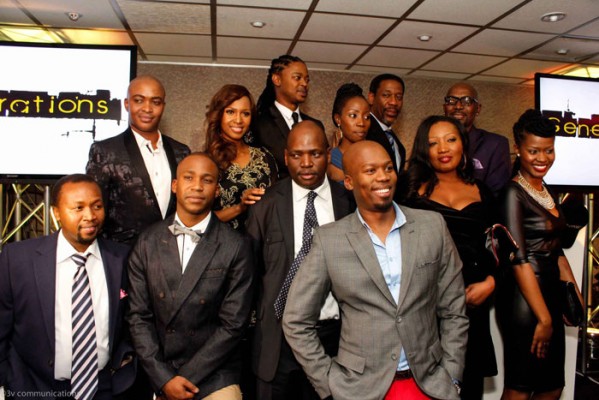
Generations’ replacement Skeem Saam viewership skyrockets

NOTE: Article first appeared in The Citizen newspaper on October 7, 2014. 

A change in TV scheduling at SABC1 has seen Sepedi drama Skeem Saam more than double its viewership numbers overnight.

As the last episode of Generations aired last week, Skeem Saam was catapulted into prime time.

According to data from the SA Audience Research Foundation, a week prior to the drama moving from its 6.30pm time slot to 8pm, their viewership stood at 3.5 million per show on average.

On the night the soapie occupied the 8pm slot for the first time on October 1, viewership shot to 8 881 352.

By Friday last week, the third day in that slot, the number went down slightly to just over 7.6 million viewers.

SABC spokesperson Kaizer Kganyago told The Citizen: “Viewership doesn’t sell ads; the time slot a show is in does.”

This was his answer amid fears that replacing Generations would have a negative impact on the massive ad revenue the show has managed to pull over the past 20 years.

Meanwhile, shooting for the new-look Generations – which will be ready to air in December – will start on October 28.

A source involved with the revamped production said: “We are all back at work and busy putting the new show together.”

The striking 16 actors – all dismissed in August – are still going ahead with their legal action.

“We have referred the matter to the CCMA (Commission for Conciliation, Mediation and Arbitration) and it will be dealt with on October 14,” said Desmond Brown, their legal representative.

Commenting on reports of a separate claim by the actors for never being registered for Unemployment Insurance Fund (UIF) benefits, Brown said: “The first issue we need to deal with is whether they were employees or independent contractors.”

He claimed the actors had not been registered for UIF, despite all South African employers being obliged to register their employees.

“When we contacted them on this issue they said the actors were not employees of the SABC or MMSV, which is why they weren’t registered for UIF,” Brown said.

Literary Postmortem: Ain’t I a Woman by bell hooks

bell hooks hit me with some knowledge and schooled me on black feminism – what it is, the conditions that led to its existence, outlined its challenges/objectives and so much more.

This very short read is filled with pearls of wisdom and earth shattering truths that need to be shared. In keeping with the fashion of alternative book reviews, I’m going to share some of my favourite quotes and lessons learned from the book. Initially I wanted to write an essay but there’s no insight I could give that she didn’t articulate perfectly.

But for a bit of background, Hooks traces the roots of the woman’s rights struggle all the way from American slavery to the present day America (which was the 80s). Her research unearths harrowing facts about the black female experience. I would put the whole book on here if I could because it is that necessary. For example:

“Racist, sexist socialization had conditioned us to devalue our femaleness and to regard race as the only relevant label of identification… We were afraid to acknowledge that sexism could be just as oppressive as racism. We clung to the hope that liberation from racial oppression would be all that was necessary for us to be free” (page 5).

That is the precursor to a passage on how black men were given the vote before black women and white woman in the late 1800s, a show of the utter disdain for all woman – racism was put aside for sexism to soar.

Chapter 1: Sexism and the Black Female Slave Experience

  • On the slave experience aboard slave ships: “After branding all slaves were stripped of any clothing. The nakedness of the African female served as a constant reminder of her sexual vulnerability. Rape was a common method of torture slavers used to subdue recalcitrant black women” (page 18).
  • Things didn’t get better on plantations: “Those black women who resisted sexual exploitation directly challenged the system; their refusal to submit passively to rape was a denouncement of the slave-owner’s right to their persons. They were brutally punished. The political aim of this categorical rape of black women by white males was to obtain absolute allegiance and obedience to the white imperialist order” (page 27).
  • “White male religious teachers taught that woman was an inherently sinful creature of the flesh whose wickedness could only be purged by the intercession of a more powerful being. Appointing themselves as the personal agents of God, they became the judges and overseers of woman’s virtue” (page 29). Damn, just damn.
  • Sadly: “Most black male slaves stood quietly by as white masters sexually assaulted and brutalised black women and were not compelled to act as protectors. Their first instincts were toward self-preservation” (page 35).

I’ve had fights with my brother about this one. I suppose women were all alone when they were sold to go on those ships and no one stopped it. He argues they weren’t in a position to fight back, they weren’t – but fucking try, If enough men had I like to believe things may have turned out differently.

  • True story: “While racism was clearly the evil that had decreed black people would be enslaved, it was sexism that determined that the lot of the black female would be harsher, more brutal than that of the black male slave” (page 43).

Chapter 2: Continued Devaluation of Black Womanhood

  • Systematic devaluation of black womanhood was not simply a direct consequence of race hatred, it was a calculated method of social control” (page 59-60).

This is a referral to the structural support garnered by the myths that had been circulated around black women’s sexuality. This myth being that black women were loose, had insatiable sexual appetites and were masters of seduction. Which is why raping them was not seen as a violent offense, society had come to believe that black woman basically asked for it. Along with this black men were said to be violent rapists who wanted to harm white women, another myth to keep the races separate through fear.

  • “White Americans have legally relinquished the apartheid structure that once characterised race relations but they have not given up white rule. Given that power in capitalist patriarchal America is in the hands of white men, the present obvious threat to white solidarity is inter-marriage between white men and non-white women, and in particular black women” (page 64).

This is something I don’t think I can agree with. Given that “the power” is in the hands of white men, they don’t need the solidarity of their white women to keep it – they need them to make that grip tighter possibly. I don’t think that inter-marriage is a threat at all, in fact it’s an advantage, that shows just how all-encompassing that power is.

  • The term matriarch implies the existence or a social order in which women exercise social and political power, a state which in no way resembles the condition of black women or all women in American society. The decisions that determine the way in which black women must live their lives are made by others, usually white men” (page 72).

Chapter 3: The Imperialism of Patriarchy

  • “… Emphasis on the impact of racism on black men has evoked an image of the black male as effete, emasculated, crippled. And so intensely does this image dominate American thinking that people are absolutely unwilling to admit that the damaging effects of racism on black men neither prevents them from being sexist oppressors nor excuses or justifies their sexist oppression of black women” (page 88).
  • “At a very young ages, black male children learn that they have a privileged status in the world based on their having being born male; they learn that this status is superior to that of a woman. A consequence of their early sexist socialisation, they mature accepting the same sexist sentiments…” (page 102).

I have seen this among my own friends – they expect women to be and act a certain way – standards they definitely hold for themselves. Or the women they have “fun” with, only the ones “worthy” of taking their names one day. Le sigh.

  • “While insecure feelings about their selfhood may motivate black men to commit violent acts, in a culture that condones violence in men as a positive expression of masculinity, the ability to use force against another person – i.e., oppress them – may be less an expression of self-hatred than a rewarding, fulfilling act” (page 104). Wowzer.
  • “Since the black woman has been stereotyped by both white and black men as the “bad” woman, she has not been able to ally herself with men from either group to get protection from the other” (page 108).

Steve Biko once said of black people that we are on our own, black women especially so, I feel.

  • “While I believe it is perfectly normal for people of different races to be sexually attracted to one another, I do not think that black men who confess to loving white women and hating black women or vice versa are simply expressing personal preferences free of culturally socialized biases” (page 112). Word to big bird.

Chapter 4: Racism and Feminism: The Issue of Accountability

  • “To black women the issue is not whether white women are more or less racist than white men, but that they are racist” (page 124).
  •  “Animosity between black and white women’s liberationists was not due to disagreement over racism within the women’s movement; it was the end result of years of jealousy, envy, competition and anger between the two groups” (page 153).

A conflict that Hooks says was driven by white males to make sure the two would not be able to find solidarity at any point. She adds that the only way to try and achieve any kind of “sisterhood” begins with actively rejecting and all stereotypes about one another.

Chapter 5: Black Women and Feminism

  • On the Civil Rights Movement: “Those black women who believed in social equality of the sexes learned to suppress their opinions for fear attention might be shifted from racial issues” (page 176).
  • “The fear of being alone, or of being unloved, had cause women of all races to passively accept sexism and sexist oppression” (page 184).
  • “We, black women who advocate feminist ideology, are pioneers. We are clearing a path for ourselves and our sisters. We hope that as they see us reach our goal – no longer victimized, no longer unrecognized, no longer afraid – they will take courage and follow” (page 196).

Was uncomfortable to read the criticisms of Malcolm X and Amiri Baraka, had one eye closed and everything, but ya. It’s astounding that a book written in 1982 could resonate so well with me in 2014 – that we still face many of the same challenges.

Therefore we must take courage as she said. Aluta Continua.

Pastor’s supporter drinks petrol as part of “miracle” (video)

NOTE: Article first appeared on The Citizen website on September 25, 2014.

Pretoria pastor Lesego Daniel has roped in a congregant to support claims that petrol can be turned into pineapple juice.

The believer has taken his faith to ‘another level’ by drinking petrol to “connect to God”.

In January this year, Pastor Lesego Daniel made members of his church eat grass for the same reason.

At the time he reportedly told his congregation that eating grass would rid them of their sins and heal them of any ailments they may have had.

In a video posted on YouTube, the Pretoria-based pastor’s congregant claims to turn petrol into pineapple juice.

This “miraculous” power is demonstrated in front of the congregation, with one of the church members pouring petrol into a basin and igniting it to prove that it’s flammable.

Beforehand, Daniel tasted the liquid in front of the crowd.

READ MORE: The dangers of drinking petrol

What is apparently the same fluid is then drunk in front of the congregation, with spectators shouting “hallelujah”.

After drinking the “petrol turned pineapple juice”, the man coughs before saying: “It has lot of fumes but I don’t have any side effects”.

Daniel works from Robboni Centre Ministries in Ga-Rankuwa.

Generations off air from October 1

NOTE: Article first appeared in The Citizen newspaper on September 20, 2014. 

The contingency plan the SABC had in place to deal with the lack of new Generations episodes will come into full effect on October 1 – when the show is pulled off the air.

Kaizer Kganyago, SABC spokesperson, confirmed last night the show would no longer be on air as of next month.

The cast of Generations. Image courtesy of Facebook.com/GenerationsTVShow

“There are no new episodes … Generations will be off air until December,” he revealed.

Filming of the popular soap stopped on August 11 when 16 principal actors started withholding their services. The 16 demanded higher salaries and a cut of R500 million in royalties.

Kganyago said SABC1 would juggle their scheduling to move SePedi drama Skeem Saam from its 6.30pm timeslot to the coveted 8pm slotGenerations used to occupy.

Earlier this week, Generations producer and creator Mfundi Vundla said he was rewriting the entire show, presumably without the 16 actors, who were axed after being given an ultimatum to return to work or be fired a week after their strike action started.

The actors seem oblivious to the changes being made. The Generations Actors Guild announced yesterday they would be taking their matter to the CCMA.

Generations fight has producer in a lather

NOTE: This article first appeared in The Citizen newspaper on September 18, 2014. 

The creator and producer of hit soap Generations, Mfundi Vundla, is standing his ground and is rewriting the entire show after he fired 16 principal actors who were on strike.

Following their dismissals by Vundla’s company, MMSV Productions, almost a month ago, he reportedly left the country to rethink the direction of the show now that his entire cast was gone.

Earlier, he said he took the strike very personally and felt “betrayed” by their accusations of exploitation.

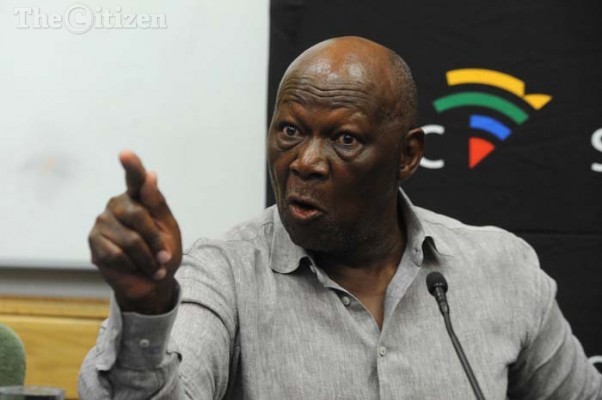
FILE PICTURE: Generations executive producer Mfundi Vundla addresses the media at the SABC offices in Auckland Park, 22 August 2014, following the termination of services of 16 actors from the popular soapie. Picture: Refilwe Modise

Yesterday, when The Citizen contacted Vundla, who is back in the country, he said he was in a brainstorming session.

“I am busy rewriting the whole of Generations, I can’t talk to the media at the moment,” he said.

Viewers and fans of the soapie have been tuning in to watch prerecorded episodes for almost six weeks.

No filming has taken place since August 11, when the actors started “withholding their services” – meaning there may only be seven prerecorded episodes ready to air from today.

This is probably the reason Vundla is in a frenzied rush to pen the new direction of the show.

SABC spokesperson Kaizer Kganyago could not confirm how many episodes were left, but said: “They haven’t been shooting, so at some point the episodes will be finished.”

He added that the SABC did have a backup plan for when that time came and this would be announced in due course.

In the event that the 16 actors were not reinstated, the Congress of SA Trade Unions (Cosatu) would march and picket in solidarity, the federation said. Patrick Craven, Cosatu national spokesperson, said they had requested a boycott of the show from Monday and would continue to put pressure on the SABC, producers, government and the public.

There has been no word on when auditions will be held to replace the fired actors or allocate new roles  for the “new” Generations. Cosatu general secretary

Zwelinzima Vavi threatened that any actors who auditioned would be publicly named and shamed.

Water supplies restored as reservoirs fill

NOTE: Article first appeared on The Citizen website on September 16, 2014. 

Water supply has been sporadic or non-existent in parts of Johannesburg and the West Rand over the past two days.

Democratic Alliance ward councillor Amanda Forsythe received calls from residents reporting “ first  low water pressure and then others saying they had completely ran out of water”.

Forsythe contacted Johannesburg Water, who informed her that the Rand Water reservoirs had ran out of water due to an extensive power outage.

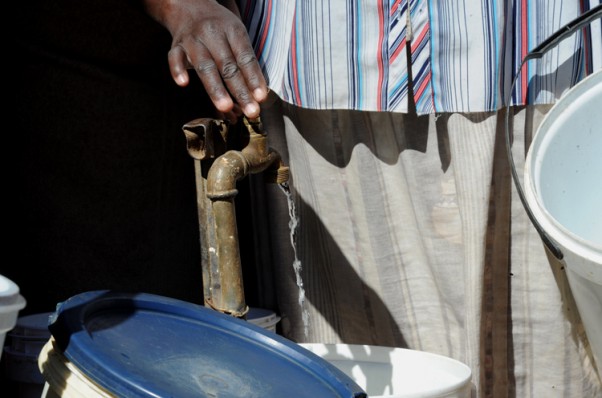
FILE PICTURE: A resident fills her bucket with water from a tap. Picture: Werner Beukes/SAPA

Johannesburg Water spokesperson, Justice Mohale said: “The interruption was caused by the power outage in the Eikenhof area, which resulted in Rand Water unable to pump water from its Eikenhof Pumping station to the Meredale Reservoir, which supplies Joburg Water.”

Affected areas included the south-western part of Johannesburg and northern suburbs including Emmarentia, Greenside, Melville and Parktown. Restoration of water supply began yesterday afternoon but because of the size of the reservoirs, it took a few hours. Forsythe said water was restored to most residents by 10pm last night, but that there were some glitches.

“Some people had water on for a while last night and then this morning had nothing, but I believe water has been fully restored now,” Forsythe said.

Considering the extent of the water interruption, Forsythe said: “Those reservoirs are huge. The power outage must have lasted a day or so. They even have back-up generators, but those also ran out of power because of the high demand for water.”

5 arrested for Gauteng mall robberies

NOTE: Article first appeared on The Citizen website on Septemper 9, 2014. 

On Tuesday morning Gauteng police made their first arrests in connection to a recent spate of mall robberies in the province.

Five men aged between 24 and 44 years of age were nabbed in a police raid in Brixton and Doornfontien at 4am this morning, . The five are suspected to be involved in at least two mall robberies in the province.

Provincial commissioner of police, Lesetja Mothiba told a media briefing in Parktown that so far 11 mall robberies have rocked Gauteng.

On 22 August, a gang of robbers struck an iStore at Centurion Mall, escaping with over R1 million worth of goods. A week before a group of men robbed an iStore at Cresta shopping mall , taking an undisclosed number of cellphones and iPads. As they fled the scene they started shooting randomly, injuring an elderly man in the parking lot.

That same week a group of men robbed an iStore at Glen Shopping Mall in Glenvista, Johannesburg, shooting and injuring a security guard before they fled the scene.

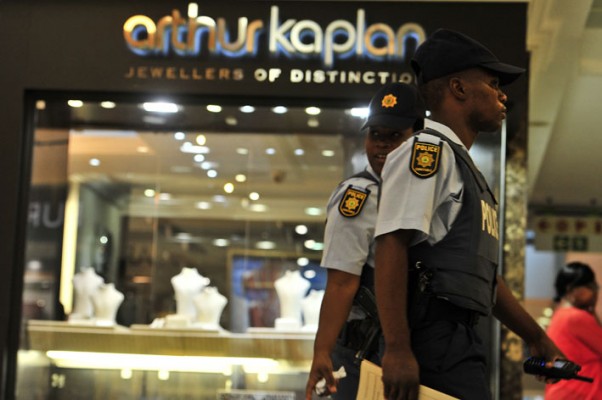
FILE PIC. Members of the police walk outside the jewellery store that was robbed on 14 November 2013 in Menlyn Park shopping centre. Picture: Christine Vermooten

A man was killed last week at Black Chain Shopping Centre in Soweto when five suspects stole a cash box.

On Monday evening, a cellphone store at the Glen shopping centre in Ormonde, Johannesburg, was robbed with the suspects fleeing with cellphones.

Increased Security

Mothiba said lax mall security made the robberies easier for criminals,  “some mall security is very relaxed. Some have CCTV camera’s that aren’t working or are of poor quality”.

Police are now offering a reward of R200 000 for people with information on those involved in mall robberies.

General Tebello Mosikili, deputy provincial commissioner for detective services. She revealed that police spend between R1 million and R1,5 million on rewards annually.

Police plan to work hand in hand with mall security,  management and private security companies in the coming weeks to access various malls’ security.

Mothiba said police have identified at least 12 malls that they say are “high risk”. There will be increased visibility at these malls but he did not want to scare people by identifying them.

Generations dispute far from over

NOTE: Article first appeared on The Citizen website on September 3, 2014.

There is no end in sight to the ongoing Generations drama as the popular soapie enters the fourth week of no filming.

MMSV Productions owner and Generations producer, Mfundi Vundla threw a spanner in the negotiation process with the 16 fired actors when he reportedly jetted off to Mackinac Island in Michigan, the United States of America over the weekend.

Vundla reportedly said he was going away to think of the new direction the show would take, adamant that he would not be taking back the 16 who “betrayed” him.

Seemingly following in Vundla’s footsteps, actor Thato Molamu, who plays Nicholas Nomvete has also taken steps to change his situation. He has landed a hosting job on SABC 2 show, What’s Behind The Wall? 

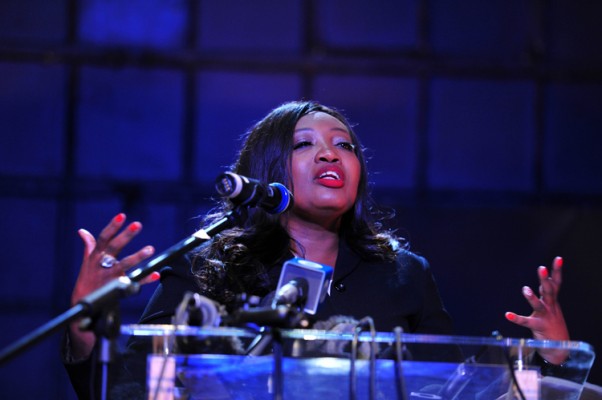
Sophie Ndaba during a press conference held by the Generations stars that were fired recently at the Market Theatre in Newtown, 26 August 2014. Picture: Neil McCartney

He was reportedly on leave like a pregnant Katlego Danke when he got fired.

The last move made in this standoff between the actors, their production company and the SABC came last week Thursday. The actors sent a letter to the SABC requesting a time and date to meet again to possibly start negotiations.

The actors legal representative, Desmond Brown said some of the other fired actors had also started looking for “other gigs” while waiting to solve their dispute.

Winnie Modise, Sophie Ndaba and Nambita Mpumlwana did just that when they attended the Women in Sport awards evening hosted by the department of sports and recreation last week.

Ministerial spokesperson, Anda Qhama Bici said the three “were invited as guests, they weren’t making an appearance”.

Last week the fired actors received partial salaries because they have not been at work since August 11. They are demanding a cut of the show’s royalties and three year contracts.

At the moment pre-recorded episodes of Generations are still being aired, but there are only two to possibly four weeks’ worth of episodes left that are ready to air.

2Cents: The #Generation16 and cultural activism

The past two weeks have been the stage on which a wage dispute has turned into a full on cause to change the entertainment industry as it pertains to artists working in broadcast television.

Sixteen gatvol Generations actors decided to withhold their services (not strike they say) until their production company and the national broadcaster, SABC entered into wage negotiations with them.

They were given an ultimatum to return to work or get fired – the latter was chosen for them or by them depending on which “side” you’re on.

Since headlines have been abuzz with stories of inflated salaries, new talent, forlorn stars etc. This past Tuesday, for the first time in two weeks everyone got a big ol’ dose of perspective.

Initially when Mfundi Vundla spoke last week dropping the R55 000 bomb – I was like, well that is some good money, why are these guys kicking their toys about. But I immediately chided myself – the 21 year old soapie probably makes more money than any production of its kind in the country. Yesterday I learnt they make R500 million a year now.

That they cannot sit down to negotiate a way to cut the actors a piece of that pie seems unreasonable, to me at least. Apparently they have only received R3000 in royalty fees for the past 11 years.

Some of the dismissed cast members highlighted what was wrong, what they wanted and broke down in tears when doing so – illustrating to me that I actually have no idea how the “industry works”. Then Dr Johan Kani explained for us all.

“We carry the residue of the apartheid era master/servant relationship,” he said. Kani expanded on this saying that actors are not employed by their production companies, they are in a contractual relationship with them. Adding that actors should not be treated in the disposable manner that the dismissed 16 were treated.

He spoke at length about he had used his art to help bring down an oppressive system, yet here sat 16 people, 21 years later who were being treated in a way that resembled that past regime. He said that as an academic entity in society, artists should be valued and now was the time for them to stand up to say they are worthy of more.

He called on them to make the Generations set unworkable, much like the miners in Rustenburg had done to Lonmin for five months. Block the doors, barring clening staff, writers and the like from going to work until their demands are met.

His speech was the ultimate ah-uh moment. His son, Atandwa Kani then took to the podium. He was fired along with the 16 after only being a part of the team for three weeks, he had not even been on screen yet.

He admitted that he came on board wanting to “ascend his status as an actor”, acting alongside some of the country’s best.  However, “this was a battle I could not turn my back on,” he said.

“I come from a family where I was raised by a father who spent most of his life, and dedicated his life to the emancipation of this country – as a political activist through the arts. Now, I cannot having his blood running through my veins sit back and be silent.”

What they had to say, what everyone had to say on Tuesday afternoon made me realize the dire need for cultural activism of this kind in South Africa.It also made me realise that this is no longer just about the 16, but about something much bigger.

I really do hope their cause catches on and that they do stand as firm as they have promised to. Pay back the royalties maan. 

Cops exploit law – Roux

 NOTE: Article first appeared in The Citizen newspaper on August 28, 2014. 

The country’s criminal justice system was being “exploited” by police inefficiency, Paralympian Oscar Pistorius’ lawyer Barry Roux said yesterday.

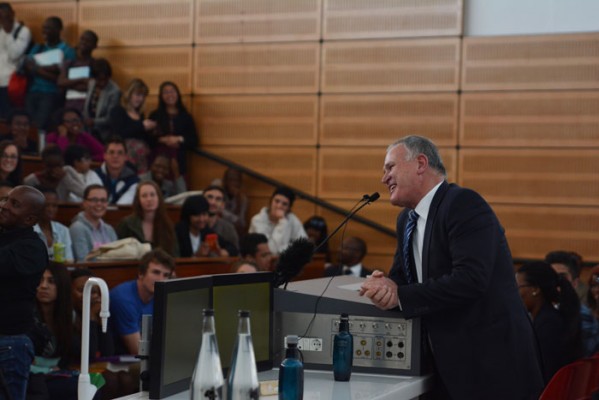
EXPERT ADVICE. Barry Roux speaks to law students at the University of the Witwatersrand yesterday, where he discussed the lack of efficacy of the SA criminal justice system. Picture: Valentina Nicol

“There’s tardiness; they don’t take the docket to court – sometimes they don’t take it because they sold it. Or sometimes they don’t take it because they have misfiled it,” said Roux. He blamed 80% of those in the police force, calling on them to “wake up”.

He also criticised some of the procedures in courts that led to delayed justice, saying “if justice is delayed long enough” people don’t show up any more or simply forget what happened.

He was speaking at a Wits University auditorium, filled to capacity with future lawyers, about the topic “Does our criminal justice system work as it should – from when a crime is committed through to the trial?”

Roux said the biggest problem in South Africa was that people who committed crimes did so knowing “there’s a fair chance they won’t get caught – or if arrested, won’t get tried”.

Roux, with 30 years’ experience behind him, was introduced as a “master cross-examiner”, something the entire country has had the opportunity of witnessing during the trial of Pistorius.

Roux became a celebrity overnight because of the case, with memes and a parody account to match on Twitter.

The room cracked up with laughter when Roux talked about witnesses who claimed they “don’t remember” events when testifying on the witness stand.

Roux added that testimonies based on what people said they saw could be unreliable because their versions would be reproductions of what happened based on their perception.