Same music, different people

By Pheladi Sethusa and Shandukani Mulaudzi

Pulling the short straw is something that happens a few times in your life. Sometimes you may be lucky and you won’t, this is life.
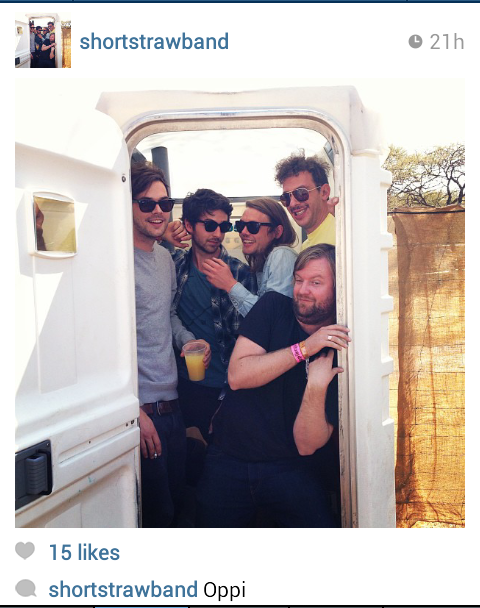
Screenshot_2013-08-10-12-10-21-1 ShortStraw

For the five man band ShortStraw, it was about the beginning of their career. They started out playing for no one then moved on to crowds of about 40 and now, they have two shows on the best Oppikoppi stages.

In an interview with the band, we told them ofour sad racist encounter the night before.

“That’s fucking bullshit. It’s fucking 2013 you can only laugh at people who still think that way,” said Russel, bass player for ShortStraw.

Russel told Wits Vuvuzela that one of the first black bands to play at Oppi was Kwani Experience and that was what sparked a cultural change at Oppi.

“Black bands used to be apprehensive. But once they played and were received well they changed their minds about the fest.”

Tom added that music is an experience for everyone and something that should bring all people together.

After pulling the short straw on day one, we were on a mission to find some diversity at Oppikoppi.

Traditional music moves

FIRST OPPI: Bongeziwe Mabandla plays his first set at the festival. Photo: Pheladi Sethusa

The Ray-Ban stage, where the incident happened the night before was where we found a new enlightening Oppi experience.

The act was, Bongeziwe Mabandla, who enchanted the crowd with his sweet traditional melodies in isiXhosa. His sound was one we cannot put our finger on but it made us feel like we were watching a male Thandiswa Mazwai.

The crowd, representative of South Africa’s overrated rainbow nation, more than half of whom did not understand the lyrics, stood and danced along with him.

People lost their minds when he jumped off the stage into the crowd and beckoned him to jump onto the table, which he did without protest.

AO JIKA: Mi Casa’s frontman, J Something setting the stage alight. Photo: Pheladi Sethusa

 Oppi’s cultural shift

Bittereinder, who are veterans to Oppi said the festival has gotten bigger and better with more variety in music than ever before.

Jaco van der Merwe, rapper in three man band used the Vusi Mahlasela tribute last year as an example of Oppi’s diversity.

Mi Casa is a great example of diversity, it’s just beautiful. They also have random black people at our show, who have no idea what we are saying, but they jam anyway,” Jaco chuckled.

Later that evening we jammed to crowd favourites Zakes Bantwiniand MiCasa. At these performances, the crowds were just as diverse and responsive. As J’Something asked us to jika, we turned and saw different people jika along with him.

Op pad na Oppi

OPPI PAD: The long and windy road. Photo: Shandukani Mulaudzi

By Pheladi Sethusa and Shandukani Mulaudzi

Three camera bags, two spare batteries for each camera, sleeping bags, tent, camp chairs, bags and booze all squeezed into the back of a Polo hatchback.

Even though the day had been coming for a month, two Oppikoppi virgins were scrambling to get their things together at the last minute.

Rosebank Mall was full of people getting last minute supplies, mostly of the liquid variety.

The journey begins

Within the first 30 minutes of the drive, a wrong turn made it clear that it would be a long journey to Northam Farm, Thabazimbi.

The scenic route made up for the potholes and narrow roads which made for a bumpy ride and also provided plenty of photo opportunities.

After two hours of driving a toilet break was needed but no Engen, Shell or Totall garages were in sight – only kilometre after kilometre of dusty road and the odd bush. The only solution to this problem was found inbetween the two car doors of the little Polo.

We’re here!

A wrong turn gone right led directly to the Oppikoppi gates.

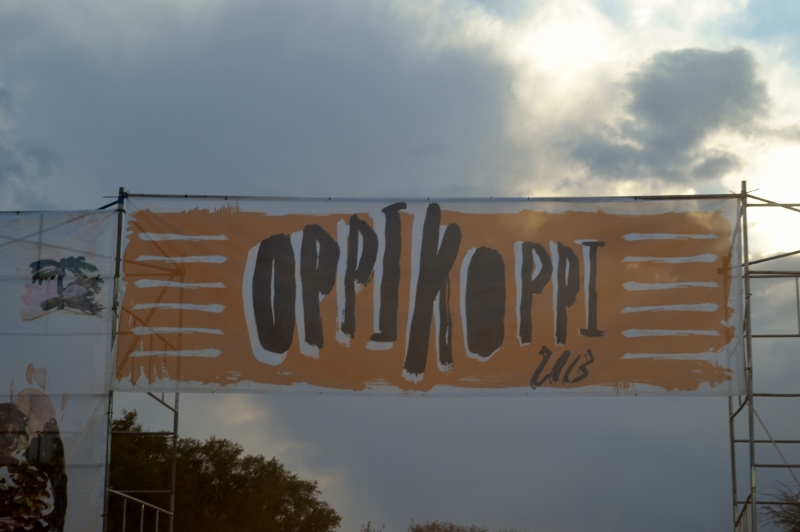
ENTER HERE: Oppikoppi 2013. Photo: Shandukani Mulaudzi

Thorn bushes and dust in the air welcomed the first-timers to what would be their home for the next three days. Setting up a tent and easing into the campsite took no longer than 30 minutes.

After settling in, it was time to explore the festival they didn’t know but had heard so much about. Having heard rumours about poor to non-existent sanitation, drunken mosh pits and rampant racism – only first-hand experiences could tell.

Rumours turned true-mours

A performance by band, CrashCarBurn proved the mosh pits true, leaving a rocky taste in our mouths.

A bird’s eye view of the ShortStraw performance from the shoulders of a strong man proved the racism claims.

While many sat on shoulders and waved their hands to the music, it was not a fun experience for one.

As soon as she was lifted to the gracious man’s shoulders, pushing and shoving came from the girls in the front. It could have been a matter of jealousy however, we learned differently.

The guy let our reporter down, and apologised for the failed experience.

His friend, known only to us as Francois, told Wits Vuvuzela journo Caro Malherbe: “I’m sorry. I really would like to talk to them (the black colleagues) but the girls won’t like it. They are of a different race classification.”

With shock and disappointment, the short straw was indeed pulled: by us. We went back to our tents feeling disheartened, but still hopeful.

That hope was quickly snuffed out by comments that came from a neighbouring tent. To our left was a tent with two black men who were very chatty, to our right were two white, Afrikaans men who were also very vocal.

We overheard the white campers saying “Ag, ek gaan nou iemand klap as hulle nie stil bly. Ons sal sommer die nuwe Waterkloof 2 wees”, this was followed by the two men laughing.

That was within a few hours of being on the farm, two more days to go.

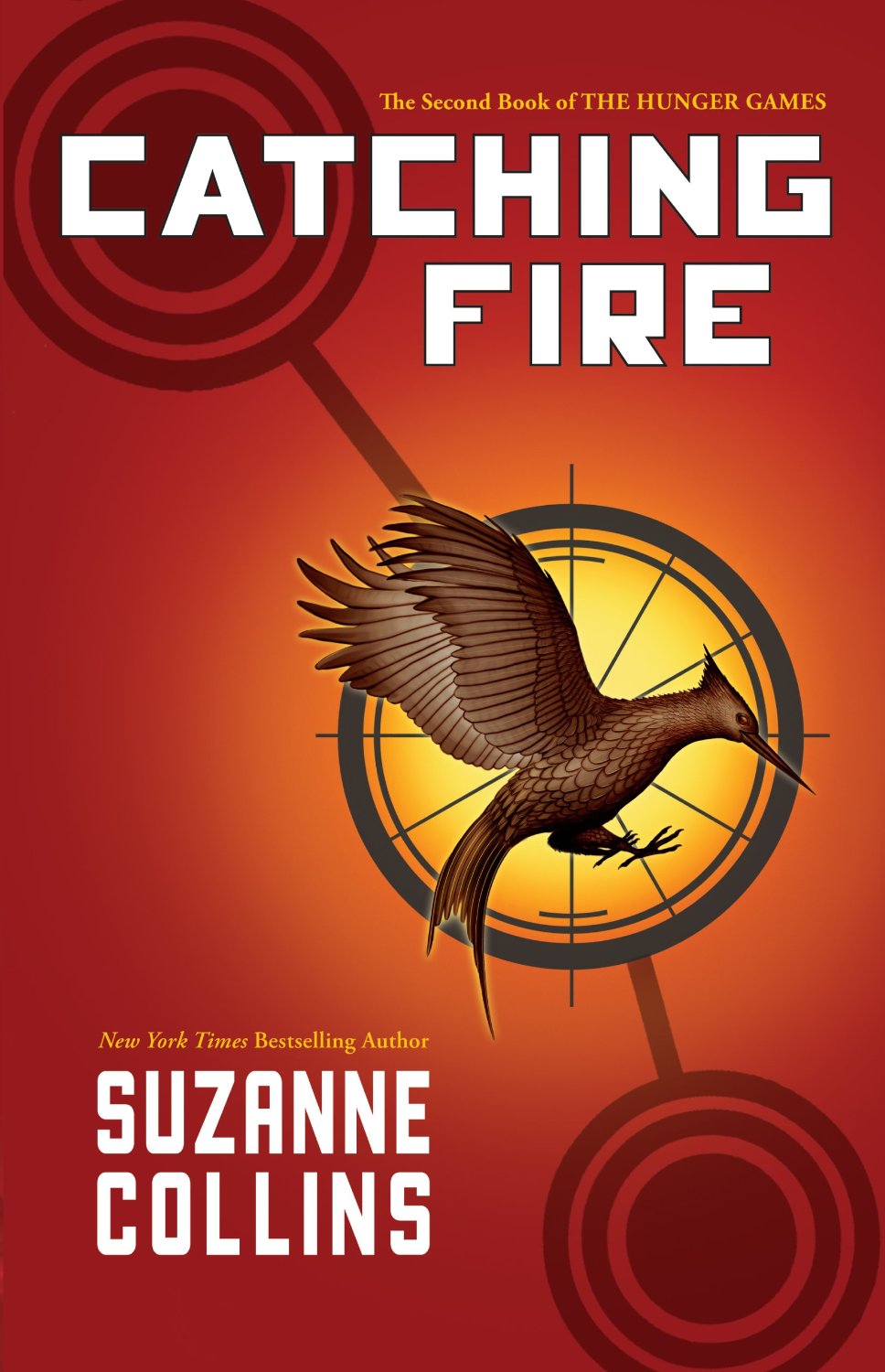
BOOK REVIEW: Catching Fire

Catching Fire by Suzanne Collins. Photo: Provided
Catching Fire by Suzanne Collins.

This is the second book in the Hunger Games series and boy does it deliver.

I imagined that The Hunger Games was some sick, fantasy story – which it is, but it is also a whole lot more. My general attitude led to me opting to watch the movie instead of reading the book I thought was some dodge teenage craze.

I loved the movie and have watched it several times over. I have loved Josh Huctherson since his movie Little Manhattan and have been hoping to see more of him ever since. And now here he is all grown up, playing the role of Peeta Mellark, the young man who is besotted with Katniss Everdeen (played by Jennifer Lawrence). Katniss is the heroine, the alpha female of the novels and movies.

Sometimes it can be good to watch the movie before reading the book, because in this case I believe the characters were perfectly cast. I might have cast the ‘wrong’ people in my mind’s eye and would have been left disappointed when I saw the people cast in the movie.

For a bit of background:

In the first Hunger Games book/movie Katniss and Peeta’s names are drawn during the reaping, which means that they have to represent their district at that years Hunger Games. A little like soldiers being drafted for war. In the games one girl and one boy from each district are picked to enter an illusory arena in which they fight to the death – the last one left alive being the victor of the games.

Things get a little complicated when Peeta declares his undying love for Katniss (which to me was super romantic) just before they enter the arena. Halfway through the games it is decided that to win a pair from a district need to be alive. Katniss then finds Peeta and as they are the only way of keeping one another alive they team up. Katniss pretends to be in love with him for the cameras. Long story short, they win and have to carry on with their charade of being lovers.

Cut to the second book, Catching Fire. It begins with showing us how life has progressed in the past few weeks after the games. They are both well to do and can afford to give their families everything they need and want.

It is evident that some of the love we saw between Katniss and Peeta in the games has since dissipated. They kiss and hold hands when the cameras are on, and this disgusts Katniss. Because she is actually in love with her best friend Gale, who she now has to pretend is her cousin.

Katniss and Peeta have to lead very particular lives because the Capitol is watching them. The president of the Capitol pays Katniss a visit to force her to make her relationship with Peeta more believable, especially when they go on their Victor’s tour through all the districts. Peeta can feel her coldness all the time and pleads for them just to be friends, at least.

On the tour it becomes evident that they have become symbols of defiance throughout the districts. This brings the two together and leads to an actual bond being formed. Things take a turn for the worse when both are forced to go back to the Hunger Games for the 75th anniversary of the games.  A twist that no one could have expected. In the arena a number of daunting and shocking things happen – but amidst all of the life threatening dangers, the two fall in love. Peeta becomes her rock, not Gale.

I’ve given way too much away but I couldn’t help myself. I could hardly stop myself from reading the book at all hours of the day and night. I was truly captivated from the first word in the first paragraph, to the last word in the last paragraph.

I love the metaphors about how cruel and calculated the powers that be can be and in fact are. I also love the powerful way in which in the people in the districts choose to risk their lives to try and rid themselves of the shackles of their oppression. But most of all, I love that Katniss finally gives Peeta a chance. That she finally sees the man he is and can be with her by his side. In other words, it was an amazing read and I cannot wait to start the third book.

Court Reporting Party

Our social media lecturer, Dinesh Balliah took some great photo’s at our little partay last week.  man I love my team #teamvuvu

Best reads

Decided to start this new little section, to promote what I thought were the best reads from the newspaper.

Obviously none of my work will feature in this section because that’ what the rest of this blog is dedicated to.

I’ll just share some of the best work from #teamvuvu that week and hope others enjoy it as much as I did.  So here goes:

  • Academia lost in translation by Nolwazi Mjwara. Fasctnating piece on monolingualism in South Africa. I felt like I was at the talk and agreed with everything the speaker had to say.
  • A coffee shop that’s stirring things up by Mfuneko Toyana. A write up about HEI Cafe, i may be a little biased considering my vested interests in HEI but regardless it was a well written piece with beautiful imagery.
  • Dismissed “sex pests” speak… by Prelene Singh and Emelia Motsai. Our front page this week, the quotes in this article are priceless. This article also represents something much bigger though. It’s about showing that the collective efforts of our team, the University and the brave girls and boys who came forward have been effective.
  • Habib No money for in-house cleaning by Emelia Mostai. Outsourcing has been and continues to be a serious problem at Wits. Readings
  • I did not report my harasser by Shandukani Mulaudzi. In my humble yet not so humble opinion there has not been one ‘Slice of Life’ written that isn’t compelling. The section lets us truly speak in our voice, Loved that this read like a conversation. Literally though, Shandu and I discussed this matter a few weeks ago and now here it is on paper (well on screen here).
  • Letter to SRC president by Saul Musker. He is not a teamvuvunite but his letter made the opinions section of the paper. Shucks if ever there was a response to an open letter, this was it. I could hardly believe that I was reading the words of a first year. His response was clear and left me with a lot to think about.

The Newsroom 8.0

The Newsroom 8.0

I should be writing a news feature right now, but the task seems impossibly daunting as the deadline draws ever closer.

We had our first crack writing the intro to a feature earlier in the week, which served as some sort of prep for this. We all had to interview our partners  and write up a scene setter from what they had told us. Learnt so many entertaining and heart-breaking things about my colleagues. Thus far that has been one of my favourite feature writing classes.

Getting stuck into the paper proved difficult this week, you know with it being an 8 pager and all. Somehow things always take longer when we have less pages to fill. Makes no sense but yeah that’s how things seem to go.

Scribbled two things for the paper – two informational pieces. Production was a bit more tense than usual but all of that was long forgotten later that evening at our Court Reporting party.

We had Court Week earlier in the year, a week that was somewhat of a rollercoaster. Drinking before writing our stories seemed to be one of the best things most of us could have done – this alternative method making for some peoples best writing.

We officially became ‘award winning’ journalists that evening – must say it felt so nice. I realised then that I might be doing the best Honours course in the world and also that the people I am doing it with are beyond awesome.

AND THE WINNER IS: Scored my self three awards :D Photo: Pheladi Sethusa
AND THE WINNER IS: Scored my self three awards 😀 Photo: Pheladi Sethusa

This coming week is going to be rather adventurous, going to Oppikoppi with a colleague – things might get messy, but not too messy for us to capture the whole thing through our lenses and pens. But before the fun begins, I have to write this feature and help put a whole paper together.

Cherrio**

VIDEO: WAM After Dark

The Wits Art Museum hosted their first “WAM After Dark” event this past Friday, August 2. Th event is geared at attracting a younger crowd to the museum. It was quite fun to be in attendance, here’s a quick video showing what went down. Related articles Snap(s) of the week (thejourneytoadream.wordpress.com)

Team Vuvu Oppi ball

ALL ROADS lead to Limpopo in August, this time not for Moria celebrations or to return to one’s roots, but rather to rock out at Oppikoppi.

Bewilderbeast

Bewilderbeast is the theme this year and it marks the 19th Oppikoppi festival since its inception in 1994.

Performers set to take the stage and entertain revellers include Mi Casa, Jeremy Loops, Jack Parow and the Deftones.

Two Wits Vuvuzela reporters will be attending Oppi this year and, in preparation for the festivities, they decided to find out how to prepare for their weekend in the bush.

What to expect

Most people approached for advice said to get a reliable tent, warm sleeping bags and a big cooler box to store food and booze.

A veteran who has attended numerous Oppikoppi festivals, Habrey Landman, from the University of Pretoria, told Wits Vuvuzela: “You need to take a boy, to help you make a fire and set up camp. There are no camp areas, it’s just bush.”

She added that hygiene is a major issue and the best way to stay clean is to bring along wet wipes and dry shampoo that can be bought at Clicks.

VoWFM DJ Max Motloung said he had been warned about the funky smelling festival.

“Just know that you guys are not going to bath, hey,” he said.

Motloung added that one should be prepared to wait in hours of traffic when leaving on the last day of the festival.

Landman said festival goers should keep hydrated: “a case of something, a bottle of something and dash” would suffice.

The festival starts next week Thursday, August 8 and runs for three days until Saturday, August 10.

Team Vuvu is ready, all that stands between reporters and bringing the festival to Witsies is a three-hour drive to a farm in Northam.

Ramadan: a time to reflect and fast

Allahu Akbar: Muslim students pictured at the University of Johannesburg, reciting a sunset prayer before breaking fast on Tuesday evening. The Wits and UJ Muslim student associations broke their fast together at a Ramadan Iftar dinner. Photo: Caro Malherbe

For Muslims all over the world Ramadan is a time of sacrifice and reflection.

What is Ramadan?

Anwar Jhetam from the   Muslim Students Association said Ramadan marks the ninth month in the Islamic calendar.

This is the month in which it is believed  the holy Qu’ran was revealed, said Jhetam.

“It is a month of fasting and increased worship to develop a closer relationship with God.   Ramadan is a month of reflection and self development,” he said.

During this month Muslims fast from dawn to dusk and abstain from “food, drink and sex with one’s spouse”, said Jhetam.  The fast is broken after dusk at which point people are allowed to indulge in the above.

Students and fasting 

While the rest of the students go about their day, munching this and that, Muslim students have to wake up before sunrise to have breakfast and fast throughout the day until about 5.30pm.

Romy Dasoo, 1st year Engineering, said she is finding fasting while attending university very difficult.

She has class from 8am to 5pm. “I end up breaking fast later, due to traffic,” she said.

Third year physiology student, Imraan Ballim, said: “Apart from the weird gastric sounds, it’s quite cool.”

Ballim believes the month of Ramadan is a very spiritual experience. “You engage more with religion and what it means,” said Ballim.

He also believes the introspection aspect of the fast makes it worthwhile.

Dasoo wishes she was more spiritual because the month would mean more to her and added that she admires students who are very spiritual.

Many students are quite aware of the difficulty of having to concentrate on an empty stomach.

Ballim agreed the first few days are difficult but said it becomes easier with time as you aren’t distracted by having to eat or drink.

Shared experience

Many Muslim students also get together to pray in the afternoon.

Ballim said this is a “nice experience because everyone gets together” and shares in the religion. Breaking fast is another good experience, as people gather with their families to feast on food they have been wilfully avoiding all day.

Special concessions are made for pregnant women, children, the sick and people who will be travelling at the time.

“They are permitted to abstain from the fast and can fast at a later date,” said Jhetam.

“At the heart of the fast is drawing closer to God during this special time,” he added, saying that students should use this time to develop character traits and habits that they will carry with them long after this religious period is over.