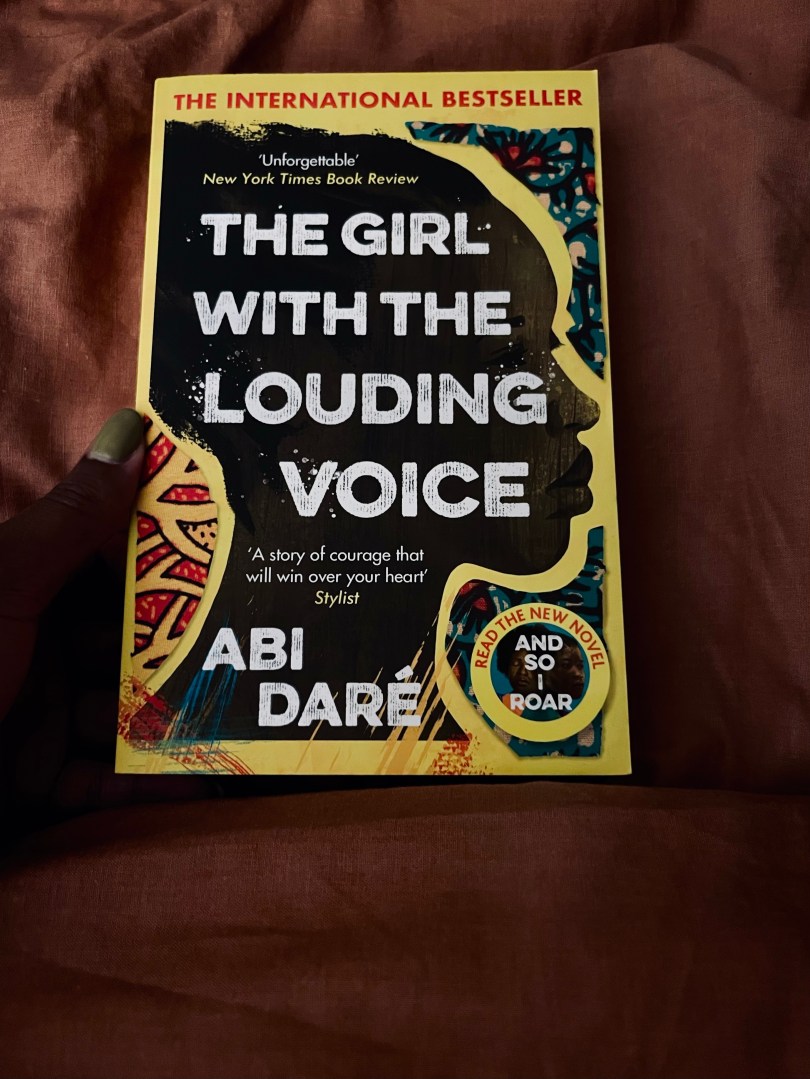
Literary Postmortem: The Girl With the Louding Voice by Abi Daré

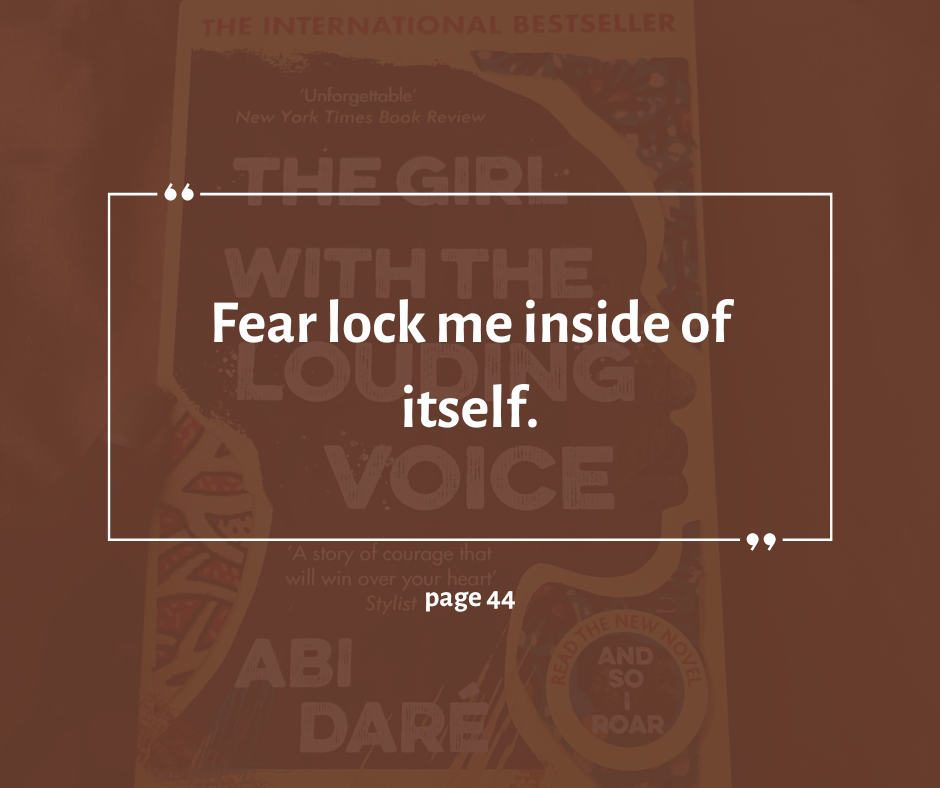
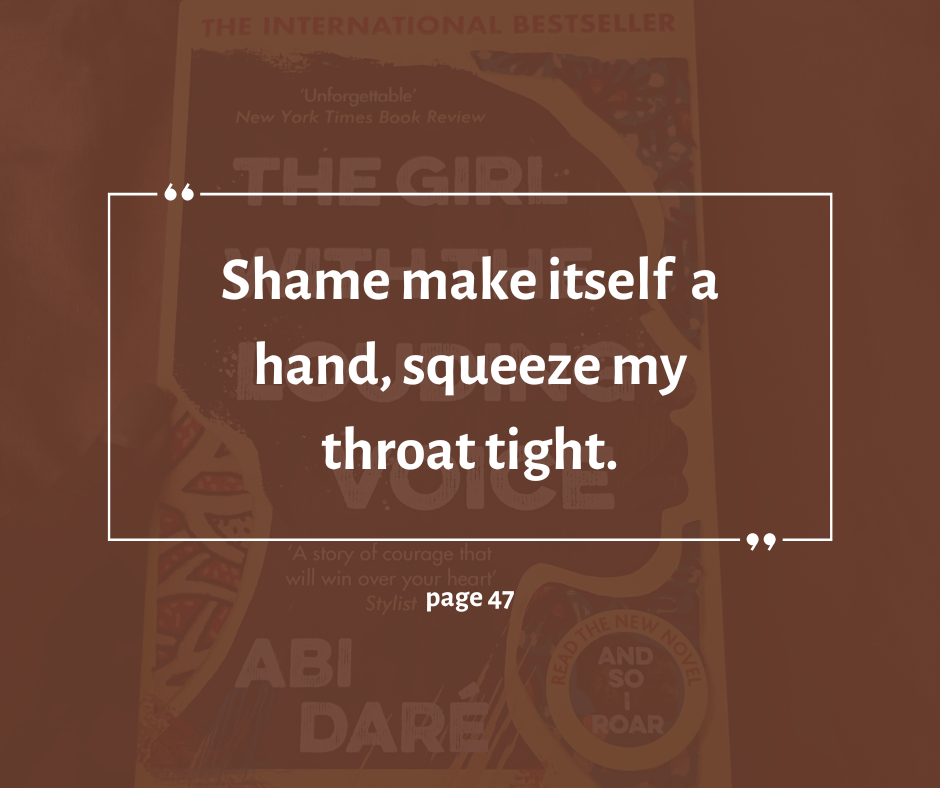
Things just kept getting worser and worser with each page I turned in this read, the sheer volume of violence and injustice both overwhelming and infuriating. Which is why I could barely put it down and sometimes spent an extra two or three hours reading before bed, I was captivated by Adunni and Daré’s literary presentation of life in rural and urban Nigeria in the early 2010s. 

I had heard much about the protagonist, Adunni before even opening this book from friends and people I go to the same internet with, mostly because of how she speaks. Daré makes the deliberate decision to write Adunni’s thoughts, fears and hopes in the broken English of a 14-year-old who didn’t quite finish school, which is true to the character and adds so much honesty to her story. The “nonstandard English” spoken by Adunni was less confusing than expected and often times more descriptive to me of the situations she found herself in, phrases like “the sky have eat up the morning sun” to describe an overcast sky, and “cold is spreading rashes all over my body” to describe goosebumps, provide such clear imagery. I think for me, the language alone was the thing that allowed me to be steeped in Adunni’s innocence and fostered an intimacy that kept me ‘on side’ no matter how bad things got for her.

Adunni’s tale is coloured by various indignities, violations and brazen injustice. The thing that keeps readers afloat is her determination to somehow overcome those odds. I usually hate an ‘against all odds’ narratives, in which wave after wave of evil is meant to simply be thwarted by sheer resilience, but Adunni’s character implores you to stay with her through all of it. She is fuelled by the prospect of different outcomes, which keeps your hope alive as well, despite the deep poverty, child marriage, domestic violence and slavery of it all. 

The chapters are short but jam-packed, which makes for a fast-paced, page-turning adventure. Daré has written some of the most endearing and repulsive characters, people like Big Madam and Morufu filled me with unspeakable rage. While their context and complex backgrounds are unpacked and do shed light on why they are the way they are, it’s a cold comfort when the object of their frustration and abuse of power is a little girl.

From about halfway through, I appreciated and even looked forward to the foreshadowing at the start of chapters, provided by whatever fact was quoted from ‘The Book of Nigerian Facts’. I like my fictional reads injected with some historical tidbits that feed my insatiable need to know things. The facts about Nigeria were fascinating and sobering, for example: 

“Fact: Child marriage was made illegal in 2003 by the Nigerian government. Yet, an estimated 17% of girls in the country, particularly in the northern region of Nigeria, are married before the age of 15.” – page 194/Chapter 35

I was looking forward to finding out some more of these revelatory facts in the book once I purchased a copy, only to find it was a fictional book used for the purposes of the narrative in the pages of this novel 😦 There is, however, a Nigerian Facts Book published in 2022, which I imagine aims to do the job of the book Adunni uses to learn about her country and her life really. 

In short, it’s a harrowing but highly entertaining read, filled with twists and turns that will still your sensibilities. I will probably never read it again because of how much trauma lives in it’s pages but I would recommend it. Best bits below.

Fairy tales for little girls whose identities are all too often marginalised

“CAPE TOWN 25 June 2016 – Twenty five year old actress and now author, Buhle Ngaba has written a children’s book aimed at empowering young black girls. Copies of “The Girl Without a Sound” will be available in bookstores next month.”

I really enjoyed my interview with Buhle, she is the personification of #blackgirlmagic and I will enjoy watching her star burn even brighter in months and years to come.

Source: eNCA

Literary Postmortem: Two Thousand Seasons

Immediately after finishing this read last night, I almost felt like I had never really read a novel before, that’s how incredibly remarkable it was.

It was my first Ayi Kwei Armah reading and it definitely won’t be my last. What a man. To call this a book would be reductive it’s a piece of brilliant literary work – something that should be at the very top of all those narrow “50 books to read before you die” listicles.

“Beyond that he taught us not to fear the power of the destroyers’ weapons but to learn quickly the use of that power against the destroyers themselves.” – pg 147

So what happens? Basically the book is a narrative account of slavery thrust upon this continent, first by the Arabs and then later by the “white destroyers from the sea”. There is nothing vague in this work, people are called what they are and the terrible acts performed by these destroyers described in all their grotesque wickedness are laid bare. Of people being forced to fornicate with horses as punishment, of people being branded, of the raping of young boys by old men, of being shot at  and dumped overboard and much more. It felt all the more real because Armah had made you (the reader) a part of this world, on this journey with these people’s in the grips of a terrible destruction.

But beyond this is also offers an insight into “the way”, our way before we were so rudely interrupted, and interestingly he doesn’t paint it as some utopia either but there was much more respect for one another and the spaces we occupied.

It’s a difficult read, with a lot happening on every single page, so I took my time reading it. Every word counts and if you miss a line you will be the lesser for it. It was a truly devastating read but in the best way possible, I will never be the same and I am the better for it.

“A mind attacked and conquered is guided easily away from the paths of its own soul,” – pg 28

What I loved most was that he didn’t just outline and highlight what the problem was/is but he proffered practical solutions. I think that is what kept me from complete ruin by the works close. Yes, I cried in many, many places, but towards the end when one of the most important characters meets his end, I was sad but I knew it was coming and I also knew that his death would not render those like him immobile, incapable of carrying out their planned action without him at helm to lead the charge.

I was left with a real sense of hope, a real sense of knowing that I will not be the answer to today’s destruction but I can in whatever way I can, CREATE something that will help to bring the end of our destruction closer. And that is all I need, all I want really.

“No illusions brought us here, none support our work. We offer none of the comfort destroyed mind finds in lies.” – pg 183

Of this reading experience I would say this: As a student of history I know things and stuff about slavery in its many forms, when it happened, to whom etc. I’ve read the books, watched the movies and written the essays. But all in a semi-detached way because those accounts are rarely ever personalised, Armah made the facts breathe.

I’ll use a short analogy to elaborate: I was unplugged from the Matrix like Neo, I had already puked from the knowledge being forced down my throat and into my ears. Eventually as he began to accept the truth about the world and who he was, that was all flipped upside down when he met the architect. This book was my architect. Laid everything bare, didn’t hold back on anything, showed its disdain and even gave me a way forward.

Nothing and no one have done that for me before, I will forever be thankful for this piece of work. It gave me real and more importantly, practical advice on how to press on. I will have to read and reread it many more times, it’s too dense a work for me not to have missed things.