Debate Club: Gender agenda

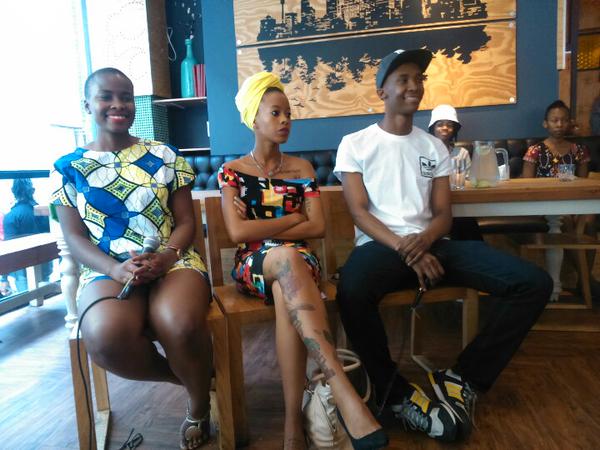
Gender not sex. Womanism not feminism. Patriarchy not masculinity.  These were some of the things brought up at the last debate club meeting of the year on November 25, 2014. The panel steering the direction of the conversation was made up by Panashe Chigumadzi, Lee Molefi and Lebohang Nova Masango.

Feminism, what it is and who it speaks to made up a substantial part of the debate on the night. Some described it as movement that seeks justice and equality. As women wanting to live in a world where they don’t have constantly “check” themselves to stay out of harms way. As vaginas and boobs not being the things that dictate where we belong and what we get to do. The most poignant description for me was:

The way patriarchy shapes what men should and can expect from women was another hot topic. I recall one guy in the audience saying he is all for woman empowerment and equality for “other women” just not his woman. He admitted that he had learnt to expect subservience and as a result that is what he now yearned for.

If I recall correctly he said he’s all for his sister becoming and engineer but his wife should have a more “humble job” as to not bruise his ego and mess with his role as the head of the house. The room, filled predominantly with women, was up in arms at that. This is the kind of thinking that reminds women that they are alone in this struggle, black men aren’t really here for us. Agreed with these comments on gender roles made on the night:

My biggest take away from the night was the fact that so few men were willing to understand what feminism is, some suggested that they can never identify because they aren’t women, that they need to be schooled and feel included to get on the train. In response, the panel said acknowledging patriarchy and how as a man you benefit from it, is similar to white people having to acknowledge white privilege. Something that was necessary to start trying to make things better.

https://twitter.com/ShanduMul/status/537288762934714369

There is a lot more that could have been discussed but time rules us all. This is a very short video of the night made by the good people at LiveMag:


ELECTIONS: Born to vote

Pre-recorded videos and live-streams from the other provinces were projected onto the wall behind the panel. From left to right: Khadija Patel, DJ Fresh, Kagiso Lediga, Shaka Sisulu and facilitator Tumelo Mothotoane. Photo: Pheladi Sethusa

For a group of people largely labelled apathetic, the youth in attendance at a debate on a Tuesday morning, braving the temperamental and rainy Joburg weather – were anything but apathetic.

Yesterday (Tuesday March 11, 2014), JoziHub in Milpark was the venue for the To Vote or not to Vote debate aimed at so-called ‘born-frees’.

Bornfrees stand up

There is a particular fascination with this year’s youth vote as this year the “born-free” generation, children born in 1994, when South Africa became a democracy, will vote for the first time. How they vote and who they plan on voting for are of particular interest because they have grown up in a democratic South Africa.

Lesedi  Molefi of the organisers Live magazine said in the past three months they have interviewed a number of born-frees and found that, “we’re not apathetic and have an incredible role to play,” not only in these elections but in steering the country’s future.

The panel consisted of comedian Kagiso Lediga, journalist Khadija Patel (@khadijapatel), DJ and tweleb DJ Fresh (@DJFreshSA) and social activist Shaka Sisulu (@shakasisulu). The panelists were chosen because they are seen as accessible to the youth and their ideas.

Why should born-frees vote?

Addressing the question, why should born-frees vote, Lediga said: “If you’re not voting, you’re not participating.” DJ Fresh added that participation goes beyond just voting, part of that civic duty is to hold politicians accountable. Sisulu provided an anecdote to explain further: “If you’re dating someone, you can’t see them once every five years – it won’t work, it’s a one night stand then. Put your ballot in the box but make sure to maintain and nurture that relationship over the five years coming.”

The debate was live streamed from Johannesburg to Cape Town and Ginsberg, King Williams Town with questions coming from all three places to the panel. A common complaint from all three provinces was that the youth were never heard. DJ Fresh responded by saying the onus was on political parties to appeal to the youth on their level through channels like twitter and instagram: “Politicians talk at young people and not to them.”

The focus in the latter part of the debate was on what the born-free vote can achieve and individual agency. Patel said, “agency is important – it means having the power within yourself to do something.” The crowd responded well to this and the conversation started to look at ground level solutions and social activism that gear them in that direction.

Lethabo Bogatsu, a self proclaimed born-free said the talk left her feeling empowered and keen to be an active citizen, “I was always going to vote but now I’m not going to stop there. It’s not just the vote and then I’m done. I’m going to work on the relationship, my man is going to be my vote, my political involvement is going to be my man. I’m going to have a relationship there because being single is rough.”

The entire debate can be viewed here.