
Research for Africa, by Africa

FILE PICTURE: Chairperson of the African Union Commission Nkosazana Dlamini Zuma. Picture: Nigel Sibanda

NOTE: Article first appeared in The Citizen newspaper on April 25, 2014. 

Pooling resources and working together, instead of competing, are some of the ways research conducted at African universities can help propel the continent to be a global leader, projecting to 2063.

During a public lecture on research in African universities in the Senate Hall at the University of Pretoria yesterday, Dr Nkosazana Dlamini-Zuma, chairperson of the African Union Commission, emphasised how research done at universities can help with the overall development of Africa.

“The only way to do so is by getting universities to look 50 years into the past and 50 years in to the future,” said Dlamini-Zuma. Projecting ahead “liberates you – it is not defined and confined by immediate circumstances”.

Research carried out at universities is one of the ways universities could help to “turn all our resources into wealth for our people,” said Dlamini-Zuma. A fundamental way of doing this was to broaden the base from which students are chosen, she said.

The university’s vice-chancellor, Cheryl de la Ray, responded by saying demand was too high to accommodate more students. “We don’t take international students for our undergraduate courses because of huge demand locally,” she said.

“We make plans and expect other people to fund them.”

Dlamini-Zuma said development needed to happen internally, with Africans helping Africans. The AU has found that most African researchers collaborate with researchers from overseas and not one another, something which “surprised and disappointed” her.

She added that African universities and researchers needed to work together towards Pan-African development, mentioning the African Union was in the process of starting a virtual Pan-African university.

Dlamini-Zuma stressed that through research conducted at African universities “vexing questions could be answered”. She cited a cure for malaria and the gradual disappearance of Lake Chad as examples of questions that needed to be investigated.

A day in the shoes of a Witsie

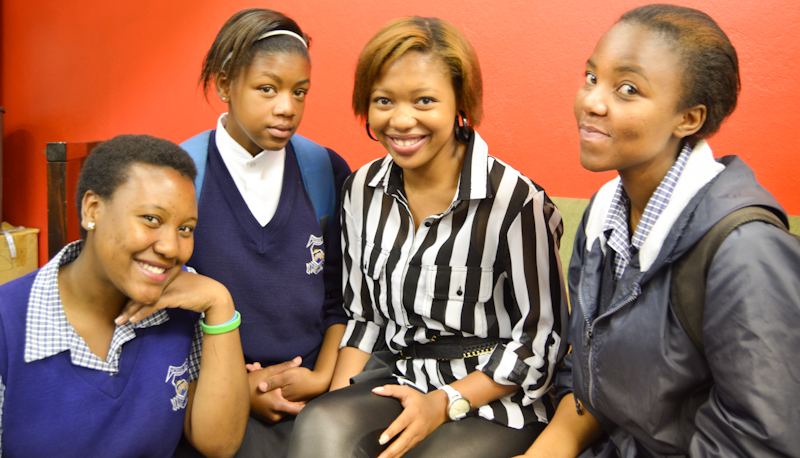
SMILES ALL ROUND: Wits mentors each got some highschool pupils to take under their wing for a day, From left to right: Philile Mashele, Palesa Mokoena, Tanyani Daku and Kedibone Rapoo. Photo: Pheladi Sethusa

Sixty uniformed pupils were beaming from ear to ear as they got a chance to walk up the steps, sit in the lecture halls and walk amongst ‘real’ students – things and people they had only ever seen on Wits’ promotional brochures.

A rare opportunity provided by the Wits Rag society made that possible. This year’s Take a Child to Varsity day was bigger and better. Last year only ten kids got to spend a day with a mentor, this year that number more than doubled said Wits Rag Chairperson, Siphe Mkize.

The pupils

“We take kids from underdeveloped area’s… To help them get an idea of what to study when they come to varsity, as well as what they need to do to get there,” said Mkize.

A teacher from Lesebogo Girls High School in Soweto, Humbulani Mavhunga who ordinarily teaches grade 10’s and 11’s maths, accompanied pupils on their visit this past Wednesday.

“I took a range of learners, mostly the highest achievers and some who are sitting in the middle. I also took some low achieving learners, to show them what is possible if they work hard,” said Mavhunga.

Mentees and mentors

The selected pupils were allocated a mentor from Wits, anyone from any faculty could volunteer their services for the day. The mentors who availed themselves this year were “very keen and patient with their kids,” said Mkize.

Tanyani Daku, a Media Studies mentor took three girls under her wing and spent her time giving advice from her personal experiences and answering questions posed by her inquisitive bunch.

Daku said she loved being a mentor and getting a chance to help kids with complicated social situations, focus on their academic lives and improvement thereof.

The pupils she took under her wing could do nothing but sing her praises. Although not all of them wanted a media studies mentor, they were glad they all said what they learnt from their mentor was invaluable.

Stop going to the zoo!

“We must stop going to the zoo for school trips, rather come to varsity,” said an impassioned Daku, making her mentees roar with laughter.

Echoing words in the same vein, Mavhunga said that she hoped Wits Rag would continue with this initiative. “This opportunity helps kids to make informed decisions about their futures,” she said.

She said it was important to break down the legacy of students choosing careers within very narrow confines, Mavhunga wishes she had the chance to be exposed to university beforehand.

“All we knew was teaching, nursing and being a policeman or woman,” said Mavhunga.

Impressions

“Today blew me away. I thought Wits was very serious and just for people who want to pursue maths or physics but it’s not,” said grade 11 pupil, Philile Mashele. She cannot wait to come to varsity now that she has had a taste of what it’s really like.

Another pupil, Palesa Mokoena said that she was impressed with the way people seemed very “focused” on campus, she said it inspired her.

On a slightly different note, fellow classmate, Kedibone Rapoo said that she was by no means prepared for varsity life and the pressures that come with it. However, “I am prepared to try by studying hard,” she said.