
On the imbalance of knowledge that knocked the wind out of my 13-year-old self.
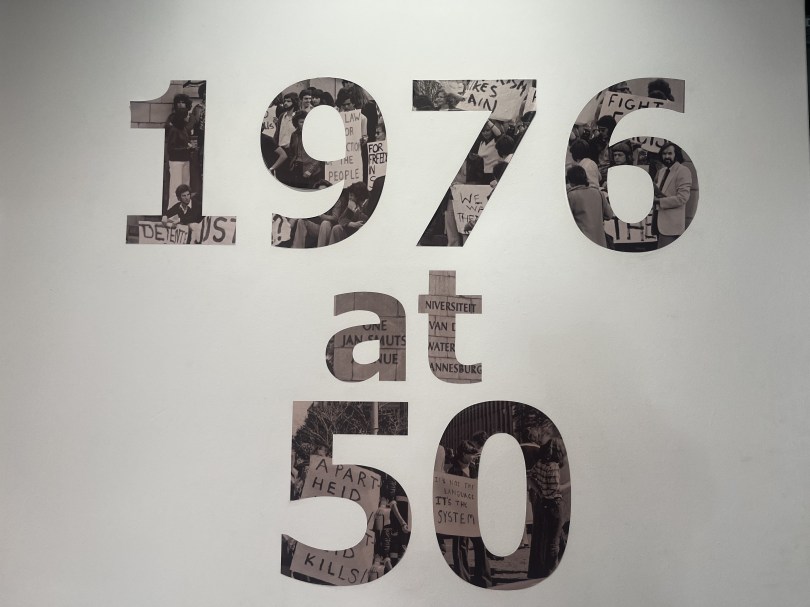
I recently interviewed Paul Laufer, a photographer and cinematographer from Los Angeles, for a podcast episode. The context of our conversation was a photo essay he put together to commemorate 50 years since June 16, 1976. His body of work contains stills that were published in the Wits University student newspaper of the time, Wits Student, as well as some never before seen images he only recently developed for this exhibition. A fascinating experience for me on multiple fronts – namely, as the current editor of the student publication at Wits, as a former student journalist of selfsame publication (Wits Vuvuzela), as a black woman in South Africa and a person obsessed with history.
One thing kept playing on a loop in my mind after my two-part Zoom call with him. Paul had been sent into Soweto to shoot a quick portrait of Orlando High School principal, Mr Tamsanqa Kambule (whose name is now on a whole building at Wits). A colleague of his had already written the copy about the school and its visionary steward, Paul just had to get the headshot. But upon driving into Soweto, he says everything he had been told about the township began to come apart at the seams as very ordinary scenes unfolded as he drove deeper and deeper into it. So I asked what he knew about Black life at the time and part of his response was, “Black people understood everything about our life, there were no secrets. The reverse was not true. White South Africans had no idea about Black urban life.” In other words, we knew everything about them and they knew nothing, or very little, about us.
It took me back to my own upbringing, and the continual need to explain references – songs, movies, icons, ways of being – and Black life in general to friends, coworkers and acquaintances who lived in insulated silos, with very little knowledge, outside of prejudice, of what was going on outside of their own little bubbles. [Run-on sentence much?!]. As I turned his words over in the days that followed, a very specific moment in primary school came up. A genesis of my understanding of this disparity in experience and exposure.
I went to what is considered a ‘model C’ (formerly reserved for whites only) school in Irene, Pretoria. Our student body was reflective of the ‘new’ and changing South Africa – for context, this would have been between 1998 and 2004. I say new like that because – look around 👀 Anyway. It was in grade seven, the exact date and month elude me. But our arts and culture teacher announced that we would be performing parts of the musical, Sarafina, in our annual school play. There was palpable glee from all the Black learners in the room. Finally, we would get sheet music we didn’t actually need, we already knew the words. We knew who we might want to be cast as. Knew how we would be dressed. How we would move when the accompaniment started. But all of that joy and wonder was quickly tempered when a classmate’s “what’s that?,” followed the announcement. The hours and days that followed revealed that many of our white counterparts had no idea what Sarafina was. I felt somewhat betrayed by it.
That moment was a dream come true for the little drama kid I was at the time. Singing and dancing along to Sarafina songs on stage?! I had practised my whole life for this. See, Sarafina was one of the video tapes my brother watched and wore down from the mid-90s through to the early 2000s. It was on high rotation with our other faves, Coming to America, The Lion King, Titanic, Boys in the Hood and Matilda to name a few. Crazy line-up – I know. But we liked what we liked. Leleti Khumalo as Sarafina was one of the first on-screen characters I could imagine myself as. I wanted to be her. I wanted to dance like her. Be brave like her. Wear my school skirt like she did. Be snarky with boys like she was. Make them weak in the knees like she did. Be knowledgeable like she was. Fight like she did.
So to sit in that classroom and hear some of my peers and friends have no idea what we were talking about left me crestfallen. What alternate universe did they live in that they didn’t sit down as a family on June 16 every year, and remind themselves of what our freedom had cost? Here I was, watching 7deLaan to get better at Afrikaans, reading SaltWater Girl and standing in a Musica to listen to a White Stripes album. Actively imbibing whiteness and white culture at will. Or force really – because again, look around. This imbalance in that moment put me off kilter for a while. It made me question the very nature of my interracial relationships, considering this lopsided perspective of the world and each other. Like you weren’t curious about me at all? Damn Gina (we watched Martin a lot too). In retrospect, I probably owe some of my conscientization to that moment, it made my 13-year-old self open her eyes a bit wider and raise her eyebrows at other and more sinister remnants of the system that showed up in daily life.
Some days later, our teacher (shout out Mrs Eunice Marais) arranged for an in-class screening to bring everyone up to speed before practice started in earnest. Watching a movie in class then, meant watching on a giant black behemoth of a TV unit, over a few days, with discussions and speculations holding you over until the next instalment. The temporary interest quelled my sadness, but the ensuing disinterest in further immersion became somewhat commonplace in the years that followed. But that I got to stand on a stage and sing lead vocals on the Lord’s Prayer and Freedom is Coming? Oh please, fuck them kids.

