Literary Postmortem: You Made a Fool of Death with Your Beauty by Akwaeke Emezi

What a frustratingly delicious and maddening rollercoaster ride this novel was. Feyi when I catch you?! This was a page turner for sure, but because it was a library book, I couldn’t mark it up as I went along so instead, I am going to go through some of the questions in the book club reading guide, as a means to reflect on my experience of it.

Q: Feyi’s interior monologue (and actions) In response to Nasir’s pursuit rapidly oscillates between interest and disgust, as we see in chapter 2: “he was hunting her”; “she wanted him closer. She wanted him far, far away.” What does Feyi want on the roof? Do we know? Does she?

I think she carries enormous guilt about the fact that she not only survived the accident with Jonah, but is now at a place where she is physically and emotionally trying to explore new connections. Feyi is on the roof because she is really curious about Nasir, but also knows she can’t make eyes at him ‘during the people’ (South African turn of phrase, look it up, or don’t). So she knows they can have a private moment up there.

Q: In chapter 3, Joyce says, “Maybe Nasir is it—not the serious thing itself, but just the chance. Don’t run away from it,” in response to Feyi’s insecurities about accepting a date with Nasir. Later, Joy’s voice in Feyi’s head tells her to take a chance. What does this chance refer to and what could it mean will Feyi?

A chance at a real romantic relationship, what she has with Milan is purely physical but she can already sense that things would be a lot more serious with Nasir.

Q: When thinking about her developing emotional intimacy with Nasir, Feyi considers the fact that their physical intimacy is moving glacially. In chapter 4, Feyi asks Nasir whether he was sleeping with anyone, and his response allows for a shared moment of trust and humour between them. Nasir uses that space as an opportunity to inquire about Feyi’s studio. How does this reflect their respective outlets of intimacy and their inevitable relationships to it?

There’s a quiet acknowledgement that Feyi isn’t quite ready for physical intimacy because Nasir is ‘more’ than just a guy, knowing that he is being ‘serviced’ elsewhere brings her some relief that she can push that task even further out (emphasis on task). I remember taking issue with how this conversation moved on so casually, flippantly almost. But I recognise that is because I hold a candle for Nasir and I was upset that he was stepping out on us 🥲😅 The pivot to the studio conversation is his effort to get to know her more deeply, he is at this moment operating under the premise that she wants to be known fully before taking their relationship to the next level. Oh, if only he knew 😦 Shame I’m being unfair she also was giving their relationship a genuine chance at this point, but definitely holding back A LOT under the guise of taking things slow.

Q: “So much of her time was spent in uncertainty” Feyi reflects on her imposter syndrome; meanwhile “It was hard to imagine Alim ever doubting if he fit into whatever he was.” What were Feyi’s doubts around her work? How does this doubt pervade other aspects of her life and how does she view Alim’s sureness in comparison?

Because her art is so personal, it puts her life up for scrutiny and judgment from others and herself. It operates as a mechanism to memorialise and process, which requires enormous amounts of vulnerability from her, which she isn’t entirely comfortable with. Alim is able to practice his art more freely because he is more open and quick to vulnerability, it colours his world as opposed to dimming it in hers.

Q: “It was something she wanted to hear—what it was like to fall in love again after your heart had been shattered. She could feel Jonah’s presence on the mountain peak, gentle and curious,” writes Emezi in chapter 10. How does this differ from past moments of intimacy up until this point, when Feyi felt Jonah’s presence?

In other moments, she was overcome by guilt, and Jonah’s presence was her internal warning signal that what she was doing was not ‘right’. When she is on the mountain top with gramps (sorry, not sorry #justiceforNasir) because she feels strongly for and about Alim, she doesn’t feel that guilt and/or shame; instead she feels the warmth of a familiar safety and calm by being with someone who makes sense to her.

Q: “’ There are so many different types of love, so many ways someone can stay committed to you, stay in your life even if y’all aren’t together, you know? And none of those ways are more important than the other,” Feyi says in Chapter 11. Why is this perspective liberating for Feyi?

I think she realises that moving on isn’t about forgetting Jonah, that being devoted to his memory doesn’t have to mean staying stuck in her hurt or even in who she was when they were together.

Q: In Chapter 11, Nazir tells Feyi, “Lorraine and I don’t have a lot of memories of our mum. The house helps us remember.” What does this house represent to the Black family? And to Feyi? How do these meanings influence the space she occupies in it?

I think it is a living monument to the memory of what they lost and the effort to keep things together through physical reminders of what once was. It also signals an inability to move on in some ways, less nostalgia, more shrine if you know what I mean. Crazy to me that Feyi feels a pang of jealousy seeing family photos – like yes doll, where do you think you are?!

Q: Feyi fondly recalls Jonah’s words in chapter 15: “He said [being messy is] one of the best things about being human, how we could make such disasters and recover from them enough to make them into stories later.” How has this informed Feyi’s decisions in life since Jonah’s passing?

Well she’s made quite a big mess of things at the Black’s, so that’s one. This recollection allows her to remember that she can prioritise herself and her desires (not that anything had been stopping her to be fair).

Q: What is the difference between Alim calling Faye his friend and Faye calling Nasir her friend?

He meant it, she didn’t 💀

Q: “You know you can always just come home right?” Joy reassures Feyi in chapter 16. What or who is Feyi’s home here?

Joy is Feyi’s home now.

Q: In chapter 17 we witnessed the confrontation between Nasir, Feyi, and Alim. Discuss whether you expected it to go down this way or not. When Nasir’s anger and subsequent actions justified? Were Alims? How is this possibly triggering forfeit?

I actually did because I was BIG MAD myself, but I was also scared of him and what he might do in that moment, I understand why she was terrified too.

Q: Alim tells Feyi in chapter 18, “I can’t bring myself to not try to give you the best every year I have left,” to which she requests he make “no plans.” Why is Feyi resistant to making plans?

Because people can die tomorrow and none of those plans would matter, she has conditioned herself to live moment by moment because of the fear of loss that constantly walks beside her.

Q: “You can see [my painting] in any stage it’s in. I don’t care, I like showing myself to you,” Feyi tells Alim in chapter 21. How does this stark difference from her objection to showing Nasir her artwork parallel the differences in their respective relationships?

This really hurt me, because Nasir was so eager, on board, down-for-whatever, desperate for her to show herself to him. But she just couldn’t and I guess that’s only fair, we don’t have to match people’s attraction/energy/care, but I do think he was owed more honest communication about the improbability of her feelings for him growing beyond a homie level.

Q: “You’re worth it, Feyi. You can be yourself, as messy and contradictory as you like,” Joy affirms in chapter 5. “He’s lucky to even be near you.” Feyi’s feelings seemed to be at odds with each other throughout the novel. Speak to the inherent beauty in the contradiction and comfort and transients that come as a result of Feyi’s growth, both within our protagonist as well as from the perspective of the reader.

I struggled with her choices, not gonna lie, but I get them. She gave herself the chance to figure out what she truly wants and needs. She was ten toes about what she did and didn’t want for herself. I suppose the intensity of my disappointment helped me realise that people fiercely choosing exactly who and what they want for themselves might always look crazy or wrong or ill-timed to others, but that those things can’t and shouldn’t inform whether or not they make those decisions. That sometimes your body knows before you do what is meant for you and what isn’t. As much as I was batting for Nasir, choosing him would have been a betrayal of self that actually may have set Feyi back even further in her journey of healing. Alim, whether I like him or not, was the person she needed to help in coming back to herself fully and simultaneously shed the survival version that had been in the driver’s seat for the last few years (unfortunate pun, forgive me).

That said, #justiceforNasir, tell him he can find me @pheladi_s on all socials.
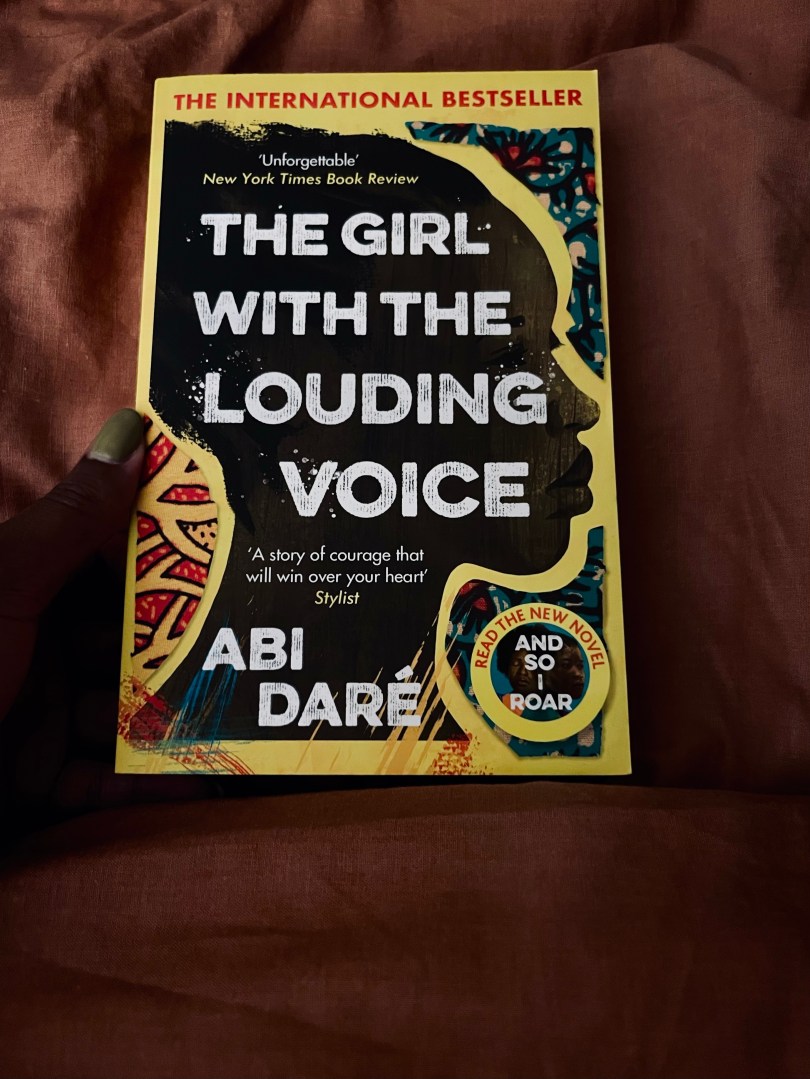
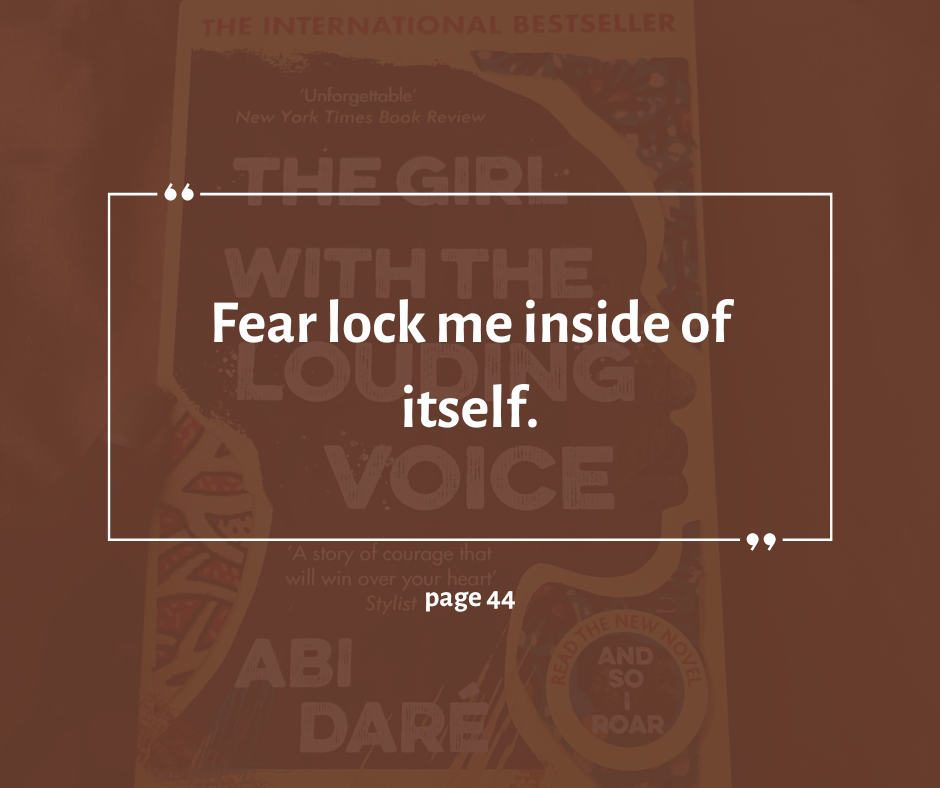
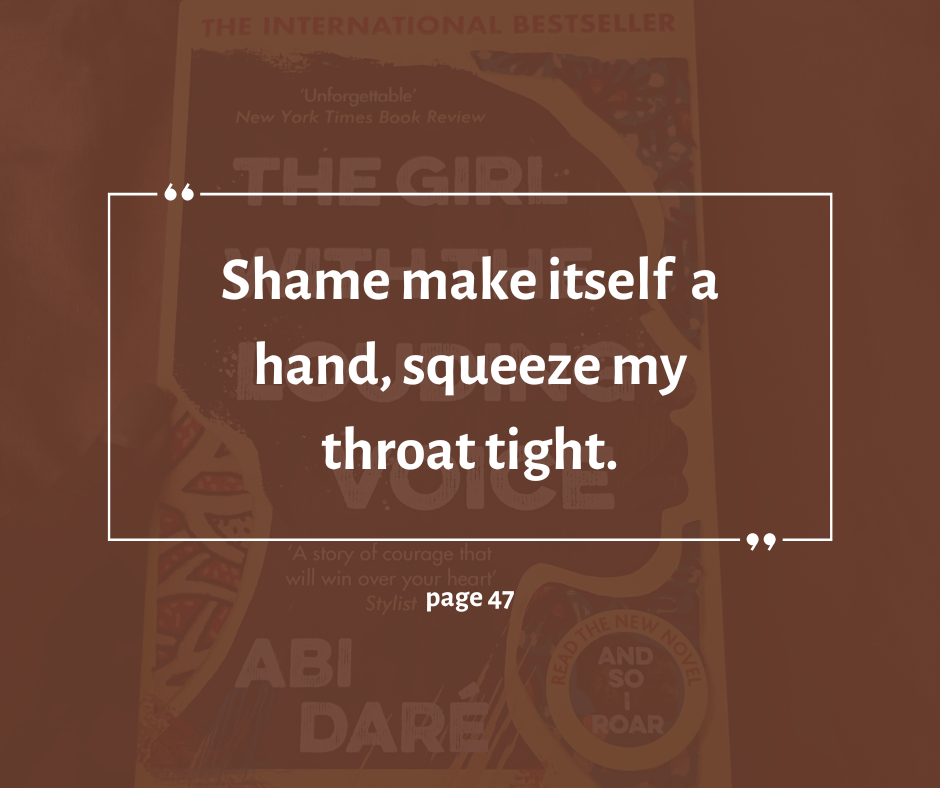
Literary Postmortem: The Girl With the Louding Voice by Abi Daré

Things just kept getting worser and worser with each page I turned in this read, the sheer volume of violence and injustice both overwhelming and infuriating. Which is why I could barely put it down and sometimes spent an extra two or three hours reading before bed, I was captivated by Adunni and Daré’s literary presentation of life in rural and urban Nigeria in the early 2010s. 

I had heard much about the protagonist, Adunni before even opening this book from friends and people I go to the same internet with, mostly because of how she speaks. Daré makes the deliberate decision to write Adunni’s thoughts, fears and hopes in the broken English of a 14-year-old who didn’t quite finish school, which is true to the character and adds so much honesty to her story. The “nonstandard English” spoken by Adunni was less confusing than expected and often times more descriptive to me of the situations she found herself in, phrases like “the sky have eat up the morning sun” to describe an overcast sky, and “cold is spreading rashes all over my body” to describe goosebumps, provide such clear imagery. I think for me, the language alone was the thing that allowed me to be steeped in Adunni’s innocence and fostered an intimacy that kept me ‘on side’ no matter how bad things got for her.

Adunni’s tale is coloured by various indignities, violations and brazen injustice. The thing that keeps readers afloat is her determination to somehow overcome those odds. I usually hate an ‘against all odds’ narratives, in which wave after wave of evil is meant to simply be thwarted by sheer resilience, but Adunni’s character implores you to stay with her through all of it. She is fuelled by the prospect of different outcomes, which keeps your hope alive as well, despite the deep poverty, child marriage, domestic violence and slavery of it all. 

The chapters are short but jam-packed, which makes for a fast-paced, page-turning adventure. Daré has written some of the most endearing and repulsive characters, people like Big Madam and Morufu filled me with unspeakable rage. While their context and complex backgrounds are unpacked and do shed light on why they are the way they are, it’s a cold comfort when the object of their frustration and abuse of power is a little girl.

From about halfway through, I appreciated and even looked forward to the foreshadowing at the start of chapters, provided by whatever fact was quoted from ‘The Book of Nigerian Facts’. I like my fictional reads injected with some historical tidbits that feed my insatiable need to know things. The facts about Nigeria were fascinating and sobering, for example: 

“Fact: Child marriage was made illegal in 2003 by the Nigerian government. Yet, an estimated 17% of girls in the country, particularly in the northern region of Nigeria, are married before the age of 15.” – page 194/Chapter 35

I was looking forward to finding out some more of these revelatory facts in the book once I purchased a copy, only to find it was a fictional book used for the purposes of the narrative in the pages of this novel 😦 There is, however, a Nigerian Facts Book published in 2022, which I imagine aims to do the job of the book Adunni uses to learn about her country and her life really. 

In short, it’s a harrowing but highly entertaining read, filled with twists and turns that will still your sensibilities. I will probably never read it again because of how much trauma lives in it’s pages but I would recommend it. Best bits below.

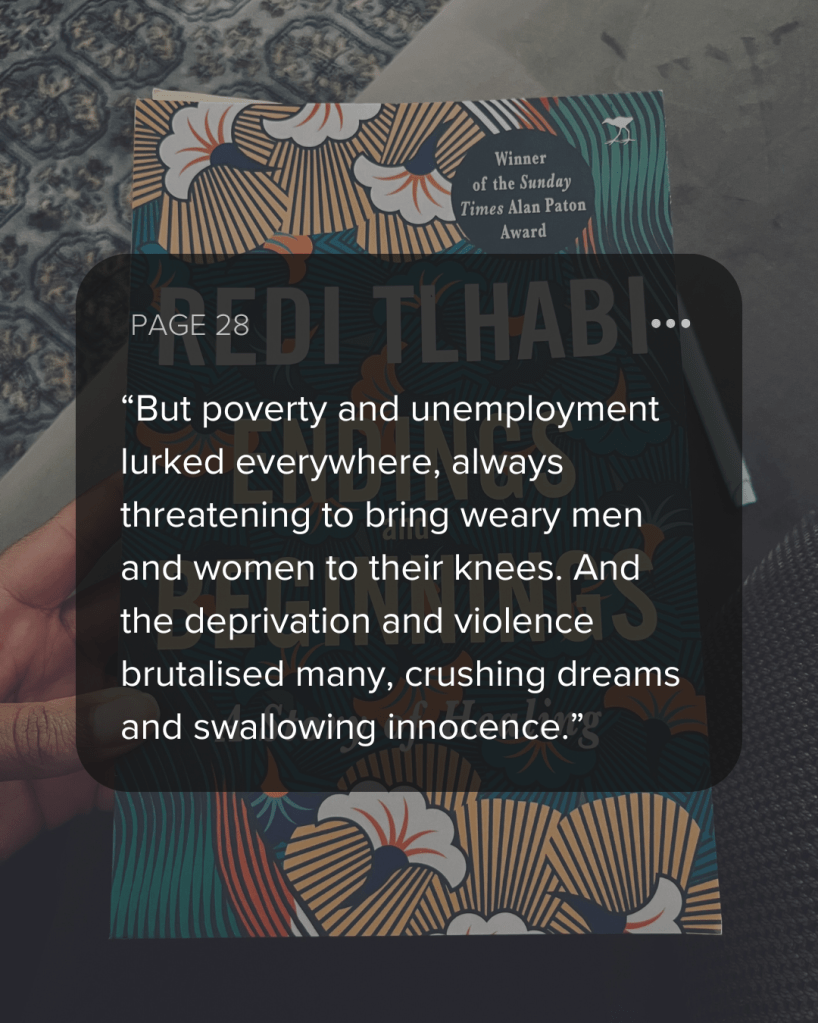
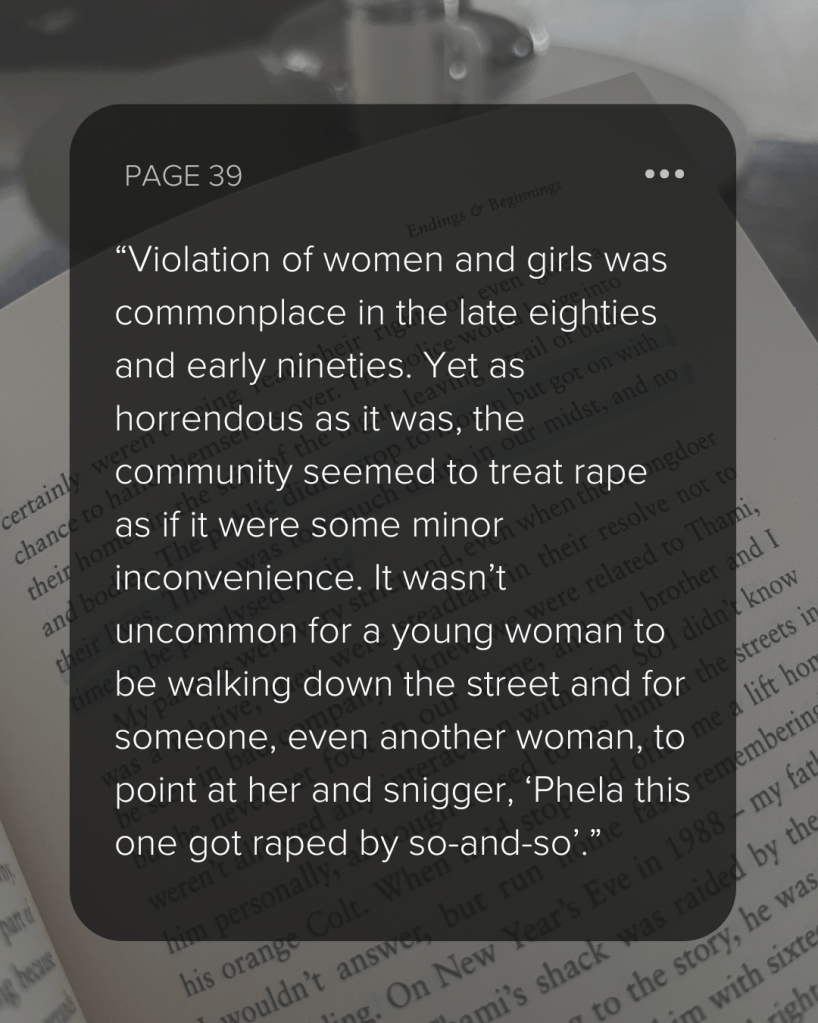
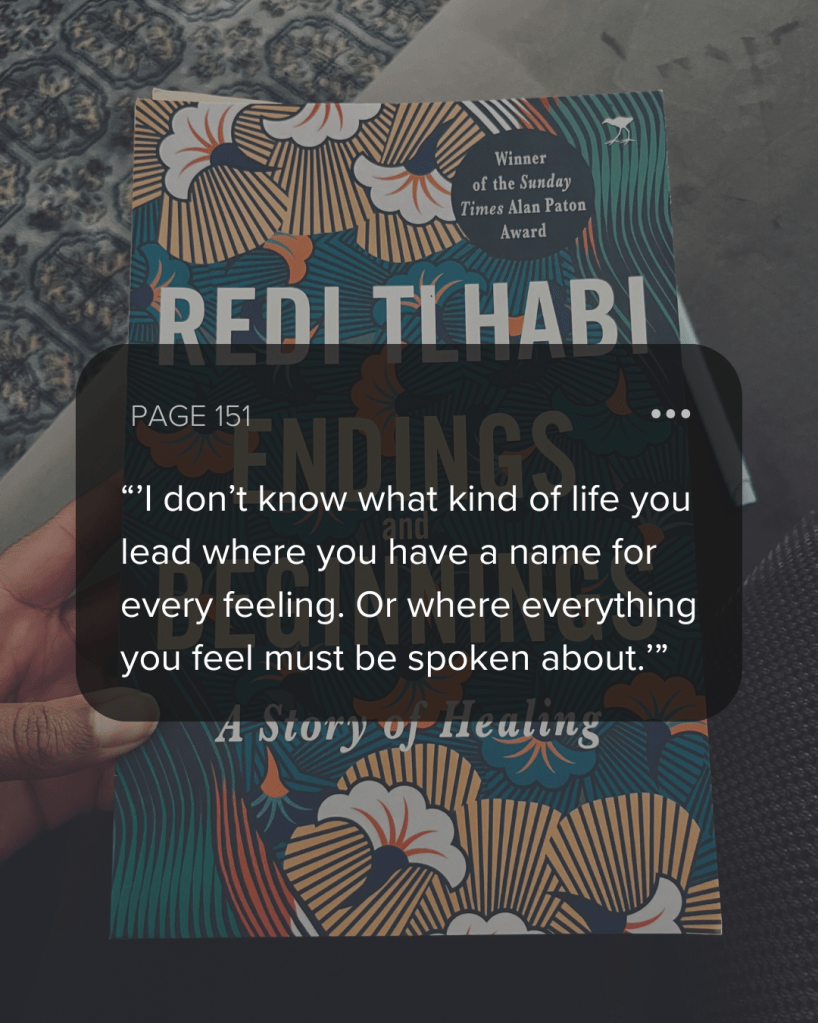
Literary Postmortem: Endings and beginnings

The fragility of life and the devaluation of individual lives in South African society swung on a pendulum throughout the 288-page stage that this memoir played out on.

For transparency’s sake, I must declare that I am a certified Redi Thlabi stan, she’s an incredible journalist and thinker I have always looked up to, and that no doubt coloured my reading somewhat. I picked my copy up at a recent book sale by publisher, Jacana, for a steal (one of those pay-per-kilogram sales – best!) Knowing Thlabi’s public persona quite well, I went in with quite specific assumptions about what her memoir might be like, and boy was I wrong on every count. Nothing could have prepared me for the twisted tale of a great first love marred by violence, manipulation and neglect. Sjoe, I was never ready shem.

Without giving away much more of the plot, I will say that the story that unfolds won’t be difficult to summon into ones imagination, Thlabi writes with a careful balance of honesty, warmth and clarity that transports you to the same street corners, the end of longing stares and swirls of despair that she experienced. It’s a reminder of how complex human beings and human relationships can be. Thlabi illustrates just how thin the line is between our precious inner lives and the relived realities that threaten it day and night. Grief stalks the pages from start to finish, the intensity of it varied from part to part and chapter to chapter, but ever present nonetheless.

Without being glaringly obvious about it, a geographic and historical profile of Soweto is sketched and helps root readers in place. The passage of time can also be seen through the lens of the location itself, ensuring that the past and present are delineated well. The lives of ordinary South Africans (and Southern Africans) during Apartheid always fascinate me, because they help us fill in the gaps that pure political and historical accounts can not. One of my favourite parts of the memoir was an account of how a central character risked life and limb to do his bit to assist in the anti-Apartheid movement. I appreciate accounts like this because the collective memory of our history can be narrow and solely focused on the people with bridges and buildings named after them, which is a distortion of how many truly played their part to fight off an oppressive regime.

Would I read it again? Nah uh. While intensely personal and revealing, I think it’s the kind of work that doesn’t necessitate revisiting when you are done reading it. Much like Khwezi, Thabi’s second book, it winds you so much that the very idea of bracing for impact again just doesn’t seem possible. But like Khwezi, it is a masterclass in using deep listening and authentic connection to navigate through one’s curiosity and sense of justice.

Some of my best bits below:

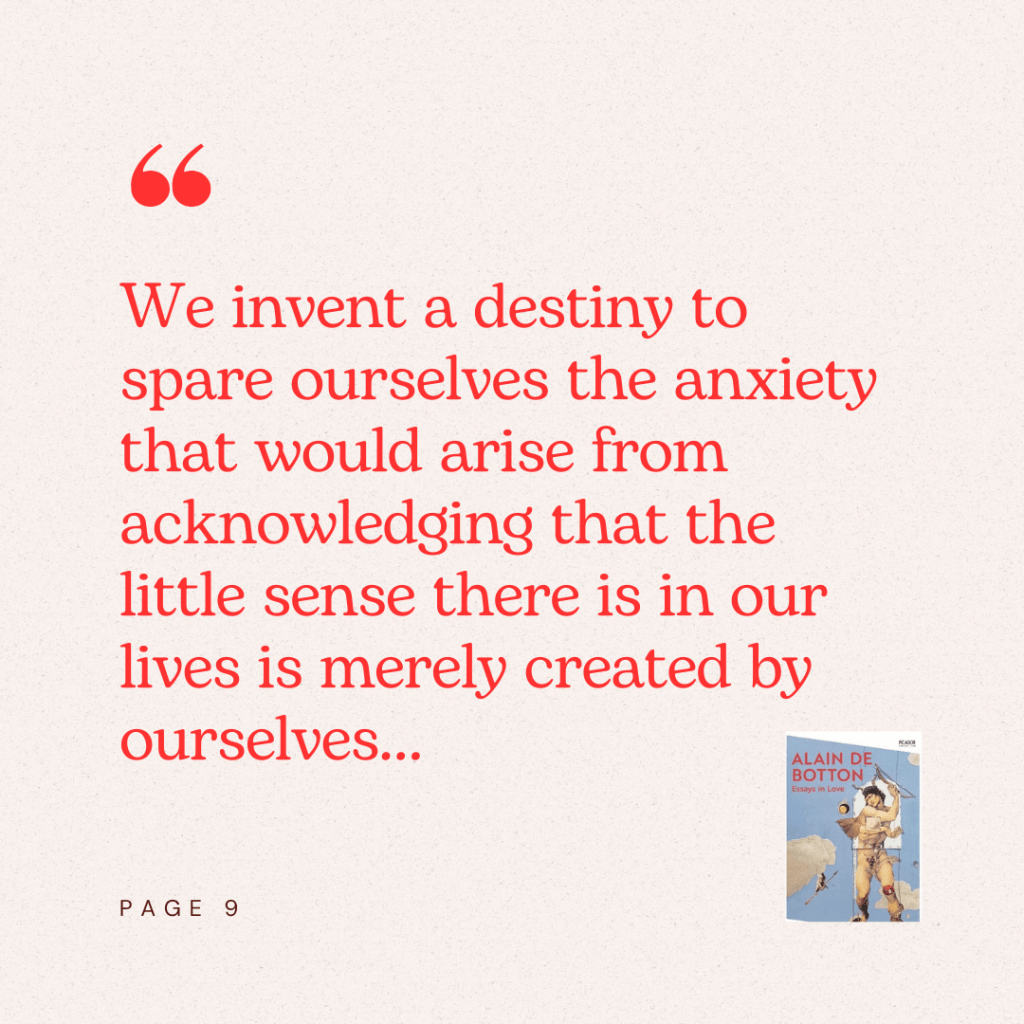
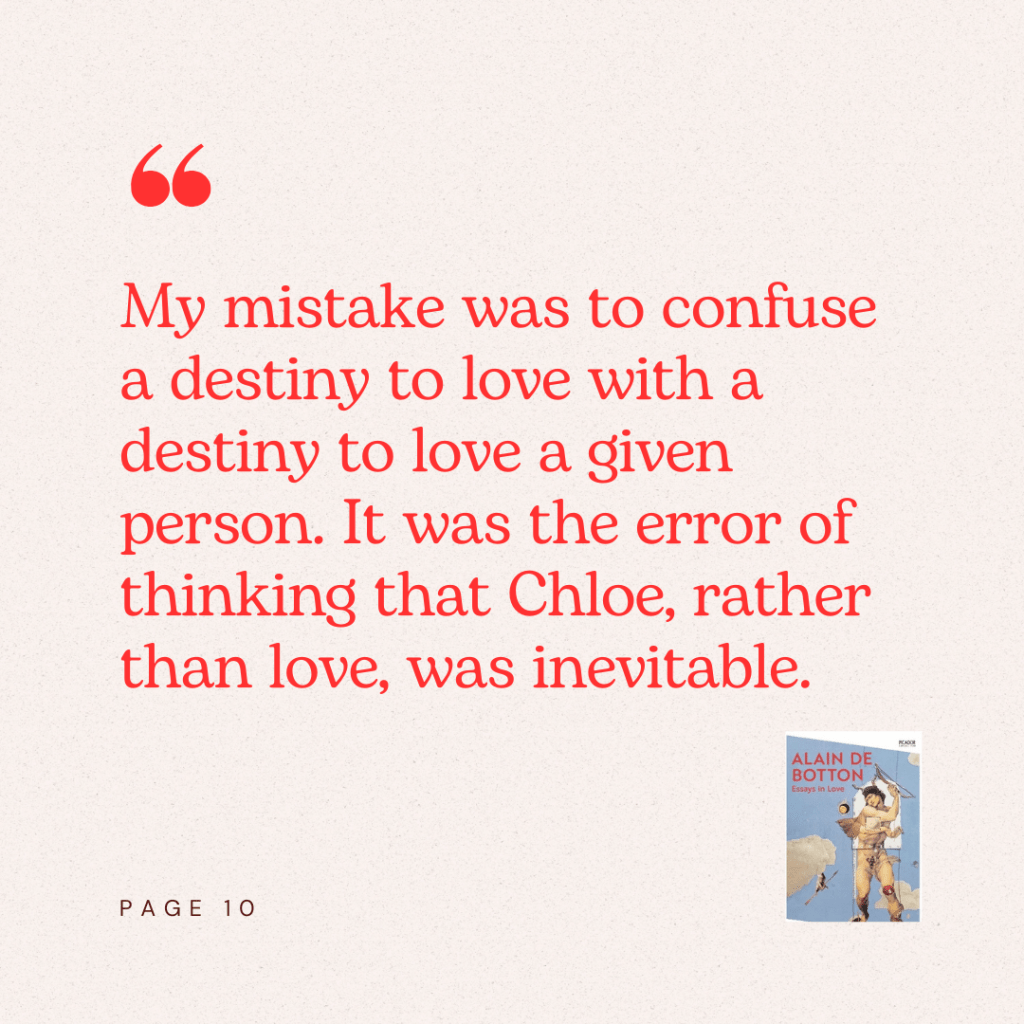
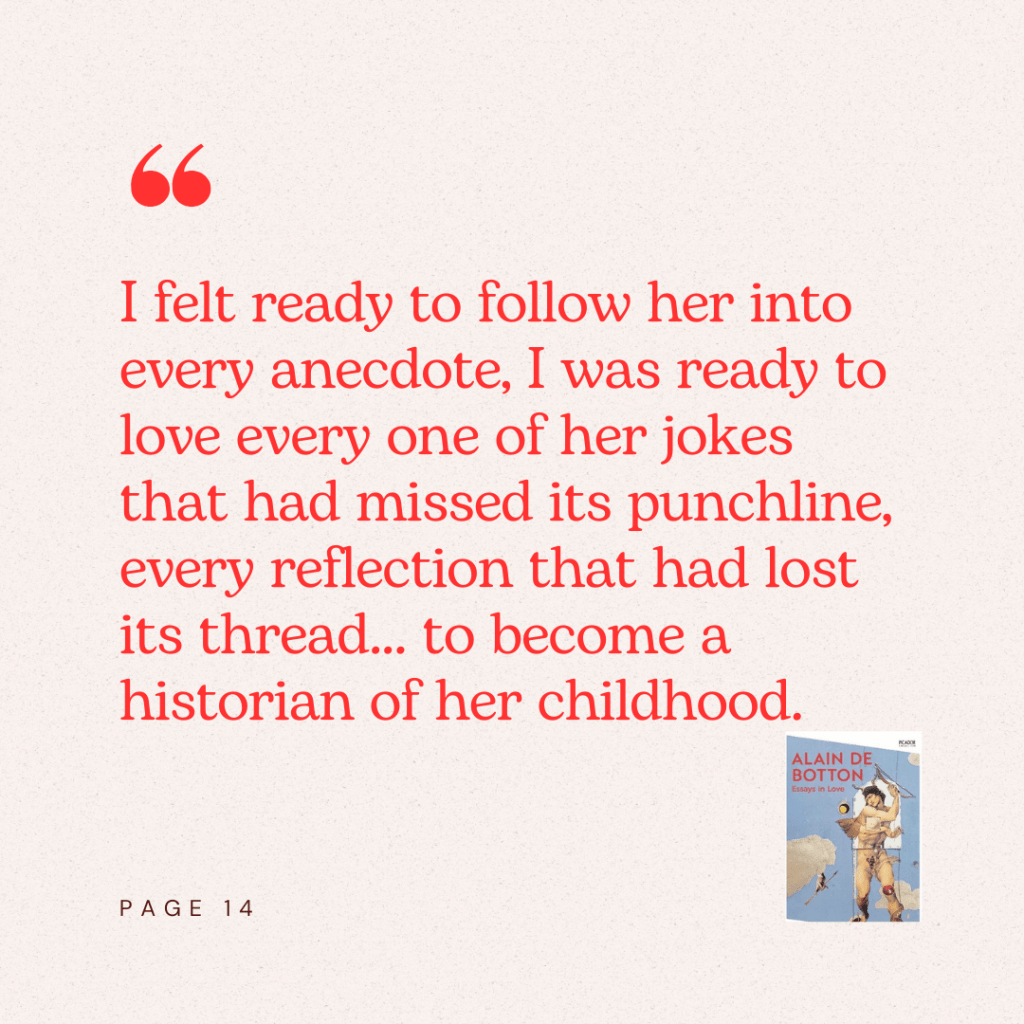
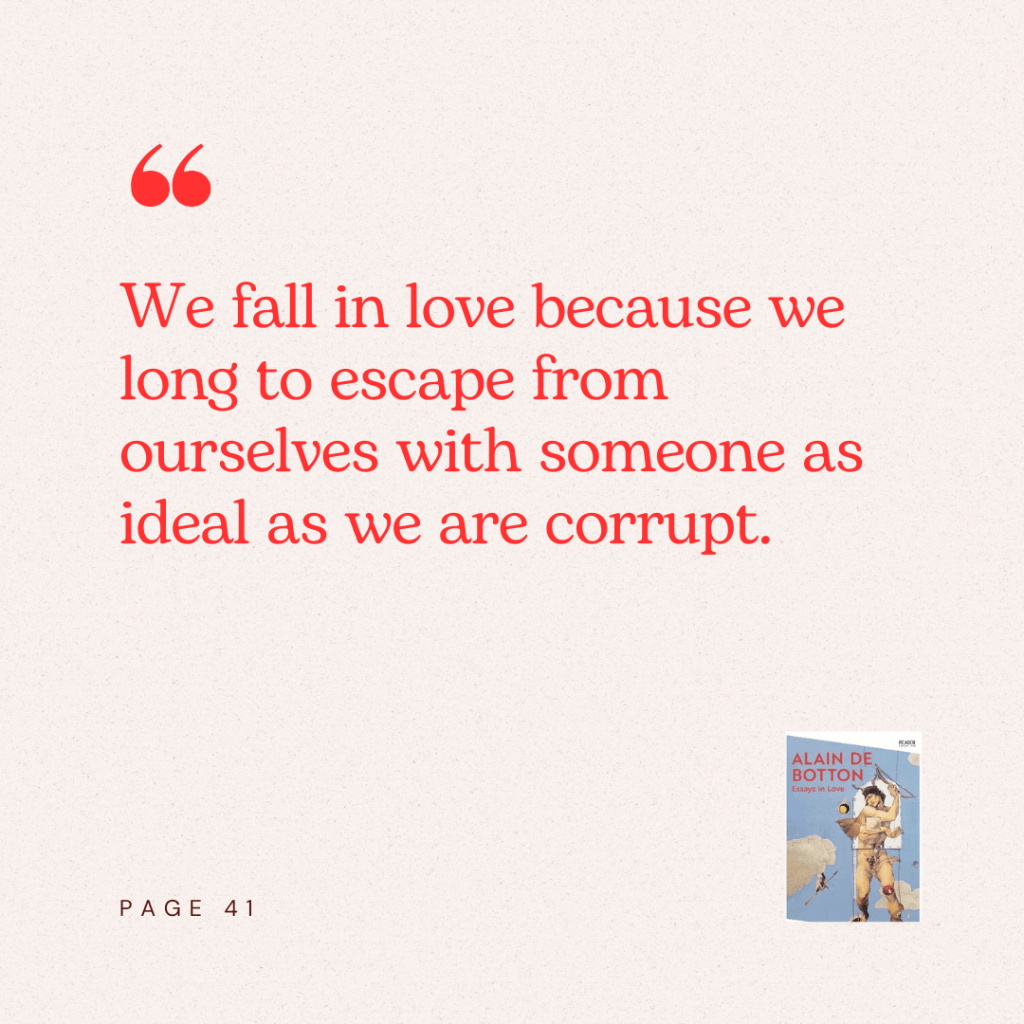
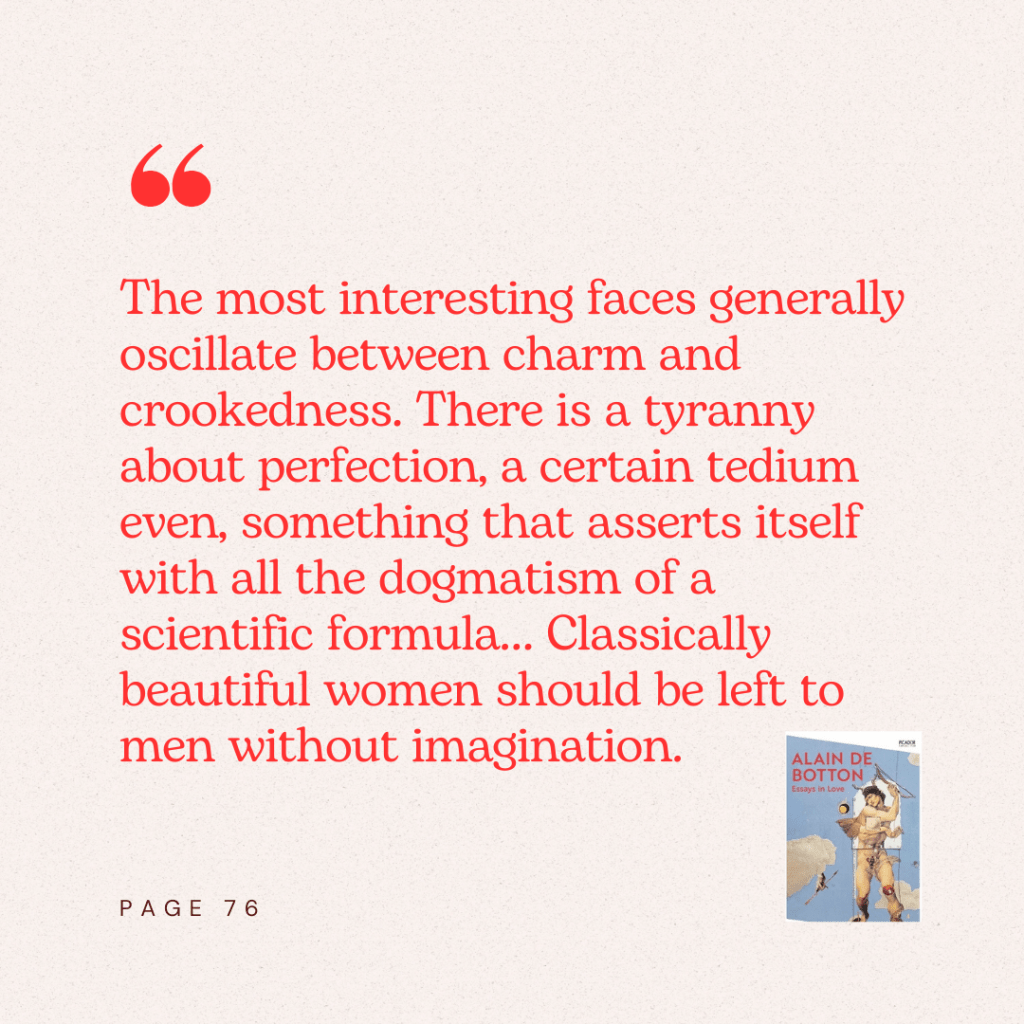
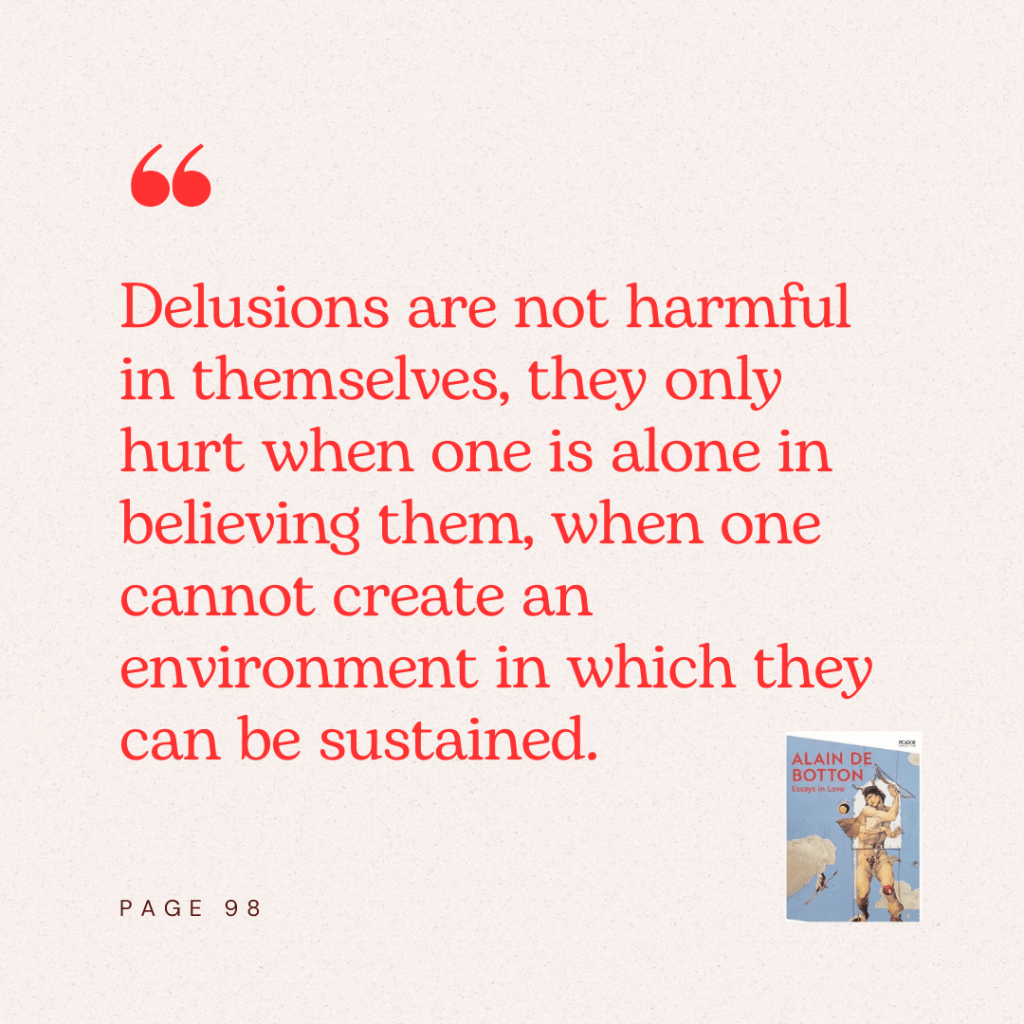
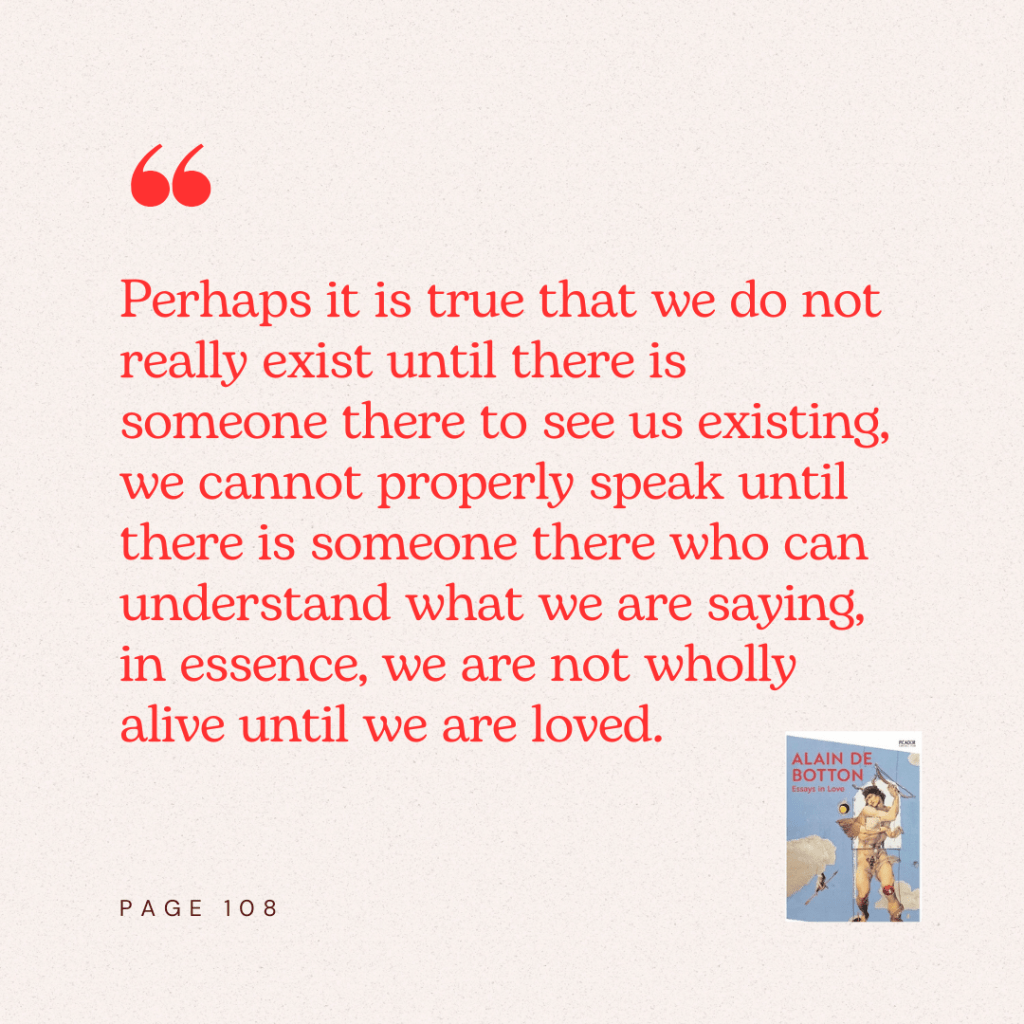
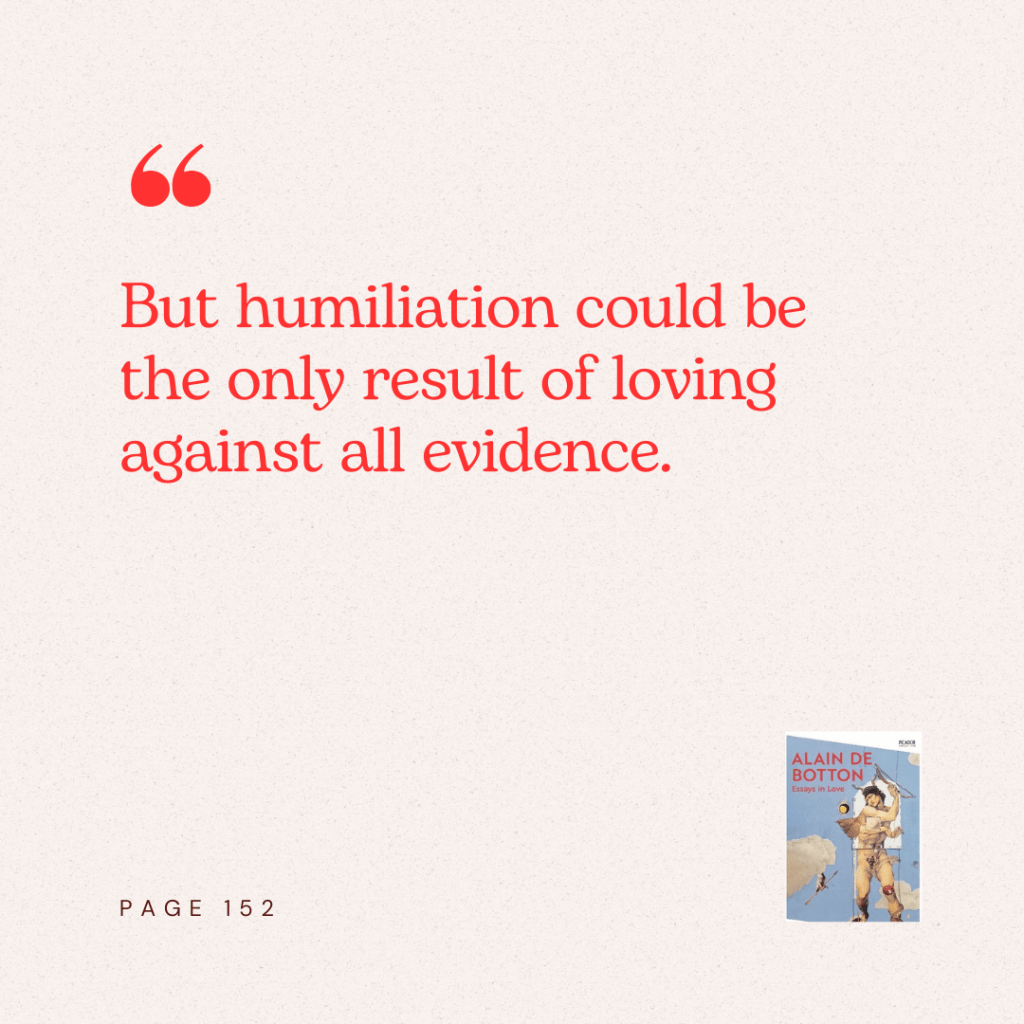
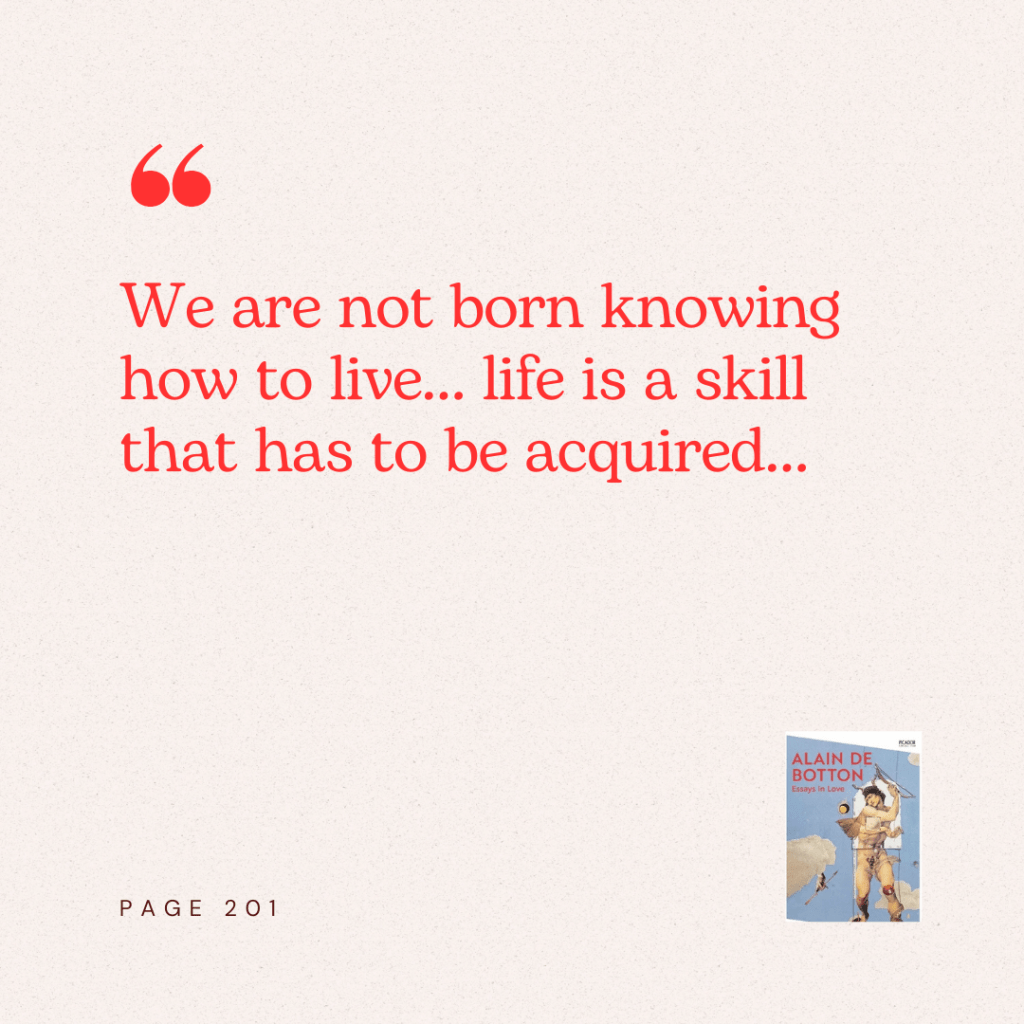
Literary Postmortem: Essays in Love

I know the internet girlies tell us we should never spin the block, but let me tell you that doesn’t count for books and the second or third or fourth time is often better than the first.

I first read Alain de Botton’s Essays in Love some eight or so years ago when I joined a new book club shortly after moving to Cape Town to start a new gig and life. I remembered laughing and nodding along a lot, so I decided to pick it up again when I needed a pick me up a while back. My slim recollection was correct, I laughed and nodded along more upon my second read. Time and one too many relatable experiences also made sure that I cried a bit too this time around.

As someone who often has to imbibe whatever can be learned about relationships through external media and anecdotes, the writing style in this book invited an intimacy which placed me in the middle of the room when they were fighting, alongside him on taxi rides and embedded in the neural networks that carried his stream of consciousness. De Botton allows us to be flies on the wall, inviting us into this relationship and its journey from start to end. With chapter titles like ‘The Fear of Happiness’, ‘Romantic Terrorism’ and ‘Psyco-Fatalism’ one is never too far from learning some cool historical and philosophical insights while relating to the more personal linkages. The numbered paragraphs in said chapters initially look like an odd choice but it actually helped move the narrative along quite neatly.

The critique of modern love and our strange passage through it remains my most memorable takeaway from this book; it is reflective and honest about what it takes to be with another person and highlights the inner conflicts that ultimately make/break such unions. Upon a second read, I probably like it more now than I did as the hopeful romantic I was when I read it some eight years ago.

As always, the best bits below:

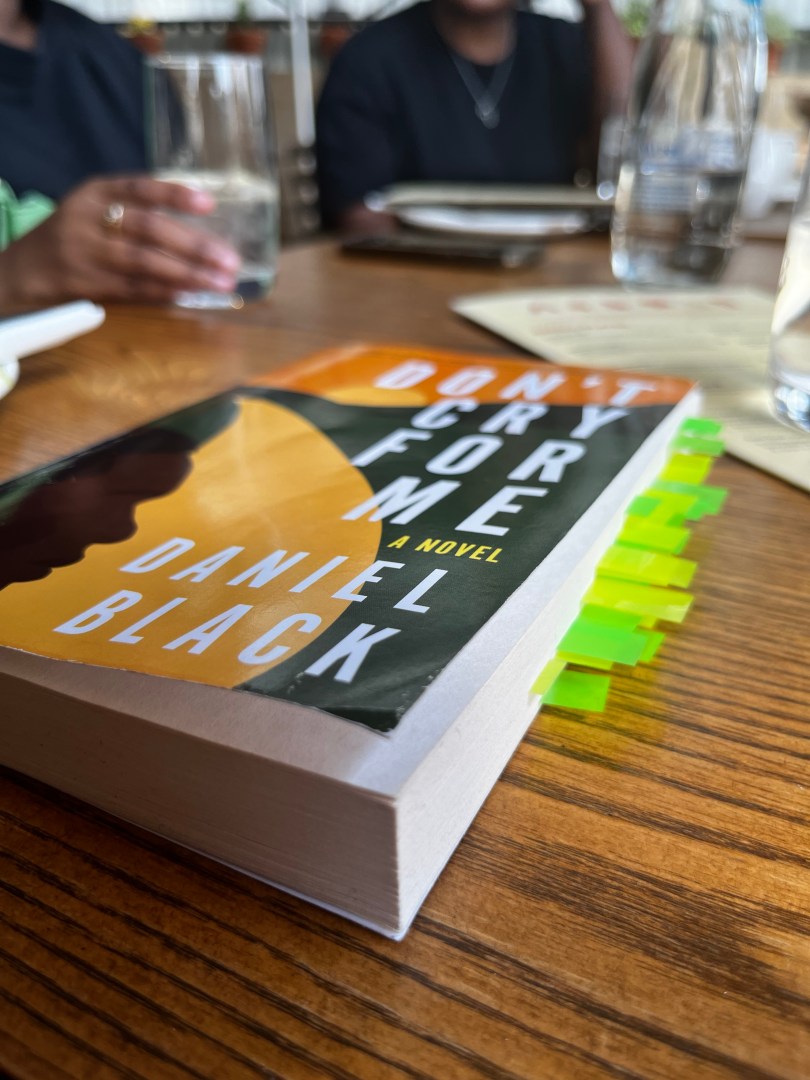
Literary Postmortem: Don’t cry for me

I listened to an full audiobook for the very first time and let me say up front – I actually enjoyed it so much! Before this experience I was a little anti where audiobooks were concerned, imagining that it must be ‘cheating’ and a grating experience akin to listening to the world’s longest podcast. But it was neither of those things.

Choosing to listen to this book by Daniel Black rather than read it was a choice driven by convenience, the cost of living crisis and a book club meeting less than a week away. A softcover copy would have set me back R700, while the audiobook was free to listen to Everand with their 30-day free trail (which I forget to cancel and led to a loud ‘FUCK’ in the middle of a set of leg presses at the gym last night when the bank notification popped up) and promised to only take up 7 hours and 28 minutes. And boy did those seven hours fly by – I was THOROUGHLY entertained from the onset and throughout.

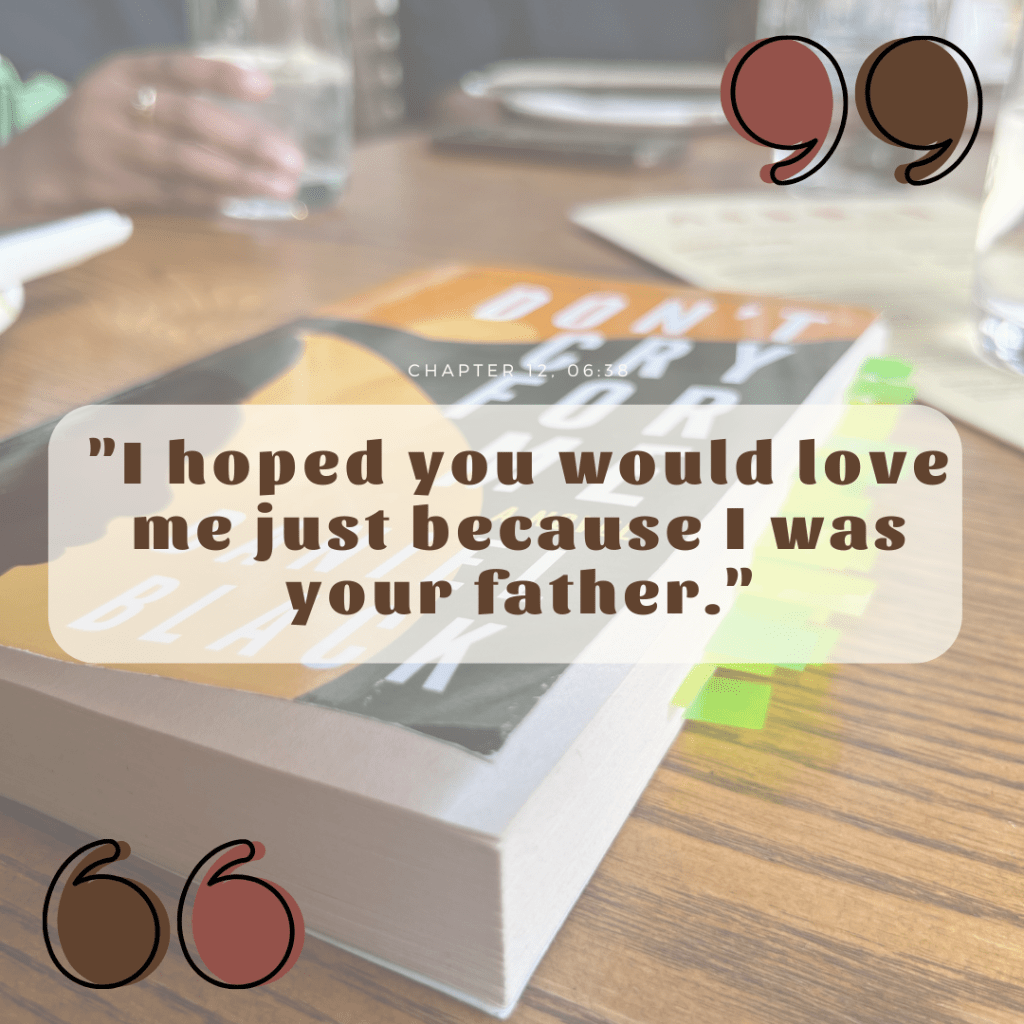
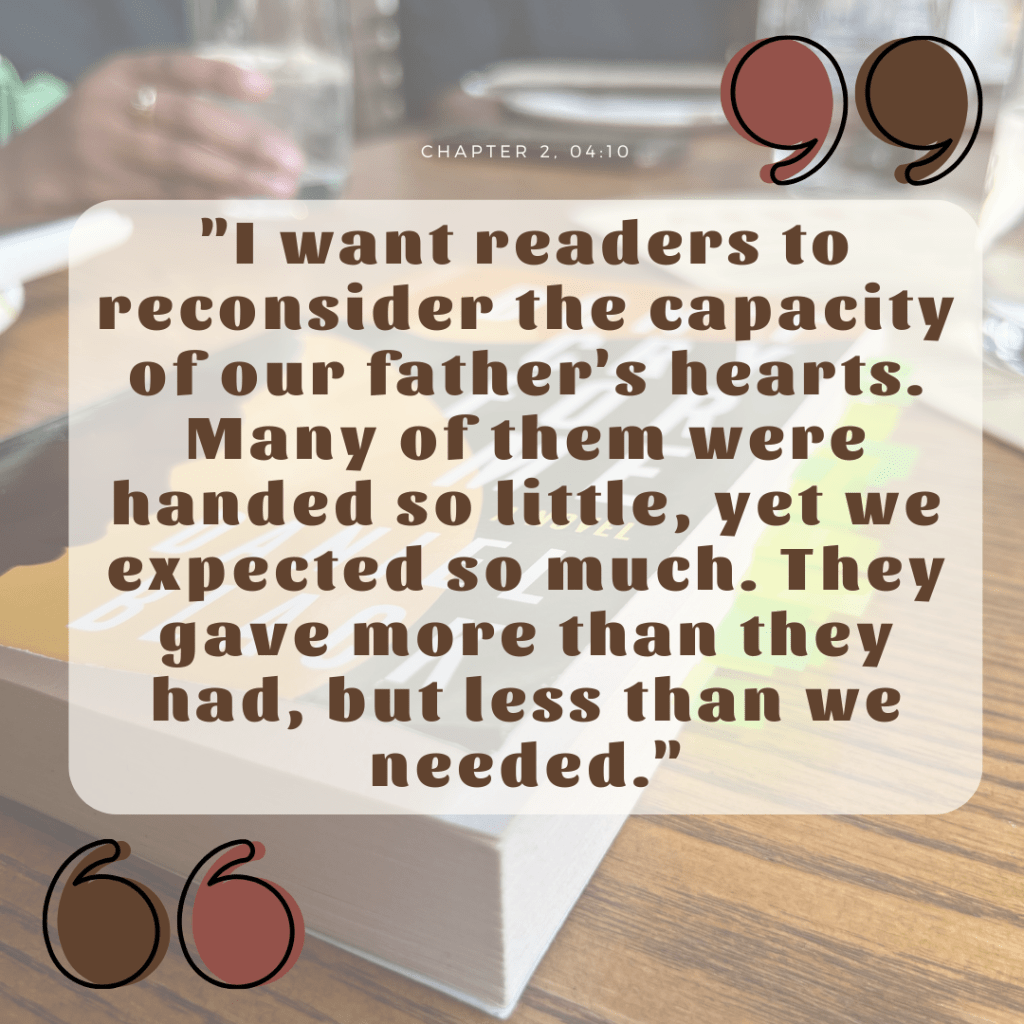
Read by the author himself, I noted that the cadences and timing were always spot on, there were one or two audible editing/recording flashes but not noticeable enough to ruin any part of the experience. In a nutshell, this is a tale about a father and son’s complicated relationship, told from the oft times problematic point of view of a dying father. It felt honest in sometimes cringeworthy ways, but I really liked that because that is human. The narrator is deeply flawed and in the parts where he can’t or won’t recognise that in himself, we are afforded the freedom to colour in for ourselves – which is the best part of reading for me. No two people interpret or experience a passage, a chapter, a whole book the same way and that’s so cool to me.

Anyway back to the book, I was particularly struck, again, by just how recent slavery was. That some people and their parents and were raised on plantations within the last 100 years. The periodization makes it easier to understand Jacob as a (by)product of his environment and circumstances. He can’t help but be the man he is, despite sometimes knowing better, acting against that better judgement and honouring his true feelings. It is unfortunately too relatable in parts (domestic abuse, racism, homophobia, sexism – all the ism’s really).

As I listened along, bookmarking some of my favourite bits was really easy on the app, transcribing them for the purposes of this post not as much.

I would love to read this again (or for the first time if we are to be pedantic), really enjoy the exploration of black fatherhood and the level of grace it forces one to extend as a result.

Literary Postmortem: Luster

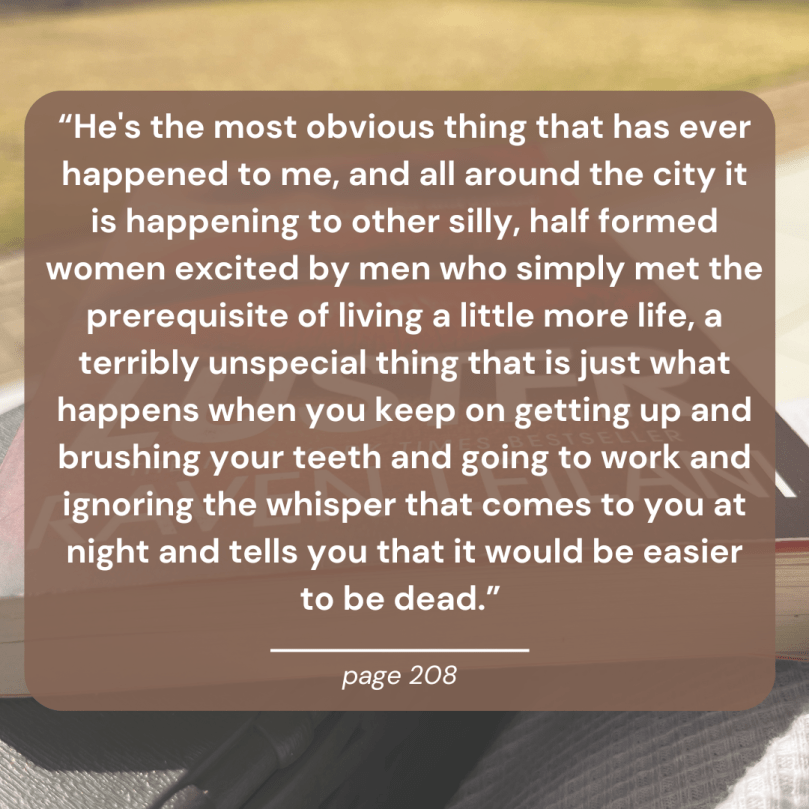
“What the actual?!” I have never said and thought this phrase more than I have in the last month reading Raven Leilani’s Luster.

I recently described it as ‘very fucked up and difficult to read, but the beautiful sentences have made me stay the course’ – I probably phrased it less eloquently at the time but that’s what I thought when taking in the 227 pages that often felt like an exaggerated pitch for an HBO show (you know, dimly lit with all of the fucked up sex and drugs).

In short: Edie is a traumatized, touch-starved, poverty-stricken artist, who starts an affair with a very boring, middle-aged married man (I think his name was Tom, no James, no Michael, no no Eric – see, unmemorable at best). In the middle of their punch-me-fuck-me shenanigans, Eric’s wife, Rebecca (who we are told knows about the affair) moves Edie into the marital home on the day she has quite literally hit rock bottom, with no job, no money and nowhere to live.

The move isn’t benevolent, Rebecca wants someone, someone Black, to act as some kind of hand-holding older sister to her adopted Black daughter. The whole thing is insane. Edie has nowhere else to go, so she stays. Carries on with that man, befriends the daughter (Akila – who is arguably the only person I even liked and rooted for on this whole thing), and lives off random monetary offerings Rebecca leaves her – until she falls pregnant.

As I said, story-wise – hated it, Edie was living through the wound from onset and throughout. I suppose her upbringing was the catalyst for some of the chaos that was her lived experience, to be fair she couldn’t make better choices because she often didn’t have the liberty to truly choose. But Raven is such a good writer that I stayed the course despite myself to find more of her tragic, curt and heart-wrenching sentences and passages. Some of my “best bits” below:

Literary Postmortem: Memoirs of a Born Free

I remember being insanely jealous when I saw this book being advertised when it was first published in 2014. Watching Malaika wa Azania doing interviews about the book, thinking “that’s what I wanted to do, surely that should be me”. I’m so glad the universe gave her the gig because this is honestly one of the best books I have read about the state of South Africa – now more than ever really.

This nation’s students stood up last year to say enough is enough and more importantly stood up for themselves when nobody else would. This book reads like a brilliantly timed prologue to what we have seen happen in the past few months at universities across the country.

I was part of the generation that has witnessed the end of our people being oppressed and trapped by the false belief that they owed their eternal gratitude to you (the ANC), and that there would be none brave enough to take you on. (page 167)

For the longest time, until recently,  people have expected and have thought about “born free’s” as one homogeneous group that is “non-racial”, not oppressed and has countless opportunities to drag themselves out of poverty and joblessness. This has never been true in this country and remains untrue today. This book made me acknowledge the nuances of inequality in this country, I’ll explain by way of example. memoirs of a born free

Malaika and I are exactly the same age. The schools we went to were relatively similar. We both fell in love with books an words in ways that changed our lives. Our experiences of whiteness in high school were quite similar. Our thoughts about this continent and it’s people on par. But even though we share some experiences there are a lot, too many that we don’t. And that is our reality. My heart almost broke when she shared a story about taking a friend home from school one afternoon. They ate and did what they did very other afternoon when they went to one another’s “houses” (I say houses like that because a shack isn’t isn’t a house). It started raining. Heavily. The topmost form of zinc protection between them and the heavens caved in from the rain. The shack flooded. Pots and pans floated around the girls. We see similar images on news bulletins every now and again but being inside the head of that little girl who was embarrassed that she had a friend over as they and everything her family owned took an involuntary swim. Some people routinely experience such things as  drainage systems and plumping systems are non existent in the places that house tin enclosures.
Merely by being born black in this country you had problems. I didn’t think I’d need therapy to cope with my own circumstances. (page 104)
Her life was rough, she dealt with and took on so much just to survive. There are some who would look at her story and begin telling the “magic negro/against all odds” narrative, that instead of speaking to and addressing the conditions that make people have to trudge through hell just to eat or have a place to sleep or gain entrance into an institution of further education, praises this magical black person who “overcame” those challenges and puts them on a pedestal with a placard reading “HARD WORK PAYS” as inspiration for the other lazy blacks – who are obviously poor because they don’t work hard enough, lol.

She has an amazing mind and can so easily put forth her observations in ways that had me screaming out yes on the train while I was reading this. It was like having one of those heated debates in a politics lecture that I miss so much, affirming and teaching me things at the same time. She speaks to the reality of now, the discord between the state and us, the animosity between black and white and the poverty keeping the majority of our people scrapping at the bottom of the barrel.

There are times when the only weapon a black child can use to fight against a system that dehumanises her is to be so angry that she is left with no choice but to dare to be alive.

While I bemoan the resilience narrative, I also found her political resilience inspiring. Fighting “the system” is an uphill battle with assured losses along the way, choosing to keep on fighting is necessary to achieving any kind of change. It’s not about winning or reaching a point where you get something that you want, like the vote, thinking that you have attained freedom once you have it. It is a journey, a continuous one that will not end any time soon if we rest at historical pit stops for a feast.

But comrade Malema was the closest thing to ourselves than anyone else at that point. (page 114)

I was particularly saddened by her account of what transpired while she was part of the EFF, the way they treated her really hurt and frightened me considering their trajectory and my allegiance.  Either way this woman is a fighter and I can only hope that one day I can follow in her footsteps in using words to paint truth bombs for pictures.

In other words, a must read.


Literary Postmortem: Two Thousand Seasons

Immediately after finishing this read last night, I almost felt like I had never really read a novel before, that’s how incredibly remarkable it was.

It was my first Ayi Kwei Armah reading and it definitely won’t be my last. What a man. To call this a book would be reductive it’s a piece of brilliant literary work – something that should be at the very top of all those narrow “50 books to read before you die” listicles.

“Beyond that he taught us not to fear the power of the destroyers’ weapons but to learn quickly the use of that power against the destroyers themselves.” – pg 147

So what happens? Basically the book is a narrative account of slavery thrust upon this continent, first by the Arabs and then later by the “white destroyers from the sea”. There is nothing vague in this work, people are called what they are and the terrible acts performed by these destroyers described in all their grotesque wickedness are laid bare. Of people being forced to fornicate with horses as punishment, of people being branded, of the raping of young boys by old men, of being shot at  and dumped overboard and much more. It felt all the more real because Armah had made you (the reader) a part of this world, on this journey with these people’s in the grips of a terrible destruction.

But beyond this is also offers an insight into “the way”, our way before we were so rudely interrupted, and interestingly he doesn’t paint it as some utopia either but there was much more respect for one another and the spaces we occupied.

It’s a difficult read, with a lot happening on every single page, so I took my time reading it. Every word counts and if you miss a line you will be the lesser for it. It was a truly devastating read but in the best way possible, I will never be the same and I am the better for it.

“A mind attacked and conquered is guided easily away from the paths of its own soul,” – pg 28

What I loved most was that he didn’t just outline and highlight what the problem was/is but he proffered practical solutions. I think that is what kept me from complete ruin by the works close. Yes, I cried in many, many places, but towards the end when one of the most important characters meets his end, I was sad but I knew it was coming and I also knew that his death would not render those like him immobile, incapable of carrying out their planned action without him at helm to lead the charge.

I was left with a real sense of hope, a real sense of knowing that I will not be the answer to today’s destruction but I can in whatever way I can, CREATE something that will help to bring the end of our destruction closer. And that is all I need, all I want really.

“No illusions brought us here, none support our work. We offer none of the comfort destroyed mind finds in lies.” – pg 183

Of this reading experience I would say this: As a student of history I know things and stuff about slavery in its many forms, when it happened, to whom etc. I’ve read the books, watched the movies and written the essays. But all in a semi-detached way because those accounts are rarely ever personalised, Armah made the facts breathe.

I’ll use a short analogy to elaborate: I was unplugged from the Matrix like Neo, I had already puked from the knowledge being forced down my throat and into my ears. Eventually as he began to accept the truth about the world and who he was, that was all flipped upside down when he met the architect. This book was my architect. Laid everything bare, didn’t hold back on anything, showed its disdain and even gave me a way forward.

Nothing and no one have done that for me before, I will forever be thankful for this piece of work. It gave me real and more importantly, practical advice on how to press on. I will have to read and reread it many more times, it’s too dense a work for me not to have missed things.

Literary Postmortem: Americanah

I will start by saying “long live Chimamanda Ngozi Adichie, long live”. What a woman, what a storyteller.

There is nothing I didn’t love about this novel. Well at first I looked at the tiny bible-like print with a bit of a side eye but it grew on my eyes.

In the past two to three years, I have made a conscious effort to read more African authors because frankly even though I was an English Literature student, I was starved for stories told by my people, about my people for my people. This novel lived up to this preference through and through.

From the very first paragraph to the last one on page four hundred and something – she had me. Not to compare, but Americanah filled the historic/political/social gap I found in NoViolet Bulawayo’s We Need New Names.

In Americanah there is an effort made to make the reader truly see and understand Nigeria, its people and its politics. In no way forced or didactic, but rather she chose to edify us by way of conversation. The whole book felt like a collection of stories told by that very interesting person at the party who has everyone in the room enthralled. It almost felt like a very long, well-written, witty blog post – which I loved.

In a nutshell the story follows Ifemelu – a woman you will come to love and hate – from her childhood and teenage years in Nigeria, to her years spent in “exile” in America-land. I say exile like that because she really only went there because life in her home country was not conducive to her growth at the time, which is what going to exile is partly about. People leave because they have to not because they want to – it’s about fleeing from restriction really (well to my mind).

The bulk of the book speaks to two of my favourite topics, love and race. It’s a great love story, one that had me falling in love with Obinze (the love of her life) chapter by chapter. He is perfect because of his imperfections and somewhat simple nature. He loves her in an all encompassing way but never smothering. Their story is weaved into every corner of the book, much like her longing for him when they are apart. Without quite knowing it until the very end, he is everything.

I found it fascinating that race only became an issue for Ifemulu when she stepped off this continent full of people who look like her without question. I like that she tackles race head-on in her personal life and goes as far as to start a blog dedicated to confronting the race problem in America. She puts excerpts of the blog in the book, which was another highlight while reading.

Her characters are complicated, irritating even frustrating and that made for a more authentic read. I liked that i didn’t like everyone all the time because that is our reality. People are disappointing, fearful, childish, racist, arrogant and and and.

If my opinion counts for anything I would say in fifty years this will be one of those books we call classic, hell I’ll call it that now. Read it. Re-read it. Make people you love read it.

Literary Postmortem: The Reactive

My excitement and expectations going into this book were quite high and I must say I was not disappointed at all. This debut novel by Masande Ntshanga, is one of the best things I have read in a long time. He is a young, black writer from the Eastern Cape aka everything I want to be one day (save for being from the Eastern Cape).

Anyway so late last year I attended an event where he read an extract from the book and I knew then that I had to read the book. He writes in a way that demands you to carry on reading. If you plan on reading the book and want to be surprised don’t read this – there will be spoilers.

Right.

So I mentioned the high expectations – shattered not long after I had settled into this read. I expected to read about his younger brother, Luthando dying at an initiation school and the guilt his older brother, Lindanathi felt over his compliancy in that. That’s actually why I was so interested in the story to begin with. It’s a horrible thing that happens to young boys out in rural areas in our winter. Luthando’s death is always lingering throughout the book but I still felt I needed to know more about his death.

Initially I thought the immense guilt the protagonist (Lindanathi) feels throughout the book irrational because you know things happen, right? But then the more I read about his drug induced hazy days in Cape Town with his two friends Ruan and Cecelia, the less empathy I felt.

They did drugs. Often. A lot of drugs. Often. It scared me. Scared me because it just happens so easily, they are at the point where it’s routine, they need the drugs to peel themselves off Cecelia’s apartment floor. It also scared me because Ntshanga writes about the drug use/dependency with far too much accuracy to not be drawing from personal experience (or so I think). There’s also quite a bit of kinky bordering on messed up sex, group sex with masculine porn endings *purses lips*.

But anyway in a nutshell, these three are drugged up all the time and sell pharmaceutical drugs (ARVs) on the side – they lead a life that looked like absolute chaos to me. But there are reasons for why they are the way they are, some which we don’t really get to learn about. Personally, Lindanathi making himself reactive was the most chilling for me. There’s a lot of ambiguity in the book, shielded by absolutely beautiful imagery and sentences. I can’t recall how many times I had to stop reading to re-read and mull over the perfect sentences.

To me, Lindanathi redeems himself towards the end of the book when he decides to stop running from his problems and avoiding his family. He goes back to do the thing he promised his brother he would do with him. He decides for a change to look his life in the face and show up. Then we meet Esona, ah I would have loved to have one more chapter for their story – she sounds like the thing he has needed for a long time.

The way the book ends is comforting, still sad (yes, I cried) but it feels like things happen as they should. It really was a brilliant read, it felt extremely honest, therefore heartbreaking but also so necessary.

I am just a girl with a blog who read a book but I would definitely recommend The Reactive.