NOTE: Article first appeared in The Citizen newspaper on June 5, 2014.
Chief Justice Mogoeng Mogoeng on Wednesday denied trying to push religion down South Africans’ throats, saying his comments had been misunderstood.
In a press conference held this afternoon, Mogoeng said those who did not read his speech and only got bits of it are the people who have “misunderstood” him.
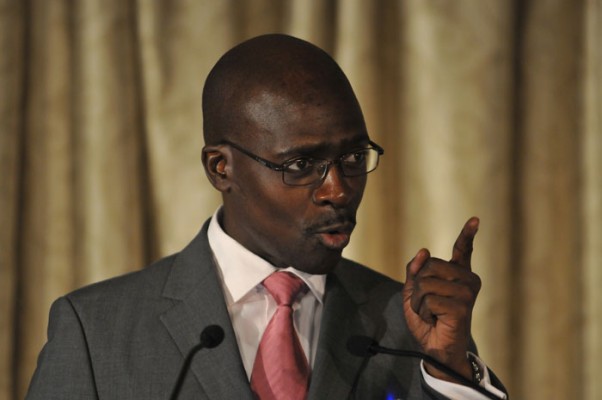
FILE PICTURE: Chief Justice Mogoeng Mogoeng addresses members of parliament in the national assembly during the first sitting of the 5th democratic parliament in Cape Town, 21 May 2014. Picture: Refilwe Modise
Speaking at an annual conference in Stellenbosch last week he sparked outrage came from the public when Mogoeng suggested that religion should inform some of our law making processes.
Mogoeng said he spoke about law and religion because that was the theme of the conference.
“I spoke about religion and law because the conference was about religion and law,” said Mogoeng bluntly.
Mogoeng said he highlighted all religions and not just Christianity, “there are treasures in all religions in Africa” he went on to use Ubuntu as an example.
Mogoeng added that all religions practiced properly teach tolerance and love and by so doing shape society.
The chief justice felt that he had not betrayed the constitution in anyway, “I take my oath of office very seriously. I will not give precedence to my religion at the expense of the law”.
When the chief justice finished reading his prepared statement, he ended with “God bless you” before opening the floor for questions.
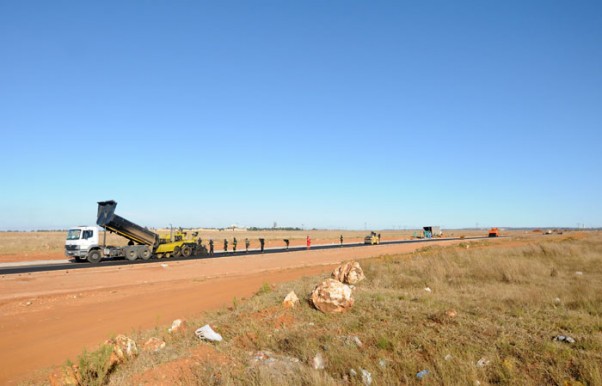
Municipality workers erect a road between the land and the mine in Bekkersdaal in Johannesburg, 12 May 2014, which residents want to occupy by force. Picture: Nigel Sibanda
NOTE: Article first appeared in The Citizen newspaper on May 13, 2014.
Rand Uranium mine on the West Rand will enter into talks with concerned residents in Bekkersdal this week over unused land in the area.
The land close to the mine, which is owned by the mine, has been standing empty for nearly 30 years.
Residents in Bekkersdal attempted to occupy the land earlier this year but were stopped when the mine issued an interdict against their action in January.
Thabang Wesi, spokesperson for the Greater Westonaria Concerned Residents’ Association, said “they (Rand Uranium mine) withdrew the charges because they understand that we need this land”.
Residents were not stopped by the interdict but by “other pressing issues”, said Wesi.
“We need that land. It’s vacant and there’s no development happening there. Bekkersdal must grow like other townships.”
The only residents seen by The Citizen on site yesterday were miners leaving to go home and municipality workers paving a new road to connect the mine to the township.
Wesi described the vacant land as being as big as Bekkersdal itself. “The mine is in the township but doing nothing for the people who live there. They are only developing the land and not the people,” said Wesi.
The current management of the mine also stands accused of not contributing to the community trust fund.
“They have to contribute – if not they must go” said Wesi.
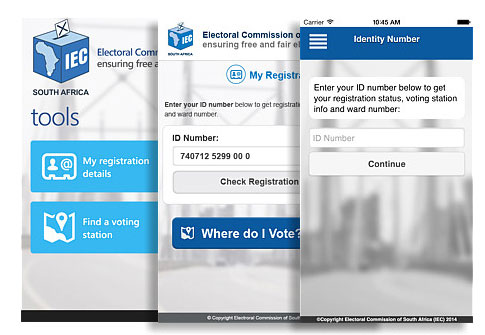
Screen grabbed photo’s of the IEC SA app, available for download on both Play Store and App Store.
NOTE: Article first appeared in The Citizen newspaper on May 6, 2014.
While some have criticised political parties of not doing enough on social media to campaign for the elections, the Independent Electoral Commission (IEC) has two different apps in place to help voters through the electoral process.
The Citizen downloaded the apps to their level of usefulness. The fun app, “IXSA” (I vote South Africa) is a 3D digital game that will require 62.64 megabytes of data to download. But that’s all forgotten once you start playing. There are three different missions, with challenges in each to complete. Using a virtual rotary dial you move your 3D avatar around to get to each challenge.
That’s when all the fun begins – you have to get your avatar from their home to a voting station and cast your ballot successfully. The game is a simulation created to take voters through the process in a fun and interactive way. If you have ever played Sims, you will enjoy it.
The practical “IEC SA” app is available for download on Android’s Play Store and Apple’s App Store for a data friendly 4.06 megabytes. The app provides users with access to their voting details.
Along with this, the app lets users find alternate voting stations, look up previous election national and provincial results and a frequently asked questions tab to answer any questions voters may have. It’s an easy to use way of getting important personal information.
Anyone with a smartphone or tablet can be up-to-date with election results and processes at the swipe of a finger.
NOTE: Article first appeared in The Citizen newspaper on May 6, 2014.
The top three topics covered in the media during the election campaigns were, election campaigning, party politics and corruption – with a particular preoccupation with the Nkandla saga.
In contrast, the top three marginalised topics were: voter education, election results and election funding, Media Monitoring Africa (MMA) said in an interim report on media coverage about the elections released yesterday.
According to MMA, of the 50 media outlets covered over a seven-week period, 85% of all their coverage focused on five “big” parties, namely and in order: the ANC, DA, Economic Freedom Fighters (EFF), Agang South Africa and Congress of the People. This left 24 parties a tiny share of 15% of all coverage.
MMA director William Bird said in Rosebank, Johannesburg, it was also found that the biggest cities received the most coverage, with smaller areas and smaller parties being left out of the loop. The voices most largely represented were President Jacob Zuma (ANC), Juluis Malema (EFF), Helen Zille and Mmusi Maimane (both DA).
Looking at the overall range of coverage, MMA found that only 15% of all coverage was biased.
Economic Freedom Fighters leader Julius Malema is seen addressing supporters during a march to the SABC’s head office in Johannesburg on Tuesday, 29 April 2014 over its refusal to air an Economic Freedom Fighters’ television election commercial. Picture: Werner Beukes/SAPA
NOTE: Article first appeared in The Citizen on May 5, 2014.
Economic Freedom Fighters “commander-in-chief” Julius Malema told a rally in Atteridgeville yesterday that he intends to go to Parliament to “deliver the best of the best” to all South Africans.
He was the keynote speaker at the Tshela Tupa (“Crack the Whip”) rally – his last opportunity to campaign before election day on Wednesday.
The almost 30 000 strong crowd went wild when Malema made his grand entrance. Led by bikers, he greeted the crowd while walking around the track.
Before he addressed the crowd, Dali Mpofu, Gauteng premier candidate for the EFF, led a demonstration of how e-tolls would be “destroyed physically” – an EFF campaign promise. Using hammers, party supporters in red jumpsuits laid into a white structure labelled “e-toll”.
“Any future without EFF is suffering,” Malema told the crowd.
His organisation would be around for the next 100 years, he said, and would be “handed down from one generation to the next”.
The EFF is “inspiring the hopeless masses of people”, he continued. He reiterated promises of increased minimum wages, compulsory free education and land expropriation without compensation. “You will own those farms after the 7th of May,” he said.
He said that the EFF was asking voters for “five years” to make a difference.
Apparently addressing remarks made by City Press editor Ferial Haffajee, he explained how way grants would work under EFF policies.
“We will take out the middle man (the South African Social Grants Agency)… That money will be added on top of our credits. The second money is going to come from politicians.” Money that would otherwise have been used to buy politicians cars would be given as grants to children and the elderly, he said.
Politicians should buy their own cars and houses and finance their own credit cards. They earn a salary and they “should use it”, he said.
Pre-recorded videos and live-streams from the other provinces were projected onto the wall behind the panel. From left to right: Khadija Patel, DJ Fresh, Kagiso Lediga, Shaka Sisulu and facilitator Tumelo Mothotoane. Photo: Pheladi Sethusa
For a group of people largely labelled apathetic, the youth in attendance at a debate on a Tuesday morning, braving the temperamental and rainy Joburg weather – were anything but apathetic.
Yesterday (Tuesday March 11, 2014), JoziHub in Milpark was the venue for the To Vote or not to Vote debate aimed at so-called ‘born-frees’.
Bornfrees stand up
There is a particular fascination with this year’s youth vote as this year the “born-free” generation, children born in 1994, when South Africa became a democracy, will vote for the first time. How they vote and who they plan on voting for are of particular interest because they have grown up in a democratic South Africa.
Lesedi Molefi of the organisers Live magazine said in the past three months they have interviewed a number of born-frees and found that, “we’re not apathetic and have an incredible role to play,” not only in these elections but in steering the country’s future.
The panel consisted of comedian Kagiso Lediga, journalist Khadija Patel (@khadijapatel), DJ and tweleb DJ Fresh (@DJFreshSA) and social activist Shaka Sisulu (@shakasisulu). The panelists were chosen because they are seen as accessible to the youth and their ideas.
Why should born-frees vote?
Addressing the question, why should born-frees vote, Lediga said: “If you’re not voting, you’re not participating.” DJ Fresh added that participation goes beyond just voting, part of that civic duty is to hold politicians accountable. Sisulu provided an anecdote to explain further: “If you’re dating someone, you can’t see them once every five years – it won’t work, it’s a one night stand then. Put your ballot in the box but make sure to maintain and nurture that relationship over the five years coming.”
The debate was live streamed from Johannesburg to Cape Town and Ginsberg, King Williams Town with questions coming from all three places to the panel. A common complaint from all three provinces was that the youth were never heard. DJ Fresh responded by saying the onus was on political parties to appeal to the youth on their level through channels like twitter and instagram: “Politicians talk at young people and not to them.”
The focus in the latter part of the debate was on what the born-free vote can achieve and individual agency. Patel said, “agency is important – it means having the power within yourself to do something.” The crowd responded well to this and the conversation started to look at ground level solutions and social activism that gear them in that direction.
Lethabo Bogatsu, a self proclaimed born-free said the talk left her feeling empowered and keen to be an active citizen, “I was always going to vote but now I’m not going to stop there. It’s not just the vote and then I’m done. I’m going to work on the relationship, my man is going to be my vote, my political involvement is going to be my man. I’m going to have a relationship there because being single is rough.”
Distinctive green and red rectangles and circles that can be seen from miles away are part of a new off-campus residential building for students.
Mill Junction in Newtown is an example of creative, low cost housing in the city. Photo: Pheladi Sethusa
Built on 25-year grain silos, the low-cost, environmentally friendly and close-proximity living space known as Mill Junction has quickly become an iconic building in Newtown.
Turning the old into new
The residence is at its core made from the abandoned grain silos and re-purposed shipping containers. An interesting exploration of architectural creativity and ingenuity, which provides affordable housing to students.
The diverse colour palate on the exterior of the building bleeds into its interior, which each of the 14 floors of the 40 million rand building painted a different colour to add to its overall “funk”.
CEO of Citiq Property, Paul Lapman, explained that there are ten silos in total, two rows of five which go up ten floors, the remaining top four floors are made from shipping containers. “We’ve actually used the inside of the silos to lay out the corridors, put the lifts in, put the stairs in and everything else,” he added.
The middlemost silos on each floor are painted a different colour and host a different recreational area – every second floor has a communal TV room, others are study rooms, computer rooms and one is a gym. Along with this each floor is fitted with two communal kitchens, communal bathrooms and private bathrooms for those who need their privacy.
Up in the air
A view from the eastern most side on Mill Junction’s rooftop. Photo: Pheladi Sethusa
After a year of construction, the building signed up between 260 and 270 of the 374 spaces available within their first month of opening, the top most floors filling up first because of the exceptional city views provided by the skyscraper. The huffing and puffing from walking up the 14 floors with Lapham abated as soon as the panoramic beauty of Johannesburg came into view.
The rooftop is still a work in progress but when it is done it will provide students with a rooftop braai area and another space to socialise – fitting considering the boom of rooftops as social spaces in the inner city at the moment.
Green living
The motion sensor lights, magnetic stoves and double glazed windows are some of Mill Junction’s environmentally conscious elements. “We’ve sourced quite a lot of the materials from China,” leaving them with enough money to provide energy efficient facilities said Lapham.
Making use of the old silos was also another “green” feature, Lapham said they could have easily chosen to knock down the silos and build from scratch but they had chosen to “preserve some of Joburg’s history and do something different”.
Third year law student, Zareef Minty, is the national youth president for businessmen Kenny Kunene and Gayton McKenzie’s new political party, the Patriotic Alliance (PA).
The slight looking 20-year-old Minty, who is also a fashion designer said the PA was youth-centred and had a strong focus on giving second chances to the reformed, like two of its own founders.
Second chances and new alliances
“If Nelson Mandela could have that chance to be reformed (sic) coming out of jail and having an opportunity, then we should allow Kunene and Gayton to have the same thing.
JUGGLING: National youth president for the Patriotic Alliance, Zareef Minty, explains how he manages between being a law student, political figure, fashion designer and author. Photo: Pheladi Sethusa
“In the same way a student has been charged with something should be allowed to have a future as well,” said Minty.
“Ex-cons” Gayton McKenzie, president of the PA and general secretary Kenny Kunene, met each other in jail and following their release in 2003, became business partners.
Minty met the two through his clothing line partnership, after Kunene was asked to be an ambassador for Minty’s own fashion label, Self Made Billionaire (SMB). “Kunene liked the idea of an up and coming clothing brand worn by celebrities,” said Minty.
Youth-centric
He said the party also included more young people in its decision-making. He said four of the party’s 12-member national executive committee were under the age of 25.
“We are the only party out there who allows youth to have a platform in the NEC. The ANC and the Democratic Alliance has a separate Youth League so you don’t get young people in parliament,” he said.
Minty is sixth on the PA’s parlimentary list, which means if they manage to get six seats after the national elections this year, he could be sitting in parliament and not in stuffy lecture rooms.
The party’s focus on the youth and a “practical approach” to politics are what Minty believes will make the PA “a better alternative to the ANC”, which he said was policy heavy with little to no implementation thereof.
He believes that PA would be able to relate mostly to the born-frees because it was a party that did not have any “baggage”.
Campaign trail
The PA’s campaign trail on campus has come with its own set of issues, “Until we have permission to be a club or society on campus we can’t really go out in a group and recruit people. We have been working by going person to person, trying to get them to join,” he said.
The PA, often referred to as the “coloured” or “gangster party”, was founded in Paarl in the Western Cape three months ago and plans to contest in the upcoming elections.
Minty said they have a good chance of having up to six seats in parliament after this year’s elections.
Minty is treasurer of the Wits Law Students’ Counsel and the chairperson of the Student Discipline Committee, which influenced his alignment with the PA and their belief in reforming and empowering the previously charged.
Before the PA, he was part of the ANC Youth League on campus where he took up position as treasurer but the PA presented him with an opportunity for national leadership
Along with the multitude of things Minty has on his plate this year, he plans to publish a motivational book, Empireby March. Let’s watch this space.
It starts with some subtle courting, then a proposal for a dinner date. You plan the outfit carefully a week before, pick the right shoes and accessories? The day before you get a call to confirm your date, along with it an sms that night saying: “I’m really looking forward to our date tomorrow, sleep tight.”
You arrive on time –15 minutes before, in fact, just to be safe. You ask for a table right in the middle of the restaurant so your date can spot you immediately and so that the two of you can be seen. After an hour you start to worry, your call is met by voicemail, you text incessantly but in vain. You start to notice patrons whispering about you.
The waiter is optimistic, says he’ll arrive any minute now. The manager has seen this happen before. She is sure you’ve been stood up and should probably just head home. She comes over and says: “These things never work out, don’t do it again.” After waiting 2 and 1/2 hours you admit defeat and head home, maybe it will work out next time, you think.
Voting in our beloved country has become much like the above scenario for many discouraged South Africans. We continue to show up, allow ourselves to trust, to hope and make our mark. Only the other side doesn’t show up. They leave us all dressed up with nowhere to go.
The upcoming elections present an opportunity to make our voices heard, or so they say. There are millions of voices trying to have their say, our government can only do so much, right? They may listen but it’s hard to believe they actually hear us. My generation has only just entered the arena as citizens with a voice, but already so many of us are weighed down by an overwhelming apathy because of the disconnect we can see in the promises made and the promises kept.
We fill our heads with countless readings, hours of roundtable discussions and engage with one another on theinterwebs trying to find a way. Just trying to find someone and something to believe in, someone and something bigger than the various constraints of our supposed privilege and contrasting poverty. There’s not much consensus between our leaders and us, the youth and the future. We don’t believe their lies, but we know it’s all part of a bigger game – if they don’t do it someone else will. We don’t believe there’s any point in choosing the lesser evil either, picking a side just to pick a side. The whole thing smells like a convoluted fishy mess to me.
But what choice do we have? If we keep quiet, we’ll have to watch it all burn. If we make a spoiled mark we may be accused of dishonouring those who shed blood to give us this right. If we agree to just pick a side as an act of “democracy”, we would willingly be hopping aboard “The Assimilation”, a ship destined for failure.
We don’t have the answers, we may never have them. They don’t have them either but they think they do. We have a choice to make, an important one.
It’s up to us to make the one that says the plan isn’t working, one that says let’s revise the plan, let’s turn the plan on its head if need be.
Our inked thumbnails do mean something and will mean something either good or bad for those to come. As the architect in the Matrix said: “Hope, it is the quintessential human delusion, simultaneously the source of your greatest strength, and your greatest weakness.”