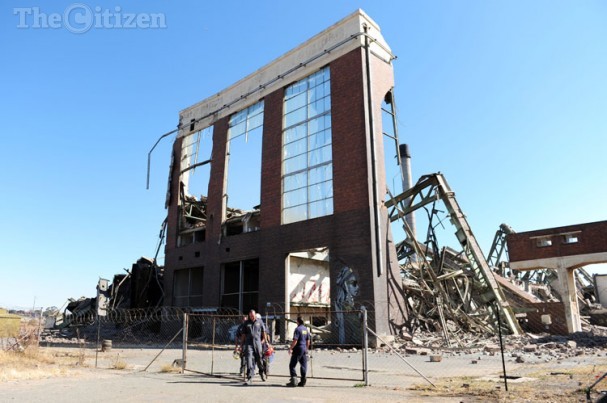
Abandoned power station comes crashing down

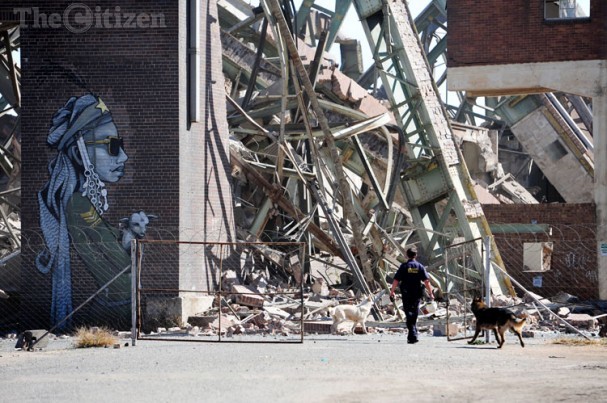
Rescue workers stand in front of the collapsed power park building, Soweto, 26 June 2014. The building collapsed yesterday morning. Picture: Tracy Lee Stark

NOTE: This article first appeared in The Citizen newspaper on June 26, 2014.

A body was recovered and five injured men suspected of stripping metal and cables from a decommissioned power station, in Orlando, Soweto, were last night rescued several hours after they had been trapped when the building collapsed on them.

“The men sustained head and body injuries, but they were stable,” said Johannesburg Emergency Management Services (EMS) spokesperson Nana Radebe. She said the body of the unidentified man was recovered late last night.

Police suspect that the men were trying to strip the dilapidated building of metal fittings and cables when the building caved in and trapped them under rubble.

“These guys came in the middle of the night, it’s obvious that they were stealing,” said Kay Makhubela from the South African Police Service.

However, last night after the rescue no arrests were made, instead the five men were taken to Chris Hani Baragwanath hospital for treatment.
Rescue workers take sniffer dogs into the collapsed power park building, Soweto, 25 June 2014. The building collapsed early this morning after suspected metal thieves were in the building possibly causing the collapse and trapping 4 of them. Picture: Tracy Lee Stark

Orlando resident Maria Matsinhe recalled how her husband telephoned her in the early hours yesterday to alert her of his ordeal.

Matsinhe said her husband Simon Pacul told her that there had been an accident involving himself, her brother and her nephew.

“I don’t know what they were doing there or how they got there, my husband was meant to be going back to work in Rustenburg,” said a visibly distraught Matsinhe.

Her husband is a miner and was supposed to return to work on the platinum belt, where the devastating five month strike finally ended this week.

The decommissioned power station at Power Park in Orlando, which was commissioned at the end of the Second World War and served Johannesburg for more than 50 years, collapsed at around 4am yesterday morning.

Monwabisi Tyani, who lives just behind the building, said: “I heard a sound like a bomb at about half past four.”

EMS spokesperson Radebe said Pacul, who was injured, called them for help.

Rescue workers in front of the collapsed power park building, Soweto, 26 June 2014. The building collapsed yesterday morning. Picture: Tracy Lee Stark

“We received a call at about 7am and when we got here we found him,” said Radebe.

Radebe said Pacul was taken to Chris Hani Baragwanath Hospital for treatment. He suffered injuries to his legs, arms and hands.

“He is in a serious but stable condition,” Radebe said.

She suggested that the alleged theft of metal and cable could have caused the old building to collapse.

“Maybe they removed small quantities over time, which weakened the building,” said Radebe.

Soweto police spokesperson warrant officer Kay Makhubela said investigations to find out what the rescued men were doing at the building were in progress.

“We must find the owner of the building to see if he gave these people permission to be here,” said Makhubela.

Respect initiation – without loss of life

NOTE: Article first appeared in The Citizen newspaper June 14, 2014. 

The traditional initiation season started yesterday and many young boys are heading to initiation schools countrywide to take part in this cultural rite of passage during their winter holiday.

In an effort to curb the deaths that result from circumcisions done at some of these schools, R180 million has been set aside by the Department of Health to assist initiation schools. Minister of Health Aaron Motsoaledi said every province will be given R20 million. This money can be used to hire help or buy necessary aids at initiation schools.

Some of the problem areas identified include the Eastern Cape, Limpopo and Mpumalanga, where some illegal schools are in operation. Motsoaledi said the problem in the Eastern Cape was “complex” because people are allowed to open up initiation schools without the consent of their traditional leader. This is why parents need to ensure the school they take their child to is legal – and report illegal schools.

Health Minister Dr Aaron Motsoaledi addresses a joint media briefing held in Pretoria on the initiation cultural practices. (Photo: GCIS)

“We can’t let these thugs kill our children,” said Motsoaledi.

Obed Bapela, deputy minister of traditional affairs said a “zero tolerance” stance would be taken on “bogus operators” of illegal initiation schools. “The loss of life that occurred over the years prompted government and the traditional leadership to embark on a drive to restore the integrity and dignity of the practice.”

Bapela gave an example of the 32 deaths last year in Mpumalanga, saying the Hawks were investigating the matter.

Motsoaledi said while some traditional leaders may be resistant to help, they need to understand that “things have changed”. Diseases such as diabetes have become more prevalent and require initiation schools to take more precautions.

The money provided is part of R385 million set aside by the department for the medical male circumcision programme, which will provide free circumcisions. The department will provide further support through assisting with health screening, providing medicines and technical help. Motsoaledi said health screening was vital in preventing deaths. “We need to pick up prior medical conditions” to avoid the inevitable.

Oh baby, it’s cold outside

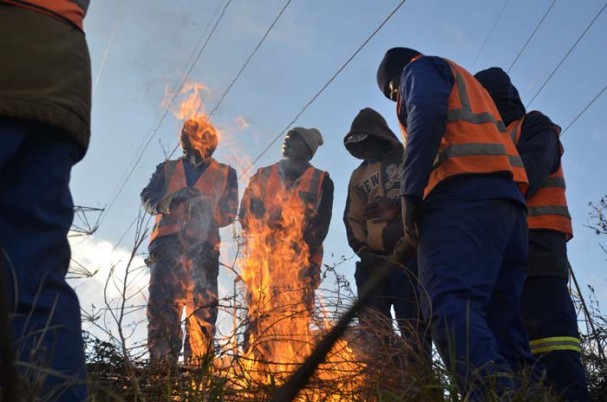
Construction workers stand around a fire to keep warm, 06 June 2014, in Industria West, Johannesburg. Residents of Johannesburg are expecting temperatures to drop as a cold front passes through the country. Picture: Alaister Russell

NOTE: Article first appeared in The Citizen newspaper on June 7, 2014. 

Temporary relief has been provided for the residents evicted in Alexandra, Johannesburg, this week amid the first winter cold. They found themselves and the few belongings they managed to hold on to housed in community halls in the area.

Phineas Ramakgasha, who works as a security guard, yesterday said he was upset about how much he had lost in just 48 hours.

He had a backpack with his work uniform, wash cloth and a bar of soap he had just bought to shower for the first time in two days.

His home and belongings were forcibly taken on Wednesday when the Red Ants evicted residents, following a court order. “I was not aware of the eviction. I rushed from work to find all my goods – TV, fridges – out in the street. They wouldn’t even let me go inside,” said an irate Ramakgasha.

He was forced to spend the night on the street with his belongings – most of which got stolen. “Our things were just lying in the street. People helped themselves. Some stole directly from our hands,” said Ramakgasha.

“Even this hall is a disaster,” he said, commenting on the small, cold space evicted people had been allocated – and the fact that they had not eaten anything by 12 noon yesterday.

Gift of the Givers are helping to provide food and blankets to some of those affected. Ramakgasha held up one of the blankets.

Another evicted resident – one of 61 – staying at the Malboro Sports Centre said the eviction was “hurtful” and their belongings were treated “carelessly”. George Nkoana said they were victims. “We all paid rent to live there. We didn’t put ourselves there. Places to live were being sold for R500 and we bought.

“We could have fought, but we didn’t. That’s why I don’t even want to go back, I don’t want to fight anyone,” said Nkoana. On the day of the eviction he moved his family and belongings to a family member’s house, but went back that night to watch over the rest of his belongings.

Both men have been separated from their families, as women and children are being accommodated at the Malboro Emergency Centre, where 25 rooms were made available to them. They also shared the sentiment that there was some foul play and “corruption” between their landlord and authorities.

Ramakgasha said he is confident they will get the new shacks they were promised by human settlements MEC Jacob Mamabolo yesterday.

They are expected to be at places of shelter until the new shacks are built for them in Malboro.

Questions about new immigration regulations

NOTE: Article first appeared in the Citizen newspaper on June 6, 2014. 

The newly implemented immigration regulations have split up families, as mothers and fathers overseas are now classified as undesirable and banned from South Africa.

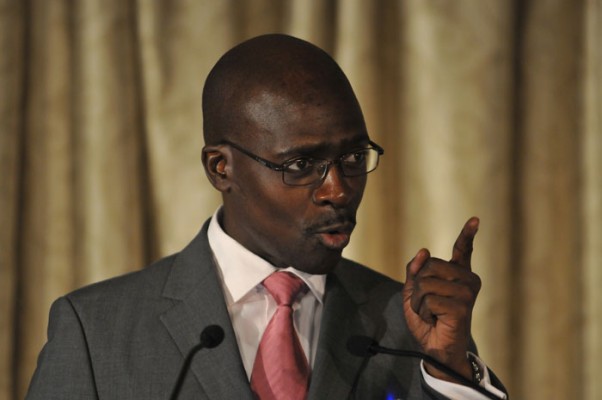
In a statement, incoming Home Affairs Minister Malusi Gigaba said the new immigration regulations, implemented on May 26, are an effort to “strengthen security” and avoid the abuses possible under previous immigration laws.

FILE PICTURE: Minister of home affairs Malusi Gigaba. Picture: Refilwe Modise.

“People are now stranded abroad and banned from entry into the country,” said Stuart James, owner of Intergate Immigration. The new regulations removed “directive 43″, which used to let spouses and other family members renew permits in under 30 days. Now this renewal process will take between 60 days and six months, leaving greater chances for overstay while people are out of the country for a period of time.

Those caught in this transition will be banned for between one to five years, said James. Urgent interdicts could be used by those “stuck” abroad, but “this could drag on for months”.

“An awful lot of lawsuits are on the way,” he said.

Julian Pokroy, chairperson of the Immigration Law Specialist Committee of the Law Society of South Africa, explained people will be classified as “undesirable” once their visas have expired.

Pokroy said there are some positive changes but also some “practical negatives”. The new critical skills visa which replaced work permits only allows entry to those skilled in particular professions. But “no one qualifies at the moment because no list has been gazetted”, said Pokroy.

James said the regulations had been implemented hastily. “It was signed in on Naledi Pandor’s last day in office.”

James attributed this to the lack of clarity on many issues. Pokroy said the regulations make it difficult for skilled foreigners and investors to gain entry to the country

Mogoeng denies pushing Christianity

NOTE: Article first appeared in The Citizen newspaper on June 5, 2014. 

Chief Justice Mogoeng Mogoeng on Wednesday denied trying to push religion down South Africans’ throats, saying his comments had been misunderstood.

In a press conference held this afternoon, Mogoeng said those who did not read his speech and only got bits of it are the people who have “misunderstood” him.

FILE PICTURE: Chief Justice Mogoeng Mogoeng addresses members of parliament in the national assembly during the first sitting of the 5th democratic parliament in Cape Town, 21 May 2014. Picture: Refilwe Modise

Speaking at an annual conference in Stellenbosch last week he sparked outrage came from the public when Mogoeng suggested that religion should inform some of our law making processes.

Mogoeng said he spoke about law and religion because that was the theme of the conference.

“I spoke about religion and law because the conference was about religion and law,” said Mogoeng bluntly.

Mogoeng said he highlighted all religions and not just Christianity, “there are treasures in all religions in Africa” he went on to use Ubuntu as an example.

Mogoeng added that all religions practiced properly teach tolerance and love and by so doing shape society.

The chief justice felt that he had not betrayed the constitution in anyway, “I take my oath of office very seriously. I will not give precedence to my religion at the expense of the law”.

When the chief justice finished reading his prepared statement, he ended with “God bless you” before opening the floor for questions.

Mine agrees to talks on Bekkersdal land

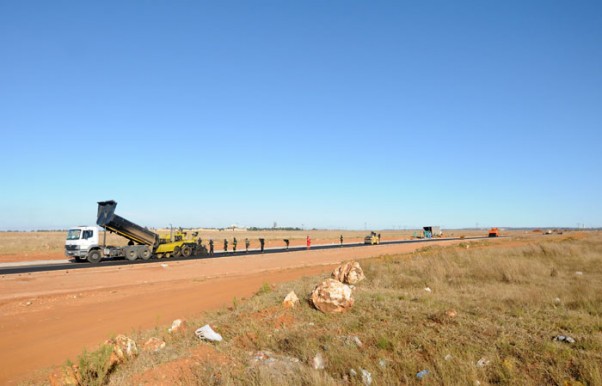
Municipality workers erect a road between the land and the mine in Bekkersdaal in Johannesburg, 12 May 2014, which residents want to occupy by force. Picture: Nigel Sibanda

NOTE: Article first appeared in The Citizen newspaper on May 13, 2014. 

Rand Uranium mine on the West Rand will enter into talks with concerned residents in Bekkersdal this week over unused land in the area.

The land close to the mine, which is owned by the mine, has been standing empty for nearly 30 years.

Residents in Bekkersdal attempted to occupy the land earlier this year but were stopped when the mine issued an interdict against their action in January.

Thabang Wesi, spokesperson for the Greater Westonaria Concerned Residents’ Association, said “they (Rand Uranium mine) withdrew the charges because they understand that we need this land”.

Residents were not stopped by the interdict but by “other pressing issues”, said Wesi.

“We need that land. It’s vacant and there’s no development happening there. Bekkersdal must grow like other townships.”

The only residents seen by The Citizen on site yesterday were miners leaving to go home and municipality workers paving a new road to connect the mine to the township.

Wesi described the vacant land as being as big as Bekkersdal itself. “The mine is in the township but doing nothing for the people who live there. They are only developing the land and not the people,” said Wesi.

The current management of the mine also stands accused of not contributing to the community trust fund.

“They have to contribute – if not they must go” said Wesi.

Practical, fun apps to help you vote

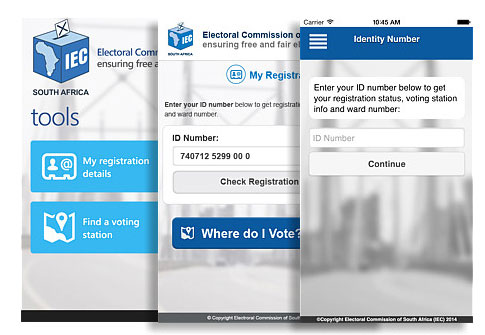
Screen grabbed photo's of the IEC SA app, available for download on both Play Store and App Store.
Screen grabbed photo’s of the IEC SA app, available for download on both Play Store and App Store.

NOTE: Article first appeared in The Citizen newspaper on May 6, 2014. 

While  some have criticised political parties of not doing enough on social media to campaign for the elections, the Independent Electoral Commission (IEC) has two different apps in place to help voters through the electoral process.

The Citizen downloaded the apps to their level of usefulness. The fun app, “IXSA” (I vote South Africa) is a 3D digital game that will require 62.64 megabytes of data to download. But that’s all forgotten once you start playing. There are three different missions, with challenges in each to complete. Using a virtual rotary dial you move your 3D avatar around to get to each challenge.

That’s when all the fun begins – you have to get your avatar from their home to a voting station and cast your ballot successfully. The game is a simulation created to take voters through the process in a fun and interactive way. If you have ever played Sims, you will enjoy it.

The practical “IEC SA” app is available for download on Android’s Play Store and Apple’s App Store for a data friendly 4.06 megabytes. The app provides users with access to their voting details.

Along with this, the app lets users find alternate voting stations, look up previous election national and provincial results and a frequently asked questions tab to answer any questions voters may have. It’s an easy to use way of getting important personal information.

Anyone with a smartphone or tablet can be up-to-date with election results and processes at the swipe of a finger.

Coverage of parties, poll topics

NOTE: Article first appeared in The Citizen newspaper on May 6, 2014. 

The top three topics covered in the media during the election campaigns were, election campaigning, party politics and corruption – with a particular preoccupation with the Nkandla saga.

In contrast, the top three marginalised topics were: voter education, election results and election funding, Media Monitoring Africa (MMA) said in an interim report on media coverage about the elections released yesterday.

According to MMA, of the 50 media outlets covered over a seven-week period, 85% of all their coverage focused on five “big” parties, namely and in order: the ANC, DA, Economic Freedom Fighters (EFF), Agang South Africa and Congress of the People. This left 24 parties a tiny share of 15% of all coverage.

MMA director William Bird said in Rosebank, Johannesburg, it was also found that the biggest cities received the most coverage, with smaller areas and smaller parties being left out of the loop. The voices most largely represented were President Jacob Zuma (ANC), Juluis Malema (EFF), Helen Zille and Mmusi Maimane (both DA).

Looking at the overall range of coverage, MMA found that only 15% of all coverage was biased.

Malema ‘will go to parliament’

Economic Freedom Fighters leader Julius Malema is seen addressing supporters during a march to the SABC's head office in Johannesburg on Tuesday, 29 April 2014 over its refusal to air an Economic Freedom Fighters' television election commercial. Picture: Werner Beukes/SAPA
Economic Freedom Fighters leader Julius Malema is seen addressing supporters during a march to the SABC’s head office in Johannesburg on Tuesday, 29 April 2014 over its refusal to air an Economic Freedom Fighters’ television election commercial. Picture: Werner Beukes/SAPA

NOTE: Article first appeared in The Citizen on May 5, 2014. 

Economic Freedom Fighters “commander-in-chief” Julius Malema told a rally in Atteridgeville yesterday that he intends to go to Parliament to “deliver the best of the best” to all South Africans.

He was the keynote speaker at the Tshela Tupa (“Crack the Whip”) rally – his last opportunity to campaign before election day on Wednesday.

The almost 30 000 strong crowd went wild when Malema made his grand entrance. Led by bikers, he greeted the crowd while walking around the track.

Before he addressed the crowd, Dali Mpofu, Gauteng premier candidate for the EFF, led a demonstration of how e-tolls would be “destroyed physically” – an EFF campaign promise. Using hammers, party supporters in red jumpsuits laid into a white structure labelled “e-toll”.

“Any future without EFF is suffering,” Malema told the crowd.

His organisation would be around for the next 100 years, he said, and would be “handed down from one generation to the next”.

The EFF is “inspiring the hopeless masses of people”, he continued. He reiterated promises of increased minimum wages, compulsory free education and land expropriation without compensation. “You will own those farms after the 7th of May,” he said.

He said that the EFF was asking voters for “five years” to make a difference.

Apparently addressing remarks made by City Press editor Ferial Haffajee, he explained how way grants would work under EFF policies.

“We will take out the middle man (the South African Social Grants Agency)… That money will be added on top of our credits. The second money is going to come from politicians.” Money that would otherwise have been used to buy politicians cars would be given as grants to children and the elderly, he said.

Politicians should buy their own cars and houses and finance their own credit cards. They earn a salary and they “should use it”, he said.

ELECTIONS: Born to vote

Pre-recorded videos and live-streams from the other provinces were projected onto the wall behind the panel. From left to right: Khadija Patel, DJ Fresh, Kagiso Lediga, Shaka Sisulu and facilitator Tumelo Mothotoane. Photo: Pheladi Sethusa

For a group of people largely labelled apathetic, the youth in attendance at a debate on a Tuesday morning, braving the temperamental and rainy Joburg weather – were anything but apathetic.

Yesterday (Tuesday March 11, 2014), JoziHub in Milpark was the venue for the To Vote or not to Vote debate aimed at so-called ‘born-frees’.

Bornfrees stand up

There is a particular fascination with this year’s youth vote as this year the “born-free” generation, children born in 1994, when South Africa became a democracy, will vote for the first time. How they vote and who they plan on voting for are of particular interest because they have grown up in a democratic South Africa.

Lesedi  Molefi of the organisers Live magazine said in the past three months they have interviewed a number of born-frees and found that, “we’re not apathetic and have an incredible role to play,” not only in these elections but in steering the country’s future.

The panel consisted of comedian Kagiso Lediga, journalist Khadija Patel (@khadijapatel), DJ and tweleb DJ Fresh (@DJFreshSA) and social activist Shaka Sisulu (@shakasisulu). The panelists were chosen because they are seen as accessible to the youth and their ideas.

Why should born-frees vote?

Addressing the question, why should born-frees vote, Lediga said: “If you’re not voting, you’re not participating.” DJ Fresh added that participation goes beyond just voting, part of that civic duty is to hold politicians accountable. Sisulu provided an anecdote to explain further: “If you’re dating someone, you can’t see them once every five years – it won’t work, it’s a one night stand then. Put your ballot in the box but make sure to maintain and nurture that relationship over the five years coming.”

The debate was live streamed from Johannesburg to Cape Town and Ginsberg, King Williams Town with questions coming from all three places to the panel. A common complaint from all three provinces was that the youth were never heard. DJ Fresh responded by saying the onus was on political parties to appeal to the youth on their level through channels like twitter and instagram: “Politicians talk at young people and not to them.”

The focus in the latter part of the debate was on what the born-free vote can achieve and individual agency. Patel said, “agency is important – it means having the power within yourself to do something.” The crowd responded well to this and the conversation started to look at ground level solutions and social activism that gear them in that direction.

Lethabo Bogatsu, a self proclaimed born-free said the talk left her feeling empowered and keen to be an active citizen, “I was always going to vote but now I’m not going to stop there. It’s not just the vote and then I’m done. I’m going to work on the relationship, my man is going to be my vote, my political involvement is going to be my man. I’m going to have a relationship there because being single is rough.”

The entire debate can be viewed here.