I attended an amazing seminar at the University of the Witwatersrand on Thursday 18th of August 2011. The speaker at the seminar was Eva Hoffman, who is both a writer and an academic. The topic of the seminar was “Lost and Found in Transition: Contested memories and moving on from difficult pasts” , and more specifically second generation trauma. A phenomenon I have recently come to learn about and find very intriguing. 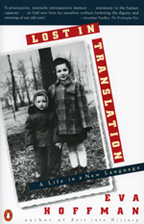
Second generation trauma has to do with the aftershocks that the children of survivors of gratuitous violence experience. The expression was first used to describe the children of Holocaust survivors. I first came across this term when reading Maus, a great graphic novel by Art Spiegelman. He not only tells his father’s story of living through the genocide but also tells his personal story of trying to deal with that ‘passed on’ trauma. Eva Hoffman’s autobiography Lost in Translation does the same. She too is a “second hand” trauma victim.
Eva Hoffman described second generation trauma as encapsulating contested memories and transitions after great wrongs have been committed. This can prove problematic when trying to achieve reconciliation, especially because the afterlife of atrocity is long. She went on to say that democracy and freedom are difficult to negotiate after such a traumatic experience and that this initiation is necessary. Not from the victims’ side but from the perpetrators’.
In Jewish consciousness, the Polish were and are seen as being conspirators with the Nazi’s in contributing to Jewish suffering. In the same breath, she said that Polish descendants cannot be blamed or punished for their forefathers, but they need to acknowledge what happened. “After such wrongs have been done, they can’t be undone… Recognition, not forgiveness needs to be the starting point of reconciliation.”
As the seminar went on Hoffman delved deeper into the nature of second generation trauma. She said that it has to do with the transmission of memories but not exclusively; memory coupled with the after-effects of parental experience. This transmission often leads to the second generation being frozen in time, in so doing perpetuating the cycle of revenge within their generation. The children of survivors speak of despondency, depression and anger which all arise from trying to locate their parents’ context in history. None of the above can be resolved unless a second generation dialogue is initiated.
Second generation dialogue refers to the conversations that need to take place between the children of the victims and those of the perpetrators. We need to recognise that children of the perpetrators are also going through some form of trauma. They are traumatised by the silence of their parents, their inability to admit they were wrong. As a result they try to reject their parents but cannot do that because it is easier said than done. The fact that both sides are trying to deal with inherited trauma should be the condition that allows for a dialogue to take place. Trust and understanding are imperative for this dialogue to work. This dialogue is the only means of getting on a reconciliatory path and leading to an expansion of minds.
 I brought all of the above into a proximal context, a personal context. I consider myself as a victim of second generation trauma. I often wrestle with the issues that Hoffman raised. I am angry and despondent about apartheid and racial oppression, and so are a lot of my peers. It is particularly difficult for us to ‘move on’ because the lived reality of inequality is still very real to us. What I mean by this is that South Africa inherited structural violence and inequality. Today we refer to it as the legacy of apartheid.
How can we even begin to let go when the effects of that totalitarian system are still rife in our society? The racial disparities in our society are very obvious and this is something that needs to be addressed.
However, when one starts to speak about such issues we are met with contestations of being too racialised. I find that a lot of liberal whites and blacks want us to repress the past. This would be folly – the past needs to be acknowledged, remembered and addressed. “Wrong doers cannot get forgiveness until they admit to crimes and are willing to repent for them”, said Hoffman.
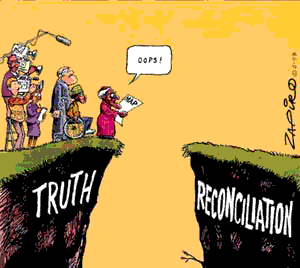
This brought up questions from the audience about the Truth and Reconciliation Commission (TRC). One gentleman said it was highly idyllic and aimed to quickly cover up the past. He went on to say it failed because forgiveness is a Christian doctrine and forced people to adhere along those lines. To counter this, a young lady said we cannot look at the TRC as a defining moment but a mere example of things that can be done to help the nation move on. Hoffman answered this by saying: “The side most responsible for atrocities needs to make the first step”. This is where the TRC failed. To add on to this point, another young lady said it is astonishing to her that “those who weren’t allowed to vote before 1994 are now responsible for reconciling a nation that was destroyed by those who were allowed to vote”. Surely it should be the inverse.
I must say this seminar did help me in negotiating my position as a young black person. Along with this I had a defining “aha moment”. I never thought about the equally complex psychological disposition of my white peers. Both ‘sides’ cannot reject or abandon their parental history but we need to remember it is not our own. The second generation dialogue resonated with me; it is the first step we can all take on this journey of reconciliation. It will not happen overnight; it will be a process. We need to create our own history that will reflect our willingness to try and amend the past.
**NOTE: Post first appeared on exPress imPress on August 28 2011.