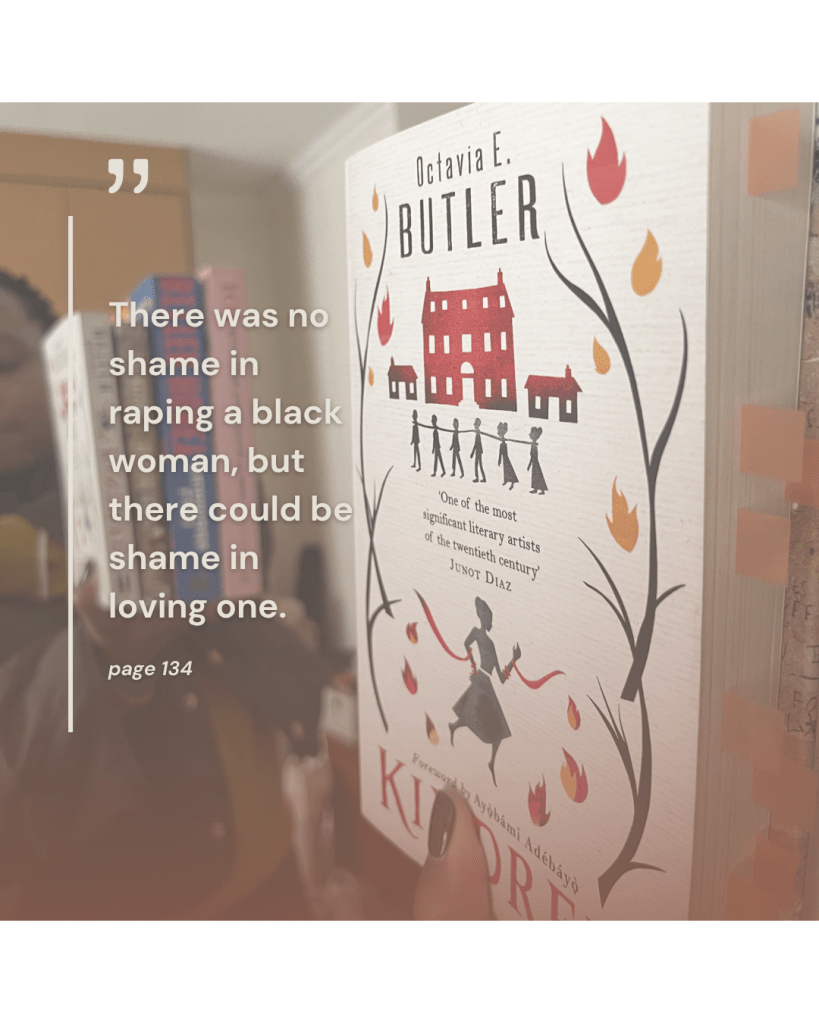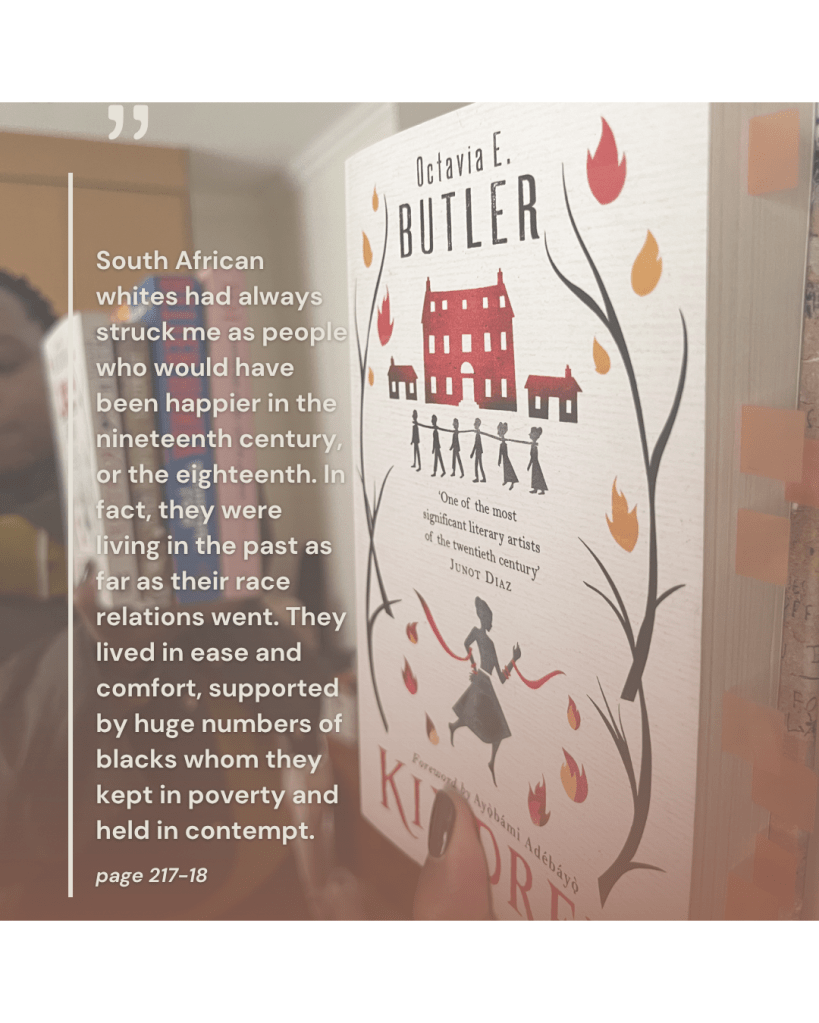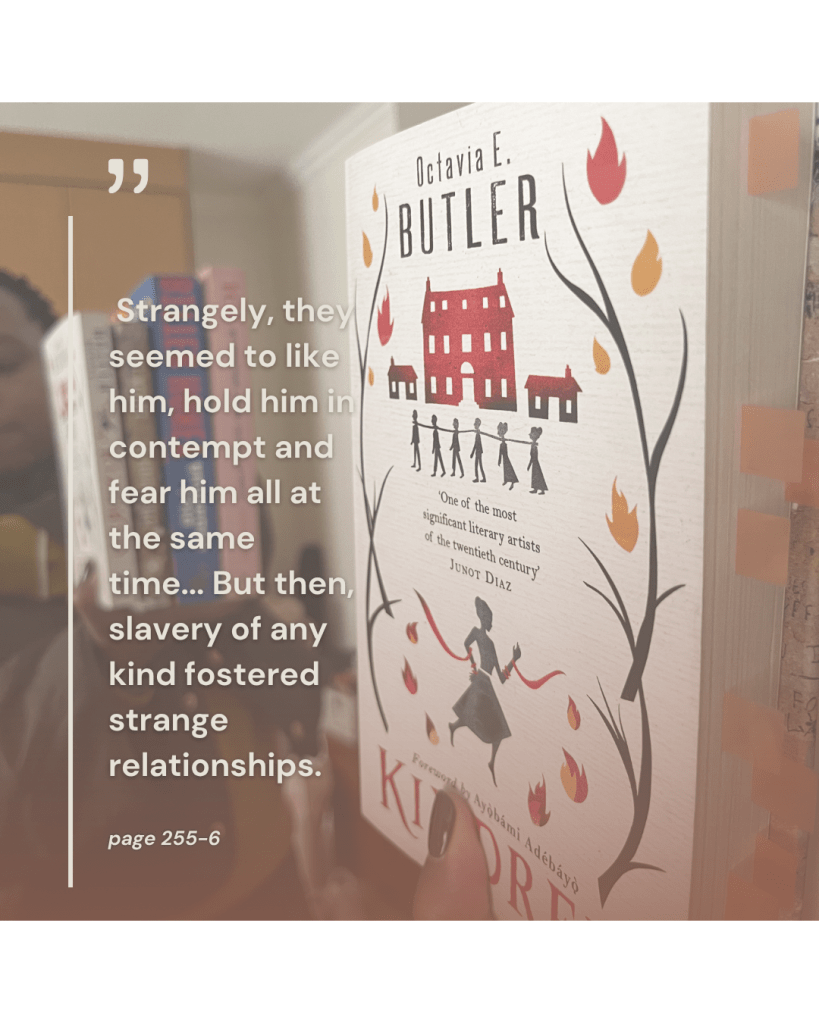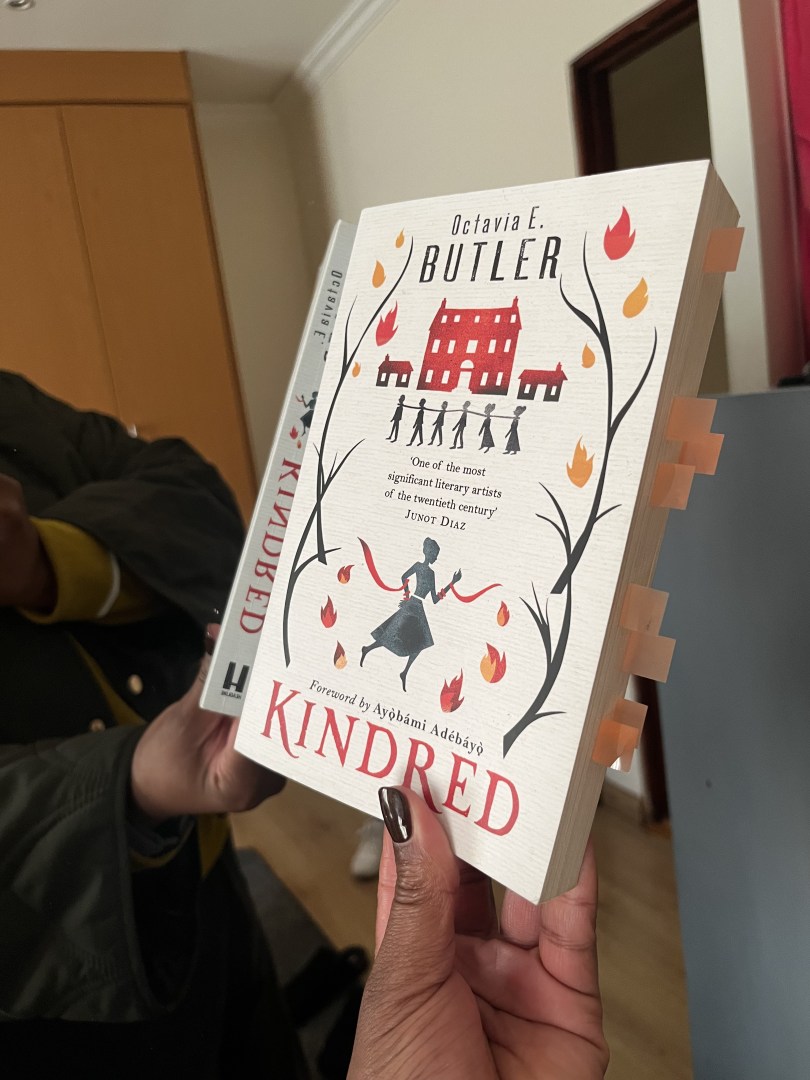
Imagine being gifted with time travel, but it sucks you back to a plantation in the early 1800s *screams*.
That was the exact premise of Kindred, a fascinating but terrifying novel we just read in one of my book clubs. Almost embarrassed to say this is the first time reading Octavia Butler’s work – at my big age *hangs head in shame* I joke, rather late than never right? Needless to say I was very excited to tuck in because her work precedes her.
Back to the terrifying premise of the book – Dana, a black woman in the States, is yanked from her 1976 reality to a slave plantation in 1815. The mechanics of her time travel depend on any instance in which an ancestor of hers (Rufus) is in extreme pain or has a near-death experience. That ancestor is a slave owner’s son and slave owner in the making himself. In addition to this, time then and now aren’t the same, so a day here can be weeks or months then, trapping her in ever precarious situations for much longer than is safe. Tricky doesn’t even begin to describe it. Dana carries whatever physical pain she is subjected to in the 1800s as an assumed but privileged slave, she carries into her 1976 reality. But worse than any of her physical injuries is the (at the time) modern sensibilities she carries and has to unlearn to survive the time she finds herself stuck in.
It was a page-turner that kept me up at many a bedtime, as I constantly fretted over Dana’s safety. It combines two of my favourite genre’s – historical fiction and science fiction. The characters are very well written as well and elicit some very strong emotions in you as you read. In our book club it scored an impressive 8/10, with some points left on the table simply because of some of the loopholes in the genesis and rationale behind Dana’s time-travelling capabilities.
I really enjoyed the juxtaposition between the two eras and the exploration of Dana’s relationships with two very different white men in either. Reading it in 2026 as a black woman in South Africa, allowed for an even more complex reading of times long gone but ever present in the “subtleties” of brutality in my neo-colonialist, post-apartheid and late-stage capitalist reality. It also acts as a provocation to readers, saying it’s easy to imagine how one would survive and revolt during a repressive and dehumanising situation, but in reality, there are very real limits to the options enslaved people had. Staying was often just as dangerous as trying to flee to freedom. Hindsight deludes us into thinking we would all be strong enough or lucky enough to do anything tangible to change the circumstances of the times we are tethered to.
I certainly won’t be reading this one again, can’t stress myself out like that again, but I would highly recommend it. As always, some best bits below.