SA NGO fighting crime in the UK

NOTE: Article first appeared in The Citizen newspaper on May 12, 2014. 

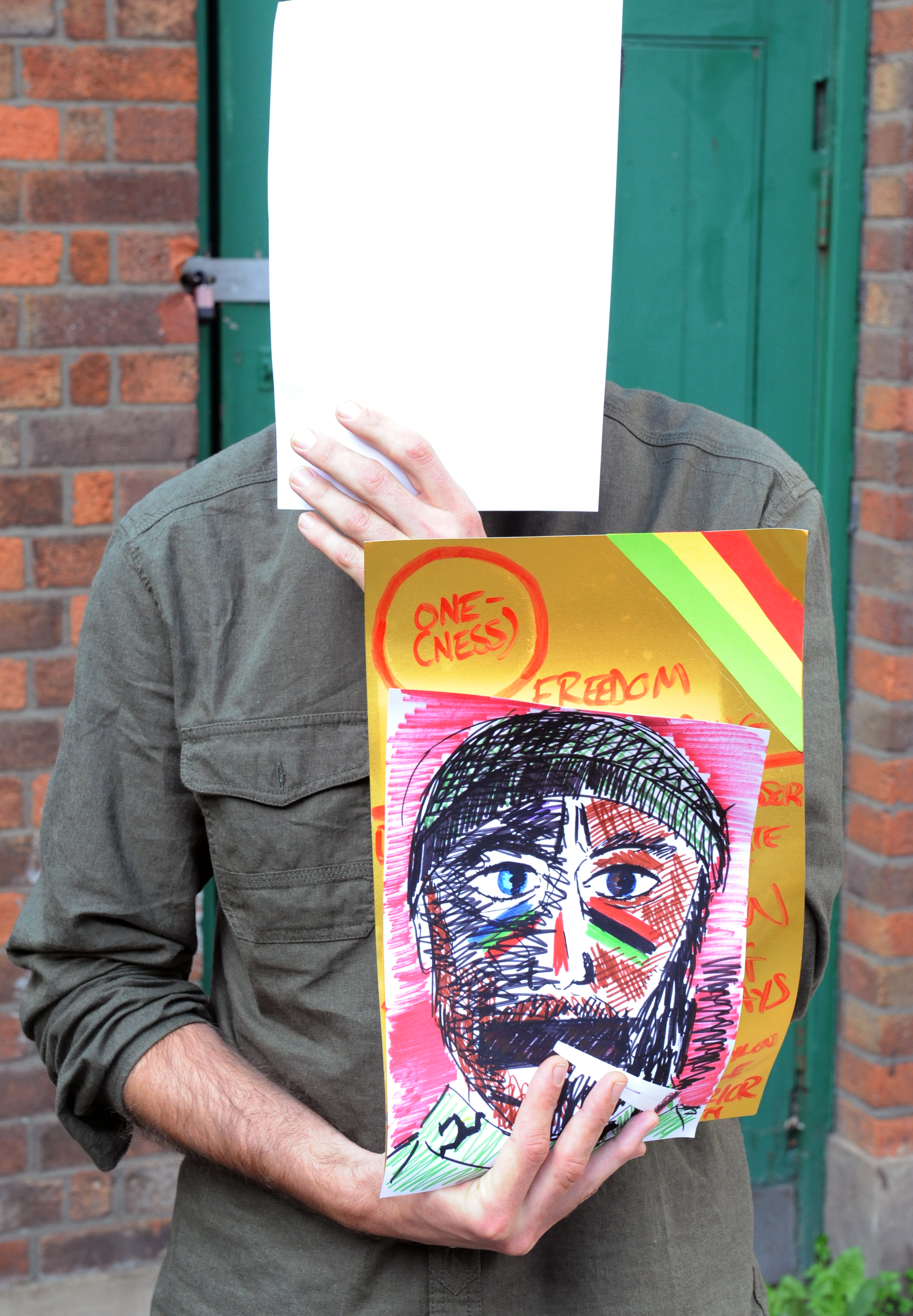
OPERATING IN LONDON AND KZN: A participant in a Khulisa Social Solutions art workshop in London. Picture: Provided.

 South African non-profit organisation is helping to fight crime in the United Kingdom through specialised programmes.

Gugulethu Shezi, marketing and communications manager at Khulisa Social Solutions, said inner-city London and semi-rural townships in KwaZulu-Natal had much in common. They were both “communities where the youth frequently see drugs, crime and gangsterism as their only redemption”, said Shezi.

The NGO uses the commonalities between the two to implement programmes that help, “youngsters transform their lives”.

In South Africa, Khulisa focuses on marginalised youngsters in some of “the poorest, riskiest townships”, and the same formula is being used in the UK.

Some of the life skills interventions used by Khulisa include art and drama-therapy workshops, said Lisa Rowles from Khulisa’s UK branch.

“Each programme is tailored to the needs of the client group,” said Rowles, meaning that some programmes are day-long “taster sessions” while others are year-long intervention programmes.

Established in 1998 in KwaZulu-Natal with financial assistance from British donors, the NGO only opened its second branch as a charity in the UK in 2007.

NEW WAYS TO LIVE: Art workshop in London.

A lot of fundraising and responding to government bids is done to keep it afloat, said Rowles.

In the UK, the “holistic” programmes the NGO uses include crime reduction programmes at schools and juvenile and adult correctional facilities which have been tracked by several academic institutions for possible successes and failures.

A report by Dr Tim Pascoe, criminologist and researcher, found that of all participants in Khulisa’s programmes, 98% progressed positively.

Some of the participants cited “anger management and conflict resolutions” as some of the benefits they had received from the programmes said Shezi.

This year and in 2015 the NGO plans to host programmes that focus on domestic violence, parents and children and looking at “the streets we walk with new eyes”, according to Rowles.

Practical, fun apps to help you vote

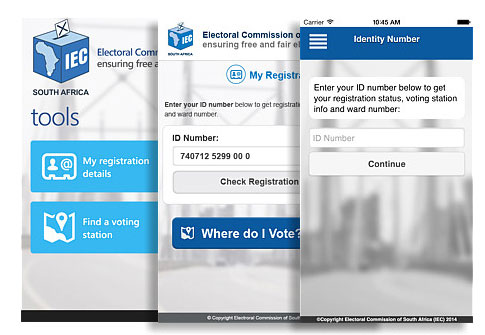
Screen grabbed photo's of the IEC SA app, available for download on both Play Store and App Store.
Screen grabbed photo’s of the IEC SA app, available for download on both Play Store and App Store.

NOTE: Article first appeared in The Citizen newspaper on May 6, 2014. 

While  some have criticised political parties of not doing enough on social media to campaign for the elections, the Independent Electoral Commission (IEC) has two different apps in place to help voters through the electoral process.

The Citizen downloaded the apps to their level of usefulness. The fun app, “IXSA” (I vote South Africa) is a 3D digital game that will require 62.64 megabytes of data to download. But that’s all forgotten once you start playing. There are three different missions, with challenges in each to complete. Using a virtual rotary dial you move your 3D avatar around to get to each challenge.

That’s when all the fun begins – you have to get your avatar from their home to a voting station and cast your ballot successfully. The game is a simulation created to take voters through the process in a fun and interactive way. If you have ever played Sims, you will enjoy it.

The practical “IEC SA” app is available for download on Android’s Play Store and Apple’s App Store for a data friendly 4.06 megabytes. The app provides users with access to their voting details.

Along with this, the app lets users find alternate voting stations, look up previous election national and provincial results and a frequently asked questions tab to answer any questions voters may have. It’s an easy to use way of getting important personal information.

Anyone with a smartphone or tablet can be up-to-date with election results and processes at the swipe of a finger.

Coverage of parties, poll topics

NOTE: Article first appeared in The Citizen newspaper on May 6, 2014. 

The top three topics covered in the media during the election campaigns were, election campaigning, party politics and corruption – with a particular preoccupation with the Nkandla saga.

In contrast, the top three marginalised topics were: voter education, election results and election funding, Media Monitoring Africa (MMA) said in an interim report on media coverage about the elections released yesterday.

According to MMA, of the 50 media outlets covered over a seven-week period, 85% of all their coverage focused on five “big” parties, namely and in order: the ANC, DA, Economic Freedom Fighters (EFF), Agang South Africa and Congress of the People. This left 24 parties a tiny share of 15% of all coverage.

MMA director William Bird said in Rosebank, Johannesburg, it was also found that the biggest cities received the most coverage, with smaller areas and smaller parties being left out of the loop. The voices most largely represented were President Jacob Zuma (ANC), Juluis Malema (EFF), Helen Zille and Mmusi Maimane (both DA).

Looking at the overall range of coverage, MMA found that only 15% of all coverage was biased.

Malema ‘will go to parliament’

Economic Freedom Fighters leader Julius Malema is seen addressing supporters during a march to the SABC's head office in Johannesburg on Tuesday, 29 April 2014 over its refusal to air an Economic Freedom Fighters' television election commercial. Picture: Werner Beukes/SAPA
Economic Freedom Fighters leader Julius Malema is seen addressing supporters during a march to the SABC’s head office in Johannesburg on Tuesday, 29 April 2014 over its refusal to air an Economic Freedom Fighters’ television election commercial. Picture: Werner Beukes/SAPA

NOTE: Article first appeared in The Citizen on May 5, 2014. 

Economic Freedom Fighters “commander-in-chief” Julius Malema told a rally in Atteridgeville yesterday that he intends to go to Parliament to “deliver the best of the best” to all South Africans.

He was the keynote speaker at the Tshela Tupa (“Crack the Whip”) rally – his last opportunity to campaign before election day on Wednesday.

The almost 30 000 strong crowd went wild when Malema made his grand entrance. Led by bikers, he greeted the crowd while walking around the track.

Before he addressed the crowd, Dali Mpofu, Gauteng premier candidate for the EFF, led a demonstration of how e-tolls would be “destroyed physically” – an EFF campaign promise. Using hammers, party supporters in red jumpsuits laid into a white structure labelled “e-toll”.

“Any future without EFF is suffering,” Malema told the crowd.

His organisation would be around for the next 100 years, he said, and would be “handed down from one generation to the next”.

The EFF is “inspiring the hopeless masses of people”, he continued. He reiterated promises of increased minimum wages, compulsory free education and land expropriation without compensation. “You will own those farms after the 7th of May,” he said.

He said that the EFF was asking voters for “five years” to make a difference.

Apparently addressing remarks made by City Press editor Ferial Haffajee, he explained how way grants would work under EFF policies.

“We will take out the middle man (the South African Social Grants Agency)… That money will be added on top of our credits. The second money is going to come from politicians.” Money that would otherwise have been used to buy politicians cars would be given as grants to children and the elderly, he said.

Politicians should buy their own cars and houses and finance their own credit cards. They earn a salary and they “should use it”, he said.

‘This parliament robbed our democracy’

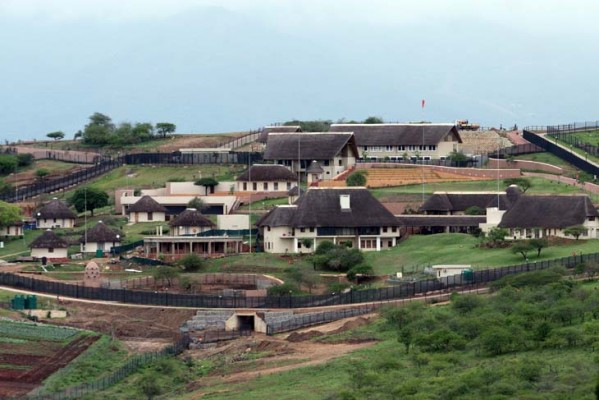
FILE PICTURE: A general view of President Jacob Zuma's private Nkandla home. Picture: AFP PHOTO / Stringer
FILE PICTURE: A general view of President Jacob Zuma’s private Nkandla home. Picture: AFP PHOTO / Stringer

NOTE: Article first appeared in The Citizen newspaper on May 1, 2014. 

The decision to dissolve the parliamentary ad hoc committee tasked with investigating the Nkandla debacle is unlawful and unconstitutional, a constitutional law expert said yesterday.

Professor Shadrack Gutto, constitutional law expert at the University of SA, said the decision to dissolve the committee and defer the matter to the new parliament appointed after the elections is “not legal and not constitutional”.

Gutto said the current sitting committee “does not have the powers to defer the matter. They can’t order the new parliament to do their work”.

ANC MPs voted as a majority on Monday to dissolve the parliamentary ad hoc committee, stating there was not enough time for the committee to investigate the matter before election day.

Gutto bluntly said: “The ad hoc committee had simply decided not to do the work it should be doing.”

He said this decision would not make the matter go away, as “serious maladministration and unjust enrichment from public funds by the president and his family” needed to be investigated in Parliament.

Members of opposition parties have said they will pursue the matter.

Gutto said: “This Parliament will go down in history as one that robbed our democracy by not complying with legal and constitutional regulations.”

He said the reasons why the committee had to be dissolved were “irrelevant and wrong.”

The newly elected members of Parliament will sit for the first time on May 21.

Another row engulfs IEC’s Tlakula

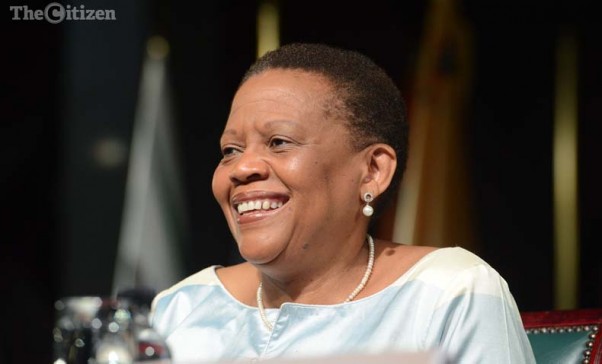
FILE PICTURE: Pansy Tlakula Chair of the Independent Electoral Commission. Picture: Tracy Lee Stark

NOTE: Article first appeared in The Citizen newspaper on April 29, 2014.

Another row has erupted featuring IEC boss Pansy Tlakula.

This time Tlakula, who is facing an Electoral Court hearing today, has been accused of using taxpayers’ money to pay her legal fees.

Bantu Holomisa, United Democratic Movement (UDM) president, said yesterday: “We have received information that the chief electoral officer, Mr Mosotho Moepya, has allegedly paid R500 000 from the IEC’s coffers to pay for Advocate Tlakula’s legal fees.”

The Electoral Court is set to sit in Johannesburg today to hear an application for her removal as chairperson of the Independent Electoral Commission (IEC) by the Multi-Party Forum.

Tlakula was found to be involved in the irregular R320 million lease of IEC Riverside Office Park building in Centurion. These findings came from a forensic investigation by PriceWaterhouseCoopers as sanctioned by the Treasury, and another by Public Protector Thuli Madonsela. Holomisa said two separate and “credible organisations have fingered this person as having done irreparable damage”.
Tlakula insists she was not accused of corruption.

Tlakula had lodged papers to review and set aside the findings and recommendations against her with the Pretoria High Court in her personal capacity, said Holomisa. In a statement yesterday Holomisa questioned “on what basis was such a large amount paid even before the review has commenced?”


Research for Africa, by Africa

FILE PICTURE: Chairperson of the African Union Commission Nkosazana Dlamini Zuma. Picture: Nigel Sibanda

NOTE: Article first appeared in The Citizen newspaper on April 25, 2014. 

Pooling resources and working together, instead of competing, are some of the ways research conducted at African universities can help propel the continent to be a global leader, projecting to 2063.

During a public lecture on research in African universities in the Senate Hall at the University of Pretoria yesterday, Dr Nkosazana Dlamini-Zuma, chairperson of the African Union Commission, emphasised how research done at universities can help with the overall development of Africa.

“The only way to do so is by getting universities to look 50 years into the past and 50 years in to the future,” said Dlamini-Zuma. Projecting ahead “liberates you – it is not defined and confined by immediate circumstances”.

Research carried out at universities is one of the ways universities could help to “turn all our resources into wealth for our people,” said Dlamini-Zuma. A fundamental way of doing this was to broaden the base from which students are chosen, she said.

The university’s vice-chancellor, Cheryl de la Ray, responded by saying demand was too high to accommodate more students. “We don’t take international students for our undergraduate courses because of huge demand locally,” she said.

“We make plans and expect other people to fund them.”

Dlamini-Zuma said development needed to happen internally, with Africans helping Africans. The AU has found that most African researchers collaborate with researchers from overseas and not one another, something which “surprised and disappointed” her.

She added that African universities and researchers needed to work together towards Pan-African development, mentioning the African Union was in the process of starting a virtual Pan-African university.

Dlamini-Zuma stressed that through research conducted at African universities “vexing questions could be answered”. She cited a cure for malaria and the gradual disappearance of Lake Chad as examples of questions that needed to be investigated.

Hospital sued by mother

NOTE: Article first appeared in The Citizen newspaper on April 24, 2014. 

Emmah Layi Motsoene (34) a domestic worker in Pretoria is suing Steve Biko hospital for negligence after her baby was born with brain damage after she was in labour too long. Picture: Christine Vermooten

What was meant to be a standard delivery due date, turned into a nightmare and resulted in a brain damaged disabled child for 34-year-old mother Emmah Motsoene.

Motsoene is taking matters into her own hands three years after her horror experience by suing the Steve Biko Hospital in Pretoria for a 14-hour labour that resulted son, Musa Sindani, being brain damaged.

With tears in her eyes, Motsoene shared her story with The Citizen. It all started one cold morning in July at a clinic in Moreleta Park after Motsoene experienced immense pain. “They told me that the baby is coming, so I went directly to Tshwane District Hospital at 11am,” said Motsoene.

Upon arrival she was checked and told her baby “is still far from coming” but allocated a bed to lie on. Three hours later the “rude” nurse helping Motsoene told her to go home and come back when her pain increased.

While Motsoene was waiting outside of the hospital gates, her water broke. “A sister from the hospital saw me and brought a wheelchair to take me back into the hospital.” Motsoene was then sent to the Steve Biko Academic Hospital just 800 metres away.

Motsoene endured six more hours of being told not to push as the baby wasn’t ready. “I could feel that my baby wanted to come out,” said Motsoene.

At midnight she saw a doctor for the first time after an intern nurse called for help. “He was very rough, he climbed onto my stomach with his knees on my forehead and told me to push because the baby was breeched.

“I wanted to die, I felt so much pain for my child – I just wanted him to come out,” said Emmah.

By 1.30am Motsoene had given birth, but was told her child didn’t get enough oxygen during labour and “something will be wrong with him”. When she saw him later that day, attached to an oxygen tank, she was told he was brain damaged.

I didn’t do it – ‘horror crèche’ owner

NOTE: Article first appeared in The Citizen newspaper on April 11, 2014.

Creche3_530972796
A relative of creche owner of Petite Bumper Dayare Labeeba Truter, leave Johannesburg Magistrate’s Court, 10 April 2014, after cases of child abuse and assault against Truter was postponed to 25 April 2014. Picture: Nigel Sibanda

In a court appearance no longer than five minutes yesterday, Labeeba Truter was told she would have to spend 15 more days at Johannesburg’s “Sun City” Prison.

Truter, the principle and owner of Petite Bumper Daycare in Rosettenville, in the south of Johannesburg, was arrested on April 8 facing charges of assault and child abuse. Truter made the news earlier this week following a viral video of a child tied up and gagged at her daycare centre.

In her first court appearance at the Johannesburg Regional Court yesterday afternoon, Judge Hawkins said Truter can formally apply for bail on April 25. Truter looked back at her family in disbelief when she found out she wouldn’t be able to go home after her appearance.

Advocate Herry Bonke Maluleke, Truter’s legal representative said the State could not let her go because she faced “numerous counts and further investigation by the State” would need to be done. “The allegations are yet to be tested,” and the State has to prove them, he said.

Truter stuck to her guns and said: “I’m not the one who did it.” She claimed she had been falsely arrested and the charges she was facing did not even pertain to the complainant’s child.

“It’s not even the same kid. The kid in the Daily Sun is not Beauty and the “father” they spoke to is not her father,” said a frustrated Truter.

She added the child in the video was not even in the country at the moment, as her father had taken her and her mother to Mozambique at the weekend.

Truter said she was called to the bathroom by one of the other children at her daycare and when she got to the bathroom another teacher was there with the child. “When I walked in she hid something behind her back – a cellphone maybe. She has family at the Daily Sun,” said Truter.

Maluleke said Truter would “most definitely” make bail on April 25.

Meet Little Lagos – Jozi style

NOTE: Article first appeared in The Citizen newspaper on April 9, 2014.

Evans Emeafa does a client's hair at his family owned beauty salon in Braamfontein, 7 April 2014. The area has been nicknamed little Lagos due to the amount of Nigerian owed businesses in the area. Picture: Tracy Lee Stark
Evans Emeafa does a client’s hair at his family owned beauty salon in Braamfontein, 7 April 2014. The area has been nicknamed little Lagos due to the amount of Nigerian owed businesses in the area. Picture: Tracy Lee Stark

You can find anything from vegetables to groceries and a unique haircut to traditional clothing when you visit the Nigerian shop-owners in Braamfontein.

It is a busy area, with loud Nigerian music playing in the shops where both foreigners and students do business.

It is also known as Little Lagos by students who stay nearby.

Some of the Nigerian entrepreneurs in downtown Johannesburg told The Citizen they were happy to hear their mother country’s economy had overtaken South Africa as the continent’s largest.

Biccard Street in Braamfontein has quite a few Nigerian-owned businesses that bring competitive services and products to consumers. Everything from salons, to Internet cafes, gyms and clothing stores line the busy street.

Oluwadamilola Apotieri, a Nigerian business owner in the area, said while the GDP takeover was good news, the truth of the matter is that it will not put food on the table of the poor. “It will not reduce the level of poverty. It will only add up to the political mumbo jumbo.”

Apotieri attributed Nigerian business people’s success to zeal. “Nigerian entrepreneurs do not mind spending time, money and energy to build.”

Ameck Ottance, a dressmaker at Graceland Fashion Design, said: “Nigerians are business-minded people. You can see that from the businesses on this street.”

Evans Emeafo, manager and stylist at a hair salon, said his trade secret lays in “keeping it in the family”.

The salon he works at is owned by his brother and their employees are all family members.

Emeafo said he “was happy that the Nigerian economy was doing so well”, but so was his business. He sees no reason to move back home.