Debate Club: Gender agenda

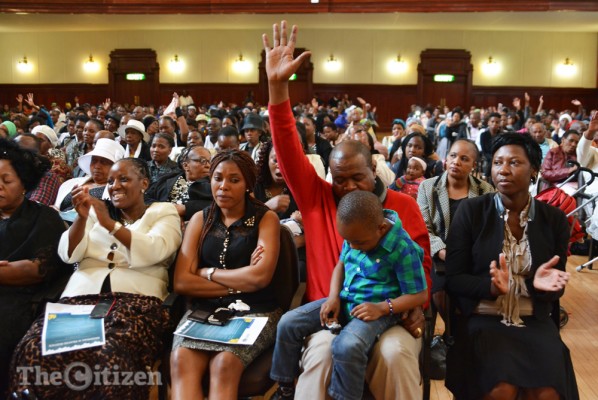
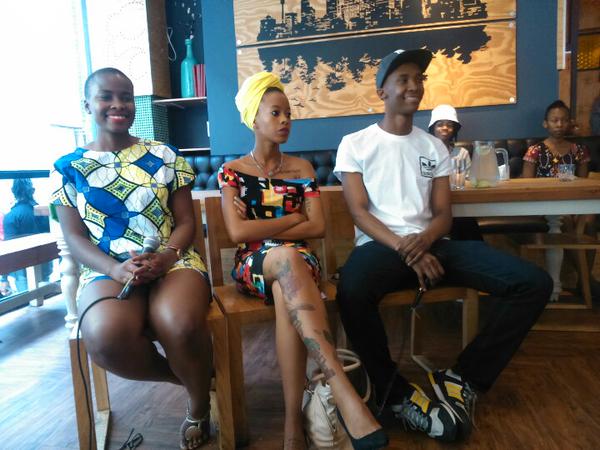
Gender not sex. Womanism not feminism. Patriarchy not masculinity.  These were some of the things brought up at the last debate club meeting of the year on November 25, 2014. The panel steering the direction of the conversation was made up by Panashe Chigumadzi, Lee Molefi and Lebohang Nova Masango.

Feminism, what it is and who it speaks to made up a substantial part of the debate on the night. Some described it as movement that seeks justice and equality. As women wanting to live in a world where they don’t have constantly “check” themselves to stay out of harms way. As vaginas and boobs not being the things that dictate where we belong and what we get to do. The most poignant description for me was:

The way patriarchy shapes what men should and can expect from women was another hot topic. I recall one guy in the audience saying he is all for woman empowerment and equality for “other women” just not his woman. He admitted that he had learnt to expect subservience and as a result that is what he now yearned for.

If I recall correctly he said he’s all for his sister becoming and engineer but his wife should have a more “humble job” as to not bruise his ego and mess with his role as the head of the house. The room, filled predominantly with women, was up in arms at that. This is the kind of thinking that reminds women that they are alone in this struggle, black men aren’t really here for us. Agreed with these comments on gender roles made on the night:

My biggest take away from the night was the fact that so few men were willing to understand what feminism is, some suggested that they can never identify because they aren’t women, that they need to be schooled and feel included to get on the train. In response, the panel said acknowledging patriarchy and how as a man you benefit from it, is similar to white people having to acknowledge white privilege. Something that was necessary to start trying to make things better.

https://twitter.com/ShanduMul/status/537288762934714369

There is a lot more that could have been discussed but time rules us all. This is a very short video of the night made by the good people at LiveMag:


VIDEO: My year at The Citizen in 5 minutes

On Thursay, November 29 was the we had to do our end of year graduate presentations for our mentors and fellow graduates.

It was really cool to see what other people did with their year and how much they learnt. There were only three of us at The Citizen – so we only knew each other.

Anyway, I decided to make a short-ish video as my presentation. We were tasked with telling people a little bit about our backgrounds and explaining the ups and downs of our time here:


Black Wednesday: Remembering the pain

About a week ago, I went to a film screening of a short doccie on Black Wednesday, hosted by the Steve Biko Foundation at the Bioscope in Maboneng.

I imagined that it would be enlightening and robust debate would be had. I didn’t imagine that I would cry throughout the entire thing.

I “know” our history, I’ve studied it extensively in school, varsity and in my private time to make sure that I never forget, I never become complacent, complicit and and and. Some say I am obsessed and I think we need to be if we truly want to “fight” the system – but that’s a discussion for another day.

Black Wednesday: On October 19 1977 three newspapers and a number of anit-apartheid journalists were banned. The movie we saw was about that, linking that day to the broader effort by the apartheid government to weaken the Black Consiousness Movement as a whole.

Seeing a grown man cry about how Steve Biko’s death was more than just a loss but something that left an indelible mark – at which point he cried, I cried. Personally I will never ever be able to forgive that. Killing Biko on September 12, a month prior, was more than an act of extreme hate but a convoluted plan to break a people – and it may have worked.

Anyway there was a cool opportunity for a Q&A session with the journalists who were banned that time, Joe Thloloe and Juby Mayet. Some highlights from that discussion:

Q: There’s a dirth intellectual leadership amongst emerging generations. They engage with Pan-African ideas at a very superficial level because it’s the “in” thing. The black rage they feel is fabricated. Thoughts on that?

Joe Thloloe: When you say fabricated anger, I disagree with that. It’s still the same anger. But we tried to sanitize it and in the process we find it erupting in ways we didn’t imagine… Since 1994 we have started to believe we are a rainbow nation, we are a miracle nation – when in fact the issues of the time still haven’t been solved. That’s the tragedy of our history.

Q: If that’s the case, can we be saved?

Juby Mayet: The black rage that exists today is directed at the current leadership, because there is such a vast gap between the haves and the have-nots. The haves are not necessarily white anymore…There is such a simple solution, don’t do it  for the t-shirt and the free food hamper – think. You’ve got the vote now, use it.

Q – asked by my friend, Shandukani Mulaudzi: What would you have liked to see happen in ’94?

JT: The first disaster was at Kempton Park, where a whole nation was hoodwinked into believing that a miracle is happening. The first thing that should have been negotiated was – how do we make up for all these years of suffering? That question wasn’t answered. And it still hasn’t been answered. We just went right to ululating and saying we are free – when in fact the basic issue was not resolved. Today a few of us have been co-opted into the old apartheid structures – we just have a few black faces there. I wanted us to answer the question of what do we do about 300 years of painful oppression.

Q: The term Black is now being used as a divider, rather than a term to unite. In the era of BCM, it was used to identify all people who were oppressed. The term Black is being abused by the current holders of power. How do you identify yourselves?

JM: When I had to fill in forms in those days and I still do this – where it asked for race I used to say human. If all of us do that they’ll soon chuck away all of the forms.

Q: Recently Minister Lindiwe Sisulu that people under 40 were not affected by apartheid, therefore should not benefit from redress measures like receiving RDP houses. Thoughts?

JT: That’s absolute nonsense. The child who is unable to read and write in Soweto today – is a product of the apartheid system. Is a product of Jan van Riebeeck landing in the Cape. So it’s 300 years that you are talking about and that will not be removed by the wave of a magic wand. When we talk about redress we must be talking about how we fix the systems, the hurt and damage that was done – mental, physical and spiritual.

Q: How do we address correcting the wrongs of the past if we don’t identify who is Black, White, Coloured etc, if we go by the human race definition?

JT: Saying we are part of “the human race” is a nice little intellectual trap we have set for ourselves. We have to be Black or Coloured or Indian to redress the past. Ultimately we are looking at all people who were oppressed, people who couldn’t vote, couldn’t get work, live where they wanted to etc.

JM: Millions are spent on nonsense things like Nkandla, expensive clothes, flying here and there. That money could be spent on other simple things like education. They did away with Teacher Training Colleges – where must our teachers learn to do what they do? There also needs to be more emphasis on reading from a very young age. Open more libraries, have mobile libraries in rural areas. My informal education largely came from reading when I was young – I just read everything that was in the house.

Q – asked by me: I’m a new journalist and obviously a black female. I find myself in a space where I am expected to write about Nkandla being so bad and that minister being so corrupt – when I know that that is not the real issue – white supremacy is. I suppose my question is, how today, as a journalist can I move beyond the anger I feel towards Jacob Zuma and focus on the real issue we have had and will probably have for I don’t know how long? It’s so very depressing to me to think that my children and their children and their children will have to live through this. It’s an all-encompassing frustration and depression that emanates from me not knowing what to do.

JM: You used the term “white supremacy” – there’s no such thing. It doesn’t exist in my world. In ’94 when we blacks went to vote for the first time were so blindsided by this rosey image of what was happening. We need to lay blame at Nelson Mandela’s feet. Yes, he was a terrific person and a great inspiration but we blindly voted for his party because of who he was – we didn’t see beyond him. We need to conscentise one another, to change mindsets.

JT: The media is a reflection of society in general. We have come to glorify the sensational. The media are businesses, they provide society with what society wants. As journalists we need to reflect who we are in our writing, not what the powers that be want. We are guerillas operating in enemy territory – the newspapers and radio stations are not ours but we must use them.

Q (asked audience member from Bolivia): I would like to see South Africa become a clour blind society. Because with this rainbow of this rainbow nation thing, there are just too many tribes – like in South America. It’s another form of apartheid to say black or white or coloured. People use “black” to play victim.

In response I said: It’s useful to label ourselves because there is a bigger system that supports those lables. It is not a coincidence that the people who liv e in dire poverty are people of colour. Until that is no longer the situation, the labeling of ourselves is necessary.

It was a lovely evening and much more was discussed in the hour long conversation. Keep learning, keep growing.

Gauteng honours 22 Nigerian church collapse victims

NOTE: Article first appeared on The Citizen website on November 20, 2014. 

Gauteng premier, David Makhura, said families who lost loved ones in the Nigerian collapse should be comforted by the fact that they died doing God’s will, at a mass memorial service held at Johannesburg City Hall this afternoon.

Bereaved families who lost loved ones in the Nigerian SCOAN church building collapse at a mass memorial service held at the Johannesburg City Hall, 20 November 2014. Picture: Valentina Nicol

The memorial service comes two months after a guesthouse connected to prophet TB Joshua’s, Synagogue Church of all Nations collapsed and killed 116 people, eighty of which were South African.

Makhura said the nation is with the 22 families from Gauteng who lost loved ones. “They died in God’s name, they died serving him,” he added.

Seventy four bodies were successfully repatriated on Sunday, with a further 11 left behind. Earlier this week, Phumla Williams, spokesperson for the department of communications said the identification process for those left behind would have to start from scratch to “positively identify” the remains.

Sombre-faced family members made their way into the hall, some holding hands and others holding back tears.

The families have been asked to not view the mortal remains of their loved ones as the bodies were exposed for some time.

Makhura said government did their best in the repatriation process because “Jacob Zuma’s government is a government that cares.” The 22 families who will lay their loved ones to rest this week, need only ask if they need any assistance Makhura said.

Horror N12 crash driver case postponed

NOTE: Article first appeared on The Citizen website on November 12, 2014. 

A truck driver accused of three counts of culpable homicide appeared briefly in the Palm Ridge Magistrate’s Court on Wednesday.

Isaac Maruding, the man who was driving the truck that caused a huge crash on the N12 in Alberton last month, has had his bail extended after a postponement.

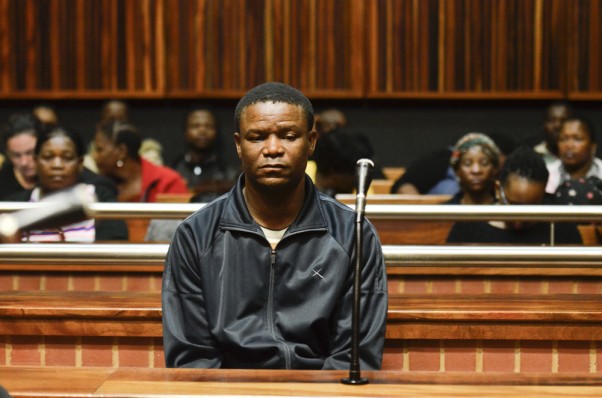
Maruding appeared wearing all black, a change from the dirty overalls he was wearing before. Today magistrate, Samuel Hlubi allowed for his case to be postponed and moved to regional court when he reappears on January 23, 2015.

Truck Driver, Isaac Wade Maruding appears in court, 12 November 2014, at the Palmridge Magistrate’s court on the East Rand. Maruding is accused of causing an accident on the N12 near Alberton that damaged over 40 vehicles and killed 3. The case was postponed to 23 January 2015. Picture: Alaister Russell

It was revealed that Maruding’s private attorney, Mokhele Salemane, has withdrawn since he secured R7000 bail for his client. A withdrawal state prosecutor, John Ntuli, called Salemane “unprofessional” as the court was only informed Wednesday by the accused.

The postponement was granted to give Maruding time to yet again find a new legal representative.

Three people died when the truck Maruding was driving ploughed into cars stuck in traffic on the N12, damaging 48 cars. Maruding fled from the crime scene – something the state previously argued made him a flight risk.

Maruding is facing charges of culpable homicide and reckless and negligent driving.

He was previously convicted of the same crimes almost 17 years ago. He served 18 months in prison for those crimes.

Maruding’s licence has been handed over to authorities until his case is finalised. This means the former taxi and truck driver will have no way of making an income for some months to come.


VIDEO: Charges withdrawn in Meyiwa suspect

NOTE: This article first appeared on The Citizen website on November 11, 2014. 

The  NPA has officially withdrawn the charges against Zamokuhle Mbatha, the 25-year-old man accused of killing Senzo Meyiwa.

Mbatha had his second appearance in the Boksburg Magistrates Court on Tuesday morning and the charges of murder and robbery were dropped against him within five minutes.

State prosecutor Gertrude Market requested that Mbatha’s appearance on Tuesday took place in absentia.

It became apparent why when Magistrate Daniel Thulare accepted the State’s request to withdraw the charges.Thulare said there was not enough evidence against Mbatha to carry on with his trial.

Mbatha’s family, who filled two benches in the packed court room, were overjoyed. Lindiwe Mbatha, his sister-in-law, said: “We knew they had the wrong person. He would never do something like this”.

The family left the court in song.

Mbatha will be released from police custody and investigations into Meyiwa’s killing will continue.

Cell C complaint banner gets a makeover

NOTE: Article first appeared on The Citizen website on November 9, 2014. 

The banner lambasting Cell C as “The most useless service provider in SA” outside World Wear shopping centre in Randburg has had a makeover over the weekend.

Black tape has been used to cover the white circle around the “C” logo and more tape used to cover the provider’s official colours.

The changes made were reportedly an effort to avoid legal action from Cell C.

The network provider is reportedly seeking legal advice on the matter and want to possibly take action against both the man who put the banner up, and the mall where the banner hangs.


READ MORE: Cell C blasted by “irate” customer (video)


Over the weekend, people on Twitter tweeted in support of the banner while airing their own frustrations with the network:

https://twitter.com/ramzymunya100/status/531155407595921408

https://twitter.com/chrisreeler/status/531164370999705601


TAC needs millions ASAP

NOTE: Article first appeared on The Citizen website on November 7, 2014. 

Picture: Supplied by TAC

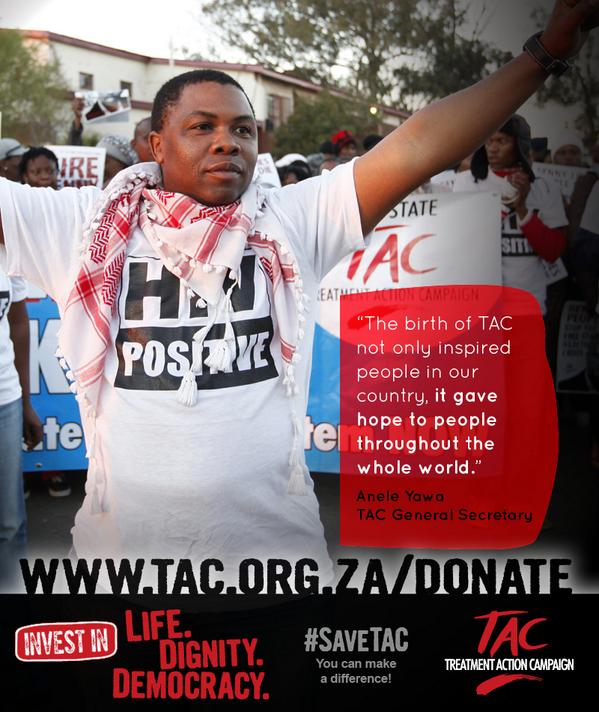
The Treatment Action Campaign have embarked on an emergency fundraising drive to counter the R30 million deficit they are facing.

The HIV/Aids activist organisation is urgently in need of financial support via donations to keep them from closing their doors.

Lotti Rutter from TAC said: “We have a R30 million deficit… We are trying to crowd source the money we need” through a current month long fundraising drive.

“So far there has been a great level of support, We are hopeful that will raise enough money,” she added.

TAC has been at the forefront of the fight against HIV/Aids for close to ten years now.

Archbishop Desmond Tutu made a passionate plea for donations for TAC, saying they have been central to restoring hope to the millions of South Africans afflicted by HIV/Aids.

“Aids is not over, it is not over until the evils that drive HIV such as rape and violence against women and children are defeated,” he said.

Rutter said the public support has been overwhelming in the few days that they have embarked on the drive.

Last night a virtual townhall meeting was held by the campaign on social network Twitter under the #SaveTAC hashtag.

The conversation centred around their funding issue as well as the vital role of social activism:

If TAC is unable to get the funds it needs this month, they will be forced to close their doors on December 1, World Aids Day.

Homeless boy finds baby tossed from car

NOTE: Article first appeared on The Citizen website on November 6, 2014.

A homeless boy in Braamfontein, who thought he had picked up a Checkers plastic bag filled with food and other “nice things” near Wits University, was shocked when he instead discovered the mangled body of a dead baby.

Wits University campus control director Robert Kemp said the body had been dumped from a white Volkswagen Polo driving down Jan Smuts Avenue in Johannesburg late on Tuesday night.

It was particularly cold and wet that night, and the desperate homeless youngster thought he might have found something to help him through it.

“A passing vagrant saw the packet thinking there might be something nice for him in there but then he discovered the deceased baby,” said Kemp.

The young boy immediately looked for help and quickly approached campus control officers at the Nowsell Hall residence.

Warrant Officer Richard Munyai confirmed the incident yesterday.

“A case of concealment of birth has been opened… that is basically [an] abortion,” he explained.

He added that preliminary findings revealed that “it was a stillborn baby in that plastic”.

A police investigation was underway.

Is ANCYL backing #BringBackBhekiCele?

NOTE: Article first appeared on The Citizen website on November 4, 2014. 

A crime prevention campaign launched by the ANC Youth League Tuesday, doubled up as a platform for the ‘bring back Bheki Cele’ campaign.

Bheki Cele, now deputy minister of agriculture and fisheries, was invited by the ANCYL in his capacity as an ANC national executive committee member. The event, hosted by the youth league, saw ‘Operation Wanya Tsotsi’, a call to reclaim the streeta being launched.

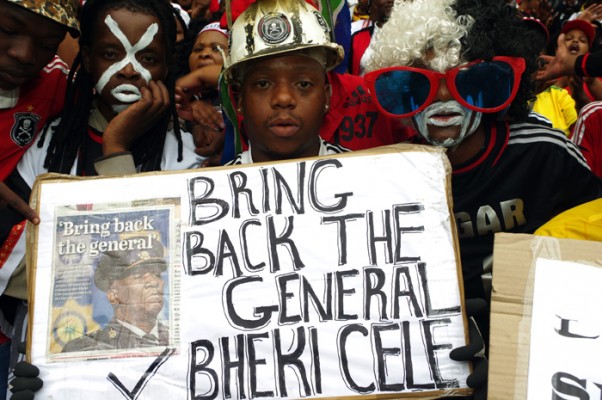
FILE PICTURE: Mourners call for the reinstatement of the country's former police chief Bheki Cele as they gather at the Moses Mabhida Stadium in Durban on Saturday, 1 November 2014 for the funeral of slain Bafana Bafana captain Senzo Meyiwa. Picture: Giordano Stolley/SAPA
FILE PICTURE: Mourners call for the reinstatement of the country’s former police chief Bheki Cele as they gather at the Moses Mabhida Stadium in Durban on Saturday, 1 November 2014 for the funeral of slain Bafana Bafana captain Senzo Meyiwa. Picture: Giordano Stolley/SAPA

The crowd erupted when Cele, dressed in all black with a signature hat, entered the Vosloorus Civic Centre. A group shouted “bring back Bheki” when a question on how to fight crime was asked.

Cele called on the youth to channel the anger the country has over crime to start fighting it. “We must organise to close and squeeze the space for criminals”.

He added that communities should come together to expose criminals. “You know these people. Criminals like to talk about their loot, their money and their girls but you choose to keep quiet.”

The crime fighting campaign came after the shooting and killing of Bafana Bafana captain and Orlando Pirates goalie, Senzo Meyiwa, last week.

Cele’s attendance was seemingly in line with the call from aggrieved fans who asked for the former police commissioner to be brought back to fight crime. ​The informal campaign was trending on social network Twitter under the hastag #bringbackbhekicele last week:

https://twitter.com/ellam304/status/528191263406043137