La Bonne Vie

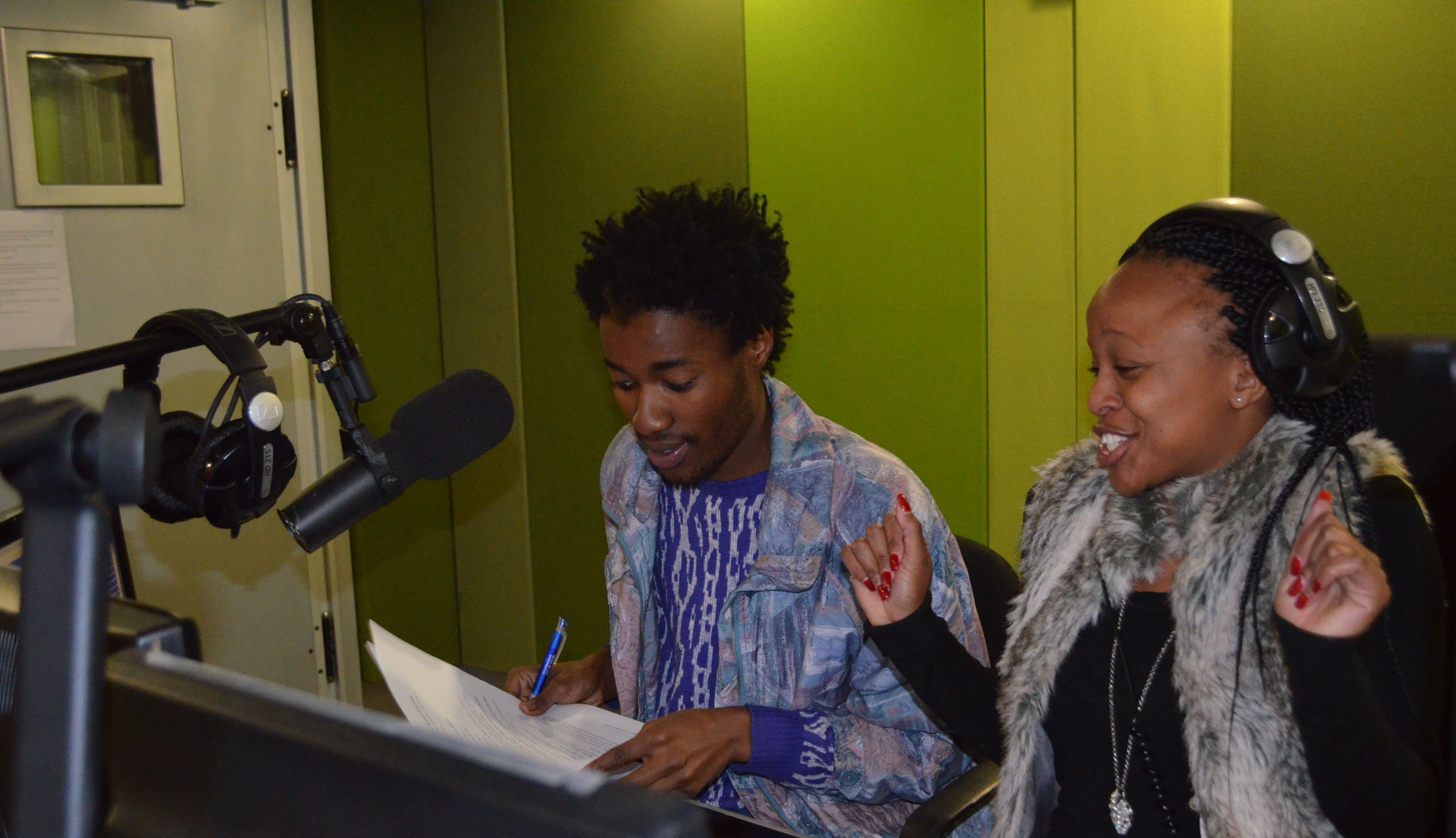
LE GOOD LIFE: Samkele Kaase and Karabo Ntshweng having fun in studio. Photo: Pheladi Sethusa

Two great minds and voices have come together to bring Witsies and all those in Braamfie ‘the good life’ on VoWfm.

La Bonne Vie is the French phrase for ‘good life’ and is now the name of a lifestyle and entertainment show hosted by Karabo Ntshweng and Samkele Kaase.

La Bonne what?

“We want to expose Joburg in its entirety,” said Ntshweng. She added that they want to give students a taste of the good life that falls within their budget.

Kaase and Ntshweng said that they went about doing this by attending events, informing people about events and having weekly give-aways. Events and places that students previously might not have had access to or just didn’t know about.

Kaase said that they connect with the people who own all the hotspots in Braam and make their proposals for deals and give-aways for the show.

Who’s it for?

Kaase said: “The show is very androgynous. People often assume that lifestyle shows are for women.” The pair added that they are about reaching out to students in the Braamfontein area who want to make things happen for themselves.

Natural progression

The co-hosts have always wanted to work together and this show was the natural progression of their professional relationship. Ntshweng said that they have both been at VoW for a long time and that they wanted to host an “entertaining talk show” that did more than just play popular music.

Kaase is still a student at Wits and Ntshweng now works at a popular Johannesburg radio station.

Witsies can catch La Bonne Vie on Thursdays at 7pm and podcasts are going to be available on VoW’s website from this week onwards.

Snap(s) of the week

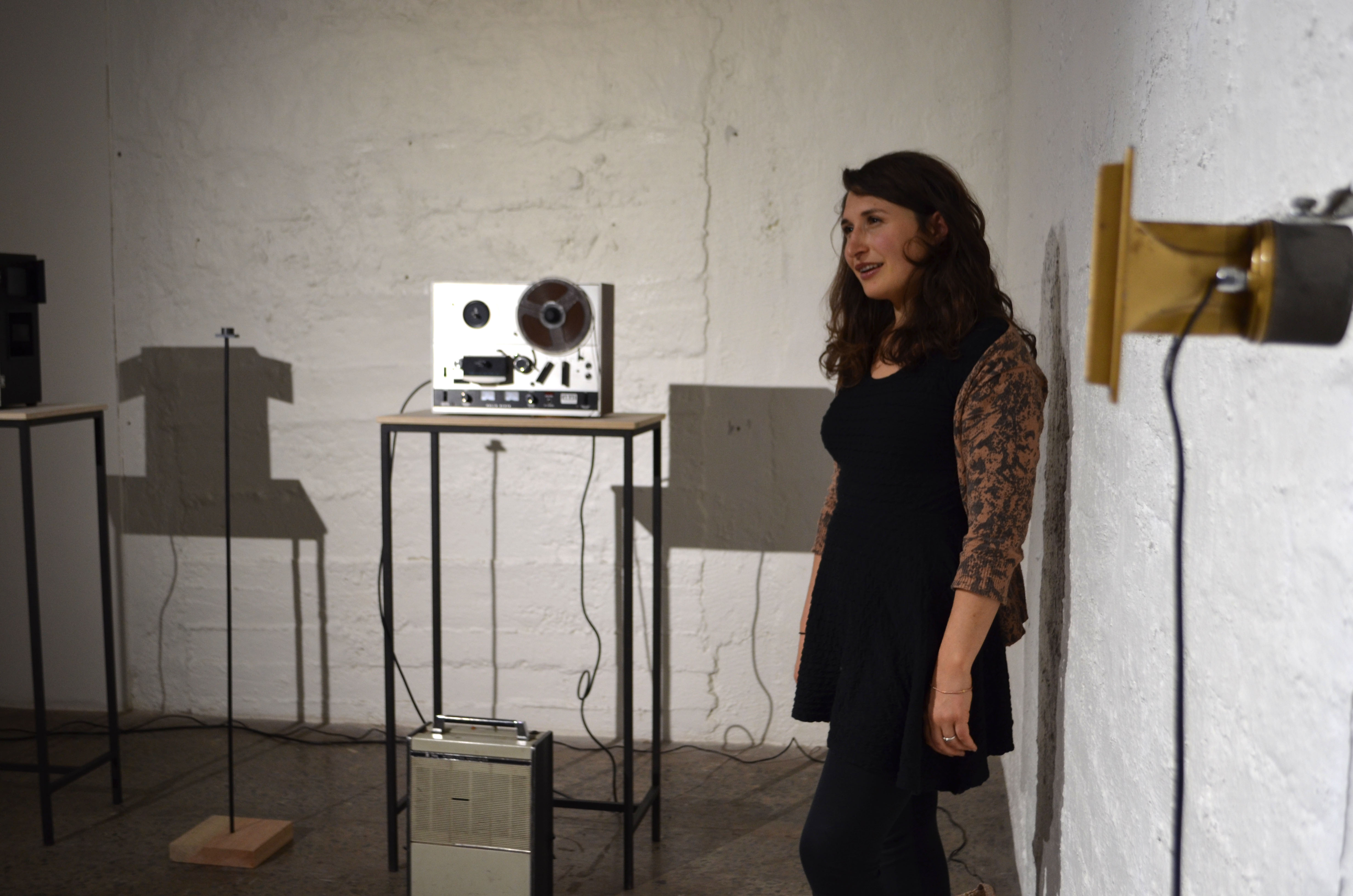
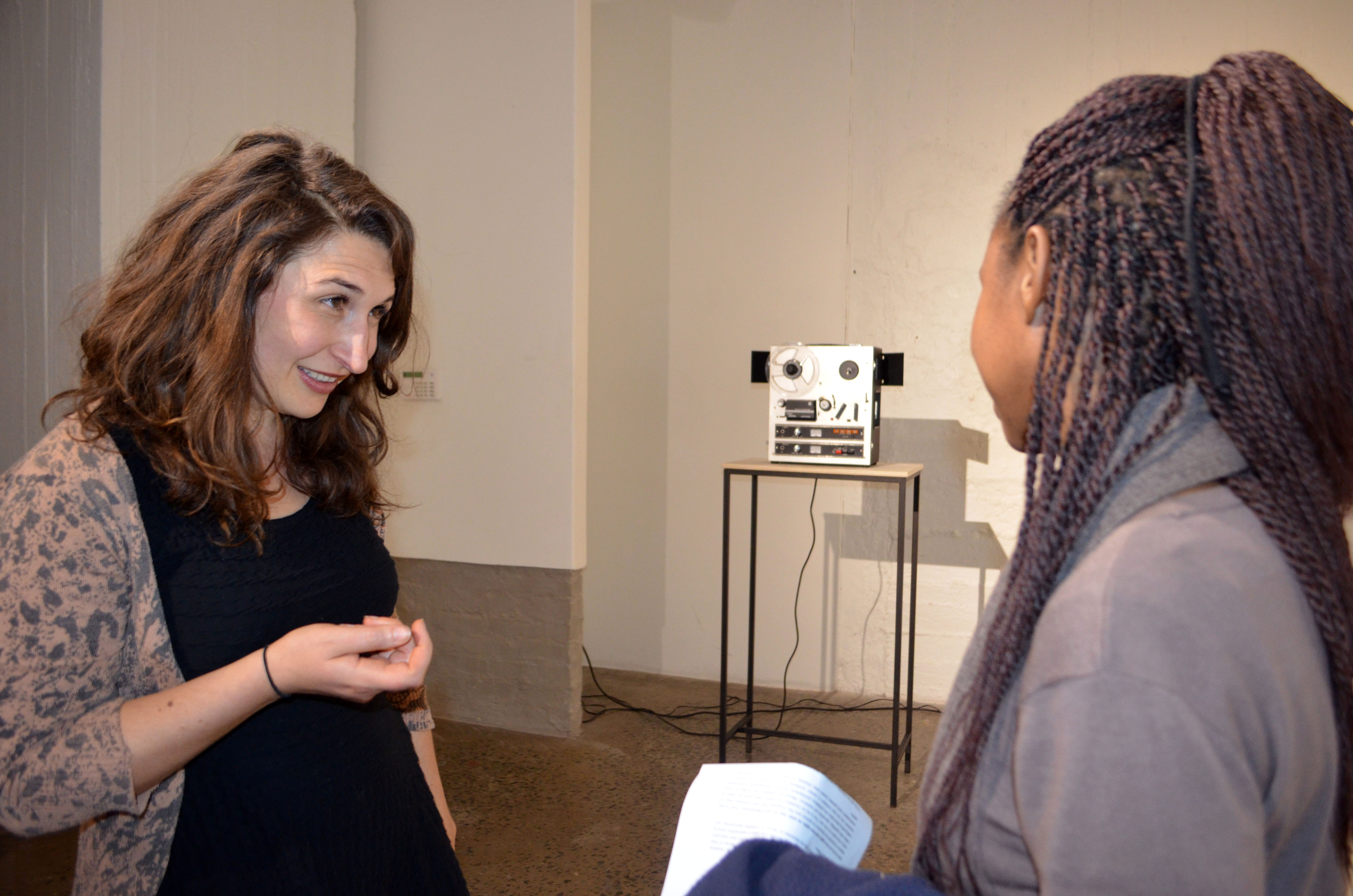
Taken at the Martienssen Prize Exhibition, hosted at the Wits Arts Museum. Witsie, Antonia Brown won herself ten thousand rand with her entry. Her work titled ‘I Will Tell Him When He Comes’ looked at an extinct Khoisan language. Pictured below are reactions after the announcement. All photos by me.

DSC_0106 DSC_0081

Antonia
Antonia Brown

The Newsroom 7.5

CHEEEESE: Team Vuvu with her royal majesty (well to me), Ferial Haffajee :) Photo: Kenichi Serino
CHEEEESE: Team Vuvu with her royal majesty (well to me), Ferial Haffajee 🙂 Photo: Kenichi Serino

Another Sunday another blog post.

The past two weeks might have been the longest two weeks I’ve ever had in my whole life and the back to back 12 page editions of the Vuvuzela have everything to do with that.

On Monday we had a bit of a false start in the newsroom. Right after our guest lecture the lights decided to go off in our whole building. So we all went off to lunch hoping it would be back by the time we got back – no such luck. Naturally we all buggered off home.  Well not all of us, I went off take photos at a soccer match on campus – which proved to be a colossal waste of my time and space on my memory card… There’s always a next time right?

Things started to look up the following day when we had an awesome guest lecture on feature writing by Aspasia Karras, editor of Marie Claire SA. One of the few magazines I even bother to read anymore. She gave us valuable insights into feature writing and ultimately made the whole process seem rather enjoyable.

The day before Aspasia came in, Nechama Brodie had told us that we are merely “the vessels that the shit flows through”, to emphasise that the feature is never about the writer. But Aspasia told us that for our features to mean something it would have to be about something that matters to us as writers, she encouraged us to write about things we are passionate about. She said we should always ask ‘who the fuck cares’ and if we don’t, then no one else would.

Then on Wednesday we had the best guest speaker ever – Ferial Haffajee. Yes, thee Ferial Haffajee, editor of the City Press. In our very midst. Her lecture was legit the best we’ve had, or let me rather say the best I have had. She started us off with a general knowledge quiz – which made me realise how little I know about what’s going on in the world. We all know a bit of this and a bit of that but it was obvious that things like the economy and finance were not on our radar (something which needs to change). Anyway our lesson with Ferial was constructive and practical.

The rest of the week was spent chasing stories and photos and painfully putting a 12 page paper together. It was much tougher this time round but even so we managed to deliver closer to deadline than the previous week.

Another week of inanity and 5 hour sleeps await, ciao**

Disregard for the disabled

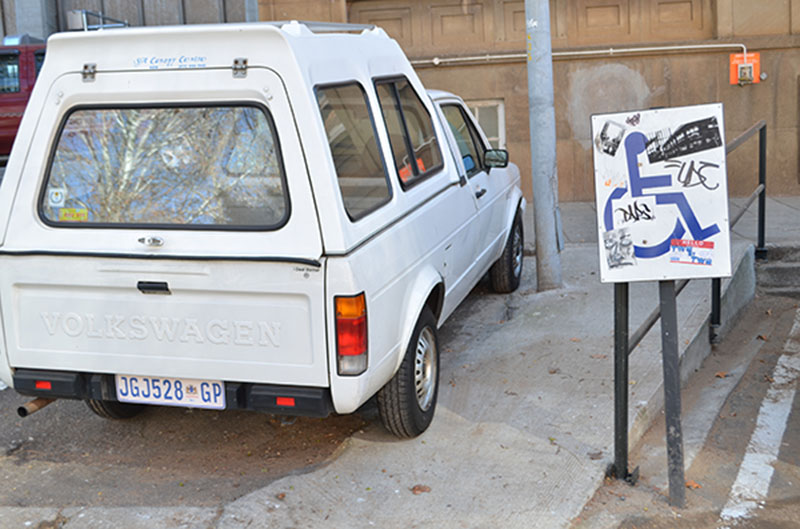
PARKED IN: Students in wheelchairs would not be able to access this ramp outside the School of the Arts as a driver decided to turn into a parking bay. Photo: Pheladi Sethusa

By Liesl Frankson and Pheladi Sethusa

It’s easy for able-bodied students to forget that navigating the world without sight or the ability to walk can be very tough.

Students in wheelchairs and students who cannot see have to carefully map out their routes to classes, residences and the like.

If they are met by even one obstacle on that route on a certain day, they have to think on their feet.

Cuthbert Ramatlo of the Disability Unit on campus said blind students with guide dogs would be stranded in such an instance, as their dogs only know one specific route.

The Disability Interest Group meets two to three times a year to discuss issues which constantly comes up is  access to campus for disabled students.

One of the major issues around this is often a lack of clear signage indicating suitable entrances, parking areas and toilets.

Vandalism

Wits Vuvuzela walked around to investigate access and wheelchair friendly routes on campus.

Some signs were vandalised while others were not clearly marked or visible.

One of the backdoor entrances that students in wheelchairs have to use. Photo: Pheladi Sethusa

Along with this a wheelchair lift at the School of Arts had been vandalised,  forcing students who use this entrance to go through the after hour’s back door.

“Often we think of back door access for people with disabilities and that’s really wrong because it’s basically going back to discrimination when there were different doors for different races,” said Duncan Yates secretary of the Disability Interest Group.

Yusuf Talia, BSc final year, a student who uses a wheelchair said: “There are some limitations at older buildings, like elevators that make certain places inaccessible”.

Along with this he said weathered paving made for tricky navigation and this problem was intensified when going uphill.

Easy access

To tackle access issues the unit has started developing interactive maps which will show easy access areas around campus for disabled students.

Yates said the map would be a living map that grows as the university changes.

The access map system aims to make online and printed maps available for disabled students, staff and visitors to make their experience at Wits more pleasant.

Students and staff will be able to flag areas on the maps online that are not easily accessible or where they may be experiencing problems.

In addition to the new mapping system the disability unit also provides training for staff and bus drivers. One of the achievements they are proud of is the dedicated Wits bus with access for disabled students.

The unit aims to respond to all student suggestions and complaints.

Talia confirmed this and said most buildings and areas are accommodating, if one lives at res the disability unit generally makes a plan for students to be comfortable.

The slippery slopes of patriarchy

Patriarchy slapped me right in the face this morning.

I was listening to my new favourite radio station, Power FM. One of the news bulletins covered a story about a serial rapist who committed suicide while in prison. This man had raped 34 girls. The breakfast show anchor, Tim Modise said that it was “unfortunate” that the man decided to kill himself. What?!

What was unfortunate was that it took 33 ‘other’ rapes to catch this man. What was unfortunate was that the he saw it fit to strip 34 girls of their innocence and dignity. What was unfortunate was that 34 girls will probably never have ‘normal’ relationships with men. That’s unfortunate.

The man’s suicide is not.

They then went on to talk about how he may have had psychological problems and how ‘irresponsible’ it was to put a man like him in a solitary cell. Irresponsible.

What struck me was the words these men used to effectively shield one of their own. No one said good riddance or that maybe it was a long time coming. No one spoke of how maybe now the 34 girls could start to heal. No one breathed a word about them.

This brings me to my second on air encounter with slippery words. I decided to tune in to 702 yesterday, for the first time in 3 weeks – just to give them a chance you know. When I changed the station I had done so just in time for John Robbie’s Comment, a segment in which he gets to air his views and opinions.

He was outraged by a comment made by the secretary general of COSAS. In his comment, Tshiamo Tsotetsi called for the castration of rapists. To this Robbie said “did you ever hear such a deeply stupid and dangerous comment?” To answer his question, no. It is not a ‘stupid’ comment, it’s a proactive one. SA has a rife rape culture which cannot and has not been cured by judicial channels. Why not take away the instrument used to rape? Tsotetsi’s comment borders on brilliance.

Robbie went on to say that what Tsotetsi was suggesting promoted vigilantism and would break the law in a violent manner. As opposed to rape which doesn’t right?

If you rape, you should know that you are opening up a world of hurt for yourself. You should be afraid to do it knowing how dire the consequences may be. I back COSAS on this one.

Men should not trivialise how violent and how prevalent rape has become in our society. I am not saying that these men did but the language they chose to use suggested it – well to me in any case.

The Newsroom 7.0

It was 09:45 on a Wednesday morning. The excitement of seeing familiar faces had waned and I had already missed two deadlines. All I wanted to do at that point was sleep. Sleep for longer than five hours.

First week back in the newsroom has been nothing sort of exhausting. Gone are the days of sleeping in, late lunches, series marathons and groove. The break was very, very good to me. I had about six and a half weeks to do the things I no longer had time for when I started this course.

The week started early, the Friday before this Monday – with news conference. We needed to plan well in advance for our 12 page edition, which came out this past Friday. We had a lot of content, which made for stabilised stress levels (mostly).

Along with trying to do this ‘little’ producing a paper thing, we started with feature writing classes. We have been told that this part of the course is one of the most difficult. I had hoped these are just scare tactics, failure doesn’t look good on me. But on the real I am quite keen. I feel like feature writing will make me write creatively and in a way that is less insular than I do on these interweb streets.

Back to the newsroom – I was rusty AF. I wrote one story on newly signed work contracts by Wits cleaners – that wasn’t too bad I rate. My design work on the other had was horrendous *shaking my head at myself* It reminded me that being good requires practice – lots of it. Something which rang true with the photo’s I took this week – the photography work I did in the holidays has made me polish up my skills behind the lens.

My favourite shot was of Albert, a Witsie with ‘the calling’ – a colleague wrote about his story. He had such a great story to tell and I am glad that I got to capture an essence of his lively spirit with the photo(s) I took.

Pictured here, Albert Khoza Photo: Pheladi Sethusa

Last night I learnt that there might be nothing more trying than trying to take photos in a dark club. Without a flash or one of those fancy lights hitched onto the camera. I love my Ruby (my Nikon D5100) but there were points last night when I looked at people’s Canon 7D’s with longing.

All in all it has been a great week. It has been tough getting back into the swing of things but I have five fresh days coming up to try again.

Sign or forever hold your piece job


ON THE JOB: Business as usual for Wits cleaner. Photo: Pheladi Sethusa

Desperate to keep their jobs, Wits cleaners say they signed contracts which they were not given time to read – making them all temporary workers for the next three months.

New company

Ukweza took over from Supercare as the new company to whom Wits has outsourced its cleaning services. Cleaners have claimed for years that Supercare treated them unfairly. Wits Vuvuzela spoke to several cleaners about the new contracts, which were signed during the university break.

New contracts

Maggie* said all the workers were called in on a Saturday to sign the new contracts. The workers were not given copies of the contracts or even given time to read through what they were signing.
“We had no time to read the contracts, but we were scared to lose our jobs so we just signed,” said a visibly upset Johanna*. Once they had signed, she said they were given a thick document to take home and read through. It set out the terms of their contracts.

Temporary work

Only at this point did the cleaners realise they would be working on a temporary basis for three months, after which permanent positions would be given.

Agnes* who has worked at Wits for 13 years found this unfair, especially because the contract said they could be dismissed without warning during those three months. “I have been here for 13 years, how can I be a temp?”

Tokelo Nhlapo from the Workers’ Solidarity Committee said the new contracts also contained a clause which allowed the workers to be body-searched, something he thought would allow for “poor working conditions”.

The workers were forced to sign because they were desperate for employment, he said. They were left especially vulnerable because contract workers were not allowed to have a union. “The university is taking advantage of structural unemployment,” said Nhlapo.

Clauses and responses

Nhlapo also made these allegations on twitter. He was engaged by the vice chancellor, Prof Adam Habib, who replied: “Deliberately lying serves no purpose but destroys Wits reputation.”

Besides the brief interaction on twitter, Nhlapo said Habib and Prof Tawana Kupe had been reluctant to engage with the Workers’ Solidarity Committee, because it was not a “recognised body” in the university structure. “We will continue to engage them. If they don’t listen we will engage students.”

A source from Ukweza management, who asked not to be identified, said: “No-one forced them to sign. They could have left when Supercare left.”

He added that no-one could say whether Ukweza was good or bad yet. “As for the body searching, it hasn’t been implemented so I can’t say anything about that.”

Kupe told Wits Vuvuzela that the allegations made by Nhlapo and the cleaners were not true.
“We would not condone such a practice because we are committed to the upholding worker’s rights and protecting them from abuse,” Kupe said.

He added that fixed term contracts do not automatically make the workers temporary workers. Kupe said the university would engage the Workers’ Solidarity Committee after they took measures “to regularise their status.”

*Names have been changed since the workers requested that their identities be protected.