Engineer didn’t inspect 84 ton Meyersdal structure

NOTE: Article first appeared on The Citizen website on October 30, 2014. 

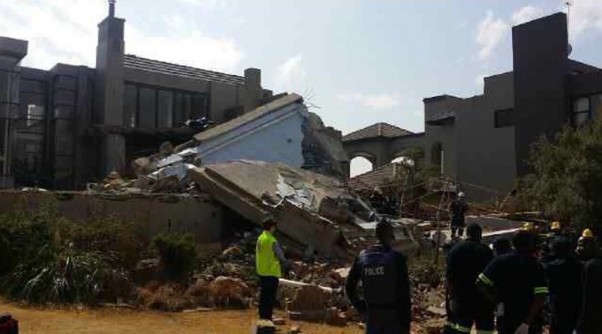
A commission of inquiry into a structure that collapsed at an estate in Meyersdal has heard that the slab that fell, weighed 84 tonnes.

Seven men died and eight more were injured when the slab fell on them.

On Thursday, the second day of the Meyersdal Structural Collapse Incident Inquiry faced another hostile witness, as the engineer refuses to answer the commission’s questions.

Ranjan Galal, the engineer of the structure, dodged numerous questions asked by presiding officer, Phumudzo Maphaha. This was much like contractor, Errol Romburgh did on Wednesday.

After a barrage of questions, Galal cracked when Maphaha put it to him that his design and not the construction work, was responsible for the collapse.

“It was not my design that caused the collapse,” said Galal. Even though earlier in his testimony he had said that the design shown on TV screens during inquiry proceedings, was not his but an architect’s. Galal changed his tune when Maphaha said they had been on the site together after the collapse.

Maphaha insinuated that the 84 ton slab was supported by columns that could not support that weight. Along with this he said those weak pillars were built atop “no foundation, they were on a retaining wall”.

The commission adjourned after all the commission’s witness appeared within two days. Maphaha will be compiling a report and making recommendations to the director of public prosecution.

Alberton house contractor keeps mum at commission of inquiry

NOTE: Article first appeared on The Citizen website on October 29, 2014.

Question after question posed by a commission sitting in Tshwane on Wednesday into the collapsed building near Alberton which left seven people killed and nine injured, were ignored by the contractor of the Meyersdal Eco Estate when questioned.

FILE PICTURE: Paramedics on the scene in Meyersdal Eco Estate, Alberton in the south of Johannesburg on 18 August 2014 after a building collapsed. Picture Alberton Record/CNS

Errol Romburgh, a member of Romicon, the construction company that was building the luxury house at the estate when part of it collapsed, refused to answer questions posed by presiding officer, Phumudzo Maphaha.

This morning the comission heard Romburgh say he was following his legal advice to use his legal right to “not answer any incriminating questions”.

The Meyersdal Structural Collapse Incident Inquiry has been set up to further investigate the collapse that happened on August 18.

Despite Romburgh’s refusal, Maphaha continued to put questions to him about his workers and health and safety issues on site. He concluded that “recommendations will be made to the National Prosecuting Authority,” following Romburgh’s failure to comply by remaining silent.


Alberton house collapse construction worker can’t remember what happened

Several men have been injured, eight are presumed to be dead and two are still missing beneath the rubble of collapse building in Alberton, Johannesburg South. Picture: ER24 Flickr

Maphaha said the purpose was particularly to investigate the cause of the collapse that led to the deaths and injuries.

Prior to Romburgh three workers gave their testimony to the commission. They were all on site when the building collapsed but could not remember how the structure came tumbling down, only waking up later in hospital.

Collins Mohale said he was given a hard hat, boots, gloves and overall but never shown how to use them. “Not everyone wore the protective clothes,” he added.

Second witness, Patrick Moremi said in the eight years he had worked for Romicon, he had undergone no health and saftey training or medical check-ups.

Another witness and worker who survived the collapse, Sandile Mabuza gave similar testimony.

The proceedings continue.

“I’m not guilty” – N12 crash truck driver

NOTE: This article first appeared on The Citizen website on October 22, 2014.

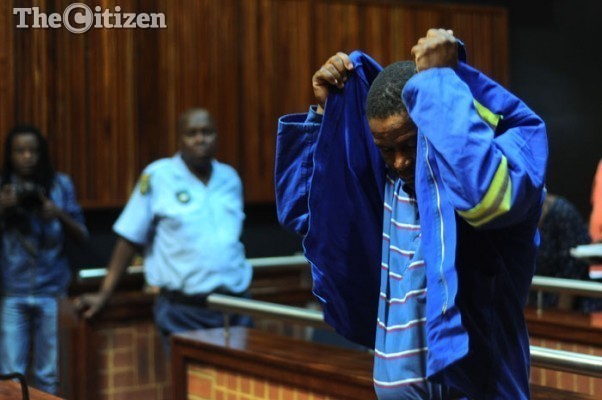
Truck driver Isaac Maruding attempts to cover his head during a court adjournment of his bail application at the Palm Ridge Magistrate's court, 22 October 2014. Maruding is appearing on charges of culpable homicide. Picture: Refilwe Modise
Truck driver Isaac Maruding attempts to cover his head during a court adjournment of his bail application at the Palm Ridge Magistrate’s court, 22 October 2014. Maruding is appearing on charges of culpable homicide. Picture: Refilwe Modise

The driver behind the wheel of the truck which caused last week’s horror accident on the N12 highway is planning to plead not guilty.

Appearing for the second time at the Palm Ridge Magistrates Court on Wednesday, Isaac Wade Maruding said in an affidavit that he was not responsible for the crash.

Maruding, driving a truck owned by Benusi Cargo Carriers, plowed through numerous vehicles on the highway when the truck’s brakes allegedly failed on October 14.

The accident left four people dead, seven critically injured and 19 with minor injuries.

In the same affidavit, Maruding apologised to those injured and their families.

Mokhele Salemane, Maruding’s new legal representative, proposed his client br granted R5 000 bail on the grounds that by being detained he was losing income and could not support his family of three – two children and his wife.

It was revealed to the court today that along with Maruding’s previous convictions for culpable homicide and reckless and negligent driving, he had another culpable homicide charge on his record.

Phokungwane said Maruding was aquitted of culpable homicide in 1996. He was a taxi driver at the time.


N12 crash driver a flight risk

IMG-20141016-WA0001-533x400


State witness and investigating officer Joas Pheagne Phokungwane said investigations were underway on the vehicle and would be concluded next week.

Phokungwane and state prosecutor John Ntuli said releasing Maruding on bail would “endanger the public at large”.

Ntuli used this as another reason for Maruding not to get bail.

Magistrate Samuel Hlubi postponed his judgment to October 27.

“No bail is set at this stage and the accused will remain in custody,” he said.The truck was impounded by police.

N12 Crash: Defence lawyers drop truck driver

NOTE: Article first appeared on The Citizen website on October 16, 2014. 

The driver of the truck that ploughed into close to 50 cars on the N12 on the East Rand on Tuesday, was left in the lurch by his legal representatives at Palm Ridge Magistrates’ Court on Thursday afternoon.

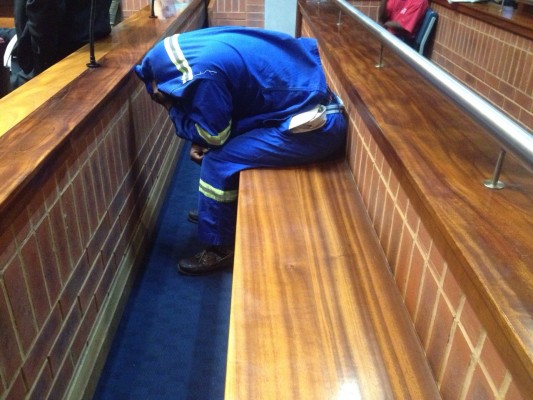
N12 crash truck driver Isaac Maruding in the Palm Ridge Magistrate’s Court. Pic: Tracy Lee Stark.

Truck driver Isaac Maruding had his first appearance in court on Thursday. State attorney, John Ntuli applied for a postponement of the case to investigate further.

Maruding, facing four counts of culpable homicide and one count of reckless and negligent driving, covered his face throughout proceedings.  His representatives, advocate Gerhard Louw and Deon van Staden initially opposed the postponement, wanting to proceed with Maruding’s bail application.

When Magistrate Samuel Hlubi denied the defences application,  Louw asked to be withdrawn as his client’s representative. “We don’t have instruction to proceed with this case beyond today,” Louw said.

Maruding has a previous conviction for both culpable homicide and reckless and negligent driving, and served time in prison for both, the court heard.

The state asked for more time to properly compile information on those who died in the crash, Ntuli saying “additional charges” may be added in future.

Hlubi postponed the matter until October 22, to give both the state and Maruding the time they need.

Maruding now has to find alternative legal representation after the company appointed lawyers dumped him on Thursday.

Motsoaledi: No SA ebola threat

NOTE: Article first appeared on The Citizen website on October 9, 2014. 

Minister of Health, Aaron Motsoaledi said he is tired of the unnecessary “media frenzy” around the possible outbreak of Ebola in the country.

Motsoaledi was speaking in Kempton Park, after a meeting with various stakeholders, who will be sending aid to West African countries affected by the deadly virus.

So far all 14 people who have been tested for the virus have been negative. “We were testing them to settle nerves,” said Motsoaledi. He added that too much panic was being created in the media every time someone with a fever or bleeding was admitted to hospital.

Professor Janusz Paweska, who has been part of a team deployed to assist medically in West Africa, explained why South Africa is not a high risk area at the moment.

“There is no habit of eating pets (birds, bats etc) in South Africa.”

He said the extreme hunger in some of the affected countries forced people to hunt bats and other wildlife just to survive.

“People are hungry out there”.

Pastor’s supporter drinks petrol as part of “miracle” (video)

NOTE: Article first appeared on The Citizen website on September 25, 2014.

Pretoria pastor Lesego Daniel has roped in a congregant to support claims that petrol can be turned into pineapple juice.

The believer has taken his faith to ‘another level’ by drinking petrol to “connect to God”.

In January this year, Pastor Lesego Daniel made members of his church eat grass for the same reason.

At the time he reportedly told his congregation that eating grass would rid them of their sins and heal them of any ailments they may have had.

In a video posted on YouTube, the Pretoria-based pastor’s congregant claims to turn petrol into pineapple juice.

This “miraculous” power is demonstrated in front of the congregation, with one of the church members pouring petrol into a basin and igniting it to prove that it’s flammable.

Beforehand, Daniel tasted the liquid in front of the crowd.

READ MORE: The dangers of drinking petrol

What is apparently the same fluid is then drunk in front of the congregation, with spectators shouting “hallelujah”.

After drinking the “petrol turned pineapple juice”, the man coughs before saying: “It has lot of fumes but I don’t have any side effects”.

Daniel works from Robboni Centre Ministries in Ga-Rankuwa.

Generations off air from October 1

NOTE: Article first appeared in The Citizen newspaper on September 20, 2014. 

The contingency plan the SABC had in place to deal with the lack of new Generations episodes will come into full effect on October 1 – when the show is pulled off the air.

Kaizer Kganyago, SABC spokesperson, confirmed last night the show would no longer be on air as of next month.

The cast of Generations. Image courtesy of Facebook.com/GenerationsTVShow

“There are no new episodes … Generations will be off air until December,” he revealed.

Filming of the popular soap stopped on August 11 when 16 principal actors started withholding their services. The 16 demanded higher salaries and a cut of R500 million in royalties.

Kganyago said SABC1 would juggle their scheduling to move SePedi drama Skeem Saam from its 6.30pm timeslot to the coveted 8pm slotGenerations used to occupy.

Earlier this week, Generations producer and creator Mfundi Vundla said he was rewriting the entire show, presumably without the 16 actors, who were axed after being given an ultimatum to return to work or be fired a week after their strike action started.

The actors seem oblivious to the changes being made. The Generations Actors Guild announced yesterday they would be taking their matter to the CCMA.

5 arrested for Gauteng mall robberies

NOTE: Article first appeared on The Citizen website on Septemper 9, 2014. 

On Tuesday morning Gauteng police made their first arrests in connection to a recent spate of mall robberies in the province.

Five men aged between 24 and 44 years of age were nabbed in a police raid in Brixton and Doornfontien at 4am this morning, . The five are suspected to be involved in at least two mall robberies in the province.

Provincial commissioner of police, Lesetja Mothiba told a media briefing in Parktown that so far 11 mall robberies have rocked Gauteng.

On 22 August, a gang of robbers struck an iStore at Centurion Mall, escaping with over R1 million worth of goods. A week before a group of men robbed an iStore at Cresta shopping mall , taking an undisclosed number of cellphones and iPads. As they fled the scene they started shooting randomly, injuring an elderly man in the parking lot.

That same week a group of men robbed an iStore at Glen Shopping Mall in Glenvista, Johannesburg, shooting and injuring a security guard before they fled the scene.

FILE PIC. Members of the police walk outside the jewellery store that was robbed on 14 November 2013 in Menlyn Park shopping centre. Picture: Christine Vermooten

A man was killed last week at Black Chain Shopping Centre in Soweto when five suspects stole a cash box.

On Monday evening, a cellphone store at the Glen shopping centre in Ormonde, Johannesburg, was robbed with the suspects fleeing with cellphones.

Increased Security

Mothiba said lax mall security made the robberies easier for criminals,  “some mall security is very relaxed. Some have CCTV camera’s that aren’t working or are of poor quality”.

Police are now offering a reward of R200 000 for people with information on those involved in mall robberies.

General Tebello Mosikili, deputy provincial commissioner for detective services. She revealed that police spend between R1 million and R1,5 million on rewards annually.

Police plan to work hand in hand with mall security,  management and private security companies in the coming weeks to access various malls’ security.

Mothiba said police have identified at least 12 malls that they say are “high risk”. There will be increased visibility at these malls but he did not want to scare people by identifying them.

Race (still, probably always will) matter(s)

In light of the blackface incident involving two Tuks students last week, I asked TO Molefe a few quick questions on the matter. He indulged me with the most enlightened and thorough answers anyone has ever left in my inbox. As such, I figured I should share and let his words hit you with some knowledge.

Image: Twitter
Image: Twitter


Q:The two girls have now been expelled from res but not the University. Do you think this action was appropriate? If so why and if not why?

A: I think the university needs to follow due process as such decisions on individual students’ fates can’t and shouldn’t be arbitrated based on public sentiment. Hopefully UP already has in place an objective process to assess infringements of its student code of conduct and to assign the appropriate sanction(s). I personally do not believe punitive measures like expulsion are necessarily the best way to handle things, but like I said, the university should be following whatever pre-established protocols it has in place to deal with these situations.

The unfortunate thing about UP’s response to this incident is, as I said in my column, is that it singles out the two young women’s behaviour as an exception. They should definitely be held individually accountable, but the university, too, needs to examine its role in allowing such behaviours and attitudes to go unchecked among its student body. The university needs to use this example as the motivation for a compulsory education programme that uses South African history to teach about prejudice and oppression, particularly racism, sexism and sexuality. Right now they seem to be panicking because of all the public scrutiny directed towards them.

Q: In your opinion what was problematic about the girls dress?

A: For me it is pretty clear cut: If, when you think “domestic worker”, the first thing that comes to mind is black women with big lips and behinds, you’re playing on a racist stereotype of black women’s bodies and a long-held belief in that such bodies are the ones best suited to domesticity. Your intention is to poke fun at black women. It is racist and sexist. It is what queer scholar Moya Bailey calls misogynoir (anti-black misogyny).


Q: Some have said they the girls were having harmless fun, much like Leon Schuster. What are your thoughts on that line of thinking?

A: I think anybody who thinks the girls were having harmless fun has chosen not to think at all about what their performance tells us about the cycle of servitude millions of black women are trapped in, many from birth. The two young UP students probably grew up in a house where a black woman cleaned up after them and took care of them. That woman has daughters of her own who, without some kind of intervention, will probably have few work options other than to become domestic workers, too. And chances are that woman’s mother was also a domestic worker. We’ve seen this in the mines where low-paying manual-labour jobs ensnare generations of a single family.

Yet, these two girls, when asked to imagine a domestic worker, a figure that has been a feature of their whole lives, they imagined a stereotype instead of a real human being. These two girls will probably go on to hire domestic workers for their own homes when they grow up. And I imagine it will be difficult for them to find it within themselves to pay their domestic workers a living wage if they can’t imagine them as human beings in all their complexity.

What I’m saying is that the dehumanising way in which the girls imagined domestic workers is how many people imagine domestic workers. And that dehumanising imagining is directly linked to why many domestic workers in this country have never been and are not paid a living wage.


Q: Black comedians make it a point to talk about race in their sets – do you think the way they do it is helpful or harmful?

A: I think it’s great when black comedians talk about race. I think it’s great when anybody talks about it. However, for something that is so divisive, race is generally poorly understood. And even those of us who read, write and think about it every day have to keep our wits about us when dealing with it out of a fear that we might be reinforcing misconceptions about race and promoting racial prejudice. I’m not sure how many South African comedians and satirists exercise this kind of thoughtfulness or care.

This might be a bit utilitarian of me, but the objective of talking about race should be to expose its contradictions, and to subvert people’s deeply held misconception that race has no social significance. (I think most of us by now are comfortable with the idea that race isn’t a biological reality in the sense that it was once believed to determine traits such as intelligence, athletic ability and creativity.) Comedy is a great way to challenge people’s ideas about themselves and the world, but only if the comedian has stopped to think about whether they are repeating and reinforcing stereotypes, or subverting it. There are too many comedians doing the former because it’s easy and because the latter is hard and takes tremendous skill to pull off while being funny.


Q: Lastly, have you seen the trailer for Dear White People set for release later this year. Do you think the South African audience has the capacity to engage with the movie meaningfully?

A: I have seen the trailer. I am ambivalent about the movie’s relevance in South Africa. I mean, we will definitely see parallels to situations here. But, although related, the contexts and histories are a little different. Because of that, I am hesitant to adopt American (or other) anti-racist narratives wholesale. We have a rich history of anti-racist thought and activism here that I think we’re making too little use of. So, I don’t think there is a need here for black people to address white people as this movie does. Instead, I think what this country needs right now is a “Dear Black People” written, directed and produced through an immersion in black consciousness thought.

Boom. Basically.