Journalism and Media Studies Lecturer at Wits University. Master of Arts in Digital Documentary from the University of Sussex. A former journalist at eNCA, Reuters, AFP and The Citizen.
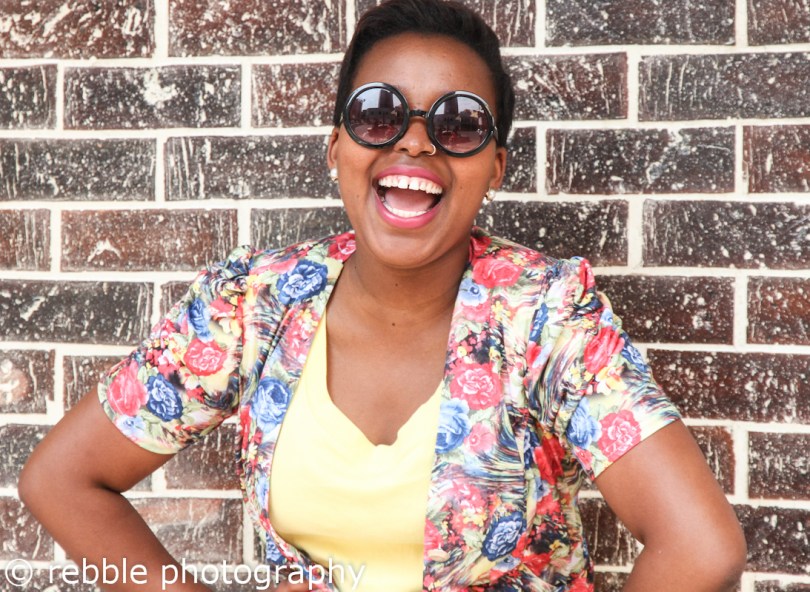
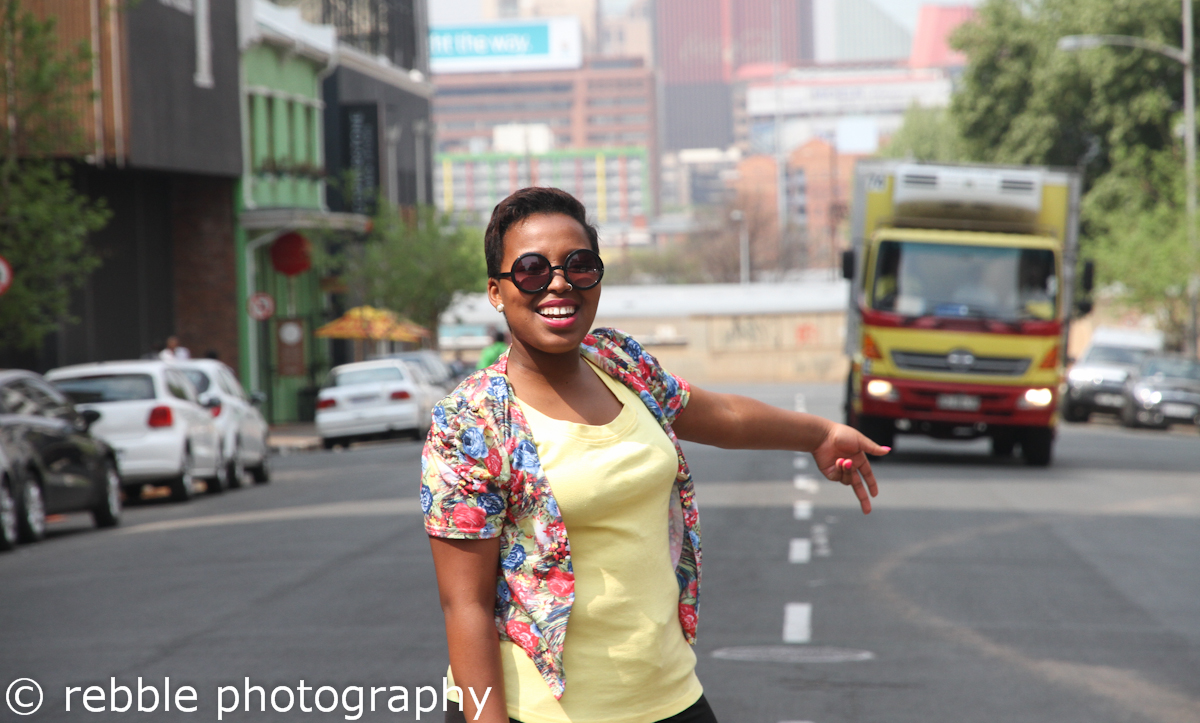
iThuli or Thuli with an ‘i’ is another native from the Ridge. She is however a nomad, who travelled to Diepsloot every evening and on weekends. This Oprah stan is the personification of the phrase dynamite comes in small packages.
Looking summer fresh.
Me: How would you describe your outfit today?
Thuli: Summery (is there such a word?)
Me: How would you describe your style in general?
Thuli: Clean and casual
Me: Are you sure about this journalism thing?
Thuli: Yes, I am. In my 16+ years of being in the school system I have never felt more at home then I do now.
Me: That said, if you weren’t doing what you doing this, what would you be doing?
Thuli: I’ve never seen myself doing anything that doesn’t involve people. I’d be doing something that involves interacting with people on a daily basis, like teaching.
Me: How have you found your honours year?
Thuli: This year has been amazing. Everyday even on my worst day I was excited to come to class. I don’t remember bunking or skipping a day of school. This year a fire was ignited or a passion within me that I hadn’t thought I had. I’m generally excited about the future but this year took my excitement level about the future to another level. I’m in love.
Me: What’s been the most challenging thing and the most rewarding thing for you this year?
Thuli: I’m not a writer. I express myself best verbally. So I was challenged in that I had to explain/express my thoughts and concepts on paper. When I arrived I was very insecure about my writing I would spend days on one story to try make it perfect but now(because of practice) I file stories faster and people understand what I’ve written which is a big win for me. This was both a challenge and reward. (Oh and live tweeting used to kick my ass).
Me: Where will you be next year and what will you be doing?
Thuli: Next year I’ll be at City Press here in jozi. I’m really excited to be challenged and to be pushed to the edge. I can’t wait to be pushed into the deep end and see myself swim cause that’s the only option I’ve given myself.
Me: How would you describe #teamvuvu in three words?
Thuli: Passionate, visionaries, extended family
Me: A word of advice for the incoming team for 2014?
Thuli: Enjoy boot camp that’s the most time free time you will have in afternoons to have a social life. What you put in is what you will get out. Your growth is dependent on what YOU are willing to give. Don’t stress, even the “experienced writers” in class are insecure about their work. Take every opportunity.
Liesl [pronounced lee-sil] has been of the most feisty and sassy people in our class this year. I will miss our early morning banter and conversations through looks.
Holiday mode: ON. Just shopping, chilling.
Me: How would you describe your outfit today?
Liesl: It’s inspired by the sunny weather. The heat especially, that’s why I’m wearing shorts and a very thin, loose, flowy top.
Me: How would you describe your style in general?
Liesl: I wear whatever feels comfortable. I’m very driven by the weather. I would hate to be inappropriately dressed for the weather.
Me: On to the less frivolous, are you sure about this journalism thing?
Liesl: I’m sure about it to a certain extent. I think you can’t lose when you study Journalism. Print maybe not so much, radio is definitely more of my thing.
Me: If you weren’t doing what you doing this, what would you be doing?
Liesl: Um, I would be doing this, there’s no other way. When I applied for this course it was Wits Journalism or bust. I didn’t apply for anything else because this is all I wanted to do.
Me: How have you found your honours year?
Liesl: Challenging but fun.
Me: What’s been the most challenging thing and the most rewarding thing for you this year?
Liesl: Being in a class with a whole lot of other females with their personalities has by far been the most challenging thing for me. I had to hold my tongue a lot of the time.
The most rewarding thing has been getting to know these people and getting to see your work in the newspaper. Also getting to see the newspaper being acknowledged, getting awards and stuff [#winning]
Me: Where will you be next year and what will you be doing?
Liesl: I still don’t know, it’s bad.
Me: How would you describe #teamvuvu in three words?
Liesl: Very loud, almost like a family – that’s not three words but ya, like a family because everybody had their roles, so there were mother hens, there were big sister types ya.
Me: A word of advice for the incoming team for 2014?
Liesl: Take everything very seriously, everything you do is going to count. So when they say rock up there with however many stories to pitch, you need to have those stories cause that shit counts.
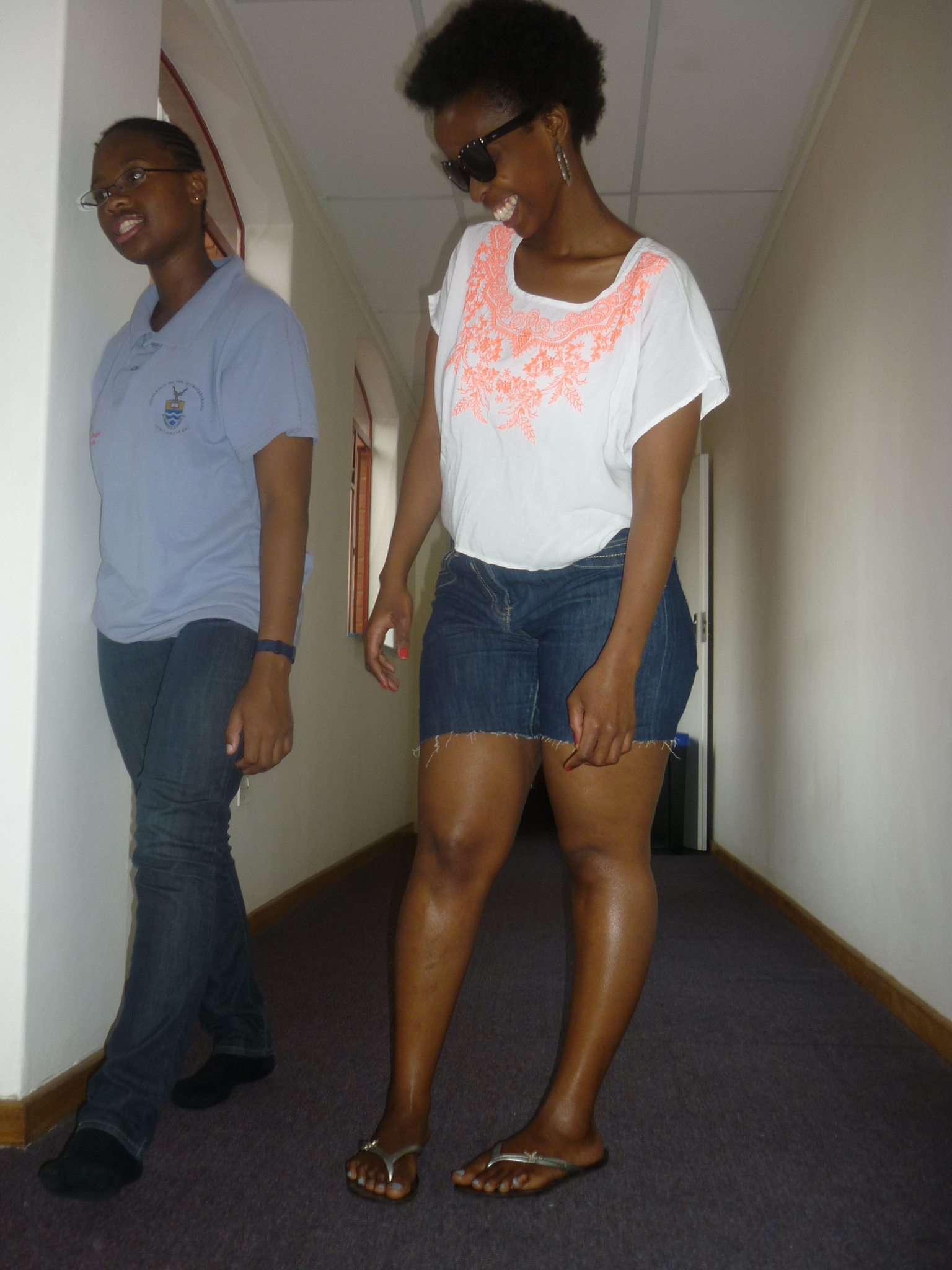
Leigh-Ann (aka LA, yes as in Reid) is another migrant from the Ridge, who later got her life together and moved to Diepsloot, dankie ANC.
Me: How would you describe your outfit today?
LA: Today I’m wearing shorts, a crop top and flops. I think I look pretty cool. I’m also rocking my afro and chunky earrings.
Holiday’s treating home girl best. Photo: Provided
Me: How would you describe your style in general?
LA: I wear comfortable clothing, um a mixture of vintage and retro. Anything that’s cheap and looks good on me, that’s on the vintage side is what I’d describe as my style.
Me: On to the less frivolous, are you sure about this journalism thing?
LA: I know for a fact that I don’t wanna do politics and print journalism, I’m more of a radio person. Radio is a passion, it comes easy to me and I feel at home when doing it. I mean, I’m pretty sure that I can write but I just don’t want to be writing for like City Press, unless I’m doing writing that isn’t political or hard news.
Me: If you weren’t doing what you doing this, what would you be doing?
LA: I would be doing my honours in advertising at UJ. I got accepted for that, so I would have been doing that.
Me: How have you found your honours year?
LA: It’s been extremely hectic, a whole lot of reading, writing for Vuvu, trying to read in between – um – trying to socialise as well. So many things have suffered because of the hectic schedule.
Me: What’s been the most challenging thing and the most rewarding thing for you this year?
LA: Finding my style of writing has been challenging. I think with journ everywhere you go people or organisations have an idea as to how you should write, I guess that’s one of things that make me think I don’t ever want to be a writer. Not that I wouldn’t ever wanna be a writer, but I feel like you constantly change your style to adapt to a publications style. Like this year I had to write according to Vuvu style and if I went to another publication next year, I would have to write in their style, so it’s like I don’t even know what my style is because I’m forced to adapt to so many writing styles.
I’ve learnt so many things this year. I’ve learnt how to make sense of a story, what to include, what to write. I think my writing skills have definitely improved, without a doubt. That’s been the most rewarding thing. I think the assurance that this is either what I want to do or not, made me learn a lot about myself as well.
Me: Where will you be next year and what will you be doing?
LA: I’ll be working at CNBC Africa, I don’t know what I’m gonna be doing. They asked me what I wanted to do and I said anything apart from writing, so I could do events, PR, maybe try my hand at graphics, ya.
Me: How would you describe #teamvuvu class of 2013?
LA: We had a lot of big personalities, just a different bunch of people. Some people had some sort of “deeper passion” for journ, whereas some people were just trying to learn how to become journalists, whereas other people were actually serious I guess.
Me: A word of advice for the incoming team for 2014?
LA: Don’t lose yourself. I think people assume you’re a better writer if you’re spying and reporting on the fact that Jacob Zuma has a side chick [hahaha], that’s not who you are. If that’s not what you want to write about don’t force yourself to write about it and don’t feel stupid for wanting to write entertainment stories or stories about make-up. Ya, don’t lose yourself for a career, it should come naturally. We are all different kinds of writers.
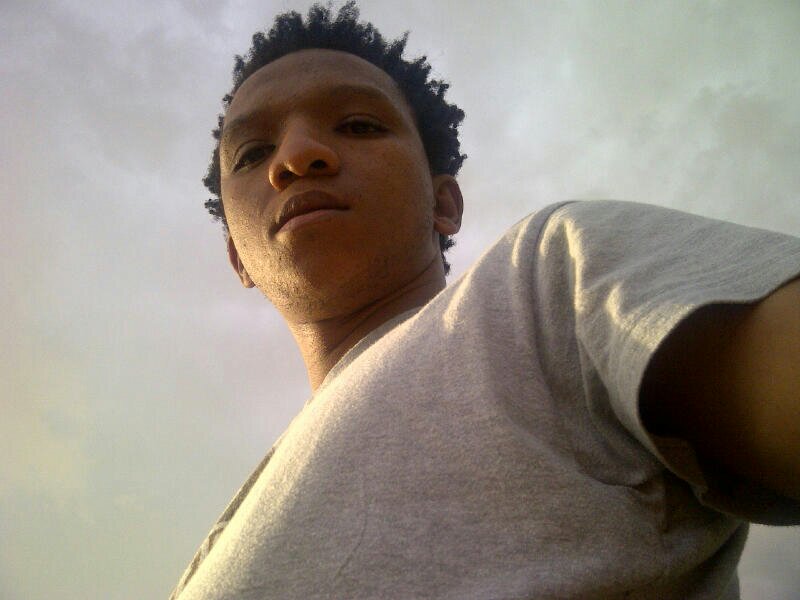
The only dude in our class, Funi – the prodigal son, humoured me by answering my questions via correspondence this afternoon as he sat in a park somewhere and he didn’t get kidnapped while he did it, kudos.
Another selfie, this one with some foreground/background action – dlala Shakes Jnr. Photo: Mfuneko Toyana
Me: How would you describe your outfit today?
Funi: I’d describe it as very comfortable and simple. It’s grey and black, a bit bland but it works.
Me: How would you describe your style in general?
Funi: Um, apparently I start all my sentences with “um,” so um. When you asked the question I thought you meant my writing style not my dress style, so I’m going to answer both. My writing style is an inside joke and you could say that my dress sense is the same. It’s very chilled, relaxed, loose with an emphasis on comfort.
Me: Now on to the more serious, are you sure about this journalism thing?
Funi: I’m absolutely, 100% sure about journalism and I guess more widely about writing. But ya, very serious about journalism – it’s a calling and it takes time for you to understand what that means, I don’t fully understand what it will entail, but I’m all in.
Me: That said, if you weren’t doing what you doing this, what would you be doing?
Funi: I suspect I would be doing one of two things, I’d either be studying History or English Literature, probably a bit of both. Or I’d be in advertising, particularly as a copywriter or pushing a desk job as a marketer, which would be terrible, just doom.
Me: How have you found your honours year?
Funi: I’ve found it interesting I guess and useful. More than anything else it’s helped me develop a lot of discipline and be clear about what I want for the future. It’s also been very demanding, extremely demanding.
Me: What’s been the most challenging thing and the most rewarding thing for you this year?
Funi: The most challenging has been the discipline aspect I think. It’s taking what I want to do and what I have to do, and trying to combine those and have and end product. I think I’ve done okay with that though.
Hmmm, the most rewarding thing has been being able to write more and consequently being able to go out into the world more. I got to see different things and watch a whole lot of other situations and other people, and just be around journalists – journalists to be and working journalists. And the free food, the free food has been very rewarding for my belly and my tastebuds.
Me: Where will you be next year and what will you be doing?
Funi: Next year if the world doesn’t end, I’ll be at Wits for the first few months of the year, skivvy for the department – earning my stripes. For three months after that I’ll be at Reuters, watching the markets. Somebody told me it’s like bird watching except there’s no birds. Ya, I’ll be doing financial journalism at Reuters paying them back for school fees this year and I’m not sure what happens after that, hopefully I’ll be in a newsroom, that’s the main goal.
Me: How would you describe #teamvuvu in three words?
Funi: Fuck, that’s tough [these aren’t the words, I hope]. Uh, a whole lot of girls? *chuckles*. I’d day loud, ferocious – no, scratch ferocious, more tenacious than ferocious and very with it, hip , hipsters – yes, that’s how I would describe them.
A fourth word, I can’t believe I left this out very, very, very talented, above anything else. I guess it comes from the other three words.
Me: How did I feel being one of only two members of the opposite sex in the class?
Funi: It felt great, for the first couple of weeks even months. I guess I was excited to tell people that I’m in a class with 15 or 16 girls, depending on how you look at these things. But it was very interesting, I wouldn’t say challenging, who would be challenged by being in a class with 15 women? It brought a lot of insight, I got to be with these 15 very different women, with very different personalities, different opinions and very different ways of carrying themselves – of carrying their beauty, their inner light and their outer light [awwwwwwww]. It was fascinating to see how that all came across in the context of a newsroom, where we’re trying to produce something meaningful for the world outside. I thoroughly enjoyed seeing that and I thoroughly enjoyed the kind of relationships I was able to have and to attempt, because life is just one big attempt isn’t it?
There are a few negative side effects – I now scratch my non-existent breasts, because of monkey see monkey do situation. When you see me in public scratching non-existent C or D cups, don’t look down on me, it’s not my fault.
Me: A word of advice for the incoming team for 2014?
Funi: Take this shit very seriously, take every day seriously, take close to every moment seriously. I’m not talking about a flippant sort of serious, I’m talking about taking this as a calling. More than anything honour your craft which means understand what journalism is, read every day, be interested, be fucking curious, watch as much news as you can, keep dissecting things, write as much as you can. Be a geek about this shit because it is a calling and it’s a tremendous calling, ya don’t be an asshole about it – be a geek about it. That’s what it takes to be a championship journalist, like we were in 2013, thank you. No autographs *laughs*
Meet my neighbour in class, Nom Nom. We have been neighbours since the begininigg of this year and as such shared much mgozi over coffee in the mornings.
Selfie vibes. Photo: Nomatter Ndebele
Me: How would you describe your outfit today?
Nomatter: Function over form. I had things to do, I had to get them done so I didn’t focus on looking good – ya I didn’t focus on the form, I just focused on the function.
Me: How would you describe your style in general?
Nomatter: Hobo chic and then every now and again, you know, I throw some niceness in the mix.
Me: Now that we’ve broken the ice, are you sure about this journalism thing?
Nomatter: I’m sure about journalism, I am surer than I have ever been about anything in my life. I think, well I know for a fact that I’m not going to be a print journalist but anything else definitely goes.
Me: That said, if you weren’t doing what you doing this, what would you be doing?
Nomatter: I think I would be pursuing drama, acting kinda vibes.
Me: How have you found your honours year?
Nomatter: Very challenging and very real – also very realistic. It has forced me to look at things in a different way than I see them in my head.
Me: What’s been the most challenging thing and the most rewarding thing for you this year?
Nomatter: Having to be the journalist that I want to be, in a newsroom of 16 other personalities. Often people pooled onto the one side and I was often on the other, so it was a challenge for me to still be myself and still be a part of the team.
The most rewarding thing I suppose has been achieving that. I was able to remain myself in the course and nurture the journalist I want to be in the future, without having to be the typical serious kind of journalist.
Me: Where will you be next year and what will you be doing?
Nomatter: Reuters news agency, interning there and interning at the Wits Journalism department for a while as well. I hope to learn as much as I can so I can fly to greater heights.
Me: How would you describe #teamvuvu in three words?
Nomatter: Loud, consistent and dynamic.
Me: A word of advice for the incoming team for 2014?
Nomatter: Always be prepared to put up a fight, write from your heart and filter the white noise. A lot of people are going to have a lot of things to say but you can’t let them get to you.
Busi: Summery, fun. It has a little touch of class, it’s a little chic.
Me: How would you describe your style in general?
Busi: I think my style in general is representative of the above. I like to look cute and pretty but there’s always a sense of my personal style in that. While I’m interested in what’s trending and what’s hot, I think it’s always important to have your own sense of style. I actually like a lot of my mom’s stuff, her style is on point.
Me: Now that we’ve broken the ice, are you sure about this journalism thing?
Busi: To be honest with you, I’m sure that journalism is still something that I love. I’m just not sure that journalism is something that I would be good at and that scares me. I know that it’s got a lot to do with, you know, how I performed this year – I don’t think that I put myself out there and gave it as much as I could have. And that’s led to my questioning whether or not this is something I can do. I don’t question whether or not I love it, I question my ability to actually do it as well as I’d like to.
Me: That said, if you weren’t doing what you doing this, what would you be doing?
Busi: I would definitely be doing music. When I left high school I wanted to go to UCT and do music and my parents were just like listen, no – get a real career. That’s how I ended up doing Media Studies and Journalism. I’m still interested in doing music at some point in my life.
Me: How have you found your honours year?
Busi: It’s been challenging, demanding but it’s also been the best year of all my studying. Um, I’ve met awesome people and I feel like I’ve been exposed to the kind of practical, how to you apply theory stuff that I’ve always spoken about. When I started in my first year, I expected Media Studies to be like Journalism and I felt like it was a great waste of time when all that theory was being thrown at me without any place to actually apply it. I think in hindsight it was useful but this year has definitely been the best year. It’s been that kind of put yourself in the deep end and swim type of year, and I’ve loved that.
Me: What’s been the most challenging thing and the most rewarding thing for you this year?
Busi: The most challenging thing has been the Monday pitches. Having to always have your brain switched on and have your finger on the pulse on what’s happening in the community, to be able to come back with something on Monday morning with an idea of what you’re going to put in the paper and making sure that it’s relevant.
The kind of feedback we get from people has been rewarding. People who like the stories that you put out or even for me, what matters more is my own peers telling me “that was cool, I liked the way you did this, I liked the way you did that”. To have your peers respect and admire some of the stuff that you’ve done, when you all started out knowing absolutely nothing was really rewarding for me.
Me: Where will you be next year and what will you be doing?
Me: How would you describe #teamvuvu in three words?
Busi: Loud, opinionated and trailblazers. This has been the group that decided that just because this is how things have been done all this time doesn’t mean it has to stay that way. Where some of the traditions and structures made sense I think the group conceded but where things didn’t, this group wasn’t afraid to speak out. Whether it was in the department or in terms of Wits and the community’s attitude towards certain issues – this has just been that group. I think that’s really important because that’s what the industry needs, so ya.
[how quickly 3 words can turn into 100 :P]
Me: A word of advice for the incoming team for 2014?
Busi: Don’t pay attention to people who tell you that what you’re doing is a waste of time, because half the time you’ll find that those people are applying for the course anyway. Where there’s constructive criticism, definitely yield towards it and listen. But make sure that you aren’t paying attention to people who have shallow, empty criticism. Those are just people who have too much time on their hands. Also try not to compete with each other as a group. Have fun yo, enjoy your time here – it’s over before you know it.
It’s that time of the year again – when camp chairs, people lathered in sun screen and crowded cars make their way to stadiums to watch cricket.
I use the word “watch” loosely here because even though I have been to many cricket games, I’ve never really watched. I have no recollection of who won and who lost.I don’t even remember who was playing.
What I do recall is the amount of booze that was flowing, getting burnt by the sun and the many details of the “deep meaningful conversations” I had with my friends pitch side. This cricket season I refuse to be a mindless spectator. I want to engage and scream my lungs out like the rest of the crowd. I sought out the help of a few fanatics.
Hopefully what they told me will help other people who have been using the cricket as an excuse to work on their phuza faces.
Teams
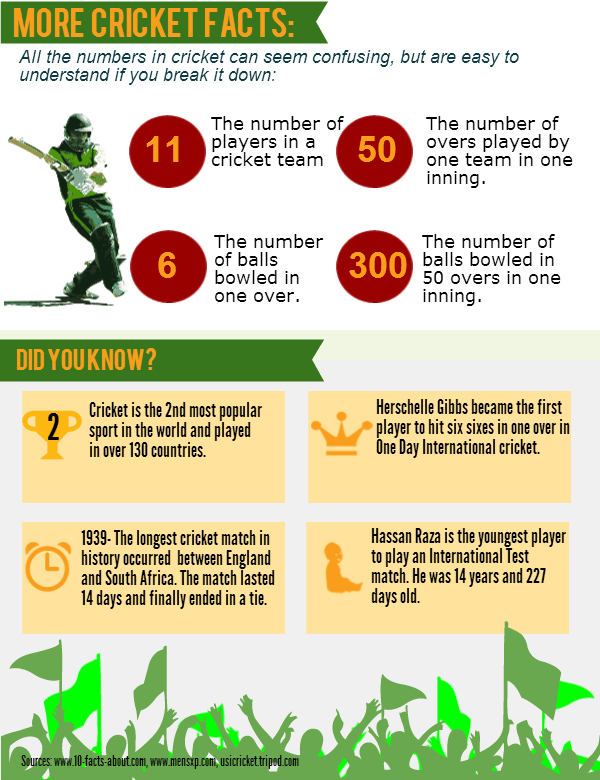
Let’s start with the teams. There are 11 players on each team. “Teams bat in successive innings and attempt to score runs, while the opposing team fields and attempts to bring an end to the batting team’s innings,” said student and player, Kagiso Mathaba.
An inning is just one half of the game that each team gets an opportunity to bat or bowl.
Simply, apart from winning, part of the game is to get as many runs as possible without losing too many wickets.
Runs
The fastest way to do this is to hit 4s and 6s. A 4 is when the ball hits the boundary line and a 6 is when the ball is hit clean over that line. The slowest way of getting runs is manually running between the wickets.
Some of the main ways of being taken out are: a direct catch after the ball has been hit by a batsman, LBW (leg before wicket) when the ball hits a batsman’s leg which is directly in line with a wicket.
A run out is when a batsman fails to make it back to the crease (you might have to look this up, I did). Also each batsman represents a wicket, so by the time 10 wickets/batsmen have been bowled out it’s late for the said team.
What I found most interesting is the fact that a team can win a game without playing an entire game.
Apparently when it rains, the Duckworth-Lewis method is used to calculate how a team would have carried on playing had it not been for the rain – but they have to play for a considerable amount of time for this method to be used.
“It’s a strategic game, it’s as much about playing as it is about thinking – it’s about tactical one-upmanship.
“The greatest thing about cricket is the commentary,” said a sports aficionado in the Wits Vuvuzela newsroom.
It’s all in the hands, from spectators who lift beers to umpires with their customised signals, to commentators who offer visual illustrations of the game as it unfolds.
Oh my, the end is here – in fact it has already come and gone hasn’t it?
This week was the most relaxed week we have ever had in the newsroom. This was the week that we got total control of the newspaper. As such none of the ‘big people’ were allowed to be involved in the production of our last paper for the year.
News conference on Monday set the tone for the rest of the week, we chose what we would be doing and once that was done went off to the Pig, haha, I knew that the week would be filled with nuts because of this.
For once I was relieved to have a thousand ad’s in the paper, it made our jobs a little easier. This last edition was meant to be fun and light, seeing as we had free reign but unfortunately we have become news writing automatons who can’t help but report the news instead of fun frivolities. Either way by 1pm on Thursday we had miraculously put together a paper. A whole newspaper – even though we were a little short staffed this week.
It was a great way to end off what has been an incredible year, personally speaking the best year of my life. This year was my chance to do what I’ve always wanted to do, to become someone with a public voice, an influential voice that is taken seriously. I’ve had the chance to be a part of an amazing team that ruffled feathers by asking the right questions, and digging and digging until they found some shred of evidence to get the stories. We have caused quite a bit of trouble this year and it’s paid off in more ways than one.
It’s been a roller coaster ride of a year, but a more pleasant one like the Golden Loop – which is quick and fast but not enough to make you scream and cry like perhaps the Anaconda (never again). It was an intense year, chock-a-block with work and fun – no one said it would be easy but no one said it would be so much fun as well. I’m leaving with much more than a degree.
It scares me how much talent is about to unleashed into newsrooms next year, teamvuvu gladiators have bright futures ahead of them shem. Again, it has been nothing but an honour to be a part of this year’s team – they will forever hold a special place in my heart as the people helped my dream come true. The people who held my hand this year, who made me coffee, who sang with me, who had drink after drink with me, the people I missed when I was absent, the people who have become my friends, my family.
It’s time for us to go our separate ways, be great and become the people we are meant to be.
Shandukani Mulaudzi is our class rep, our problem child and also my boo thang. Have a read to hear what’s popping with my neighbour.
Me: How would you describe your outfit today?
Shandu: Humpf, it’s bright, casual and comfy?
Me: How would you describe your style in general?
Shandu: People like to say it’s alternative, boho chic or whatever but I don’t like those words. I don’t have a word to describe my style, I just dress for myself and for the mood I’m in. My style icon is Solange Knowles.
Me: Now that we’ve broken the ice, are you sure about this journalism thing?
Shandu: Defo’s. I’ve waited to do journ since I was in grade 10 (2005) but I had to take a bit of a detour for a while. I really can’t see myself anywhere else.
Me: That said, if you weren’t doing what you doing this, what would you be doing?
Shandu: Vokken hell, um singing on a stage or acting. Whatever it would be it would be something creative.
Me: How have you found your honours year?
Shandu: Everything I expected and much more. I’ve learnt a lot, but I didn’t expect to make friends and not just any friends the kind of friends that will be at my wedding one day.
Me: What’s been the most challenging thing and the most rewarding thing for you this year?
Shandu: The most challenging thing has been having to call out my mentors when they were wrong. Cause they are wrong sometimes and in those times you have to stand your ground.
The most rewarding thing has been being able to work alone and in groups without it being forced on us. Through working in groups I have learnt to trust people and to embrace mine and others strengths and weaknesses.
Me: Where will you be next year and what will you be doing?
Me: How would you describe #teamvuvu in three words?
Shandu: *laughs for a while* Ambitious, musical and extroverted.
Me: A word of advice for the incoming team for 2014?
Shandu: Don’t compare yourselves to teamvuvu 2013, you’ll come short. They should just know that what they put into the year is what they will get out. Also they should try to apply themselves in everything that is put before them. And bloody hell go to the Pig. Learn to balance work and play now.









 Write. Snap. Click.