Journalism and Media Studies Lecturer at Wits University. Master of Arts in Digital Documentary from the University of Sussex. A former journalist at eNCA, Reuters, AFP and The Citizen.
#NekNomination, a social media challenge, has flooded profile pages and time lines of young people around the world. Formerly a drinking game, #NekNominations are now used to encourage people to do good.
A person or organisation challenged does an activity that helps someone else out, then passes along the challenge. It’s sort of like a electronic chain letter for charity.
The Wits Vuvuzela team (#teamvuvu), was challenged in a #NekNomination from Wapad, the student publication of the North West University. We had 24 hours to take on the challenge of making a difference and recording it.
Wits Vuvuzela reporters hit the streets of Braamfontein to hand out cupcakes to the homeless. But we also wanted to ask the homeless what they needed because sometimes a simple gesture is not enough.
Happy New Year and all that jazz, I do realise that I’m like a month too late, but better late than never goes the adage. Started working as an intern at Wits Journalism last week. Going to be here for a few weeks, “mentoring” the new bunch of Journalism Honours students.
Last week was mad hectic because there were only four of us in the newsroom but somehow we managed to produce an entire paper. Here are links to all the things I did last week:
A safe jol with a frog. A short write up on Red Frogs SA, an organisation that aims to help students stay safe and sober(ish) while they party.
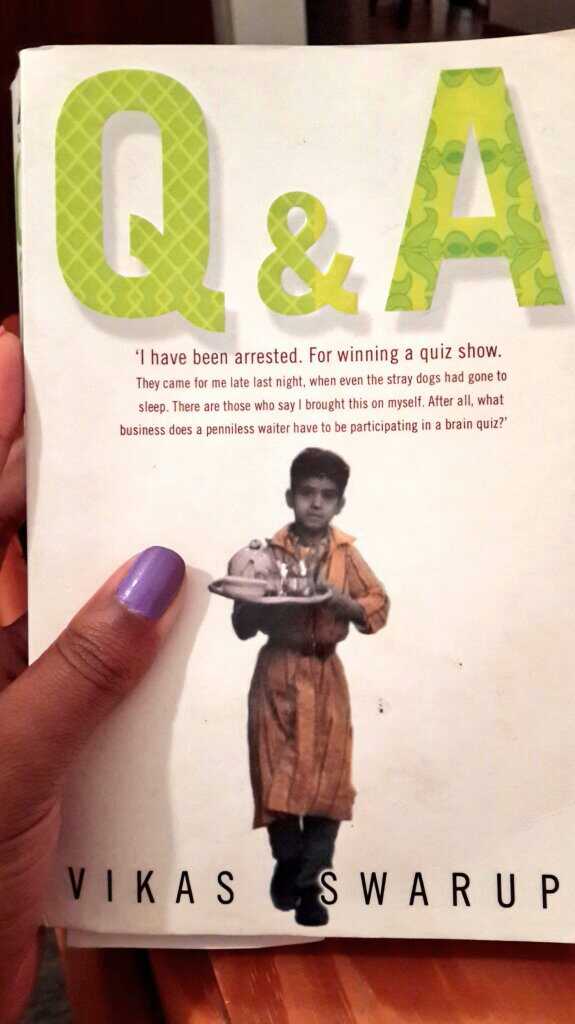
My first encounter with this novel was in my second year at University when I was buying my textbooks for the year. Q & A had just become one of the required readings in the first year set work. I was gutted that I wouldn’t get to study it and by the fact that I couldn’t afford to buy it at the time.
I had watched Slumdog Millionaire when it came out as well, but had a very poor recollection of it by the time I began reading this (which I was thankful for).
From the very first word in the prologue to the very last word in the epilogue, I was with, for and enthralled by Ram Mohammed Thomas, the protagonist in this brilliant read. One of the first things that stuck out to me was the structure of each chapter in the book. Each chapter revealed more about some of the harsh circumstances in which Ram grew up but on the flipside also revealed how going through those very specific circumstances helped him answer the game show questions posed at the end of each chapter.
Perhaps I should explain a little here – Ram was a contestant on game show modelled on Who Wants to be a Millionaire, but in his case one billion rupees were up for grabs. He miraculously answers all the questions right and wins the one billion. Each chapter of the book serves as an explanation of sorts as to how his street smarts enabled him to answer the questions asked on the show.
This quote from the first chapter in the book speaks to his University of Life degree:
“A quiz is not so much a test of knowledge as a test of memory.”
The world being as it is, the powers that be behind the show try to frame Ram as being a cheat because they cannot afford to pay him the money owed to him for winning. He is arrested shortly after the show is recorded and that is how this novel began. A genius start I rate, I don’t know if it would have worked if it had started there.
Structure aside, each chapter tackled very tough themes – everything from disability, to rape, murder, poverty, and even love. There was a twist in every chapter that had me gasping and exclaiming in sheer shock or in some cases just setting the book down for the day because what I had read was just too much. There were some truly terrible moments littered throughout the book, moments that made me realise how universal injustice and suffering are. Even though I knew the stories to be fictional, I know that pain like that isn’t only imagined, it is some peoples, too many peoples lived realities.
Ram speaks about heroes throughout the novel but never seems to think of himself as one. His chequered past seems to be in the way of that. But he is one, through and through. Even when he makes mistakes, they are often done trying to protect others. He is one of the nicest characters I have ever encountered, despite all the things he goes through. That was really inspirational to me, that someone who had been abandoned, cheated and treated less than human over and over again, could strive to get through it all and never give up even in the face of the most trying situations.
It was masterfully written and I applaud Vikas Swarup for this magnificent piece of literature. As depressing a read as it was, it also left me with so much hope and taught me a thing or two about perseverance and fearlessness. Another important thing I learnt was to never let ‘The Man’ win – to challenge him and perhaps beat him at his own game.
I’ve decided to do this review a little differently than the others. At the end of this book I found a reading group guide with a number of questions for discussion. Instead of telling you all what the book was about, how it affected me etc – I’ll simply answer some of the questions.
(Note: Most of the questions are very lengthy so in some places I have only concerned myself with parts of the question)
Q: Why does art play such an important role in the novel? In what way does art define life for Jemma and Rozzie?
A: As a photographer, Jemma uses her way of seeing the world to inform the direction of her art. Her art is one of the most important things in her life and pushes and pulls her in various directions throughout the novel. As an actress, Rozzie was propelled into an artistic industry at a very early age. Her acting ability is her art and it too has a lasting and often overwhelming effect in her life.
Q: Jemma says: “Anecdotes about the rich and famous make people cough into their fist or refold a napkin, staring into their lap…” What is it that makes people uncomfortable? How does society respond to fame in the novel?
A: I think people feel uneasy because of the excessive lifestyles, of the narcissism anf just of the impossible and unimaginable lifestyles the rich and famous lead. In the novel people close to it are mostly uneasy about it and try to keep their distance where possible. Those who don’t have personal proximity with fame are enamoured by it because it doesn’t affect their lives in a real way.
Q: How does Rozzie’s fame affect the way Jemma sees herself and others? How does fame diminish those who are famous and the people around them? How does it build them up?
A: Jemma lives in her sister’s shadow, at some point she stops actively being her sister and becomes one of the many people watching her in awe. She has an inability to connect with other people because of it – she doesn’t seem to think much of herself, she shrinks behind her sister’s brilliance. Rozzie pushed her family away in pursuit of fame, she allowed herself to be influenced by people who didn’t even care about her. I think that’s how it diminished them both. It built Rozzie up in that she was widely adored and admired. For Jemma her sister’s fame helped to build up het career.
Q: Discuss the different paossible meanings of the novel’s title. What is the relationship between art and seeing?
A: It’s a play on Jemma’s photography and Rozzie’s blindness. Both have adapted to alternative ways of seeing the world they live in. I think the relationship between art and seeing is that the way we see is in itself an art. Along with this that art extends beyond physically being able to see, that it’s about making people feel something as much as it is about making them feel something.
Q: Why is Jemma’s story told in first person and Rozzie’s in third person? How does this narrative structure shape our ability to understand each character?
A: I don’t know why but I imagined that it might have to do with the author identifying more with Jemma. The narrative structure made me immediately take Jemma’s side, feel her pain and loneliness more than her sister’s. I felt like the entire story was more about her because of it.
Q: Why does putting on Rozzie’s clothes give Jemma a feeling of protection when she removes her pictures from the gallery? Who is Jemma trying to be?
A: Jemma is a very insecure, meek character who rarely does what she really wants to. By putting on her sister’s clothes she takes on her brave and daring persona. She used the clothes as a mask to allow herself the freedom to do as she wished. She ultimately tried to be het fearless sister for a while.
Q: Why does Rozzie’s relationship with Daniel remain so important to her over the years? What does he give her that no one else can?
A: He was a first – her first lover, first mentor and the first person to truly believe in her and her talents. As this person he provides her with a genuine reassurance in her abilities and when she’s with him she can be her old self. He is her comfort zone.
Q: Jemma says of Rozzie: “My whole life has been shaped by the stretch of her light”, and that, “in my head, she’s always been a celebrity.” How do these statements reflect all sibling relationships?
A: I suppose there’s always one sibling who is the leader and one who follows. In this case Jemma’s whole life was shaped by the way Rozzie’s unfolded.
Q: At the end of the book, Jemma says, “Maybe [Rozzie is] an actress because I made her be one.” What does Jemma mean? How might she be correct?
A: Linked to the previous answer, she always let Rozzie take the lead, forcing her to always be the strong one, the brave one etc. Rozzie had to step up to her baby sister’s expectation, always had to make a show of things.
Q: In what ways does Rozzie’s blindness help both sisters gain more control over their lives? And how does it change their relationship?
A: Rozzie’s blindness forces her to become self dependent and this allows her sister to start building her own life. Even though at first her work is centered around Rozzie, she embarks on a journey of self discovery. Because they both go their separate ways for a while, they allow themselves to slowly repair their relationship.
Intimate Enemy: Images and Voices of the Rwandan Genocide
It has taken me a few weeks to get through this book. Not becaause I was bored or at all disinterested but because it was difficult to read what had actually happened.
The Rwandan Genocide is something I learnt about from Hollywood and a worksheet or two back in high school. I’ve known for a while now that I needed to school myself further on the subject. To broaden the narratives I’m privy to on this tragic moment in African history.
Before I started this I had read To See You Again: The Betty Schimmel Story, a remarkable and heartbreaking account of living through the Holocaust. I imagined that reading that had readied me for another tragic and positively horrifying read, I was sorely mistaken.
An Intimate Enemy is a joined effort by Scott Straus and photographer Robert Lyons.
“Combined then testimony and images offer a largely unmitigated and intimate view of the Rwandan genocide.” ~ Scott Sraus
Straus explains his mission and objectives in an emotive and rather educational introduction. In short, he wanted to start to figure out who and what had led to the genocide. His interviews in the book are with men who were both perpetrators and victims during that time. He stressed that his aim was not to other anyone but to begin to understand ordinary human beings were turned into killers literally overnight.
The images and testimony present in the book are from prisoners in a number of prisons in Rwanda, mostly male because women only made up 3% of the prison population at the time.
Before the advent of colonialism in Rwanda, Hutus and Tutsis lived side by side in relative harmony. Colonialists exploited the slight differences between the two groups to sow divisions of which they would reap the benefits. The usual thuggery of making one group feel superior and another inferior, affording opportunities, jobs et cetera to the superior group of people.
Straus does a good job of making the historical context of the genocide very clear. As a South African the genocide in Rwanda is particularly harrowing because of the stark change that was happening at home, while others were being hacked to death.
The interviews he conducts with the prisoners and the testimonies they give are worse than any movie or any one thing I’ve ever read. About three interviews in I had been shocked to the core, heartbroken and utterly defeated. In most cases people literally became killers overnight, some killing their own family members for their own survival. The speed at which things happened is what struck me the most, it always has even where the Holocaust is concerned. People can turn on one another in a heartbeat and that more than anything scares me about my species.
As I said I went through the testimonies very slowly, as a way of reading them as historical documents and committing them to my meomory.
Robert Lyons work starts to come up more often towards the end of the interviews. All black and white photographs, mostly portraits. His aim was to capture a side of the genocide that wasn’t sensationalised and didn’t frame a particular narrative. The exclusion of captions is an extention of that aim.
“I felt that somehow there must be a way to show the horror of genocide without making sensationalistic imagery. I wanted to explore the space between the victims and perpetrators.” ~ Robert Lyons
Looking through his photographs brought home Straus’ point. I tried but there wasn’t a person I could point out as a killer, I saw mothers, fathers, brothers and sisters. Old and young, male and female. Having the knowledge of those testimonies made it all the more trying.
Hands down the toughest thing I’ve read this year.
This past Monday was officially the last #teamvuvu event of the year. Everyone was dressed to the nines for our delicious three course dinner at Giles restaurant in Parkhurst. The wine and tears flowed in equal measure. It was a lovely send off 🙂
Thuli, Dini and Busi bringing that African Queen vibe
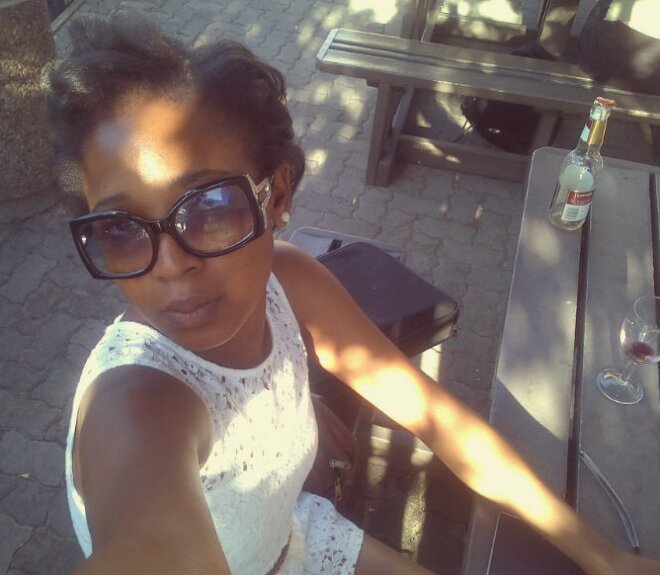
Thule [with an “e”, not to be confused with Thuli with an “i”] was one of the older women in the class, reppin’ the senior citizen’s wing [other members being Funi and Emelia]. She was the mayor of the Pig and [unsurprisingly] did this interview while at her fave watering hole.
Me: How would you describe your outfit today?
Thule: I’m wearing white wedges, a white dress and shades. I’m dressed for this hot, summer weather.
Me: How would you describe your style in general?
Thule: Laid back, relaxed and no fuss. When I have to fuss, red lips do the trick.
Me: Now that we’ve broken the ice, are you sure about this journalism thing?
Thule: Very [Probably even more so, now that she’s an award winning journalist ;)]
Me: That said, if you weren’t doing what you doing this, what would you be doing?
Thule: By this do you mean answering these questions or studying Journalism? If I wasn’t answering these questions right now, I would be drinking my wine without any interruptions. But if ‘by this’ you mean studying Journalism, I would be an economist.
Me: How have you found your honours year?
Thule: Fun. I’ve explored ideas and places I would have never explored like Kitcheners Comedy Nights on Tuesdays, Melville, Orlando East and West. [This answer :”D]
Me: What’s been the most challenging thing and the most rewarding thing for you this year?
Thule: Waking up on Fridays, being scolded by the VC, reporting on Wits issues and the media – these were the most challenging things this year.
The most rewarding things were waking up on Fridays to attend Anton Harber’s classes and being scolded by the VC for reporting on Wits issues and the media [hahahahaha, oh the irony].
Me: Where will you be next year and what will you be doing?
Thule: I’ll be at City Press next year, doing journalism kinds of stuff like being a journalist and doing what journalists do. Hopefully wearing shoes is part of that [I fear the wine drinking may have begun shortly after question 3]
Me: How would you describe #teamvuvu in three words?
Thule: Loud, loud and great.
Me: A word of advice for the incoming team for 2014?
Thule: Be loud, loud and great.
Quickfire Q & A
[Unfortunately I’m experiencing some technical difficulties, my sound refuses to convert and some of it is MIA. So we’ll give multimedia a skip this time around.]





 Write. Snap. Click.