The Newsroom 8.0

The Newsroom 8.0

I should be writing a news feature right now, but the task seems impossibly daunting as the deadline draws ever closer.

We had our first crack writing the intro to a feature earlier in the week, which served as some sort of prep for this. We all had to interview our partners  and write up a scene setter from what they had told us. Learnt so many entertaining and heart-breaking things about my colleagues. Thus far that has been one of my favourite feature writing classes.

Getting stuck into the paper proved difficult this week, you know with it being an 8 pager and all. Somehow things always take longer when we have less pages to fill. Makes no sense but yeah that’s how things seem to go.

Scribbled two things for the paper – two informational pieces. Production was a bit more tense than usual but all of that was long forgotten later that evening at our Court Reporting party.

We had Court Week earlier in the year, a week that was somewhat of a rollercoaster. Drinking before writing our stories seemed to be one of the best things most of us could have done – this alternative method making for some peoples best writing.

We officially became ‘award winning’ journalists that evening – must say it felt so nice. I realised then that I might be doing the best Honours course in the world and also that the people I am doing it with are beyond awesome.

AND THE WINNER IS: Scored my self three awards :D Photo: Pheladi Sethusa
AND THE WINNER IS: Scored my self three awards 😀 Photo: Pheladi Sethusa

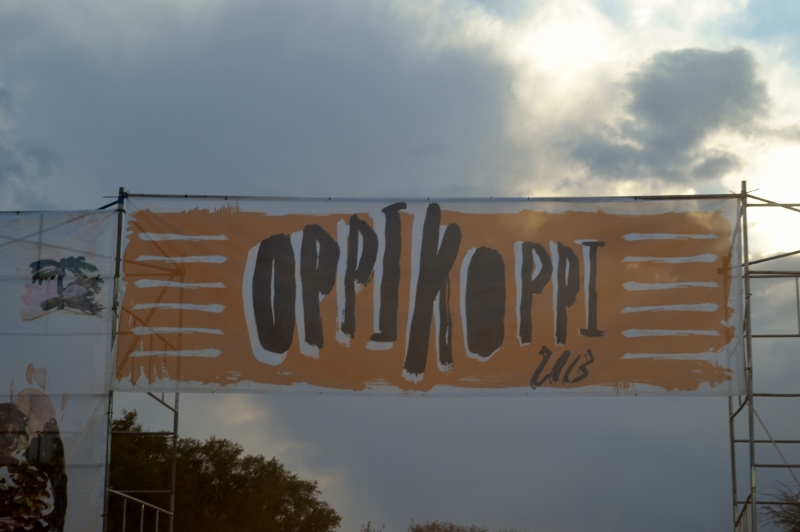
This coming week is going to be rather adventurous, going to Oppikoppi with a colleague – things might get messy, but not too messy for us to capture the whole thing through our lenses and pens. But before the fun begins, I have to write this feature and help put a whole paper together.

Cherrio**

VIDEO: WAM After Dark

The Wits Art Museum hosted their first “WAM After Dark” event this past Friday, August 2. Th event is geared at attracting a younger crowd to the museum. It was quite fun to be in attendance, here’s a quick video showing what went down. Related articles Snap(s) of the week (thejourneytoadream.wordpress.com)

Team Vuvu Oppi ball

ALL ROADS lead to Limpopo in August, this time not for Moria celebrations or to return to one’s roots, but rather to rock out at Oppikoppi.

Bewilderbeast

Bewilderbeast is the theme this year and it marks the 19th Oppikoppi festival since its inception in 1994.

Performers set to take the stage and entertain revellers include Mi Casa, Jeremy Loops, Jack Parow and the Deftones.

Two Wits Vuvuzela reporters will be attending Oppi this year and, in preparation for the festivities, they decided to find out how to prepare for their weekend in the bush.

What to expect

Most people approached for advice said to get a reliable tent, warm sleeping bags and a big cooler box to store food and booze.

A veteran who has attended numerous Oppikoppi festivals, Habrey Landman, from the University of Pretoria, told Wits Vuvuzela: “You need to take a boy, to help you make a fire and set up camp. There are no camp areas, it’s just bush.”

She added that hygiene is a major issue and the best way to stay clean is to bring along wet wipes and dry shampoo that can be bought at Clicks.

VoWFM DJ Max Motloung said he had been warned about the funky smelling festival.

“Just know that you guys are not going to bath, hey,” he said.

Motloung added that one should be prepared to wait in hours of traffic when leaving on the last day of the festival.

Landman said festival goers should keep hydrated: “a case of something, a bottle of something and dash” would suffice.

The festival starts next week Thursday, August 8 and runs for three days until Saturday, August 10.

Team Vuvu is ready, all that stands between reporters and bringing the festival to Witsies is a three-hour drive to a farm in Northam.

Ramadan: a time to reflect and fast

Allahu Akbar: Muslim students pictured at the University of Johannesburg, reciting a sunset prayer before breaking fast on Tuesday evening. The Wits and UJ Muslim student associations broke their fast together at a Ramadan Iftar dinner. Photo: Caro Malherbe

For Muslims all over the world Ramadan is a time of sacrifice and reflection.

What is Ramadan?

Anwar Jhetam from the   Muslim Students Association said Ramadan marks the ninth month in the Islamic calendar.

This is the month in which it is believed  the holy Qu’ran was revealed, said Jhetam.

“It is a month of fasting and increased worship to develop a closer relationship with God.   Ramadan is a month of reflection and self development,” he said.

During this month Muslims fast from dawn to dusk and abstain from “food, drink and sex with one’s spouse”, said Jhetam.  The fast is broken after dusk at which point people are allowed to indulge in the above.

Students and fasting 

While the rest of the students go about their day, munching this and that, Muslim students have to wake up before sunrise to have breakfast and fast throughout the day until about 5.30pm.

Romy Dasoo, 1st year Engineering, said she is finding fasting while attending university very difficult.

She has class from 8am to 5pm. “I end up breaking fast later, due to traffic,” she said.

Third year physiology student, Imraan Ballim, said: “Apart from the weird gastric sounds, it’s quite cool.”

Ballim believes the month of Ramadan is a very spiritual experience. “You engage more with religion and what it means,” said Ballim.

He also believes the introspection aspect of the fast makes it worthwhile.

Dasoo wishes she was more spiritual because the month would mean more to her and added that she admires students who are very spiritual.

Many students are quite aware of the difficulty of having to concentrate on an empty stomach.

Ballim agreed the first few days are difficult but said it becomes easier with time as you aren’t distracted by having to eat or drink.

Shared experience

Many Muslim students also get together to pray in the afternoon.

Ballim said this is a “nice experience because everyone gets together” and shares in the religion. Breaking fast is another good experience, as people gather with their families to feast on food they have been wilfully avoiding all day.

Special concessions are made for pregnant women, children, the sick and people who will be travelling at the time.

“They are permitted to abstain from the fast and can fast at a later date,” said Jhetam.

“At the heart of the fast is drawing closer to God during this special time,” he added, saying that students should use this time to develop character traits and habits that they will carry with them long after this religious period is over.


La Bonne Vie

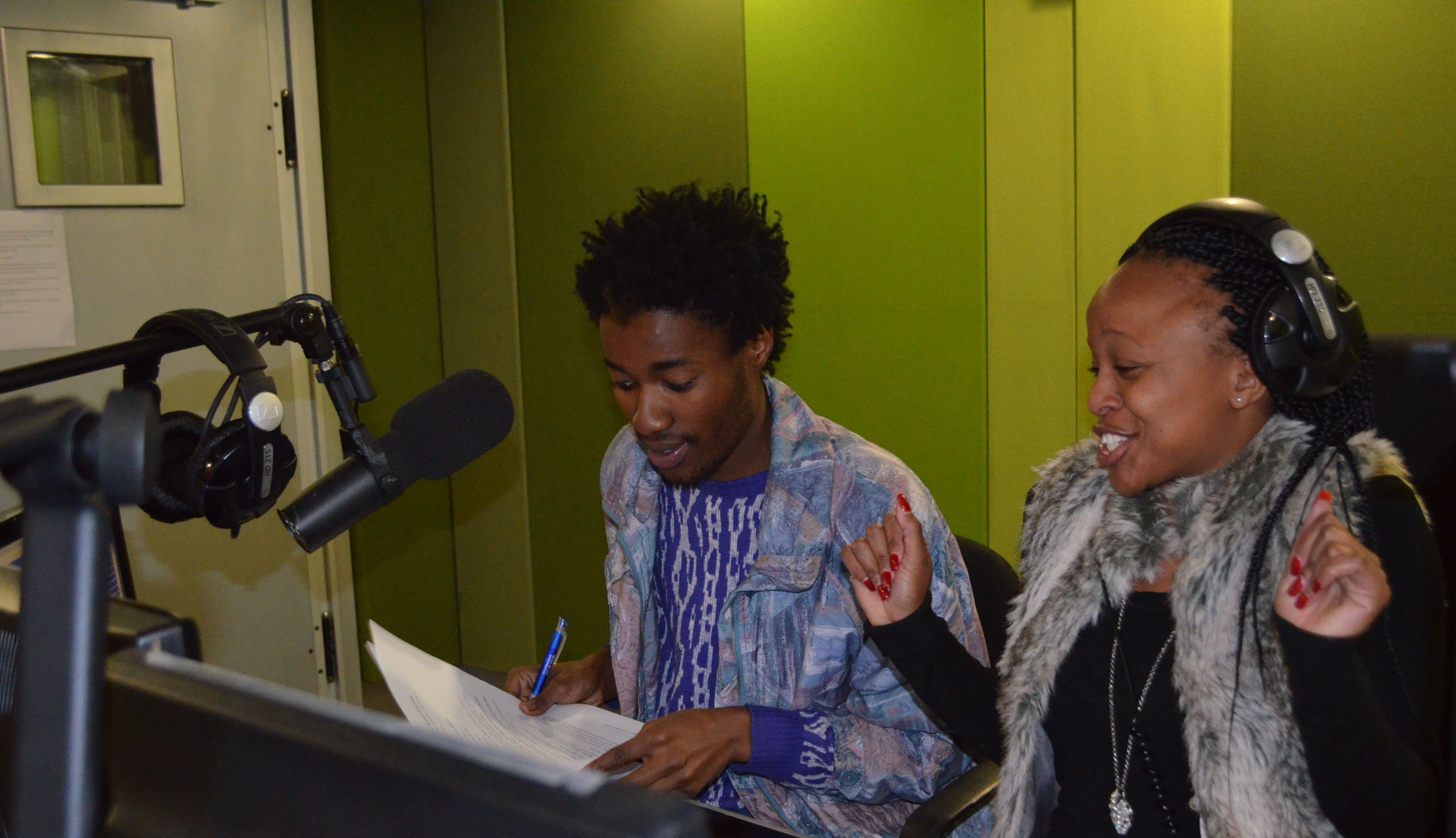
LE GOOD LIFE: Samkele Kaase and Karabo Ntshweng having fun in studio. Photo: Pheladi Sethusa

Two great minds and voices have come together to bring Witsies and all those in Braamfie ‘the good life’ on VoWfm.

La Bonne Vie is the French phrase for ‘good life’ and is now the name of a lifestyle and entertainment show hosted by Karabo Ntshweng and Samkele Kaase.

La Bonne what?

“We want to expose Joburg in its entirety,” said Ntshweng. She added that they want to give students a taste of the good life that falls within their budget.

Kaase and Ntshweng said that they went about doing this by attending events, informing people about events and having weekly give-aways. Events and places that students previously might not have had access to or just didn’t know about.

Kaase said that they connect with the people who own all the hotspots in Braam and make their proposals for deals and give-aways for the show.

Who’s it for?

Kaase said: “The show is very androgynous. People often assume that lifestyle shows are for women.” The pair added that they are about reaching out to students in the Braamfontein area who want to make things happen for themselves.

Natural progression

The co-hosts have always wanted to work together and this show was the natural progression of their professional relationship. Ntshweng said that they have both been at VoW for a long time and that they wanted to host an “entertaining talk show” that did more than just play popular music.

Kaase is still a student at Wits and Ntshweng now works at a popular Johannesburg radio station.

Witsies can catch La Bonne Vie on Thursdays at 7pm and podcasts are going to be available on VoW’s website from this week onwards.

Snap(s) of the week

Taken at the Martienssen Prize Exhibition, hosted at the Wits Arts Museum. Witsie, Antonia Brown won herself ten thousand rand with her entry. Her work titled ‘I Will Tell Him When He Comes’ looked at an extinct Khoisan language. Pictured below are reactions after the announcement. All photos by me.

DSC_0106 DSC_0081

Antonia
Antonia Brown

The Newsroom 7.5

CHEEEESE: Team Vuvu with her royal majesty (well to me), Ferial Haffajee :) Photo: Kenichi Serino
CHEEEESE: Team Vuvu with her royal majesty (well to me), Ferial Haffajee 🙂 Photo: Kenichi Serino

Another Sunday another blog post.

The past two weeks might have been the longest two weeks I’ve ever had in my whole life and the back to back 12 page editions of the Vuvuzela have everything to do with that.

On Monday we had a bit of a false start in the newsroom. Right after our guest lecture the lights decided to go off in our whole building. So we all went off to lunch hoping it would be back by the time we got back – no such luck. Naturally we all buggered off home.  Well not all of us, I went off take photos at a soccer match on campus – which proved to be a colossal waste of my time and space on my memory card… There’s always a next time right?

Things started to look up the following day when we had an awesome guest lecture on feature writing by Aspasia Karras, editor of Marie Claire SA. One of the few magazines I even bother to read anymore. She gave us valuable insights into feature writing and ultimately made the whole process seem rather enjoyable.

The day before Aspasia came in, Nechama Brodie had told us that we are merely “the vessels that the shit flows through”, to emphasise that the feature is never about the writer. But Aspasia told us that for our features to mean something it would have to be about something that matters to us as writers, she encouraged us to write about things we are passionate about. She said we should always ask ‘who the fuck cares’ and if we don’t, then no one else would.

Then on Wednesday we had the best guest speaker ever – Ferial Haffajee. Yes, thee Ferial Haffajee, editor of the City Press. In our very midst. Her lecture was legit the best we’ve had, or let me rather say the best I have had. She started us off with a general knowledge quiz – which made me realise how little I know about what’s going on in the world. We all know a bit of this and a bit of that but it was obvious that things like the economy and finance were not on our radar (something which needs to change). Anyway our lesson with Ferial was constructive and practical.

The rest of the week was spent chasing stories and photos and painfully putting a 12 page paper together. It was much tougher this time round but even so we managed to deliver closer to deadline than the previous week.

Another week of inanity and 5 hour sleeps await, ciao**

Disregard for the disabled

PARKED IN: Students in wheelchairs would not be able to access this ramp outside the School of the Arts as a driver decided to turn into a parking bay. Photo: Pheladi Sethusa

By Liesl Frankson and Pheladi Sethusa

It’s easy for able-bodied students to forget that navigating the world without sight or the ability to walk can be very tough.

Students in wheelchairs and students who cannot see have to carefully map out their routes to classes, residences and the like.

If they are met by even one obstacle on that route on a certain day, they have to think on their feet.

Cuthbert Ramatlo of the Disability Unit on campus said blind students with guide dogs would be stranded in such an instance, as their dogs only know one specific route.

The Disability Interest Group meets two to three times a year to discuss issues which constantly comes up is  access to campus for disabled students.

One of the major issues around this is often a lack of clear signage indicating suitable entrances, parking areas and toilets.

Vandalism

Wits Vuvuzela walked around to investigate access and wheelchair friendly routes on campus.

Some signs were vandalised while others were not clearly marked or visible.

One of the backdoor entrances that students in wheelchairs have to use. Photo: Pheladi Sethusa

Along with this a wheelchair lift at the School of Arts had been vandalised,  forcing students who use this entrance to go through the after hour’s back door.

“Often we think of back door access for people with disabilities and that’s really wrong because it’s basically going back to discrimination when there were different doors for different races,” said Duncan Yates secretary of the Disability Interest Group.

Yusuf Talia, BSc final year, a student who uses a wheelchair said: “There are some limitations at older buildings, like elevators that make certain places inaccessible”.

Along with this he said weathered paving made for tricky navigation and this problem was intensified when going uphill.

Easy access

To tackle access issues the unit has started developing interactive maps which will show easy access areas around campus for disabled students.

Yates said the map would be a living map that grows as the university changes.

The access map system aims to make online and printed maps available for disabled students, staff and visitors to make their experience at Wits more pleasant.

Students and staff will be able to flag areas on the maps online that are not easily accessible or where they may be experiencing problems.

In addition to the new mapping system the disability unit also provides training for staff and bus drivers. One of the achievements they are proud of is the dedicated Wits bus with access for disabled students.

The unit aims to respond to all student suggestions and complaints.

Talia confirmed this and said most buildings and areas are accommodating, if one lives at res the disability unit generally makes a plan for students to be comfortable.