NOTE: Article first appeared on The Citizen website on August 27, 2014.
Sixteen actors from the cast of Generations came out strong on Tuesday afternoon, insisting they will not go to work until “their demands are met”.
At a media briefing held at the Market Theatre in Johannesburg, the 16 dismissed actors banded together to finally give their side of the story.
Nambitha Mpumlwana who acts as Mawande Memela gave a brief financial run down of what a “supposed R55 000″ salary would look like after deductions.
She said after tax, agent fees and retirement annuity payments the actors would get a little over R19 000 – with which they would have to “pay rent or a bond, a car payment” and more.
Sophie Ndaba during a press conference held by the Generations stars that were fired recently at the Market Theatre in Newtown, 26 August 2014. Picture: Neil McCartney
A meeting with SABC, production company MMSV and the minister of Arts and Culture, Nathi Mthethwa yesterday did not prove fruitful.
Patrick Shai – who acts as Patrick Tlaole – announced they were told further talks would only happen if the actors agreed to do so without their legal representatives.
A week of mass strike action has seen 16 principal actors from Generations supported by the ANCYL and department of Arts and Culture.
Now Dr John Kani has asked the nation to support their cause.
A number of the actors who stepped up to the podium to address the media broke down in tears when speaking of their working conditions. Menzi Ngubane who acts as Sibusiso Dlomo came out as the person Mfundi Vundla had paid hospital fees for.
Ngubane was hospitalised for kidney failure. He said he spent seven weeks at Helen Joseph public hospital and Vundla would not have him moved to a private hospital. After being discharged he paid R30 000 back to a friend for his medical fees.
“I was discharged on a Thursday and had to go back to work the following Monday. Sitting down on a chair between the six to 10 scenes we shot a day,” said an emotional Ngubane, who had others on stage in tears.
Pre-recorded episodes of the show are currently keeping the soapie on air but these recordings will only last for a few more weeks.
The direction of the show is unclear at the moment with Vundla alluding to “new talent” as a strategy that may be used to take the show forward should matters with the 16 not be resolved.
To this Sophie Ndaba who acts as Queen Moraka said: “Artists looking to audition must first think about what we are trying to do here.”
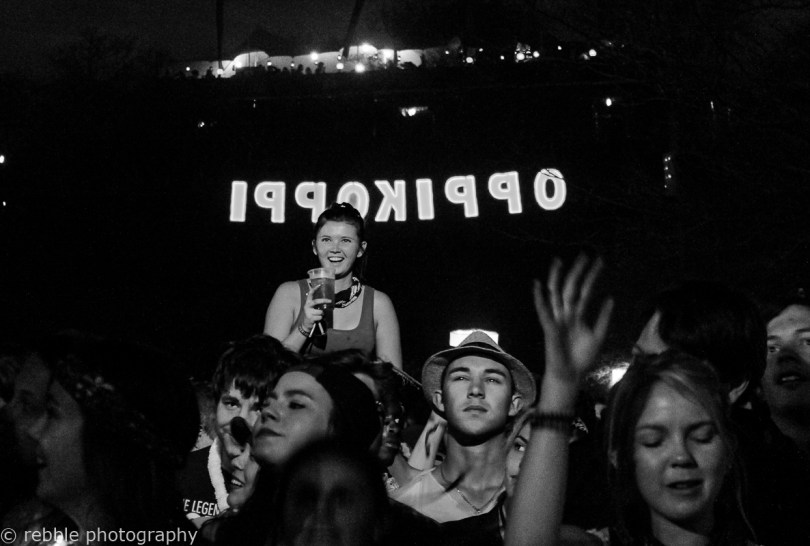
This year I headed out to camp out in the bush again for the 20th year of Oppikoppi. These are some of the photos I managed to take at some of the performances I watched.
NOTE: Article first appeared in The Citizen newspaper on August 14, 2014.
Sitting on a black leather couch in a tent on a farm in Limpopo, 42-year-old singer-songwriter Chan Marshall – also known as Cat Power – shared some intimate details of her life.
Marshall had just come off stage after her first appearance at Oppikoppi on Saturday, a performance on the Bruilof stage that saw fans shout words of encouragement when the sound equipment was not working properly.
Cat Power (Chan Marshall) on the Bruilof stage at Oppikoppi Odyssey on 09/08/2014. Picture: Pheladi Sethusa
Between constantly apologising for the staccato nature of her performance, Marshall had to change the sound on the amplifier, sing into two microphones and figure out how to work a keyboard she had never played by herself – a visibly nerve-racking experience.
“I always have stage fright,” she says.
It’s a situation that’s not entirely foreign to Marshall, though in the past her erratic performances have been attributed to problems with alcohol and drugs. “People used to say ‘Oh, did you go see the train wreck?’” she says.
She does admit to having had a drug problem a while ago after her partner passed away.
“I chose it every day and I knew what I was doing every day. It wasn’t me being oblivious. I was riding that train because I couldn’t take the pain of losing the love of my life.”
Marshall wished the women in the audience a happy Women’s Day while on stage, and spoke about feminism afterwards.
“A lot of times women don’t have the simple, casual dignities that men have as their birthright,” she says.
“I’m called a feminist because I protect myself from someone else trying to get something from me,” she says.
Marshall’s latest album, Sun, was produced independently, using the singer’s life savings.
“I had to make a choice between what the label wanted me to do and what I knew I could do myself, and the album made the top 10,” she says.
She performed at the Baxter Concert Hall last week, a performance she had asked for in December when she came back after Nelson Mandela passed and she witnessed “social change” that inspired her.
Marshall intends to return to Cape Town next January to write about the experiences she has had in the city over the years.
In light of the blackface incident involving two Tuks students last week, I asked TO Molefe a few quick questions on the matter. He indulged me with the most enlightened and thorough answers anyone has ever left in my inbox. As such, I figured I should share and let his words hit you with some knowledge.
Image: Twitter
Q:The two girls have now been expelled from res but not the University. Do you think this action was appropriate? If so why and if not why?
A: I think the university needs to follow due process as such decisions on individual students’ fates can’t and shouldn’t be arbitrated based on public sentiment. Hopefully UP already has in place an objective process to assess infringements of its student code of conduct and to assign the appropriate sanction(s). I personally do not believe punitive measures like expulsion are necessarily the best way to handle things, but like I said, the university should be following whatever pre-established protocols it has in place to deal with these situations.
The unfortunate thing about UP’s response to this incident is, as I said in my column, is that it singles out the two young women’s behaviour as an exception. They should definitely be held individually accountable, but the university, too, needs to examine its role in allowing such behaviours and attitudes to go unchecked among its student body. The university needs to use this example as the motivation for a compulsory education programme that uses South African history to teach about prejudice and oppression, particularly racism, sexism and sexuality. Right now they seem to be panicking because of all the public scrutiny directed towards them.
Q: In your opinion what was problematic about the girls dress?
A: For me it is pretty clear cut: If, when you think “domestic worker”, the first thing that comes to mind is black women with big lips and behinds, you’re playing on a racist stereotype of black women’s bodies and a long-held belief in that such bodies are the ones best suited to domesticity. Your intention is to poke fun at black women. It is racist and sexist. It is what queer scholar Moya Bailey calls misogynoir (anti-black misogyny).
Q: Some have said they the girls were having harmless fun, much like Leon Schuster. What are your thoughts on that line of thinking?
A: I think anybody who thinks the girls were having harmless fun has chosen not to think at all about what their performance tells us about the cycle of servitude millions of black women are trapped in, many from birth. The two young UP students probably grew up in a house where a black woman cleaned up after them and took care of them. That woman has daughters of her own who, without some kind of intervention, will probably have few work options other than to become domestic workers, too. And chances are that woman’s mother was also a domestic worker. We’ve seen this in the mines where low-paying manual-labour jobs ensnare generations of a single family.
Yet, these two girls, when asked to imagine a domestic worker, a figure that has been a feature of their whole lives, they imagined a stereotype instead of a real human being. These two girls will probably go on to hire domestic workers for their own homes when they grow up. And I imagine it will be difficult for them to find it within themselves to pay their domestic workers a living wage if they can’t imagine them as human beings in all their complexity.
What I’m saying is that the dehumanising way in which the girls imagined domestic workers is how many people imagine domestic workers. And that dehumanising imagining is directly linked to why many domestic workers in this country have never been and are not paid a living wage.
Q: Black comedians make it a point to talk about race in their sets – do you think the way they do it is helpful or harmful?
A: I think it’s great when black comedians talk about race. I think it’s great when anybody talks about it. However, for something that is so divisive, race is generally poorly understood. And even those of us who read, write and think about it every day have to keep our wits about us when dealing with it out of a fear that we might be reinforcing misconceptions about race and promoting racial prejudice. I’m not sure how many South African comedians and satirists exercise this kind of thoughtfulness or care.
This might be a bit utilitarian of me, but the objective of talking about race should be to expose its contradictions, and to subvert people’s deeply held misconception that race has no social significance. (I think most of us by now are comfortable with the idea that race isn’t a biological reality in the sense that it was once believed to determine traits such as intelligence, athletic ability and creativity.) Comedy is a great way to challenge people’s ideas about themselves and the world, but only if the comedian has stopped to think about whether they are repeating and reinforcing stereotypes, or subverting it. There are too many comedians doing the former because it’s easy and because the latter is hard and takes tremendous skill to pull off while being funny.
Q: Lastly, have you seen the trailer for Dear White People set for release later this year. Do you think the South African audience has the capacity to engage with the movie meaningfully?
A: I have seen the trailer. I am ambivalent about the movie’s relevance in South Africa. I mean, we will definitely see parallels to situations here. But, although related, the contexts and histories are a little different. Because of that, I am hesitant to adopt American (or other) anti-racist narratives wholesale. We have a rich history of anti-racist thought and activism here that I think we’re making too little use of. So, I don’t think there is a need here for black people to address white people as this movie does. Instead, I think what this country needs right now is a “Dear Black People” written, directed and produced through an immersion in black consciousness thought.
I took part in a blog-a-thon a few weeks ago. This is what I came up with in the hour and a half we were given. I chose the topic “digital nomad” and employed free writing principles to get the post done in that time frame.
Hi I’m Pheladi and I’m an interweb slore.
It started at the tender age of 16 when I was persuaded to open up a Facebook account in 2007. I didn’t really know what it was but the more I gave of myself the more I liked it. I moved there permanently a month later when I uploaded my first album. I did it on the sly in the computer room at the school’s library.
Soon enough I invited people over to live with me and when I got a new phone my new shelter went everywhere with me. The other places on the interwebs just didn’t have the same allure. Emails were cold, Hi5 left an abandoned building along with MySpace once FB took over.
When rent became cheaper circa 2009 my parents finally smelt the roses of the millennia and got us internet at “home”. This is when my relationship status changed, to “in a relationship” for the first time.
The first thing I did when I woke then was check for new FB activity. In the car on the way to school I ignored my dad’s random unfunny jokes to see how many new likes I had since I posted my hilarious yet tragic new status. At school we posed for photo’s behind what now seems like ginormous camera’s to be posted later that night. We picked on each other via comments – someone’s humiliation bringing out the snark that I suppose was always brimming on the surface.
Until then I had really only cheated on FB once, with Mxit – but I’m not sure that that counts, I used that for my private life, not my interwebs life (there’s a difference).
I became a real slore when I went to varsity. I was a media student, a gateway drug to the interwebs. I had clearly left Kansas and even learnt what an interweb slore is via the wireless tentacles that kept pulling me in.
Let me school you
Interweb(s) – Derived from the real word ‘internet’. I learnt this word on black twitter. Timeline unknown (unremembered really).
Slore – An adjective of sorts, combines the word “slut” and “whore” to mean ultra promiscuous. First heard on an episode of Keeping Up With the Kardashians, streamed live via free varsity data.
FB was my main chick, but I had an insatiable appetite that needed to be filled. I saw YouTube on the way to lunch with a friend, I introduced myself and we hit it off. I had just gone through a bad break up on FB which made it difficult to stay loyal (don’t get me wrong I was on everyday – it just hurt) – so YouTube provided all the happiness I required, especially the musical kind.
Twitter was love at first site, I was shy at first because (s)he was already with so many of my other friends, that and the fact that I think everything is lame until I try it. We took it slow at first (aka I trolled other people’s timelines for “research”). I made the first move as @sista_rebz – 5 months later and 5 000 tweets later we were practically married. At which point my slightly advanced Nokia got stolen by two white “plumbers” and I got degraded to tweeting from twitter for mobile. I spent about R200 on airtime a week to keep up the all-consuming union.
I also suffered a tremendous blow to my twitter image, everyone was tweeting from “twitter for Blackberry” by then. But there I was tweeting “via mobile” but who said socks with sandals isn’t cool – not me because I still managed to keep up with the BB kids hitting the 10 000 tweet mark in under year of joining.
The exposure to things and stuff on other people’s timelines pushed me into a digital wormhole I may never escape from. It started with starting something new with some new .com every other month. I began IM’ing, skyping, tumblring, checking in on foursquare, feeding my brain with wiki leaks (or forced spills if you will), listening to sounds on the clouds, trying to be “profesh” by linking in and and and.
All these things I am now on (with) help me in my professional life as a journalist. I’ve since lost contact with what was my first love – I keep FB close, an app on my homepage even but that’s about it. The need for likes wore off when I got to know him/her better. Juggling these other loves is difficult and data consuming but I stay stumbling upon, flipping boards, sending grams and +1’ing because, the interweb.
That headline is probably a grammatical sin of note but I’m 23 and kind of cool so let’s just be strong.
So I have been a working girl for a few months now and figured it’s time to say something about that.
The Job
I am currently working at The Citizen newspaper, as you can tell from the infrequent posts I manage to put up. I’m an intern at the daily paper and I rate so far so good.
I have managed to end up on the front page a few times – which is really very flattering. I’m fortunate to be working somewhere where I am allowed to do that – most interns don’t really get the opportunity to write as frequently as I do. Most people do the things senior journos are “above doing” – making phone calls, rewriting press releases that kind of thing.
I almost feel guilty that I have all this freedom to do pretty much any and everything while some of my friends are on the press release end of the spectrum (note: I have nothing against press releases I use them as well just not enough to want to die yet).
On the other hand I feel like I was NEVER ready for a daily newspaper – life here is really fast. Sometimes it feels like I’m on a rotating conveyer belt – type, file, type, file, type, file – on and on. What doesn’t kill you right?
The money
Being in the working world, paying my own way through life has taught me a few things about myself. Initially I was like “who would ever use this much money in a month? Losers.”
In the beginning I could not spend it all, I saved some, spent more and carried over the rest. Then I decided it was time to invest in things I really needed, a new camera and laptop. It didn’t seem like that much money at the time but soon that coupled with careless social spending, ever increasing petrol prices brought me back to reality.
Last week I ended up with R40 and only enough petrol to go to work before pay day – it was the worst feeling (I’m very liberal with hyperbolic speech). I suppose I have to learn how to budget now. Having money is nice but it makes everything look shiny and like something I “need”.
The social/not so social life
Coming into journalism everyone warned me about not having a life. Something which I experienced a bit last year when I was doing my honours at Wits – I became the friend who cancelled plans last minute and was always late to things. I suppose last year I didn’t feel it as much because my classmates became a huge part of making up for the nonexistent social life.
This year, without them things are different. I do go out when I can but I mostly just want to sleep. Everyone works now so making plans, finding times that fit is another struggle – because you know they have boyfriends and things.
Then I go to stories and other journos know eachother and I just play candy crush to pass time. I suppose I didn’t count on the loneliness when I decided I want to work in the media (to paraphrase Fitzgerald Grant).
A funeral service fit for a hero was given to Taegrin Morris this morning at W. J Clement stadium in Reigar Park, Boksburg.
Teagrin Morris’s (4) coffin at Reiger Park Stadium, Johannesburg, 26 July 2014, before it was laid to rest at Van Dyk Cemetries. Picture: Nigel Sibanda
The community gathered in their numbers to mourn the boy. Many wearing t-shirts with little Taegrin’s smiling face on the front of them, with the words “genoeg is genoeg” in red print.
Taegrin died after being dragged from a car for several kilometres when his mother’s car was hijacked last Saturday evening.
His tiny brown coffin was guarded by classmates from Geppetto Pre Primary school, who held lit candles in honour of him.
Gauteng Premier, David Makhura uttered the phrase “enough is enough” several times during his address.
“We’re deeply hurt by the manner in which the heartless killers took his life,” he said.
Makhura drew much cheer and applause when he promised the community that the criminals responsible would be found and driven out of the community.
He added that “coloured communities have been marginalised for too long,” saying a change in that paradigm was needed in Reiger Park.
Lizzie Phike – whose son was kidnapped last week when her husband was hijacked in Bronkhorstspruit – was in attendance to support the Morris family.
“They weren’t as lucky as me and I am to say sorry for that. I am hurt by what happened because the same thing could have happened to my boy,” said Phike.
In a final show of strength Taegrin’s mother, Chantel Morris decided to make the vote of thanks on behalf of her family. “If it were not for your prayers this week, we would not have made it,” she said.
Taegrin was laid to rest at the new cemeteries in Van Dyk Park in Boksburg. The entire service was paid for by provincial government.
NOTE: Article first appeared in The Citizen newspaper on July 19, 2014.
Even though government spends more than R5 billion a year subsidising public transport, 30% of all households use the bulk of their salaries on transport, according to Minister of Transport Dipuo Peters.
Peters said there was an urgent need to make transport accessible and affordable to vulnerable and marginalised groups who most need these services.
FILE PICTURE: Taxis use the Rea Vaya Lanes for parking to pick up passengers on Empire Road, Johannesburg, 13 October 2013. Picture: Tracy Lee Stark
“Today public transport costs and the distances involved prevent the poor from taking full advantage of opportunities offered by cities and such exclusion contributes to high unemployment rates,” she said.
Peters was speaking in Hatfield, Pretoria yesterday where the National Household Travel Survey of 2013 was announced.
The survey, which was compiled by Stats SA, looked at the patterns of transport and travel nationally using data collected from a sample of 51 341 participants over the past 10 years.
The survey found that the number of children who walk to school every day had increased from 4.8% to 5.7% and a further 6.6 million children walk as their first mode of transport.
Peters said this meant pupil transport was an urgent problem that needed to be addressed .
Children should not be walking or hitchhiking long distances when there was so much violence against children, the minister said.
Peters cited the Bus Rapid Transit system and the Gautrain as successful projects.
However, Peters added that the Gautrain buses were not being used as effectively as they could be.
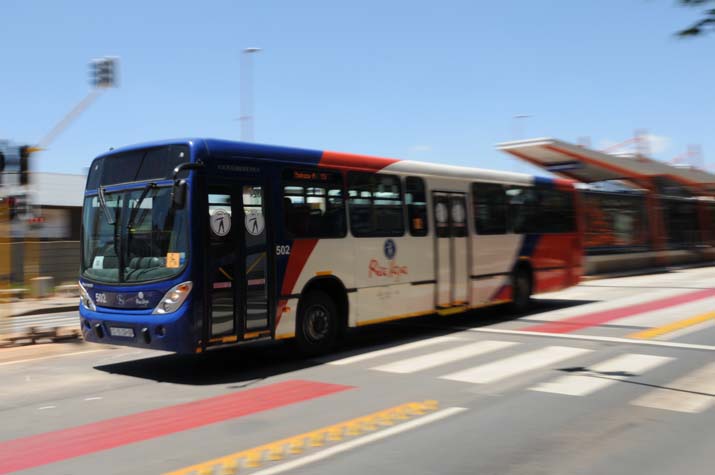
FILE PICTURE: A Rea Vaya bus passes its terminal. Picture: Alaister Russell.
“Gautrain buses are becoming wasteful expenditure.
“People use private transport to get to stations and cause congestion. We need to start using them.”
The most popular form of public transport to go to work was taxis, with private vehicles coming a close second.
Peters said the taxi industry provided 300 000 direct jobs and contributed R40 billion to the economy annually.
Statistician-general Pali Lehohla noted that while taxis were popular because of their speed and relatively low prices, “people are unhappy”.
He attributed some of the discontent to the issues of safety, comfort, unreliability and increased fares.
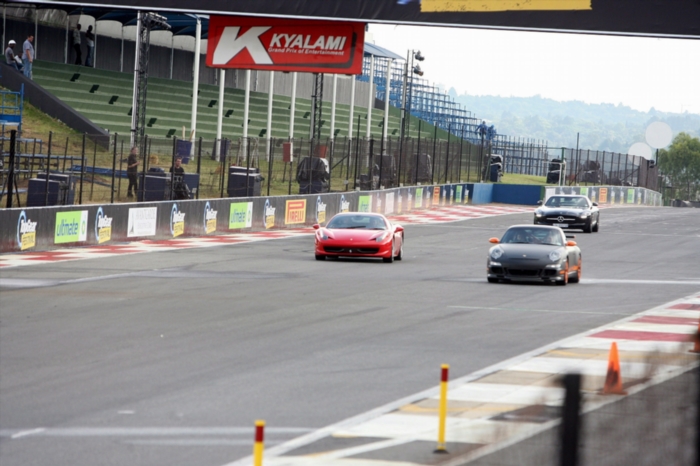
A general view of the Kyalami race track on July 23, 2014 a day before it will go up for auction in Johannesburg, South Africa. The circuit hosted its last international competition in May 2010 with the sixth race of the World Superbike Championship. AFP PHOTO/GIANLUIGI GUERCIA
Back in the good old days, people overseas related to four things regarding South Africa: the Springboks, heart pioneer Chris Barnard, golfer Gary Player – and Kyalami.
An auction in Hyde Park, Johannesburg, yesterday saw the historic Kyalami race track sold to Porsche SA for a whopping R205 million.
Lead auctioneer Joff van Reenen took no longer than two minutes to wrap up the sale of the property to a telephonic bidder. Porsche SA CEO Toby Venter was in Cape Town when the sale was made.
Lance Chalwin-Milton, joint managing director at High Street Auctions, said because the buyers were in the motoring industry, the race track would remain as is, with “possible development around the track”.
This sale is the highest auctioned price paid for a single property in South Africa – the previous highest being R120 million, said Van Reenen.
Piece of history
The Kyalami circuit was built in 1961, on a piece of land chosen by the late rally driver Francis Tucker, “because nobody would ever think of building anything there”.
It was completed the same year and its first major race, the Rand Grand Prix, was won by Jim Clark in a Lotus Climax.
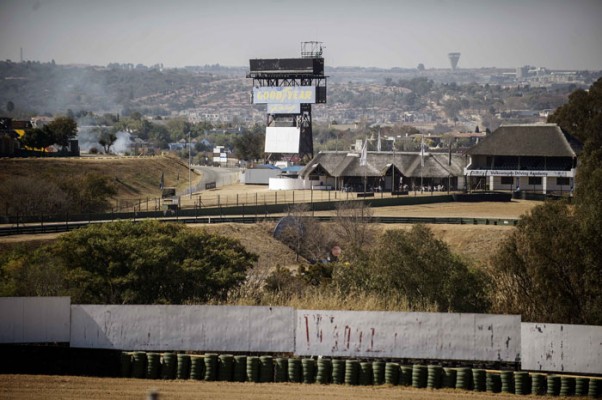
FILE PICTURE: The Kyalami Racetrack in Johannesburg. Photo by Gallo Images/Sowetan/Tshepo Kekana
Over the years, the circuit was widened, becoming a regular host of the F1 Grand Prix world championship.
It was revered as one of the fastest circuits in the world, with F1 cars reaching higher speeds than on tracks like Monza, Spa and Silverstone.
In 1988 it was cut in half and redesigned to its current shape.
Its last F1 took place in 1993, won by Alain Prost in a Williams Renault, leading home Ayrton Senna (McLaren) and Michael Schumacher (Benetton).
In between, the venue also hosted international sports car and truck races, superbike events and manifold rounds of SA championships for single seaters and saloon cars.
Its last major international event was the final round of the 2010 World Superbike championship.





 Write. Snap. Click.